 Orbit News Hub
High-Tech Imaging in Alberta Forestry: How 3D Scans are Saving Our Forests
https://orbitnewshub.com/high-tech-imaging-in-alberta-forestry/
#Forestry #3DImaging #Science #Environment #ClimateAction #Alberta




High-Tech Imaging in Alberta Forestry: How 3D Scans are Saving Our Forests
https://orbitnewshub.com/high-tech-imaging-in-alberta-forestry/
#Forestry #3DImaging #Science #Environment #ClimateAction #Alberta
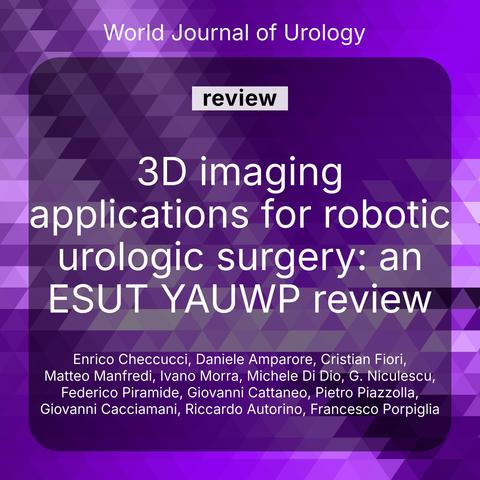
3D imaging tech application in robotic urologic surgery:
🧠 Enhances surgical planning
🌐 Integrates with augmented reality
📈 Optimizes educational tools
🌟new!🌟 in Advances:
Katrina Yezzi-Woodley and coauthors introduce a streamlined Batch Artifact Scanning Protocol (BASP) to rapidly create 3D models using a medical computed tomography (CT) scanner. #archaeology #3Dimaging #digitalmodels

The Batch Artifact Scanning Protocol: A New Method Using Computed Tomography (CT) to Rapidly Create Three-Dimensional Models of Objects from Large Collections En Masse
🔬📄 'Efficacy and Feasibility of Tissue-Clearing Technique and Three-Dimensional Imaging in the Human Gastrointestinal Tissues Using Illuminate Cleared Organs to Identify Target Molecules' - a Karger: #Gastroenterology article on #ScienceOpen -
🔗 https://www.scienceopen.com/document?vid=09d6ca4d-9131-4734-89df-86fae09bc8d7
#TissueClearing #3DImaging #LUCIDProtocol #Pathology #Microscopy
<p xmlns:xsi="http://www.w3.org/2001/XMLSchema-instance" dir="auto" id="d7337466e239"> <b> <i>Introduction:</i> </b> Tissue-clearing technology has shown potential for comprehensive structural and functional analysis through three-dimensional (3D) imaging of biological tissue. However, its effectiveness in human specimens remains insufficiently explored. In this study, we validated the illuminate cleared organs to identify target molecules (LUCID) protocol for human gastrointestinal specimens and demonstrated its utility in enhancing tissue transparency and 3D imaging. <b> <i>Methods:</i> </b> The gastrointestinal mucosa specimens resected via endoscopic submucosal dissection including the esophagus, stomach, duodenum, and colon were fluorescently stained and optically cleared using LUCID. Cleared specimens were imaged in 3D form by confocal laser scanning microscope, and the observable depth at any five points was measured and compared to non-cleared specimens, respectively. After clearing and imaging, the specimens were restored to the formalin-fixed paraffin-embedded form again, and conventional two-dimensional pathological evaluation using hematoxylin-eosin, Ki67, p53, and E-cadherin staining was performed to compare them with their preclearing state. <b> <i>Results:</i> </b> The observable depth was significantly extended after clearing for specimens from each organ (esophagus 228.3 ± 14.9 µm vs. 1,036.7 ± 62.9 µm, <i>p</i> < 0.05; stomach 115.2 ± 5.5 µm vs. 428.7 ± 15.9 µm, <i>p</i> < 0.05; duodenum 256.2 ± 9.5 µm vs. 787.0 ± 18.6 µm, <i>p</i> < 0.05, colon 113.9 ± 5.4 µm vs. 436.6 ± 18.5 µm, <i>p</i> < 0.05). The pathological evaluation after clearing revealed a preserved fine structure and staining and showed no apparent deformation, degeneration, or tissue damage compared with before clearing. <b> <i>Conclusions:</i> </b> The effectiveness of tissue clearing using LUCID on human gastrointestinal specimens was demonstrated, and the LUCID protocol had minimal impact on specimen morphology and staining. LUCID is expected to be a method that enables comprehensive structural analysis of human gastrointestinal mucosa and lesions that may avoid missing microscopic findings that may occur in split-face pathological assessment. </p>
@david_chisnall Hate to dissent, but clinicians that work with patients & take decisions aided by paraclinical tests (like CTs & EEGs) view this advanced tools (eg #3Dimaging & quantitative EEG) as fool’s gold: colorful and fancy images that exist just to impress people not in the know.
Kind like visualizing the matrix in code in an old screen versus in “hologram mode” from inside.
No serious clinician prefers a 3D image over the slices nor the colorful maps over the EEG lines
Revolutionary 3D imaging method combines optical metrology and computer vision to accurately capture reflective surfaces. Discover its wide-ranging applications. #3DImaging #Optics #ComputerVision
https://geekoo.news/bridging-optical-3d-metrology-and-computer-vision/
Hello. OK. I give. I'm sick of twitter. I'm looking for cool people to follow. Point me at good accounts?
My interests are #design #neuroscience #3dimaging #datascience #softwaredevelopment #research #uiux #hci and #art
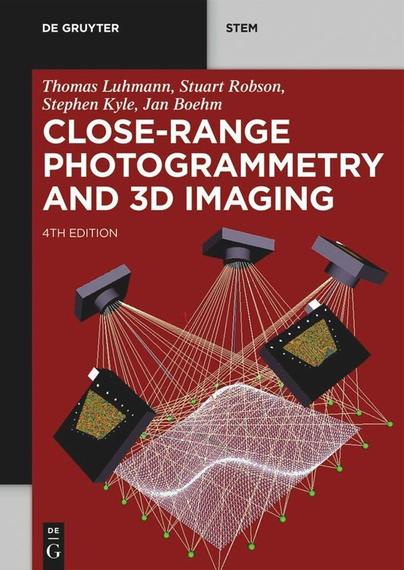

The fourth edition of this well-known guide to close-range photogrammetry provides a thorough presentation of the methods, mathematics, systems and applications which comprise the subject of close-range photogrammetry. The authors present accurate imaging techniques to analyse the three-dimensional shape of a wide range of manufactured and natural objects. 1st edition awarded the Karl-Kraus-Medal for “Best International Textbook’’. Covers all current and established technology features and recent technology developments of signifi cance. New topics include: aspherical lenses, hyperspectral camera and colour calibration.
behold
(twelve hours ago, I was struggling to figure out how to turn a cube into a rectangle)
 thetopbeautyreview
 Suweb Reza
 Adv in Archaeological Practice
 ScienceOpen
 Geekoo
 Matt Queen
 Jan Boehm
 Cleo of Topless Topics