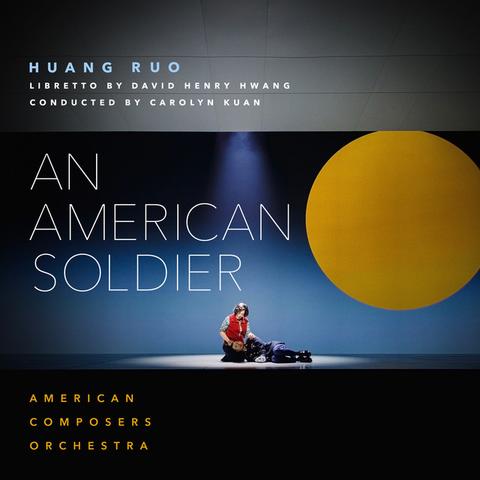
La Cenerentola, 1953
https://www.reddit.com/r/OldOpera/comments/1scthkh/la_cenerentola_1953/
It has been far too long since I've listened to a full opera, and I
decided it was time to begin again. I actually read the libretto to
this some time ago, but I hadn't listened to the work itself until
tonight.
Libretto
https://archive.org/details/lp_la-
cenerentola_gioacchino-rossini
First Recording Tried
https://www.youtube.com/watch?v=CQ22-8ztr_g
Recording Used
https://www.youtube.com/watch?v=JsmGQ6o7g8c
(Note: The libretto that
I used, while the exact same translation, was from a different link,
with a different introduction. Unfortunately, I can't find it, but
this one seems to be formatted a bit better and is actually directly
from the album of the performance being reviewed, complete with short
notes on the singers!)
The story was Cinderella, without the magical
elements, as was explained in the introduction. However, there were
a few clever twists along the way. There is some wonderful trickery
involved when the prince and his valet reverse places and tease the
unsuspecting stepfather (no stepmother here) and stepsisters. I
really enjoyed watching them go from bad to worse, sticking their
feet in their mouths as the phrase goes. It was also fun watching
Ramiro, Dandini, and Alidoro plot things, especially since I knew
something would happen but not exactly what, until it did. That
said, this is the first time I found the libretto of an opera to be
disturbing. I always preface such remarks with the idea that it's
not real life, and it should not be taken as such.
I'm also not one
for political correctness and modernising works. Even so, I was
shocked when Don Magnifico literally threatened twice to murder his
own stepdaughter! I would expect a threat of wipping, going to bed
without dinner, or being locked in her room, but that was a bit much.
I was also uncomfortable with the ending. It is made clear that the
actions against Cinderella were bad. The prince was even willing to
punish the father and sisters. But Cinderella acted as if all of it
was just a dream or a game (her own words) and actually forgave them,
going so far as to hug them and welcome them back into her new life!
I'm not a psychologist, but this made me think of Stockholm syndrome,
or at the least, a woman so badly abused that she has no idea that
such actions should be punished. It's all for a tidy, happy ending,
but the message seems to be that it's perfectly fine to abuse your
child, and that, if you're abused, you should just smile and accept
it. Had this been written by Verdi or Puccini, I'm sure the ending
would have been much more satisfactory, but then, of course, it
wouldn't be a comedy. In keeping with a light theme, the best ending
I've seen would have been from the modern film Ever After, in which
Cinderella asked that they be treated as she was, and the sisters
were seen being led into the kitchen to become maids.
While the
libretto may have raised questions, no such thing can be said of this
performance, which was excellent. I was actually going to listen to
another version, ironically, also from 1953, because I was quite
familiar with at least three of the singers, namely Giulietta
Simionato, Giuseppe Taddei, and Italo Tajo, plus the conductor,
Tullio Serafin. But the sound quality was terrible, and I say this
as someone who is accustomed to acoustic and live recordings!
However, this turned out to be a very good thing, because I found
several new singers to enjoy, particularly Marina de Gabarain, and
Juan Oncina (also in the first recording). De Marina Gabarain has
one of the best female voices I've ever heard in opera, and Juan
Oncina is a very sweet leggero. The music itself was absolutely
marvellous. Not once did I feel that any of it dragged. This is
definitely my sort of opera, both in story line and in music, from
melodies to harmonies. The sound effects during the storm were also
great.
I highly recommend this opera to anyone who wants to have a
night of wonderful music combined with a great story and performance.
I'm sure there are those who will say that, since this is a
Rossinian work, these singers weren't the best for it. But in that
case, it would be necessary to find those who truly studied bel canto
as authentically as possible, and while I'm sure they exist, I dont
know anyone like that, unless we go all the way back to singers like
Patti and Battistini.
#opera #review #Rossini
 World Concert Hall
 Alles_Okate
 Nick East (Indie Writer)
 Georgiana Brummell
 Bob the Traveler
 Keith
Keith Mikey
Mikey
 Her Doing
 Sebastiaan Ammerlaan 🇳🇱