Mark Brimble

54 Followers
51 Following
58 Posts
Gene Therapy researcher. 2022 ASGCT CDA Fellow.
Thomas lab #postdoc.
🇬🇧 living in 🇺🇲
Here for #science #immunology #TCR #academia #ultrarunning
@kevinng this is a fascinating concept!

Some holiday reading:

How different are self and nonself?
Mayer et al.

https://arxiv.org/abs/2212.12049

How different are self and nonself?

Biological and artificial neural networks routinely make reliable distinctions between similar inputs, and the rules for making these distinctions are learned. In some ways, self/nonself discrimination in the immune system is similar, being both reliable and (partly) learned through thymic selection. In contrast to other examples, we show that the distributions of self and nonself peptides are nearly identical but strongly inhomogeneous. Reliable discrimination is possible only because self peptides are a particular finite sample drawn out of this distribution, and the immune system can target the ``spaces'' in between these samples. In conventional learning problems, this would constitute overfitting and lead to disaster. Here, the strong inhomogeneities imply instead that the immune system gains by targeting peptides which are very similar to self, with maximum sensitivity for sequences just one substitution away. This prediction from the structure of the underlying distribution in sequence space agrees, for example, with the observed responses to cancer neoantigens.

arXiv.org

RT @[email protected]

Really thrilled to share our first paper from the lab @[email protected] describing a new therapeutic strategy to unlock exhausted T cells for immunotherapy. @[email protected] @[email protected] @[email protected] with a great team esp Abbey & @[email protected] who led this work 👇👇 https://www.nature.com/articles/s41590-022-01384-y

🐦🔗: https://twitter.com/Hazemghoneim11/status/1605609507979157504

Rebalancing TGFβ1/BMP signals in exhausted T cells unlocks responsiveness to immune checkpoint blockade therapy - Nature Immunology

Cancer immunotherapies can be limited by terminally dysfunctional T cells in the tumor microenvironment. Here the authors present a model of stable human T cell dysfunction to show that TGFβ contributes to this terminal dysfunction which can be therapeutically inhibited by simultaneously blocking TGFβ1 and boosting bone morphogenetic protein (BMP) signaling.

Nature
Let’s try a first #sciencemastodon paper sharing with our letter "Crohn’s-associated invariant T cells (CAITs) recognise small sulfonate molecules on CD1d" in which we proof that a subtype of NKT type II cells are enriched in #crohnsdisease https://bit.ly/3AQMaZe
Crohn’s-associated invariant T cells (CAITs) recognise small sulfonate molecules on CD1d

In the recent study by Rosati et al, we described a novel unconventional T cell population enriched in the peripheral blood of patients with Crohn’s disease (CD) and characterised by a semi-invariant T cell receptor (TCR) repertoire.1 However, the specificity of these Crohn’s-associated invariant T (CAIT) cells was not defined. Identifying the specificity of CAIT cells is essential to understand the origin of the antigen triggering their enrichment in CD. In our previous study, we observed that CAIT cells have TCRs similar to those reported for some natural killer T (NKT) type II cells.2 3 Here, we performed a sequence similarity analysis4 and identified a large cluster composed of CAIT clonotypes and three reported NKT type II clonotypes (figure 1A). While the NKT type II and CAIT clonotypes all had highly similar TCR alpha chains carrying TRAV12-1/TRAJ6 genomic segments, their beta chains were highly diverse (figure 1A, bottom). Dash et al have shown that TCRs with similar sequences frequently have the same specificity.5 6 In the original publications describing these clonotypes, the authors reported that the NKT type II cells recognise small molecules of the pentamethylbenzofuransulfonates (PBFs) family presented by the invariant HLA-like CD1d protein.2 3 Thus, we investigated whether CAIT TCRs shared the specificity of the NKT type II cells. Figure 1 Comparison of natural killer T (NKT) type II and Crohn’s-associated invariant T (CAIT) cells. (A) Sequence similarity analysis of NKT type II2 …

Gut
With the #new #funding anticipated, our lab is seeking #postdocs #bioinfomatician please reach out. #TCRs #autoimmunity #Tcell and #protein #engineering background preferred http://saligramalab.org/
Home - Saligrama Lab

Laboratory of Human Adaptive Immunity and Neurology

Saligrama Lab
We were honored to be included in this month’s Fred Hutch Science Spotlight. https://www.fredhutch.org/en/news/spotlight/2022/12/vidd-laing-natcommun.html
Cheers to long-lived memory T cells after shingles!

Researchers discover selective retention of virus-specific tissue resident T cells in healed skin after recovery from shingles, a disease caused by a herpesvirus.

Fred Hutch
Hear ye hear ye! Hot #AAV #GeneTherapy takes incoming!
PRPF31 #RetinitisPigmentosa is a #retinal disease caused by haploinsufficiency. #PRPF31 mutations are also homozygous lethal, which makes creating an animal model challenging. We tackled this problem by knocking out PRPF31 using a #CRISPR construct in adults using #AAV – and then showed that #GeneTherapy could prevent retinal degeneration in vivo. Out now in #NatureCommunications. https://www.nature.com/articles/s41467-022-35361-8
Gene augmentation prevents retinal degeneration in a CRISPR/Cas9-based mouse model of PRPF31 retinitis pigmentosa - Nature Communications

PRPF31-RP is a blinding disease, caused by insufficient levels of a pre-mRNA splicing factor. Here, the authors show that CRISPR-Cas9 editing of the Prpf31 gene in mice leads to retinal degeneration similar to human patients, and, in the same model, demonstrate benefits from PRPF31 gene therapy.

Nature

Do you use #AAV vectors for #genetherapy or research?

If so, your virus probably isn't as pure as you imagine.
We showed that using standard production techniques, the incorporation of plasmid DNA contaminants directly upstream of the AAV P5 promoter.

When you conduct gene transfer, these sequences are transferred and can be transcribed, translated, and potentially immunogenic!! 😬😬

Core message: Find a way to reduce or remove P5 related contaminants from your AAV

https://www.cell.com/molecular-therapy-family/methods/fulltext/S2329-0501(22)00009-2?_returnURL=https%3A%2F%2Flinkinghub.elsevier.com%2Fretrieve%2Fpii%2FS2329050122000092%3Fshowall%3Dtrue

#Introduction.
I am a Senior Scientist @UW focusing on T cell #immunology interested in what constitutes the most beneficial T cell response to infection. Also fascinated by the complexities and oddities of non-mammalian immune systems.

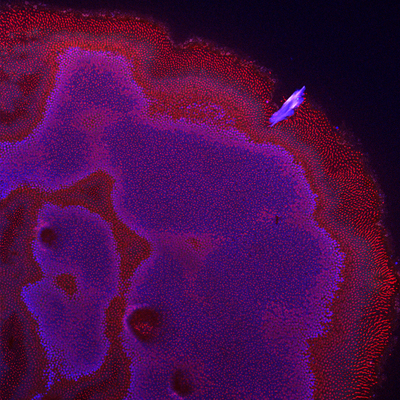
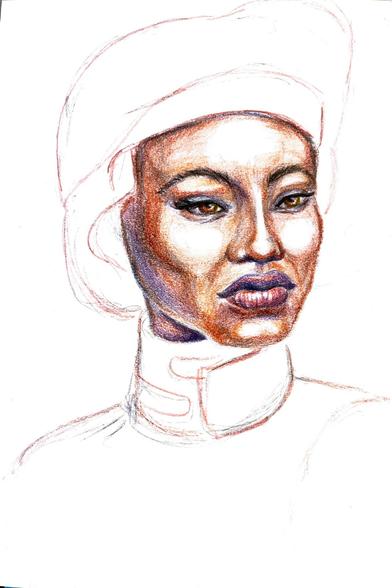
Something people don’t know about me: In rare moments of quiet, I sketch (see work-in-progress pic).

I am here to keep up-to-date with the latest in science news, publishing, and banter. Might connect with the #indie music scene for some tunes too.