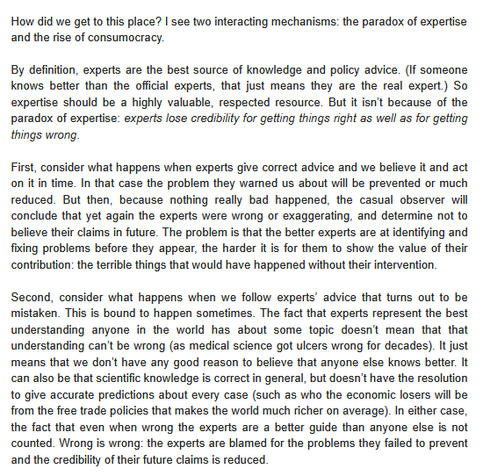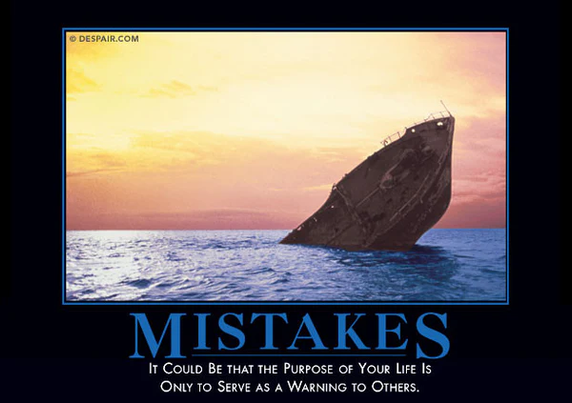

The lesson of Y2K was this: if you fix the problem and do a very good job, you will be treated like you didn’t do anything and that the problem wasn’t real to begin with.

@mos_8502 oh yes. It's absolutely a common issue in corpo (and probably any job where what you do is not immediately evident).

Security? WTF, we never had a breach, we don't need you.

Programmers? We have the product already, why do we need so many of you?

I had a boss telling this to my face:
"It's not what you actually do, it's what you show you're doing that is important".

And with that and the "If you liked your job I wouldn't have to pay you" (different boss) I decided I had enough of this career and the next is shoveling manure.

@hkz @mos_8502 See also https://terriblesoftware.org/2026/03/03/nobody-gets-promoted-for-simplicity/ I always try to talk publicly (within the org) about hidden success; that refactoring you did months ago that means changing some code now is trivial, the work you put it to a deployment to ensure it is (as close as) invisible to end users etc
Nobody Gets Promoted for Simplicity

We reward complexity and ignore simplicity. In interviews, design reviews, and promotions. Here’s how to fix it.

Terrible Software

@mos_8502
We were lucky that the Y2K bugs were easy to find, and mostly trivial to fix.

Perhaps we should have missed a few ;-)

I was rather surprised at the number of them we had to fix, considering the software was originally written in 1995.

We were fixing C code where the dates went into fixed size buffers. Typically 2001 would turn into 20101, so it would have been a mess.

@mos_8502 my total contribution was finding and fixing a couple of scripts which would have printed dates as 01/01/19100 and documenting a bunch of test instruments which thought it was 1984 still so clearly Y2K was the least of their problems.

@mos_8502 Yeah, the IT people should have done a worse job.

We should have had a lot of small but very visible problems. :)

@mos_8502 Especially when it for a friend who knows you know your way are whatever tech, and wants you to trouble shoot her home wifi problem. 🫣

@mos_8502 one company I worked for at that time (one of literally the largest banks in the world - a firm that in the 1990’s talked about having $1T in assets under management) used y2k as an excuse to update internally written applications. We started the process with over 1200 internal applications (we had over 1500 full time programmers) this was in 1997/1998

They all had to test and certify their apps and all dependencies.

Unless they signed off that their app wasn’t critical

No takers

@mos_8502 in the end I wasn’t at the firm by Jan 1, 2000 (had left for another job about a year earlier) but it was impressive how seriously they took it - every app was tested and they had planned deployments and updates for any 3rd party systems that needed to be updated. This was at the height of Web 1.0 and they most definitely spent a lot on their developers and tech in general

It may have been an unusual case but also helped that when their apps failed they lost millions each hour

@mos_8502 and if you do a very good job the first time 'round, it was obviously too easy, and not worthy of recognition.

If you write software that just runs, without any problems, people forget they're using it; they forget it exists.

@mos_8502 management have to learn the hard way with market crashes and systemic failures, so they can forget in 30 years and have it happen all again
@mos_8502 hypothetically, were I employed, the team I'm in might run an Engineer of the Month competition, in which we nominate people & then vote. My vote would always go to the person that got the job done well without any fuss, rather than rewarding the ones who "went the extra mile", "long hours but it was all worth it", and so on.
@mos_8502
The lesson is the world contains fools and liars.
But most people are not.
Those who are should not be given prominence.
@mos_8502 the hardest thing is to make it look easy
@mos_8502 Or the classic 'Remember how we heard about the ozone hole and then it just went away'...AARGHH...Just ignoring the unprecedented global response then, huh?
@mos_8502
The biggest problem with IT people is that their wisdom to intelligence ratio is near zero.
@mos_8502 why do we even need seatbelts etc
@mos_8502 and this is why you let things crash horribly first, then you get to be a hero for your fast response to the catastrophe (cause you've been quietly preparing for a while).

@elexia @mos_8502 huh.

that is what the fascists are doing, isn't it.

@navi @mos_8502 your solution doesn't even have to be good if you just let things crash horribly enough first
@navi @elexia @mos_8502 I think they are manufacturing a false problem. Making a big deal out of a molehill and then claim whatever they did fixed the non-existant problem.
@EdBruce @navi @mos_8502 they do that too, but they also very much let actual problems get to the point of catastrophe. now sure, a lot of the rank and file are often in denial like their ideology at least on a surface level demands of them, but you can bet that some of the more educated and powerful are definitely looking to benefit off of issues they helped make worse themselves. sometimes they are even quite explicit about it.
@mos_8502 the sysadmin’s dilemma; balancing the ideal of invisibility against the need to justify your employment.
@mos_8502 Proposed solution - let some thing go to shit as a lesson to everyone else. Presumably this is the purpose of Trump.
@mos_8502 y2k paradox. Corollary: if you solve a problem quickly and efficiently, the people paying you will think it’s wasn’t a very difficult problem to begin with.
@mos_8502 There is no glory in prevention

@mos_8502 Oh of course! After all, if there was a problem to fix at all, it was your fault, even if it existed before you. Right?

Then, for everybody else, if you fixed the problem before it became a problem, there just wasn't a problem.

@mos_8502 Similar problem that clandestine services have to deal with. Successes are private, failures are public.
@mos_8502 Welcome to public health!
@mos_8502 "if you dig the best ditches, all you get is a bigger shovel."

@mos_8502 Yep. It really peed me off when people started calling Y2K a non event with no recognition of why that was.

The other part of the problem was the media hype and panic. At the time, I was sole IT support for a spring manufacturer. I spent a few months making sure our manufacturing machines, servers and computers would handle the date change but I spent most of 1998-99 replying to emails and letters from customers that our business would continue as expected. It was all one big paper trail.

For some we even had to provide a guarantee that the springs we provided would not fail as the clock ticked into the new year. This guarantee was essentially us reiterating the contract they signed when ordering and confirming said springs had no time-related functionality 🙄

@mos_8502 Always more glory in fire fighting than fire prevention.
@mos_8502 so many infrastructure jobs are like this 😕