Since releasing my oil video I've had so many people claiming that renewables will never work and we need nuclear power instead.

What's odd is that almost all of the messages mention that nuclear power is the only solution for the "base load".

I have a degree in Electrical Engineering and I took several nuclear science electives. I like nuclear energy. But I received so much "base load" gaslighting that I started to doubt my own understanding of the situation.

Energy consumption goes up and down throughout the day, but the "base load" is the minimum amount, even at the lowest point in the day. So nuclear power is good for providing this "base" because it's consistent and always running.

The issue is that renewables sometimes output so much electricity that, especially when it's sunny, the grid makes *way* too much electricity. The electricity consumption of the grid minus renewables is called the "residual load", and it very very often goes NEGATIVE.

This means that the concept of "base load" is not really relevant, because there is no consistent base. And when the residual load goes negative, the wholesale price of electricity goes negative as well.

Last year the Netherlands had negative wholesale electricity prices for about 7% of the year, and that amount is only going to grow.

You can't afford to run a nuclear reactor when electricity prices are negative, but you also can't shut it down every day either.

This was always my understanding of how renewables make the concept of "base load" irrelevant, again, as a person with a literal degree in Electrical Engineering.

But I was gaslit by so many people that I felt the need to research the current situation again today.

This could just be people using out of date information, but I suspect this is anti-renewables propaganda. Otherwise I don't know why so many people would even know what a "base load" is.

When I did some reading on the current situation, I found a lot of sites out of Australia that were repeating this "base load" idea, in the context of nuclear power.

I suspect that this is fossil-fuel propaganda.

Fossil fuel companies love promoting nuclear power because they know it takes decades to get a reactor built (if it gets built at all), and in the meantime, everyone keeps using fossil fuels.

It's the perfect way to cripple renewables without being obvious about it.

@notjustbikes the only honest reason for using nuclear power is the desire to have nuclear weapons.

@mohs @notjustbikes

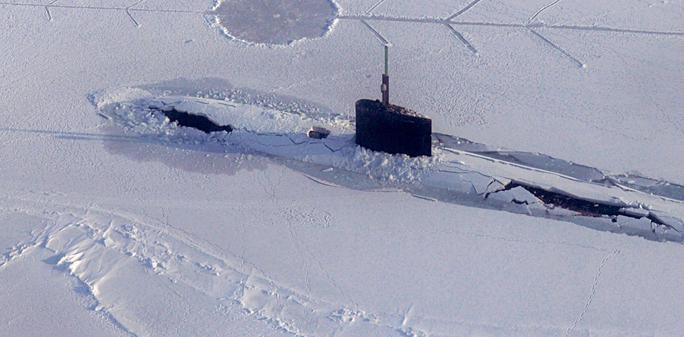
"The neglected factor is the military dependence on civil nuclear industries. Maintaining a nuclear armed navy or weapons programme requires constant access to generic reactor technologies, skilled workers and special materials. Without a civilian nuclear industry, military nuclear capabilities are significantly more challenging and costly to sustain. "

https://theconversation.com/the-hidden-military-pressures-behind-the-new-push-for-small-nuclear-reactors-266301

The hidden military pressures behind the new push for small nuclear reactors

If billions are being invested to power submarines not homes, the public deserves to know.

The Conversation
@notjustbikes oh hey, that was actually my missing link as to why fossil fuel companies promote nuclear! 
@CIMB4 @notjustbikes they know that nuclear is such a tarpit that it would take decades to get any power out of it, and in the meantime they can carry on selling fossil fuels.
@CIMB4 @notjustbikes
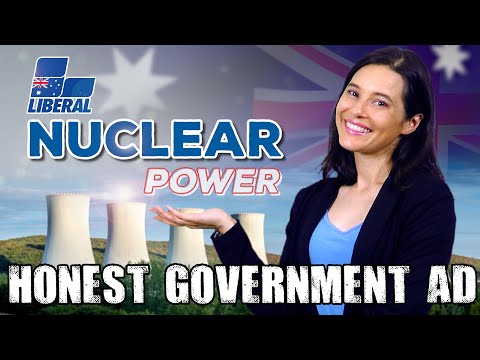
This reasoning (waiting for nuclear keeps us using fossil fuels) is nicely explained in the Australian context in this video by @thejuicemedia https://youtu.be/JBqVVBUdW84
Honest Government Ad | Nuclear

YouTube

@notjustbikes

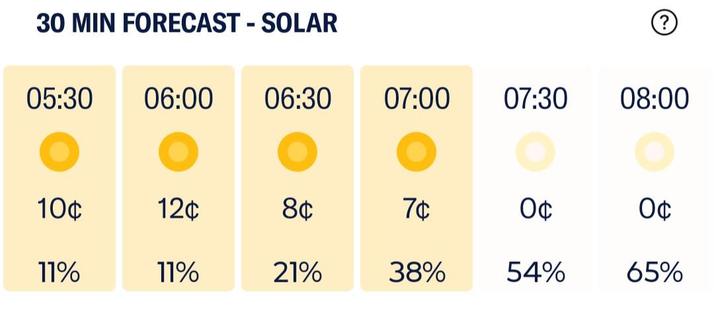
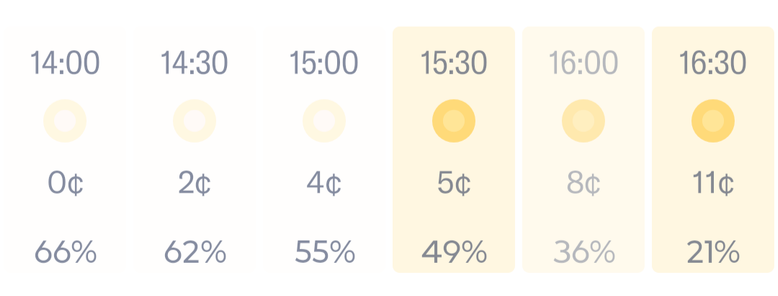
I'm in Australia, living in a house with PV panels and a battery. I sell electricity to the grid in the mornings and evenings and buy during the day, if needed. Here are the prices per kWh sellers may get tomorrow morning, the percentage at the bottom is the share of renewables in the grid and actual prices from today afternoon.

...any more inflexible supply from the coal power plants (or nuclear if we had it) and they go negative.

@notjustbikes I think the term you’re after is “dispatchable power”, which means production that can rapidly be ramped up or down - eg. Renewables firmed with batteries, or some types of fast response gas turbine. “Base load” is a vestige of the old coal power stations, which need to output approximately constant power, so we had to find ways of flattening consumption, eg by incentivising night time consumption.
@wall0159
However, the assumption that nuclear power is dispatchable is a myth: once you payed all the sunk cost to build a nuclear plant, it has to run 24/7 for a very long life if it ever wants to have remotely competitive prices per output.
@notjustbikes
@Sweetshark

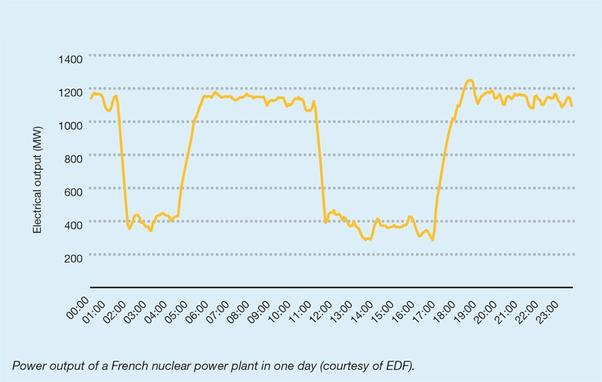
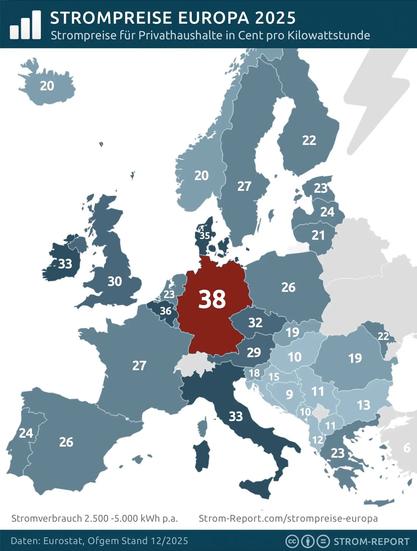
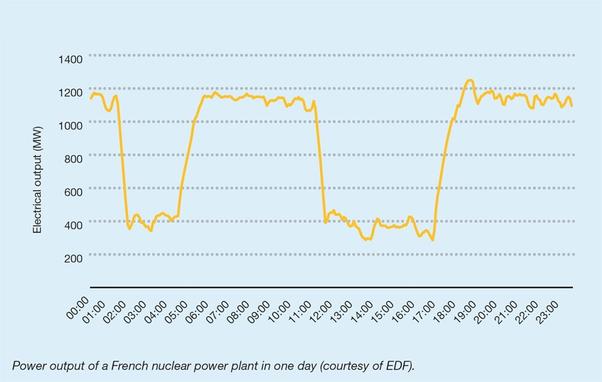
Interestingly, French nuclear power plants modulate their output power all the time and still have electricity much cheaper than Germany 🤔
@kravietz
Lol "für Privathaushalte"
@Sweetshark

You literally buried me under an avalanche of very concrete arguments and data, much appreciated 😆
@kravietz
Also: Is this generation cost (I doubt it)? If those are the end consumer prices, one has to keep mind, that french prices are heavily subsidized.
@Sweetshark

@nibbs @Sweetshark

Electricity tariffs in Europe are very complex, all of them are somehow subsidised, and in addition to that they are part of the single market, which further distorts the prices of every single source at any given time.

The primary problem is however not that they are or aren’t subsidised in Europe, but that they are most certainly subsidised in China, which is both the cause and effect of EU buying most industrial production from there.

Leave me out of this -- we discussed thus before, when @kravietz ignored industrial electricity price is below 20 ct/KWh in Germany and unsubsidized nuclear production cost is higher than that.
@nibbs

@Sweetshark

But these industrial prices are subsidised, aren’t they?

@nibbs

@wall0159

If you check current Germany generation you will see it constantly runs 8-15 GW on biomass and lignite (brown coal). This is literally the textbook example of baseload generation, in a country that has absolutely insane amount of installed power in renewables

https://www.energy-charts.info/charts/power...
Energy-Charts

Die Energy-Charts bieten interaktive Grafiken zu: Stromproduktion, Stromerzeugung, Emissionen, Klimadaten, Spotmarktpreisen, Szenarien zur Energiewende und eine umfangreiche Kartenanwendung zu: Kraftwerken, Übertragungsleitungen und Meteodaten

@notjustbikes The main centre-right political party was pushing nuclear power at the last election. So it also has some support as a culture war issue.

Both of the major parties accept large donations from the mining and resource extraction industries, so it is not just a fossil fuel thing.

@notjustbikes

Fossil fuel companies love promoting nuclear power because ...

They also abhor the idea of a decentralized grid, with local production, maybe even in the hands of the people who consume the power, because it threatens the structure of the current grid, with few well known producers and a lot of distributed consumers.

There is a tiny piece of truth in this, as a grid that also accommodates a lot of distributed producers requires a lot more digital control and modernization, and it also requires a somewhat different structure in cabling and power distribution, but on the other hand such a structure will be a lot more flexible and resilient, too.

Financially, some large scale fossil power producers (RWE in Germany, for example) are partially state owned and profits from them are being used to pay for state pensions or finance other parts of repeating state payments. These parts of the state resist ANY kind of change with an almost unsurmountable stubbornness, and these kinds of dependencies are also badly documented.

@notjustbikes Yea, the liberals were trying to push for nuclear SMRs last election, but they lost **hard**, but there was such a massive misinformation push, it just failed because... the liberals are such a mess I suppose.

@notjustbikes This worked flawlessly in the last election in Sweden 4 years ago. The winning coalition bet EVERYTHING on this narrative and it did seem to be part of them winning the election. 4 years later the main outcome of this is almost all renewable projects have been cancelled due to the market uncertainty that was created.

Election coming up in September and they seem to bring back the favorite from last time, let’s see if it works twice. Polls indicate no.

@notjustbikes Solar on suburban homes is a funny thing. At the latitude of Amsterdam, it can lead to demand evaporation for 7-8 months of the year if the home has a sufficiently sized battery.

The solar from a typical suburban home can carry 10-15 kWp of solar, leading to 7-11 MWh production per year in east/west configuration and 13-16 MWh production in a south facing ideal deployment.

There is a 1:10 production difference between January and June, though, so the household likely needs to buy power Nov-Feb, but will likely break even or almost break even in Mar, and not consume any power from the grid in April to September, and begin to load from the grid lightly on October.

Heating with a heat pump will have them but 3-4 MWh during winter.

(Numbers based on our 75 kWh/(year and qm) home, and our demand, but they seem to be applicable on a more general scale, too).

For power producers this means they have to supply power to homes like ours only for winter.

Fortunately wind + battery can actually do that without CO2.

@isotopp
Nachfrageverpuffung, oder wie heißt das auf deutsch?

#solar #autarkie
@notjustbikes

@isotopp @notjustbikes but batteries are terribly expensive. I have 5 solar panels and I've completely recovered that investment in less than two years because they were subsidised.They would cover half my daily needs if I could use all the production. So I've considered buying batteries, but there's no way I can recover that investment in a reasonable timeframe. At least not with the current electricity cost, which is very low.

@Disputatore @notjustbikes

20 kWh battery cost me 7280 Euro incl installation here. 30 kWh are possible, and cost marginally more.

https://www.zonneplan.nl/thuisbatterij/kosten

I have other costs for a freestanding house in the Greater Amsterdam area, and while the battery costs are not so small that they are immaterial, they are not "terribly expensive" – one and a half very good Kalfhoff e-Bikes, or 1/3 annual cash bonus.

Kosten thuisbatterij: prijzen en informatie

De kosten van een thuisbatterij liggen gemiddeld tussen de €5.000 en €8.000. Check snel wat een thuisaccu voor jou oplevert!

Zonneplan

@isotopp @notjustbikes that's a fabulous price. I have a quote of 3 300 euros for 3kWh of batteries plus installation. I would have to replace my inverter because the one I have is not hybrid:
X1-Hybrid-3.0D- 952€ + IVA

Smart meter- 125€ + IVA

BMS MC0600- 450€ + IVA

3.0kWh High voltage 90V-116V Lithium Battery- 900€ + IVA

Instalation- 255€ + IVA

IVA is the same as VAT.

@isotopp @notjustbikes when I say that the batteries are expensive I'm talking about a cost-benefit point of view. In Portugal, only one third of the power bill results from consumption. The remainder is the power availability and grid access costs. Even if I was to remove consumption for most of the year, I would still have to pay two thirds of the bill for the whole year. So the monthly savings would be fairly small. It could take upwards of 15 years to offset the investment.
@isotopp @notjustbikes Roughly corresponds to what I am seeing in my home, with a recent heat pump and 18 year old solar panels. No battery yet, but if we had, we would also not consume any power from the grid from mid April to early October.
@isotopp @notjustbikes here in the States, white reactionary suburbanites in Texas cover their roofs with solar and sell power back to the utilities there, but in the cities where real people live, we have people who can't afford their electric bills, and their landlords could care less about solar because they don't pay for household electricity. Distributed power needs to work at the neighborhood level and prioritize the needs of the dispossessed.
@notjustbikes there's a lot of nuclear FUD in Australia... and far too many people are swallowing it without question
@notjustbikes isn't one big downside of nuclear energy that the tractors are inert/lazy to react to the load?

@notjustbikes as an Australian, I can assure you that the Australian base load thing is hot garbage designed to keep control of energy in centralised corporate hands.

So yup, perfect for arguing against renewable / distributed energy with an authoritative sound that is actually hollow nothing.

@notjustbikes

Lots of nuclear trolls/shrills.
Not all of them are real people.

Here in Australia, we have lots of mainly uncontrolled rooftop solar.

The sun shines and The commercial solar farms get pushed out.

The constant on "baseload" coal plants lose money with negative prices. They have started to learn to dance. Like the UK coal plants. Ramping their output up and down. But they have their limits. No longer baseload.

@notjustbikes

So we have a solution.

Give away 3 hours of electricity for free in the middle of the day. When we have the most amount of negative prices and spare solar capacity.

Perfect for charging evs. Or shifting loads away form peak.

Also a big boom in home batteries is also seeing demand reduction in evening peaks. Charge own batteries, rather then export, then use your own electricity in peak. Or sell it back to the grid when it is needed.

https://reneweconomy.com.au/the-hours-the-market-wants-back-free-daytime-power-or-a-fix-for-solar-and-wind-curtailment/

The hours the market wants back: Free daytime power, or a fix for solar and wind curtailment?

What does it mean when an offer appears consumer-friendly but is also system-convenient? And what becomes visible when price is placed beside curtailment rather than read in isolation?

Renew Economy
@The_Sun @notjustbikes negative prices for "overproductive" periods should be passed on to consumers, but somehow aren't. Markets are imperfect mechanisms, and they are really bad at correcting what is fundamentally a misallocation of resources.

@celeduc @notjustbikes

//Checks my post to make sure I included the bit about 3 free hours of electricity esch day//

@The_Sun @notjustbikes free is a good *start* but production is curtailed by operators as prices drop below zero. This means equipment that could otherwise be producing energy goes idle *because* it is centralized, and I can't store it in my battery or use it because it isn't available.

@celeduc @notjustbikes

Negative prices and solar excess has seen the big batteries and pumped hydro charge cheaply and discharge at peaks.

There are a number of retail plans in Australia that exposure you to wholesale rates, including negative prices. So you can do the same and make money. Or join a virtual power plant and make money.

You think free electricity won't see people shift their loads to the middle of the day? Which will see more generation supplied from large scale solar.

@celeduc @notjustbikes

Meanwhile free electricity will see people move pool pumps, hot water from overnight controlled loads, designed to give coal something to do in the middle of the night low demand. Further putting the nail into coal.

The extra demand in the middle of the day will be met with large scale solar that was previously heavily curtailed.

@notjustbikes that was literally what the conservative (Liberal & National Party coalition) opposition pulled at the last election here in Australia:

Cancel renewables.
Start up a nuclear program (despite multiple failed attempts).
Throw money at gas and coal.

They didn't win the election

@notjustbikes

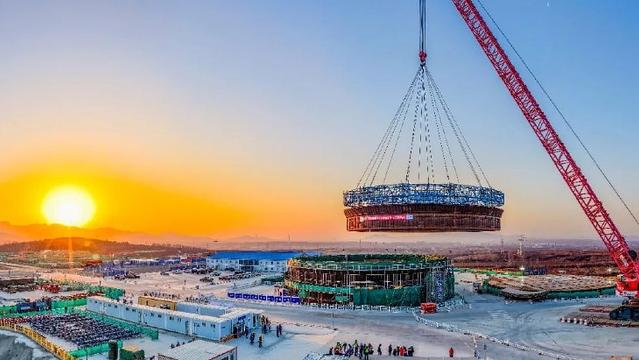
It took 4.5 years to build one of the recent nuclear power plants in China and if we buy all our PV & inverters from them they clearly must know what they’re doing, don’t they?
@kravietz @notjustbikes
China can, but nobody else. They have teams of people who know how. Nobody else does. In order to get where china is right now, it took approximately last two decades.
Despite all this, they were connecting 2 or 3 reactors per year. Only now aiming at 10.
https://www.osel.cz/14443-jaderna-energetika-v-roce-2025-jaderna-renesance.html
Jaderná energetika v roce 2025 – jaderná renesance

V letošním roce nastala řada klíčových průlomů. V Číně se dokončuje první klasický malý modulární reaktor ACP100 a testovací reaktor s kapalným palivem poprvé realizoval thorium uranový cyklus. V Kanadě se začal budovat první západní malý modulární reaktor BWRX300. Tempo rozvoje jaderné energetiky se zrychluje po celém světě. V Evropě je to zatím dominantně v oblasti přípravných prací, ale v Asii se jaderné bloky intenzivně budují. Roční výroba elektřiny z jádra v roce 2024 překonala stávající rekordní úroveň z roku 2006.

@martincigan

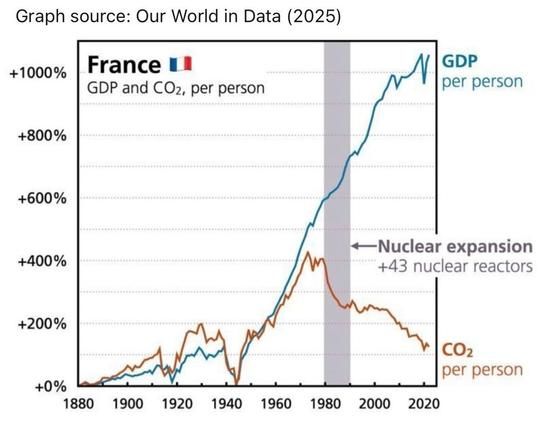
It took France around a decade to complete their Mesmer plan. China made a decision and executed it, their nuclear industry did not appear magically out of thin air. But if we in the EU only want to seek reasons “why we can’t do shit” then it will apply to renewables just as well to nuclear 🤷
@kravietz
You are only reinforcing the point. It took France 10 years to scale up and then some more years to build up the fleet. First CP0 construction started in 1971. It took China longer to accomplish similar in ability to build and they did not yet complete the buildup.
And still they aim at 15% of the electricity mix in long term.
https://world-nuclear-news.org/articles/podcast-chinas-plans-for-new-nuclear-capacity
How long would it take to scale up in Europe or usa?
Podcast: China's ambitious plans for new nuclear capacity

China is leading the way in building new nuclear energy capacity but what are the plans for the future? François Morin, China Director at World Nuclear Association, sets out the scale of the country's ambitions.  ;

World Nuclear News
@martincigan

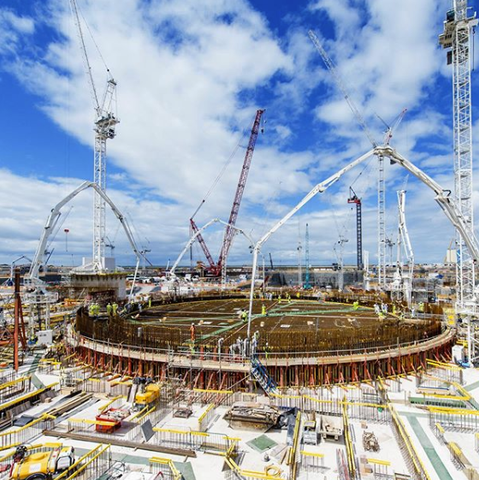
US and EU always have and had the competences, all nuclear project delays were result of hostile business and regulatory enrichment, as documented in this Hinkley Point C analysis:

https://medium.com/generation-atomic/the-hi...

Just to be clear, the same problem applies to large renewable projects such as Dutch Energy Island or many Polish on-shore wind farms.
The Hinkley Point C case: is nuclear energy expensive?

Discussions about the application of nuclear energy as part of the solution to the climate/energy challenge often falter on the perceived…

Medium
@kravietz
I personally know a few people working on one particular project. The know-how was gone. Dead or retired.

@martincigan

Somehow they managed to complete Olkiluoto 3 and Flamanville, which are now long operational, and Hinkley Point C construction continues.

@kravietz
For twice the budget and thrice the time.

@martincigan

As explained in the article I linked, there were very specific reasons for these delays - and they were unrelated to the technology. The same reasons are now plaguing Denmark Energy Hub off-shore wind farm and Polish on-shore farms, but this detail somehow skips the attention of the renewables audience 😉

@kravietz Large project are plagued by the same issues. There are only large projects with nuclear energy. With renewables, there can be large as well as small.

@martincigan

Small renewable projects can’t power industry, hospitals, trains etc. That’s why the large projects are started in the first place.

Small renewables can of course significantly reduce before-the-meter use of electricity, which is great.

@kravietz Wind and solar are much more repetitive than anything else. So is drilling in shale, perhaps once geothermal.
But once you come up with artificial islands, well, not so much.
Repetitio mater studiorum.
@notjustbikes My theory us that it's smart, liberal, pro-science, pro-enviornment. But they grew up in the 70s-80s, when nuclear was the "cool" solution to oil. They are intelligent and educated people, but their information is out of date.

@notjustbikes

There seems to be a widespread desire to forget that there is such a thing as a battery.

@notjustbikes I'm not an electrical engineer, but it seems to me that the concept of base load is useful because, at least for now, we don't have enough yearly renewal production to cover the consumption needs. But we also need better ways of using excess production. Two of them are storage and hydrogen production. It would probably make businesses sense for renewable power plants to invest in plugging storage or hydrogen production solutions to their operations.
@notjustbikes Nuclear would be great if there weren't those small issues you mentioned. That is valid for new nuclear power plants. What I don't think makes sense are decisions like Germany's of unplugging the nuclear power plants they already had working. If there was a commercially viable solution for the small modular power reactors, that would be a good solution.
@notjustbikes in terms of storage, though, the current battery solutions don't look like a viable solution as they are expensive and their production and recycling environmental track records aren't great.