
How can we develop new antibiotics against the most devastating infections with antibiotic-resistant Gram-negative bacteria?

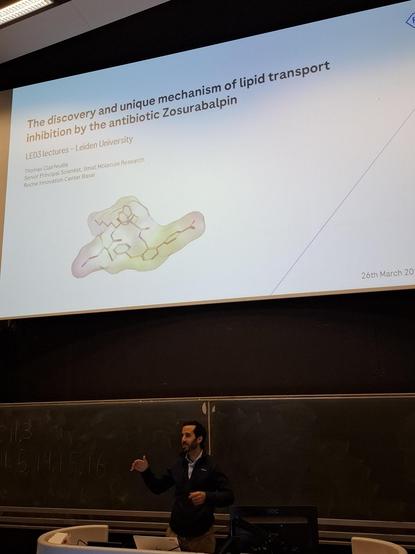
Thomas Clairfeuille gave an inspiring lecture on this topic in his @LED3hub Lecture, in which he described the discovery and development of the antibiotic zosurabalpin against carbapenem-resistant Acinetobacter baumannii (CRAB). (1/7)
https://www.nature.com/articles/s41586-023-06873-0

He started with the interesting insight, that synthetic compounds can have a big advantage over natural compounds for the development of antibiotics as they have not already undergone a long history of evolutionary selection that can lead to resistance development in nature. "Resetting the clock on resistance". (2/7)
He then talked about the discovery of zosurabalpin based on the screen of a library of cyclic tripeptides and gave important insights into all the challenges that they faced and resolved during the development of this compound. (3/7)
Next, he discussed the elucidation of the mechanism-of-action of zosurabalpin as an inhibitor of LPS transport using resistance development assays in combination with radioligand binding and functional assays. (4/7)
He then presented the structural elucidation of the binding of zosurabalpin to the LPS transport complex using cryoEM, which gave exctiting insights, why the compound is such a potent antibiotic and how resistance could develop. (5/7)
He finished with an interesting glimpse into the further optimization of the zosurabalpin scaffold using structure-guided design to result in amazing potency and broadest activity against the most resistant clinical strains. (6/7)

He also hinted at a new class of synthetic antibiotics that is in current development at Roche. Hopefully there are many more new antibiotics in the future. (7/7)

#Antibiotics #DrugDiscovery #DrugDevelopment #ChemBio #Chemistry #cryoEM #AMR #Resistance #Bacteria #SAR #Synthesis #Zosurabalpin