The nice thing that happened in class today:

Grade 5 students solve a puzzle where they put cuneiform numbers in order (there is no guidance, just work with the symbols, how do you order them?)

I told them they are like archeologists cracking a code. They did it!

"But where is zero?"
"It wasn't invented yet." I said this seriously. I mean ... it's true.

Later that day the same student asked if it was a joke. I got to tell them no! Zero had to be invented. Everything had to be invented!

This student wants to "invent a new zero" so. Watch out everyone. Math is about to get a lot more... IDK ... but MORE.
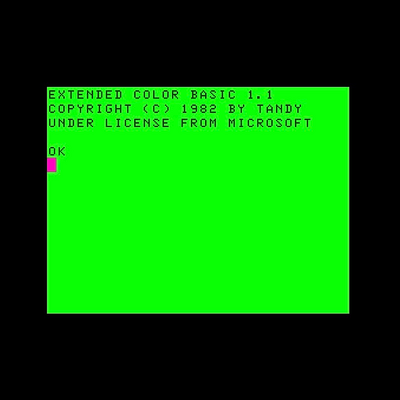
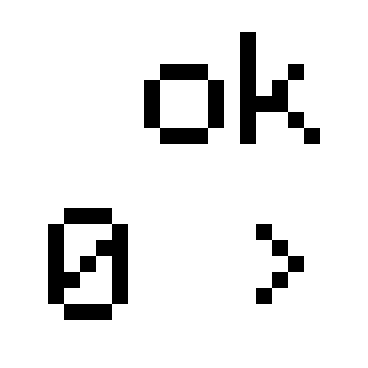
@futurebird for a while there, no joke, computing was flirting with upper and lowercase zeroes…
@mhoye @futurebird Typography has uppercase and lowercase zeroes, but they are usually called lining and old style figures :)
@futurebird More... Zero? They do know what zero plus more zero is, right? 🤭
@faithisleaping @futurebird I mean, nonstandard analysis and infinitesimals are a thing, so maybe they're just really forward thinking.

@eleanor
a really great thing that has an absolute conspiracy against it.

@faithisleaping @futurebird

@futurebird new Zero-Plus(tm), for all your complicated computational needs!
@futurebird
[sighs in iEEE 754 signed zero]
@futurebird …or perhaps less 😜
@futurebird this story has saved my day from being bleh.

@Unixbigot @futurebird damn warp core runs on taking the local warp constant and dividing by the number of seconds since midnight. It crashes at midnight with an F_DIV_ZERO error.

https://aus.social/@Unixbigot/115896165022017011

Kit Bashir (@[email protected])

“We’re out of warp, what’s wrong?” “Nothing, it happens every morning at this time. Just reset it. You haven’t been getting that on B-shift?” “No, and how long—holy crap!” “What?” “Warp degradation has added three days to our ETA so far. TELL ME if stuff breaks; if we miss the book sale on Rigel Four everybody’s getting Curium ash for christmas.” #Tootfic #MicroFiction #PowerOnStoryToot

Aus.Social

@becomingwisest @Unixbigot @futurebird

We would've figured this out sooner had there been the usual warp core dump, but ever since StarshipOS 11.0 fricking systemd has hidden them away somewhere stupid.

@futurebird
I've been in the late-capitalist dystopia long enough that "new zero" sounds like "now you need an app and a subscription to do math".

@futurebird @Unixbigot

last time this happened we got Javascript and the infamous "WAT" talk lol

@futurebird

Hee-hee, topologist have already got "the line with two origins", but we gotta let this student run free and see what they come up with on their own.

@futurebird @Unixbigot It’s about to get nothing. More nothing. Which is the same, but also more. Stuff this, I’m going to go check into Hilbert’s Hotel. Call me when it makes sense.

@futurebird Actually I have a (very undeveloped) concept of a lesson with respect to the symmetry group of the square.

Basically, after the class has been introduced at least to the intuitive approach to the symmetry group of the square, you give them a problem where they have to "solve" a substitution cipher from {a,b,c,d,e,f,g,h} or whatever to the symmetry group of the square, given the multiplication table of that substitution cipher.

The lesson here is that this problem doesn't have a single unambiguous answer: rather you can solve the substitution cipher for a few elements like the identity element and the "rotate by 180 degrees" element, but you can only classify the rest of the substitution cipher up to the symmetry group of the symmetry group of the square, more technically known as the automorphisms of D_4.

I was thinking maybe there's an angle to develop as like an alien linguist as part of a Star Trek science team, and perhaps even make it a trick question by making it seem like they are expected to find the one "true" solution.

It turns out that the automorphisms of D_4 is isomorphic to D_4, which is definitely a very yo dawg moment, but it turns out this is very much accidental. Groups G that are isomorphic to their own automorphism group include all complete groups, but this is one of a handful of sporadic exceptions of a group that is not complete but also isomorphic to its automorphism group. This includes D_4, D_6, D_∞, and may include a few more unknown examples.

It turns out that all the symmetric groups (i.e. groups of permutations of n elements) are complete except for n=2 and n=6. The n=6 exception actually pretty interesting, and @johncarlosbaez likes to talk about it.

https://github.com/constructive-symmetry/constructive-symmetry/tree/master/D002_Book_of_Algebra

https://math.ucr.edu/home/baez/six.html

constructive-symmetry/D002_Book_of_Algebra at master · constructive-symmetry/constructive-symmetry

A Philosophy of Math Education. Contribute to constructive-symmetry/constructive-symmetry development by creating an account on GitHub.

GitHub

@leon_p_smith @johncarlosbaez

I wonder if putting it in an addition table format might make it easier?

I've been wanting to do some symmetry group stuff. Bookmarking this for summer. I'd need to play around a lot to see if I can find a simple angle.

@futurebird @johncarlosbaez addition table, multiplication table, it doesn't matter, its an abstract operation. But yeah, I do call it "addition", not multiplication, at least when introducing this stuff.

I think I have a reasonably simple angle for introducing the symmetry group of the square, and that's (imperfectly) represented in the repo as it currently exists. You should print out the calculator front-to-back and play with it for a bit.

I have somewhat developed ideas about how to move from the intuitive approach of my mechanical number line for D_4 to implementing the arithmetic of D_4 using pencil-and-paper calculations. Namely, I think the semidirect product, the 2x2 integer matrix approach, and the permutation-based (i.e. subgroup of S_4) approach are particularly notable.

I don't know where I'd place the lesson on automorphisms, as honestly it need not depend on anything other than the intuitive approach. On the other hand, I'd probably want to prioritize at least one or two of the pencil-and-paper approaches to performing addition in D_4.

@futurebird @johncarlosbaez Anyway, my point is that "decoding alien hieroglyphs" is actually a pretty good way to start to get an intuition for what an automorphism is.

For example, if you were given all the alien hieroglyphs that correspond to their integers, and given access only to their addition table, then you'd be able to figure out what 0 is, as any identity must be unique, if it exists. Similarly you'll be able to figure out which two hieroglyphs correspond to ±1, in the sense that you could call one of them "1 up" and "1 down", and from there figure out what "2 up" and "3 down" are, but you'll never be able to decide if "up" correponds to positive and "down" corresponds to negative, or vice-versa.

This intuition is captured by the fact that the group of integers under addition has exactly one non-trivial automorphism: we can negate everything everywhere and things will still work out. (And in fact, this is the only such change that is guaranteed to work perfectly in all cases.)

Of course, if you then gain access to the alien's multiplication table, you can multiply "1 up" by "1 up", and that answer will correspond to the positive direction. Thus we can fully decode the alien's integers, which corresponds to the fact that the ring of integers exhibits only the identity automorphism: when multiplication is involved, we can't just flip everything's sign and expect things to work out.

This intuition is a bit hard to operationalize, though, as the addition tables are infinitely large. In reality, if the alien heiroglyphs are truly capable of expressing arbitrarily large members of an infinite set, such as the rational numbers, the notation must involve some regularity. That regularity can provide insight into the alien's interpretation of their rationals in ways that don't correspond to what could be learned from their operation tables alone.

The automorphisms of the group of rationals under addition correspond to multiplying by a non-zero rational number, capturing the intuition that you'll never be able to definitively decode the scale of the alien's unit of measurement from the addition table alone. But if you see something like 1/10000, you can guess it's probably not the unit, versus something much simpler like 1/1.

However, the field of rationals exhibit only the trivial automorphism, meaning that you could fully decode alien rationals from their addition and multiplication table.

Switching to a finite system avoids these complications, allows the use of a simple substitution cipher which prevents students from making inferences based on notation, and also is capable of providing much more interesting examples of automorphism groups than your more widely-appreicated number systems can.

@futurebird

Introduce them to 10-adic numbers, where there's more than one zero.

@futurebird If there can be multiple infinities...just sayin'.

@futurebird Dedekind showed that any two models of Peano arithmetic are isomorphic. In laymen's terms, if there is something that works like we expect arithmetic to, it will have just the one zero.

This is not obvious, and your student is to be commended for trying things out!

@futurebird different from undef, null, positive zero, and negative zero? ... okey...

@futurebird …and I thought things got complex when multiplying by `sqrt(-1)`.

Then again IEEE-754 defines both +0.0 and -0.0 as distinct values.

@futurebird
I hope they name it better than imaginary numbers
@futurebird less is more in this case
@futurebird but in seriousness, there is more actual mathematics in this question (can I have a second zero) than in all the calculations we do in school "maths".
Have them write down rules how to use and calculate with their new zero and have them check if they are consistent, and think about a way to check if indeed the two zeroes are truly different numbers, even if they fail to carry that all out, they'll learn a lot about the spirit of mathematics beyond the very limited confines of school "maths"
@futurebird I wish I had that “math” class that inspired “zero indignation” - 😉😀😁😆🤣
@dahukanna @futurebird But Dawn, Myrmi, we kinda did, dint we? Like, how would we know, otherwise?

@dahukanna @futurebird I was once asked what book a 13yo should read about math. I said "give'em Eric Bell's _Men of Mathematics_".

The book is well-written, and it's full of scurrilous gossip and silly legendary bullshit.

But at 13, we don't really need to know the truth of everything. We need to know that math really *matters*, we need to know that actual *people* made math.

Bell's a great story-teller, and at 13 we need to know we are part of a story.

@GeePawHill - 1,000,000%

@futurebird has me remote attending her class making cards right now for that exercise, engaging my curiosity and play. I would be literally skipping iin to class, waiting in anticipation for “math-drama” challenge.

I’m NOT doing the work because of “standard” test and I was not thinking about “inventing zero” pre-university.

@futurebird C has at least four kinds of zero. I’m sure there’s space for at least one more.
@futurebird
They could invent 0+0i, with a zero imagination 😀

@futurebird admittedly I'm not the best at math and I do have an anthropology degree (MesoAmerica was one of the places that independently invented Zero but I'm sure you already knew that)

But I can't FATHOM counting or math without zero.

There must be a way to make sense of it, but I haven't come to that answer

@lapis @futurebird The concept of "nothing" was known. What people didn't have was place-value number representation.

So there was no easy way to multiply by, say, 10 (assuming your base was 10).

Compare arithmetic with roman numerals versus arithmetic with indo-arabic numerals.

@ersatzmaus @lapis @futurebird
The Romans used an abacus or similar for arithmetic. Or slaves that used other number systems.
Roman Numerals were only used to record numbers.
Read Georges Ifrah
"From One to Zero" revised as "The World's First Number-Systems" (The Universal History of Numbers 1).
The ancients knew about zero, but the big breakthrough was using it for place number system instead of a gap.
The Romans invented concrete, bureaucracy & some war machines. Most else was copied.
@raymaccarthy @lapis @futurebird I'm aware, I was using the roman numeral system as an example. I did mention place-value as the key innovation.
@futurebird the additive identity 😊
@futurebird And of all the numbers, zero had to be invented the most!

@futurebird in all seriousness that’s awesome. They were engaged and interacting.

Most importantly made an awesome joke lol

@futurebird they say the Roman Empire fell for lack of any way to indicate successful exit of their programs

@futurebird In a more perfect world, I would have had you as a teacher when I was a kid. Even for a few months.

I'm so thankful that there are kids out there, right now, with you as their teacher.

@futurebird I'm curious...thinking about this...but does the concept of zero in mathematics come from rotational calculations? You can't have Pi without zero. Is the lack of zero, more about the approach to keeping track of grain or other crops?

The numbers we count, are the ones we are tracking?

@futurebird

I get their surprise, I was already in university when I learnt that the Christian calendar that I use every day (not sure how it's called in English, the one with years BC and AD) doesn't have a year zero between 1 BC and AD 1.

@futurebird

Summer reading

Zero: The Biography of a Dangerous Idea

https://en.wikipedia.org/wiki/Zero:_The_Biography_of_a_Dangerous_Idea

Zero: The Biography of a Dangerous Idea - Wikipedia

@futurebird
A good video on the history of 0:
https://youtu.be/ndmwB8F2kxA
Why the number 0 was banned for 1500 years

YouTube