 Burstaholic
 Paul Cantrell
omg, THIS
I was bordering on apoplectic when I first heard about K-12 teachers forbidding students from using Wikipedia but then teaching them to use LLMs.
🧵
https://www.mcsweeneys.net/articles/hi-its-me-wikipedia-and-i-am-ready-for-your-apology
omg, THIS
I was bordering on apoplectic when I first heard about K-12 teachers forbidding students from using Wikipedia but then teaching them to use LLMs.
🧵
https://www.mcsweeneys.net/articles/hi-its-me-wikipedia-and-i-am-ready-for-your-apology
I recently found myself comparing the articles about the Louisiana Purchase on Britannica (that flag-bearer of acceptability in K-12 education) and Wikipedia (still forbidden in many schools). It was…illuminating.
The Britannica is better written. It flows well. It is approachable. It proceeds from broad overview to coherent detail in a way that helps meet the reader where they’re at. The professional editorial oversight shows.
1/
The Wikipedia article is pretty good, but it’s overwhelming. It flows poorly. It lurches from big picture to over-specific details in a way that makes it hard to approach the article if you don’t already know the material.
The cacophony of voices behind it, though well-synthesized, still shows.
2/
The Wikipedia article also includes this sentence in its opening paragraph:
❝However, France only controlled a small fraction of this area, most of which was inhabited by Native Americans; effectively, for the majority of the area, the United States bought the preemptive right to obtain Indian lands by treaty or by conquest, to the exclusion of other colonial powers.❞
Britannica has nothing like that. It discusses the Louisiana Purchase without a single mention that the indigenous people of North America even exist.
3/
The most Britannica manages to mention of what was actually in that land is this:
❝Much of the territory turned out to contain rich mineral resources, productive soil, valuable grazing land, forests, and wildlife resources of inestimable value.❞
Not a single mention, AFAICT, of the fact that there were already people there.
4/
I remember being extremely confused about this as a kid when I first heard about the Louisiana Purchase. How could the US “purchase” land that nobody from the nation had even explored? Didn’t the people who live there own it? Huh?!?
Wikipedia, for all its messiness, answered Young Paul’s question. Britannica buried it.
But guess which one teachers are •still• trying to keep out of education.
5/
One muddle-headed way of looking at this is “oooooo Wikipedia is wooooke blah blah.”
The better way of looking at it is that Wikipedia lets people jump in and say “What?! No, you are totally missing something important!” It actually •does• the thing the radical centrists (falsely) claim they want: it opens itself to different perspectives.
6/
As humans, we •all• live our lives with our heads up our butts — including but not limited to the Britannica writers. If we’re lucky, someone will help us see what we’re missing. If we’re wise, we listen. At its best, that’s what Wikipedia can do — and in public, at scale, for everyone.
7/
I remember years ago seeing a study that diligently compared the factual accuracy of Britannica vs Wikipedia for a few select articles (will update this post w/link if I find it).
They found a similar rate of factual errors. The short of it: Wikipedia is chaotic and messy, but Britannica often had missing or out-of-date information. Wikipedia had higher noise, but also a higher correction rate. Factuality came out about a wash.
[UPDATE] I think it was this study: https://www.nature.com/articles/438900a
8/

Jimmy Wales' Wikipedia comes close to Britannica in terms of the accuracy of its science entries, a Nature investigation finds. UPDATE: see details of how the data were collected for this article in the supplementary information . UPDATE 2 (28 March 2006). The results reported in this news story and their interpretation have been disputed by Encyclopaedia Britannica . Nature responded to these objections .
Wikipedia has •numerous• problems, but it belongs in education.
And right now, per the McSweeney’s OP, it’s a lifeboat of humanity in a sea of slop.
For reference, snapshots of the two articles concerned at the time of this writing:
https://web.archive.org/web/20250923124231/https://www.britannica.com/event/Louisiana-Purchase
https://web.archive.org/web/20250917014942/https://en.wikipedia.org/wiki/Louisiana_Purchase
/end

Louisiana Purchase, western half of the Mississippi River basin purchased in 1803 from France by the United States. The purchase doubled the size of the United States, greatly strengthened the country materially and strategically, and provided a powerful impetus to westward expansion.
@inthehands
"Britannica has nothing like that. It discusses the Louisiana Purchase without a single mention that the indigenous people of North America even exist."
🤔
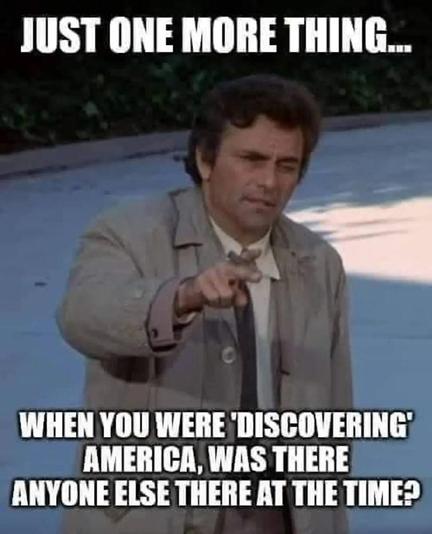
@inthehands I used both Wikipedia & Britannica (as well as a plethora of other secondary sources) in research for my philosophy book (Appetite for Antithesis, pub. 03/2025). Wikipedia was, by far, the more helpful as far as amount of factual information, number of listed sources, density of subject matter, and readability. It wasn't perfect (nothing ever is), but it got me over more research hurdles than I care to remember! 😆
I've been a financial donor to Wikipedia for years. SO VERY WORTH IT.
@inthehands When Wikipedia launched it was vilified by educators, when the problem was using a page as a reference. A Wikipedia page's References can be a treasure of leads to more information.
I like when there's a lot on a Wikipedia page, as long as there is also an ELI5 opening paragraph, a broad overview of the topic. Sometimes, that's all I want. Sometimes I want to do a deep dive into a topic. I appreciate that Wikipedia is a free to use portal for learning. I donate to them when I can.
@inthehands This is going in my current handwritten notebook of collected quotes:
"As humans, we •all• live our lives with our heads up our butts.... If we’re lucky, someone will help us see what we’re missing. If we’re wise, we listen."
--Paul Cantrell,
Mastodon,
30 Oct 2025
time to re-read Jorge Luis Borges’ short story, Tlon Uqbar Orbis Tertius.
it’s the story of a man who "discovers" a new country by reading a lost volume of The Anglo-American Cyclopaedia; a "fascimile" of the Encyclopedia Britannica.
Anglo-American Cyclopaedia https://www.borges.pitt.edu/i/anglo-american-cyclopaedia
i was never able to sit in one of his classes but sneaked out of my high school to shake his hand on his last day as a visiting professor at University of Puerto Rico.
@inthehands There is this sidebar: https://www.britannica.com/question/How-did-the-Louisiana-Purchase-affect-Native-American-peoples
Here is the Web Archive link: https://web.archive.org/web/20250214185216/https://www.britannica.com/question/How-did-the-Louisiana-Purchase-affect-Native-American-peoples
@EdBruce
Wow.
It’s somehow even more damning that they actually wrote this — they’re aware of the problem!! — and not only failed to integrate into the main article text, but AFAICT did not even •link• to it from the main article. It doesn’t even show up if you click “See all related content.”
@inthehands I finished my BA in History in '21 (only 34 years after I began, but who's counting) and in the capstone class our professor asked how many people considered Wikipedia useful in research. Most of the class said no, and he devoted a section of the class to teaching us how to use Wikipedia effectively (spoiler: check the citations, read the linked articles, check their citations, etc.) for scholarly research. We should be teaching that in middle school.
Also, fuck LLMs.
@skoombidoombis @pooserville @inthehands this is the way I learned it, and I think it’s the right approach.
This is also how I came to think that Wikipedia is not the source of knowledge, it is the destination
(Seems even more so now that so much else is overrun with slop)
@inthehands
It could have been worse. The teachers could have been using the LLM-AI edited one that's ripped off from Wikipedia, where the LLM-AI owner is an actual Neo-Nazi.
Wikipedia, like printed versions is only a starting point for research.
Hard agree.
@inthehands I think they need to be clear that *using* Wikipedia is fine, but it should never be a *citation*.
Wikipedia is a collation of sources, all of which are fair game.
@solitha
Even more fundamentally — because genuine care about citations is perfunctory or nonexistent in practice until college, or •maybe• a very fastidious high school class — Wikipedia can be a darned good as a starting point, or for a quick “usually not too wrong” answer.
Student do need to learn that you can’t take Wikipedia or any other source (primary or secondary) as complete truth. They also need to learn how to work with provisional knowledge: “Look, not 100% confident, but this Wikipedia article that challenges what I thought means it’s •probably• me that’s wrong.”

 Kid Mania
 Court Cantrell does not comply
 Sensible Crone
 Still Nmyownworld
 Avi Rappoport (avirr)
 Irenes (many)
 lj·rk
lj·rk Shaun McDonald
 Alanna 🏳️🌈🏳️⚧️
 Ian K. Rogers ikr?╭ರ_ಠ
 your auntifa liza 🇵🇷 🦛 🦦
 Ed
Ed peter honeyman
 Rachael L
 Jargoggles
 Thinkaholic is 🐸 antifa
 Nicky🦨✌️
 ShadSterling
 Panicky_Patzer
 Ray McCarthy
 Sune Auken
 lemgandi
 Solitha
 Mike would rather be running!
 bmoreinis=>journa.host