
Oh hey cool, an op-ed I wrote is now published!

TLDR: we need *fewer* satellites, each with *longer* operational lifetimes. Engineers: that's your challenge.

https://www.livescience.com/space/astronomy/what-goes-up-must-come-down-how-megaconstellations-like-spacexs-starlink-network-pose-a-grave-safety-threat-to-us-on-earth-opinion

What goes up must come down: How megaconstellations like SpaceX's Starlink network pose a grave safety threat to us on Earth

Thousands of satellites with incredibly short lifetimes are being sent up into low Earth orbit. When they fall back down they're fireballs of pollution — and what doesn't burn up hits the ground.

Live Science
@sundogplanets Bookmarked to read this evening!
@sundogplanets Engineers? They can do it, no problem. It's the investors who need to be convinced.

@sundogplanets

Higher needed too. Tax low orbit satellites a lot. UN money.

@kevinrns @sundogplanets Low orbits decay naturally. Higher orbits mean when a satellite stops working, it just sits there as a collision hazard.

@michaelgemar @sundogplanets

Degrading low orbit satellites are changing the chemical make up of the upper atmosphere.

Life is possible, for example, because of the ozone layer, cutting damaging radiation. But the Ozone layer is just oxygen molecules far apart, and peaks at 8 to 15 parts per million.

https://www.space.com/starlink-satellite-reentry-ozone-depletion-atmosphere

Air pollution from reentering megaconstellation satellites could cause ozone hole 2.0

When defunct satellites burn in the atmosphere, they leave behind chemicals that could damage the ozone layer and affect how much light Earth absorbs.

Space
@kevinrns @sundogplanets Right, but that’s just an argument for long-lived and durable satellites in LEO, and not to put them in orbits where they’ll remain to collide with stuff if things go wrong. (Although if we ever get usable tugs/servicing vehicles that could deal with dead satellites, that would change the equation.)

@michaelgemar @sundogplanets

I am MUCH more concerned with the atmosphere than lost satellites, crashes or missing services.

And no, its not just an argument for more low earth orbits, its a call to everyone to notice the people responsible for space are mostly jackasses now, putting us in danger in increasing numbers of ways.

Responsible, not interested in, or working in, and the "not jackasses" are being fired.

@michaelgemar @sundogplanets

Satellites should be taxed by the UN and a "Permit to Orbit" purchased, after guaranteeing de-orbit systems and safety, including bonds to cover costs should contracts be broken.

@michaelgemar @kevinrns @sundogplanets Most geosynch satellites are moved out of their orbit at EOL. So new ones can be placed.
@sundogplanets At first read that as that we needed there to be more satellites with short lifespans and was very confused. You mean fewer over all and also longer lives for those that exist... right? I get it... honest...
@Antiqueight haha yes, that's a good point. Will edit that for clarity.

@sundogplanets

Imagine if we lived in a world where cooperation and collaboration were the norm, instead of competition and rivalry.

We could do so much more, especially with the trillions we'd save on weapons and armies.

@PhoenixSerenity

@EricLawton @sundogplanets @PhoenixSerenity

Marie shared the solution a long time ago - problem? Our culture is the antithesis of this

@EricLawton @sundogplanets @PhoenixSerenity this is only one of the ways in which capitalism is a denial of service attack on human potential
@EricLawton @sundogplanets @PhoenixSerenity I'm not sure History sustains that hypothesis. Competition and rivalry, as well as war, together with cooperation and collaboration, got us to where we are. Humanity includes both sides of the coin. You're better off working with that than wishing for something that doesn't exist. There are people who want more, and people who are contented, people who are evil, and those who are not. And all the gradients in between. That's what is there to work with.

@Disputatore @sundogplanets @PhoenixSerenity

I know what there is to work with.

The question is, what do we do with that, and how can we do it.

Simply accepting the status quo isn't acceptable.

@EricLawton @sundogplanets @PhoenixSerenity systems have to be designed to remove the incentives to certain behaviours. In the end, there will always be a need for courts, law enforcement, and armies.

@Disputatore @sundogplanets @PhoenixSerenity

Those systems need not resemble the ones in eurocentric countries.

Other cultures have done things differently.

And they don't need to be on the scale of, for example, spending $trillions per year on the military.

@EricLawton @sundogplanets @PhoenixSerenity they may not need to, but that doesn't mean that they won't. The borders of the countries in Africa and the Middle East were all artificially designed by the colonial powers. There are loads of ethnic and religious tensions that now and then explode into conflict.

Then there is the fact that military spending isn't necessarily for war. It can also be to avoid it.

China isn't an Eurocentric country and yet...

https://worldpopulationreview.com/country-rankings/countries-currently-at-war

Countries Currently at War / Countries at War 2025

Discover population, economy, health, and more with the most comprehensive global statistics at your fingertips.

worldpopulationreview.com

@sundogplanets Just spitballing here.

The satellites would be larger and more expensive. They'd still want thousands of them to create a worldwide network. Then we'd have thousands of larger satellites occasionally firing thrusters while crisscrossing the sky and interfering with ground-based observations.

Not sure.

A solution would be to stop doing this and to pay for ground-based relays. We can do that, too. We don't have a billionaire strung out on drugs funding it.

The places where ground-based coverage is impossible could be serviced by drones. They don't stay in the air as long, so there would be expense there, too, but no costly launch vehicle, so it's a short-term win, I think. But Elon can't monetize it all for himself, so I figure it won't happen.

@steter There is already satellite internet from geosynchronous orbit. It's just slower than Starlink. But Starlink is absolutely not viable the way it's being built, so I guess that's what remote users will be stuck with.

@sundogplanets The lag time is significant. Ukraine uses it in war. They won't downgrade.

There would be a way to use fewer of them, targeting areas of conflict, while ground-based and drone systems could be used everywhere else.

Elon's DOGE hacked the nation. He can set his own price now. Hm. It might work.

@steter @sundogplanets I vaguely remember Alphabet having a project to make extremely-high-altitude balloons to provide internet access, what happened with that?

Lower latency than satellites, they can hold still or move slow and have much less disruption to switching signals from one to the next. Balloon-to-balloon relaying might be harder or less effective, but still doable. Intact recovery and refurbishment would be possible. Sounds like a better option to me

@steter @sundogplanets that (suspected?) Chinese high-altitude balloon we shot down (after it had crossed over the entire United States) was the highest missile strike ever done, high enough some people weren’t sure those weapons would be reliable at that altitude, so as-high-as-possible communications balloons might even be usable over a war zone

@sundogplanets @steter yep, you can't beat the speed of light. Lower orbits give lower latency, higher orbits give higher latency. People demanding shorter delays will keep paying for those lower orbits.

Using balloon-lofted relays seemed like a pretty good idea, but you can't rely on them in warzones. And they probably can't stay aloft for decades at a time either. There's really not a lot of great alternatives, if you want wide coverage and low latency.

@sundogplanets A good read, by the way. I hope you get lots of eyes on it.
@sundogplanets Great article and I totally agree.

@sundogplanets

Congrats on your publication! 👍

"...we need *fewer* satellites, each with *longer* operational lifetimes. Engineers: that's your challenge."

Seems to me that it could also be a #governance challenge. The #Space near #Earth is basically a village green. Putting junk up there willy-nilly could be considered a form of #pollution. We know that pollution CANNOT be controlled by #free_markets.

Just sayin'...🤷‍♂️

Edit: Above responding to your TLDR. Reading deeper you end with...

"Without far-reaching, international #regulation or self-imposed limits from satellite companies, current practices in LEO threaten the planet, and our ability to explore beyond it."

Agreed!

@sundogplanets One solution larger sats with more spot beams designed for on orbit servicing like Hubble.

@sundogplanets

Thank you! Not quite as cute as goat photos, but very interesting.

Have an orbital garbage collector, or better yet catch them and relaunch them back into proper orbits.

@sundogplanets

@sundogplanets we need a spaceship with a weapons system to just blast 'em out of there.
@heislertecreator2049 @sundogplanets That might easily multiply the problem by creating more small debris. You need to remove them in a *controlled* way. No easy shortcuts.
@martinvermeer @sundogplanets I think you're right. Something like a Canadarm with a magnet to retrieve the object as salvage? idk
@heislertecreator2049 @sundogplanets Something like that, only many satellites are not ferromagnetic. Capturing in aerogel might be an option.
@martinvermeer @heislertecreator2049 That's a lot of aerogel! Capturing huge pieces of garbage traveling many times faster than a bullet? Sounds hard.
@sundogplanets @heislertecreator2049 Yes, it would need a lot of scaling up. But then, the problem is challenging! And no, the aerogel would only be for the micro stuff.
@martinvermeer yeah that occured to me to. A something would have to be going alongside @ near/the same speed in an exact or reasonably close track and then some net capture or claw on the end of the arm to grab it?

@heislertecreator2049 For bigger objects, yes. For micro stuff, perhaps aerogel.

https://www.jpl.nasa.gov/news/ideas-that-gel/

Ideas that Gel

The most obvious ideas are not always clear. Take aerogel for instance, a transparent, smoky blue substance that's been especially manufactured to bring home a piece of a comet, among other things.

NASA Jet Propulsion Laboratory (JPL)
@sundogplanets That's the way they used to build them!
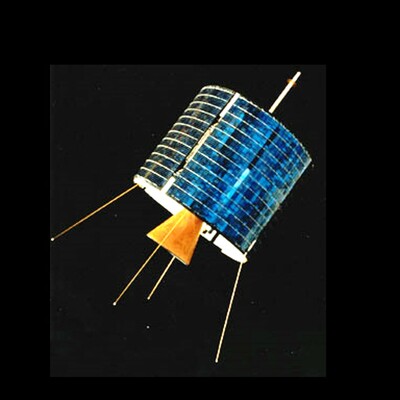
l@[email protected] First, I basically agree with your main point. But, it is not a "challenge" for engineers - look how long the Hubble space telescope has been in orbit. The problem is billionaires who only look out for themselves. Also the picture that went with your article is a bit misleading: a short while later, those satellites would be invisible optically due to no longer being in direct sunlight, but it is difficult to create an image applicable at radio frequencies.
To add a bit more: I once spent a week or two NRAO in West Virginia. To get around, you had to use vehicles with diesel engines, which don't have spark plugs. Those "sparks" create a lot of noise that interferes with the sensative electronics used in radio telescopes. It's no surprise that clusters of satellites continually transmitting in low earth orbit would be a problem.

@bzdev

Yeah, this seems more like a regulatory challenge than an engineering one, but IAmNotAnAstronomer so 🤷‍♂️

@sundogplanets

That's a really nice article!

Incidentally, this morning I came across a writeup about the state of SpaceX in general. I used to grudgingly accept that they at least seem to know their rocketry.

Not so much it turns out.

https://www.planetearthandbeyond.co/p/starship-was-doomed-from-the-beginning

Starship Was Doomed From The Beginning

The fatal flaw SpaceX can't overcome.

Will Lockett's Newsletter

@DanielEriksson @sundogplanets That's a good analysis, and I agree up until the last point.

You absolutely can make a reusable upper stage work, but it requires a very different design philosophy to the one that Starship has used so far. That means either wings, which Musk has an irrational hatred of*, or a plug aerospike.

Stoke is actually building the latter, and my personal bet for a company that will eat SpaceX's lunch.

*After SpaceX's deal with Stratolaunch to make a Falcon with wings fell through in circa 2011, Musk banned wings. The stub wings on Starship thus have to be called "flaps", even though they are strictly speaking wings.

@simonbp @DanielEriksson @sundogplanets people have been arguing about what to call starship’s appendages, but I’m in the “not wings” camp. They have more in common with air-brakes on fighter jets or the top surface spoilers many jets have in their wings. There is never flow from leading to trailing edge, it is always from root to tip.

Stoke has a neat approach. It kinda is an aerospike but also functions as sort of gas cooling for the heat shield in re-entry, which is probably more important.

@DanielEriksson @sundogplanets he’s right about the fuel piping problems they don’t seem to be able to fix. But there is no evidence of problems with the belly-flop. The last couple v1 flights did ok in the recently and landing phase. Even the one that burned a hole in one drag flap still managed to ignite engines and soft-land. But v2 is 0 for 3. Flight 9 managed to avoid being an air traffic hazard but wasn’t in control once the engines shut off.

@DanielEriksson @sundogplanets In short, Capitalism's N1. Seems to be coming apart for similar reasons (pogo, exploding turbopumps, control problems, desperate weight-shaving, in-flight fires) too.

A Methalox nine-Raptor first stage with RVac high energy upper stage (with a lifting body for crew) really would have made more sense, even if it was just an interim.

Probably the greatest core flaw of Starship is that it tries to do everything.

@DanielEriksson @sundogplanets Sounds to me like Musk needs to go up there and sort it out from within. Surely for such a certifiable genius, it wouldn't be difficult? It would make the world a better place.
@sundogplanets As with so many things it’s not the engineers driving these decisions, it’s the businessmen.
@sundogplanets What and pass up the opportunity for earth to eventually have rings like Saturn but made up of space debris.
@sundogplanets LEO will become similar to terrestrial superfund pollution sites in the US: corporations save money by just dumping waste wherever, leaving the government (increasingly dysfunctional) to clean up the mess. The corporation either uses an LLC (hich goes bankrupt) or is so large as to get laws/rules that protect them from the costs