A đŸ§µ for the hot topic of factors involved in #gender #egalitarianism here. Being friends and pupils of the late, great #JamesWoodburn, we feel his use of 'egalitarian' reflects the dynamic quality of #huntergatherer #gender relations (authors who discuss the issues are mentioned, off the top of my head! I will try to fill in details/sources later)

Woodburn had some brilliant stuff on gender buried in unpublished notes which we are getting some access to. In his classic 1982 article here, he's addressing egalitarianism among men

#anthropology #politics #gender

https://libcom.org/article/egalitarian-societies-james-woodburn

1/

Egalitarian Societies - James Woodburn

Humans lived as hunter-gatherers for 90% of human history. This classic article describes the radical egalitarianism of such societies.

libcom.org

Key questions, key areas:

#Grandmothering/#cooperative #childcare. Do women experience this support? Are they living with Mum? (Hawkes et al, Hrdy, Opie and Power, Knight, Migliano, Scelza)

If #matrilocal, is #brideservice more productive than if #patrilocal (Marlowe, Woodburn)? what factors influence residence patterns? Do brothers keep check on husbands (Hill et al on bro/sis relation, which is an evolutionary novelty for great apes)?

Abundance, #biggame + women's #economic #autonomy (Lewis, Woodburn, Marlowe, Blurton Jones, Lee, Thomas). In what contexts can men be lazy and live off women's work? When do women get demanding with sex contingent on produce like honey and fatty meat? Women like meat (Biesele)!

https://books.google.co.uk/books/about/Women_Like_Meat.html?id=MDaBAAAAMAAJ&redir_esc=y

Women Like Meat

In this study of the cognitive opposition of men and women in Ju/'hoan culture, Dr Biesele draws on a collection of oral literature, gathered over many years. The significance of an oral tradition to a foraging society is examined from anthropological, ethnographical and historical perspectives.

Google Books

Women's ability to move, as nomadic #huntergatherers, not be trapped by #settlement, able to choose where to live (Draper, Townsend, Dyble et al, demographic effects Page et al) plus women's decision-making on movement based on resources available, general #consensus decision-making (Venkataraman)

https://aeon.co/essays/what-the-ju-hoansi-can-tell-us-about-group-decision-making

What the Ju/’hoansi can tell us about group decision-making | Aeon Essays

Hunter-gatherer societies are highly expert in group deliberation and decision-making which respects both difference and unity

Aeon

How quickly, effectively and collectively do women react to any form of #male #violence or #coercion? (Woodburn, Lewis, Marlowe, Shostak, Townsend)

Freedom of #sexual #choice and the right to say NO (Shostak, Turnbull, Scelza, Marlowe, Woodburn) must be part of any egalitarian #society.

https://books.google.co.uk/books/about/Nisa.html?id=IQ5NWIQpXNkC&source=kp_book_description&redir_esc=y

https://en.m.wikipedia.org/wiki/The_Forest_People

https://www.scientificamerican.com/article/heres-what-the-manosphere-gets-wrong-about-cuckoldry/

Nisa

Married at twelve, then separated, divorced and widowed, Nisa is the mother of four children, none of whom survived. She is strong, capable of foraging on her own in one of the world's most hostile environments, not dependent on any man for her daily sustenance and ready to talk to anyone as her equal. Wise, full of humour at the absurdities of life and courageous in the face of its defeats, she is bawdy, practical and incurably romantic. She is a woman of the !Khung people who live by means of humanity's oldest survival strategy - gathering and hunting. This book is the remarkable story of Nisa's life, told in her own words to Marjorie Shostak. It is a story full of echoes from a female past that we can never know directly. But it is also Nisa's unique story, her own voice, her own dignity. In anyone's culture, she is a remarkable woman.

Google Books

Cultural creativity as #resistance!

#Moadjo is the #Theatre of #Laughter run by older women for #solidarity and #entertainment if any man should misbehave (Lewis, Bombjakova)

+

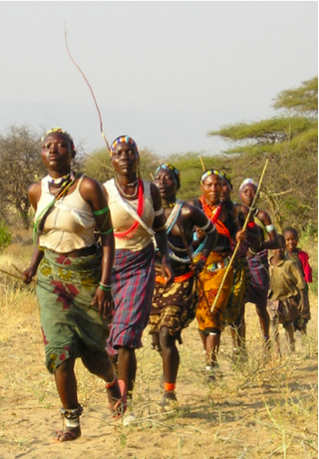
#Ritual gender solidarity in regular reverse-dominant displays associated to #initiation schools (Turnbull on Elima of BaMbuti, Woodburn on Hadza Maitoko, Lewis on BaYaka Ngoku, Finnegan, Power, Bombjakova)

#FemaleCosmeticCoalitions, #beauty tips and #pigments (Bombjakova, Power, Watts)

+

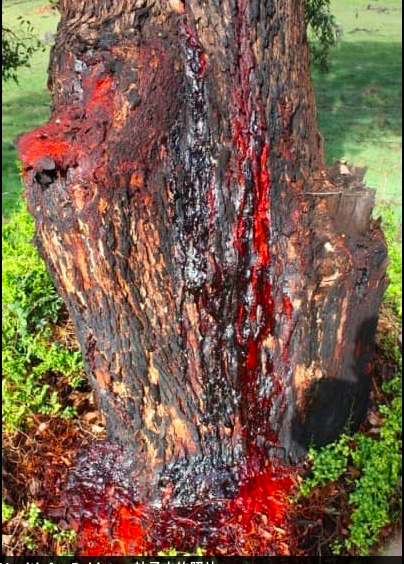
#Blood #taboos, the 'ideology of blood' affecting #hunting, #menstruation etc how much are these in women's #strategic interest? (Woodburn, Testart, Lewis, Knight, Power, Watts)

https://discovery.ucl.ac.uk/id/eprint/1317602/

Ekila: Blood, bodies and egalitarian societies - UCL Discovery

UCL Discovery is UCL's open access repository, showcasing and providing access to UCL research outputs from all UCL disciplines.

#Children as #agents (Kramer, Lew-Levy, Salali, Jang, Page): How much does children's influence reflect women's #status and #power?

+

#Grandmothers' #storytelling, #memory, #knowledge holders, running the camp (Biesele, Lewis, Gopnik)

Cooperative women's labour networks (Kraft et al #Batek #foragers show more extensive female networks than #Tsimane forager/horticulturlists) and gift exchange (Wiessner, Apicella)

Women's leisure time (Dyble et al, Agta women foragers have more than those who have settled as #farmers)

And last but not least is the influence of #music, #dance and #song on #women's solidarity and #collective power (Lewis, Finnegan, Kisliuk, Grauer, Bombjakova, England)

#MornaFinnegan writes beautifully here on the #danceoffs of women among Central #African #Forest peoples, and the incredibly rude words they sing to men!

https://rai.onlinelibrary.wiley.com/doi/abs/10.1111/1467-9655.12060