 Jerry 🦙💝🦙
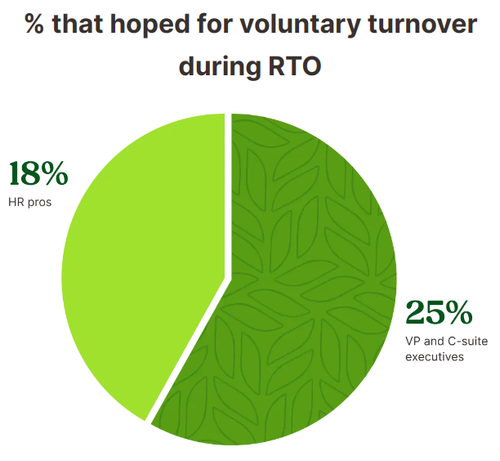
I am SHOCKED to learn that the real reason some companies are implementing RTO programs is in hopes that employees will quit. I mean, I am shook.

 Fi 🏳️⚧️
performing work and -doing- work are two entirely separate skills and there's a lot of managers out there who never figured -that- the fuck out.
@munin I always viewed it as accomplishing a mission, not “work”. I think that is why I ultimately flamed out.
oh yeah, fellow burnout here who always tried to get what needed to be done actually -done-, big mood.
but managers don't give a shit about that, because what really matters for the dipshits in the leather chairs is that there's numbers to prove that you did things to appease their egos.
 FriedPicante
 Todd Wilkinson
@jerry shocked face
 gary
gary AppSec stof
@jerry got to lol at this too
“I’m more focused in the office as opposed to home where I can veer off to do other things.”
“My kids at home sometimes distract me.”
WFH people who say this are taking the piss. Sabotaging the hone work space in ways you wouldn't for office work is not a WFH issues, it's about work ethic and people's honestly
 Tobias Fiebig
@jerry Not saying that I distrust those results... or doubt them...
... but I do have a faint feeling that the article itself might be a performance of work by an organization to be seen among HR departments. ;-P
 itgrrl
 Matt Palmer
@tfiebig good grief, how is there not a law against that...
 Phil Calvin
@jerry I can’t decide whether it’s “Employees hate this one HR trick” or it’s just lazy management (and HR) not taking care of performance management any more.
 Michael Vilain
@jerry I'm hoping someone sends this video to the Crowdstrike CEO or a Congress person questions the CEO asking "Why isn't your head on a pike outside your company's HQ as an example to others?"

Vir Cotto Is A Badass
 David Chisnall (*Now with 50% more sarcasm!*)
@jerry I never understood why companies do this kind of thing. If they want to cut their workforce by 20%, they should look at the areas where people are not contributing to business value and make targeted decisions. This kind of thing just means that the 20% who are most able to find work elsewhere (I.e. the ones they can least afford to lose) will quit.
@david_chisnall @jerry you're assuming that these decisions are made within the framework of economics, rather than petty power politics.
 Simon Zerafa
Also to prop up the value of commercial real estate.
If no-one wants to use it then it's not worth as much 🤷♂️
@simonzerafa I hear that one a lot. I was very recently in the C-suite and I will tell you that I don’t really believe it. I am sure there are a segment of companies where it is true - for example, architect firms, law firms, commercial property developers, and others that have a direct tie to commercial property (I suspect companies that own a large real estate portfolio as well), or where the company has received money/grants from local governments to hire a certain number of people to work from an office in their municipality.
For the vast majority of companies though, they don’t own the offices they work from, and so would stand to benefit financially if they terminated or at least reduced their office leases. In the US, at least, even if they have a lease they can’t get out of, there are still some significant benefits to not using the offices - such as tax write offs, savings on utilities, and so on.
I still think RTO largely is driven by vanity, ego, micromanagement, and staff/labor cost reductions.
 Major Hayden 🤠
 Mathieu Fenniak
 Chris Farris
 4dw@r3
  🦬
🦬