 Karsten Ehms
 Francisco Tolmasky
I really hate the term “side-loading.” We shouldn’t need a word for the normal way we’ve been installing apps for the past 40 years. If tomorrow Apple decided they were going to start only letting you visit web pages they approved of, we wouldn’t call some sort of alternating system that let you see *the rest of the fucking internet* “side-paging”. We’d instead call the whole thing bullshit.
 Adam Bell
@tolmasky huge +1 lol, especially since this term came from android command line dev tools
 Houston Bova
@tolmasky We do call seeing the whole internet a different thing though. We call the browsers TOR browser and the “whole” web the “dark” web.
 -> @haileys.quest
@zethtren @tolmasky That's because the clearnet and the dark web are separate networks. Hell, the "dark web" doesn't just include Tor, it theoretically includes i2p and other similar, smaller efforts too. Which are all overlay networks, that run on top of the clearnet, which is the regular network. The analogy doesn't work.
 Sam Sethi
  ⁂
⁂ LR
LR@tolmasky how dare you speak to us The Great Lord Pomme, *with disgust* you side-human.
 skybrian
@tolmasky Yeah, we should call it “malware loading.” :)
I can put up with jumping a hoop now and then if it means relatives need less tech support.
 Professor_Stevens
Yes, I agree! It's a UI issue. For consumer devices, safe mode needs to be the default. On Android, enabling dev access is not discoverable by the curious but uninformed (at least, without doing an Internet search to learn the trick.) I could quibble a bit with how it's done, but in concept, it seems like a good thing.
Many consumer products are designed in a similar way.
 Mark T. Tomczak
@tolmasky however, the smartphone was enough of a different device that it fits nicely in the mind as fundamentally not a computer (In much the same way that your refrigerator isn't a computer even though there's almost certainly a general purpose CPU in there these days) and Apple's ecosystem kicked off from day one aas a locked-down appliance a store for loading programs onto it (which if memory serves was much in line with the way early generations of cell phones capable of running applications worked... Mostly because they weren't programmed in a common SDK or even chipset so it was quite difficult to acquire and load applications onto them from a PC).
The distinction is historically relevant, is the point. And in fact, the entire store approach gave an added layer of confidence to the entire experience that was lacking in the PC ecosystem of the time; nobody wanted a virus on their phone.
@mark The reason you don’t have a virus is because of sandboxing and a host of other non-AppStore reasons. The AppStore has been repeatedly shown to have nothing to do with that. Apple let scam Authenticator apps stay on the store for a full week, and even suggested them a one the team apps! To quote Phill Schiller: “Is no one minding the store?!” The AppStore is actually worse for security because it convinces people everything there is safe, when nothing could be further from the truth.
@mark Apple has only ever effectively used the AppStore to enforce their 30% tax, not any safety thing. It’s basically the TSA of app security. Actually worse than the TSA, because tons of stuff gets through so they can’t even take credit for the lack of incidents.
 Abazigal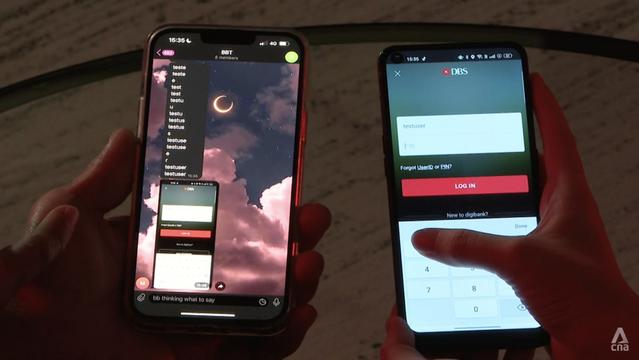
 mav
mav 
As an early smartphone adopter, I could load programs on my Windows mobile or palm os devices anytime I wanted.
The Apple ecosystem was always unique in that you have *never* had a means by which to directly load anything.
Despite the fact that it *could* be a general purpose computer, it is intentionally neutered in a way that should be illegal
I don't buy it. It's intentionally neutered in a way that Apple wanted and users are indifferent about.
I'm not claiming the app store isn't a vastly superior distribution model, but I am claiming that not allowing people to do what they want to with the hardware they own is Bad, Actually, limits the amount of repurposing people can do, compounds e-waste, etc on top of limiting choice.
And there's no reason why they should *force* everyone to use the App Store other than greed.
 Jeff Atwood
@tolmasky trading binaries makes this a far more dangerous game than the web
@codinghorror We didn’t call it side loading binaries on macOS either. Arguably the AppStore has done nothing for security, that’s all sandboxing. Apple constantly allows scam apps on the store, takes forever to take them down, lets them advertise [1], and often lists them higher in search! To quote Phill Schiller: “Is no one minding the store?!” Arguably it’s worse for security since people are convinced everything there is safe. It’s the TSA of app security.

Shady Authenticator Apps Flood Apple and Google App Stores After Twitter Shifts from SMS-Based 2FA
Security researchers are sounding the alarm over a wave of questionable authenticator apps flooding the Apple App Store and Google Play after Twitter’s recent shift from SMS-based 2FA [https://www.
@tolmasky yeah, that's all fine, but to say "just like the web" isn't correct when you are dealing with binaries. There is a movement to put binaries on the web (webassembly?) https://webassembly.org/
 Miguel Arroz
@codinghorror @tolmasky There's a big difference between a user explicitly downloading, installing and running a binary, and the browser downloading and running some binary that does who knows what from some advertising company when I open the newspaper website.
Either I trust the provider of the software I install on my Mac… or I don't. The means of distribution are irrelevant, as long as there's a system that guarantees the binary isn't tampered along the way (and there is, code signing).
@codinghorror I see the perception that this is a future technology still persists… https://x.com/tolmasky/status/1575992502234255360

Francisco Tolmasky (@[email protected]) (@tolmasky) on X
It’s interesting that Figma didn’t usher in a new age of super cool web apps. They released a super impressive WASM app *6 years ago*. Everyone was blown away & then proceeded to… talk about WASM as a future technology & just went back to arguing about React vs. Vue or whatever.
@tolmasky could be worse, could be Android
 Sumukha S
@tolmasky But the whole idea of App Store is allowing safe, new and creative applications right? App Store stays only in the Apple ecosystem. Apple doesn’t own the internet.
@tolmasky The console market predates the iPhone. Just saying.
 ⌈Tautology⌋
@tolmasky @ihorner we're not saying this to defend apple, but the term "sideloading" is older than the concept of smartphones and, also, accurately describes how applications used to have to be installed on """jailbroken""" iphones https://en.wikipedia.org/wiki/Sideloading
 Adam
Adam@pleonasticTautology @tolmasky @ihorner
Interesting history. They kept the same term even when the new method has nothing to do with the original method. I wonder if that's natural language evolution or "clever" capitalist anti-competitive marketing?
@adamsaidsomething @tolmasky @ihorner so, considering that original third-party application functions did involve having to connect your iphone to your computer (as did most things with the iphone, back then), sideloading made sense
so we reckon it's a case of... not understanding history + semantic drift? enough folks (probably tech journos) deciding that sideloading meant "not using apple's app store" that that’s what it became
 Daniel Gibson
@tolmasky
> We’d instead call the whole thing bullshit.
20 years ago we would've called the concept of side-loading bullshit too, and look where we're now..
 Freelock
@tolmasky That sounds a lot like AOL
 rclyne02
It is what it is.
Side loading is just installing apps without going through Google Play, or in this case I guess Apple.
I don't think the term existed in 1984 though, unless the 40 year thing is just sarcasm.
I feel you though. It is just an install, app store or not.
Just like I hate the term analog when referring to Tech before Digital. Like, it was not called that before? If it was I stand corrected. Sorry
 Gabriel Pettier
@tolmasky and just now i realized that it's probably because it could have been uploading or downloading, but it would have been confusing, so sideloaling it was…
 protojman
@tolmasky interestingly, in my MDM sphere I don’t even side load on Apple- was only doing that on Android as I was discouraged from interacting with the ipa files. I can’t imagine not using the term side loading in my day to day, to mean “bypassing the enterprise stores my best practices are built around.”
 Pete
Pete@tolmasky Personally, I'm an apple users and I write mobile apps and I have no problem with how Apple manages things.
If you don't like the way Apple manages their eco system then don't write apps for Apple devices. There. Problem solved.
@philpetree I’m complaining as an Apple user, not an Apple developer. I would hope that as someone who spends hundreds of dollars on an iPhone I am allowed to voice a complaint about a product? Or are you one of those “then just use another phone!” people? They crack me up. Like if your food is cold at a restaurant it’s unreasonable to request it be fixed, your only option is “go to another restaurant if you don’t like it!”
@tolmasky You can complain all you want but the truth is, the vast majority of Apple's users like the privacy and security we get from Apple and we don't want that to change. (and the whole restaurant bit is a false equivalency argument, something else Apple users don't like.)
@philpetree If anything, the restaurant would be more justified in saying "like it or leave” since there's hundreds of restaurant options vs. phones which are a duopoly. So you're right, it was unfair to restaurants for me to compare them to arguments from Apple apologists. I do however love you how you blanket describe all Apple users as hating false equivalencies, like they're some cartoon homogeneous race from Lord of the Rings. Elves love nature and Apple users hate false equivalencies!
 John Allsopp
@tolmasky in. A sense Apple has decided exactly that. A whole bunch of standardized APIs that web apps might rely on don’t work in Safari and therefore on iOS.
Essentially any aspect of the web Apple doesn’t want doesn’t happen on iOS and therefor effectively at all.
 Mister Moo 🐮
@tolmasky I think the proper word is 'installing,' just like you've been able to do on computers since at least the 1970s.
 🇺🇸 🇺🇦 🇮🇱 🐧 🥦
Great Jupiter man, don't give Apple any ideas!
 MichaelPhillips
@tolmasky oh I'm sure Apple would have some specific name in mind for getting around the walls of their carefully maintained garden of allowable websites. It might not be side paging but it would definitely be something pretentious
 Joe ❌👑
@tolmasky That is why I own no Apple devices, despite the fact that I am not a Google fan either. If Google refuses to allow an app in their store I can still install it on my phone.
 Jacob
Jacob@not2b you can install any application you like on your Apple device, it doesn’t have to be from the App Store.
 Glyph
Glyph@tolmasky definitely going to start calling non-https URLs "side-paging" though
 xsk
xsk@tolmasky @josh you are definitely right hinting the reason noone just calls it installing apps is intentional.
Imo though it has to do not only with Apple scaremongering people ( an argument which I find very amusing when people bring it up as it shows so many things about the people doing it ) but also semantically connected to define a process outside the ecosystem of the store owner.
Im sure that as a term will be 100% understandable to anyone when used in any other company context ( sideloading windows apps, car apps etc ) or even not about installing apps ( sideloading configuration, sideloading new interface etc ) .
The main issue I have with this is related to the age old problem, investigated by socrates and even more by plato when he wanted to explain his mentor choice of death and what „absolute truth“ is… and that is the fact that people „believe in Apple/MS/Tesla etc“ and are not basing this to any knowledge or objective thinking.
In short, the subject you open will be received by people that have been conditioned to not challenge the status quo Apple provides, not because they cannot but because they don’t want to. Their decisions in life and even partly who they are ( the arguments they have made that provides existential confidence in a societal norm ) are being attacked by the simplest of questions.
I wish some of them realise that if a simple argument made you feel many feelings, it means that there is something that you can look inside yourself to learn why, before you answer.
As for Apple, it is all about money and suing things with a terminology they like, simple as that.
 Nini
Nini@tolmasky Huh, I only ever really heard the term sideloading from Android users. Still, managed to get a bunch of anti-Apple sentiment by conflation so well done I suppose.
 Fell
Fell@tolmasky I'm torn both ways about this topic. On the one hand, I agree, side-loading IS the normal way to install applications. On the other hand, having a *trustworthy* third party curate applications somewhat mitigates the risk of installing malicious software. I know this because I haven't had to uninstall browser toolbars from my mum's smartphone.
 Daniel Barlow
@tolmasky Running unapproved apps on your VR headset? Side-eye
 bard
bard@tolmasky The term gets misused a lot. There's an actual `adb sideload` command for installing an apk from your computer on to your (Android) phone (as opposed to copying it and installing it in two separate steps). If you just have an apk directly on your phone and install it, that is not sideloading. You're just installing it. Whether it came from an app store or not.
Tangentially, I've also noticed a lot of people think you need to "root" your phone to install arbitrary apps when it's just normal functionality out of the box on Android. That one I guess is due to iOS users thinking of the jailbreak+Cydia process and wrongfully assuming it's the same on Android to start with.
Tangentially, I've also noticed a lot of people think you need to "root" your phone to install arbitrary apps when it's just normal functionality out of the box on Android. That one I guess is due to iOS users thinking of the jailbreak+Cydia process and wrongfully assuming it's the same on Android to start with.
 enoch_exe_inc
 Christmas Tree
@tolmasky I've always understood the term "sideloading" to mean "transferring from computer to phone". Specifically in contrast to uploading/downloading which involve the Internet.
Ironically Apple's new "alternate app stores" policy STILL don't allow sideloading! So I'm still not using the term.
@tolmasky Steve Jobs even used the term "sideloading" in the original App Store announcement to describe the process of downloading from App Store to computer, then computer to phone. The app still had to be published to the App Store; it had nothing to do with notarization.
https://m.youtube.com/watch?v=xo9cKe_Fch8&t=2m17s
(timestamp at 2:17, in case the URL parameter doesn't work)

Steve Jobs introduces the App store - iPhone SDK Keynote
 Daniel
@tolmasky it’s called sideloading because it’s immoral and sneaky to acquire unblessed software without the authorization of the church (🍎).
May the ghost of Steve Jobs keep you in the holy path 🛐
 Tech Singer
@tolmasky I admire your optimism, and wish I shared it. @FluidEscence
 DrYak
DrYak@tolmasky yup, they should do how Valve does it, e.g., on the SteamDeck they are merely called "non-Steam games".
Google should call them "non-Play store Apps", and Apple should call them "non-App store Apps" (but that will ruin the illusion that apps can only ever be found there)
@tolmasky many people have never installed an app from someone’s website. if you ask a gen Z to install a program “foo” on a computer they don’t look for “foo” on a search engine, they check the App Store.
@jazaval And then hilariously don’t get it as the first result despite being an exact string match because AppStore search is bad. I think the ironic/depressing/absurd(?) reality is that they *do* install most apps from the web, either from an app banner or direct link to the AppStore. E.g. most Instagram and TikTok downloads are probably from clicking a TikTok link and then having the site say “watch more by tapping here to get the app from the AppStore!”
 ViperDrake
@tolmasky i think the term started in Android. You used to be able to 'sideload' an SD card with an app, rom, or img file to flash in recovery.