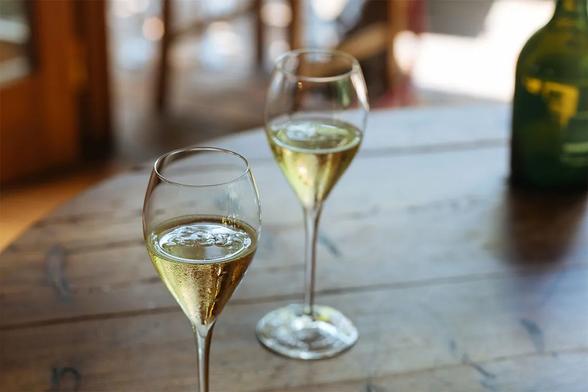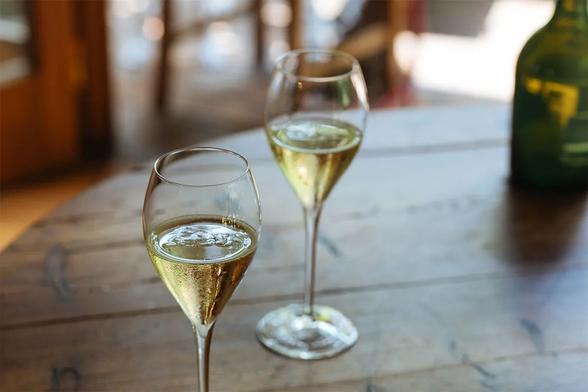
Thought I'd get one late #harvest of #grapes. The first #vine yielded a large collender full. I still have four more vine #varietals to go through! Any favorite grape #recipes for #cooking out there?
This Highly Poisonous Plant Could Be The Superfood of Tomorrow

The three staple crops dominating modern diets – corn, rice and wheat – are familiar to Americans.

ScienceAlert

`“They were crossbred with higher-producing varieties, meaning we got more Brussels sprouts that weren’t bitter... So by the time the 2010s rolled around, there were lots of Brussels sprouts, and they didn’t taste bitter anymore, and suddenly they’re incredibly palatable — and thus, really good on restaurant menus.”`

https://www.yahoo.com/entertainment/scientific-reason-why-everyone-suddenly-195136403.html

#brusselSprouts #plantBreeding #breeding #varietals #cultivars #cultivation #domestication #farming #vegetables #cruciferous #mustard

Yahooist Teil der Yahoo Markenfamilie

@RitchieTorres

Nah, I think it's a reflection of current #Varietals of #Lies

#Tea #varietals #TIL
there is in fact a spectrum of cultivars between Camellia Sinensis and Camellia Taliensis, both of natural and artificial origins, where last ones could have less caffeine.
https://sciencestea.wixsite.com/monsite/post/les-th%C3%A9s-issus-de-camellia-taliensis-vraiment-sans-caf%C3%A9ine-1 / https://archive.is/mDlKz
Teas from Camellia Taliensis: really caffeine-free?

Have you ever seen serrated tea leaves? Scaly buds? In recent years, more and more tea stores have been selling teas from Camellia Taliensis, a species of tea plant commonly found in the wild. Some sellers refer to these teas as low in caffeine. However, it is a cousin of the famous Camellia Sinensis, the most commonly used tea plant, and it is known that the vast majority of tea leaves are rich in caffeine. This issue was already topical in the 2000s. In 2008, Gao et al. investigated the caffei

Sciences Thé