 STOP DISINFORMATION Desinformación
 ResearchBuzz: Firehose
Ohio University: Ohio University Libraries to join Google Books Library Project. “The Google Books Library Project, which has significantly contributed to the digital corpus of 40 million books in over 500 languages, identified several hundred thousand books held by Ohio University Libraries that are not yet in their collection.”
https://rbfirehose.com/2026/03/13/ohio-university-ohio-university-libraries-to-join-google-books-library-project/Hear from Neyda Gilman, Librarian at Binghamton #UniversityLibraries an inaugural SUNY Sustainability Faculty Fellow, alongside Jennifer Embree, Subject Librarian & Sustainability Hub Coordinator at Binghamton University Libraries, as they share insights into .
UC Berkeley: ‘What makes it matter’: Oral history project captures heart and resilience of UC Berkeley’s libraries. “In her newly released oral history project, [Ann] Glusker’s passion and curiosity take flight. For ‘Librarians Navigating Change,’ she interviewed 15 retired and current UC Berkeley librarians, amassing nearly 400 pages of transcripts. The interviews chronicle four […]
https://rbfirehose.com/2026/02/14/what-makes-it-matter-oral-history-project-captures-heart-and-resilience-of-uc-berkeleys-libraries-uc-berkeley/ DrWeb
DrWebIn Praise of Librarians in Dangerous Times – Literary Hub
In Praise of Librarians in Dangerous Times
Sarah Weinman on the Awesome Responsibility of the Seekers and Keepers of Truth
By Sarah Weinman,November 3, 2025
Librarians are on the front lines of history and current events, when news and change arrive at a furious clip that only quickens every day.
And without libraries, my work would simply not exist.
I was a child who read books. There’s a picture of me, not quite a year old, in a blue sailor suit and a red ribbon tied around my neck, staring avidly at a picture book. I couldn’t have been reading yet—that wouldn’t happen until I was close to three, still plenty precocious—but the devotion was already there, the calling always present. I would always prefer reading to pretty much anything, whether it was practicing piano, doing homework, playing sports, and chores.
Books were everywhere as I grew up, and I know how fortunate I was. All around the house, because my parents and older brother were avid readers, too. In the sprawling home of my great-uncle, who spent many years as a sales representative for Harper & Row—before it was absorbed into HarperCollins, now my own publisher—and the duplex townhouses of my grandparents.
Going to the library was special, though. The elementary and high school ones, staffed by people who understood what books meant to kids because they’d never lost sight of what books meant to them. The local branch, a few minutes’ drive from my home, where I borrowed countless books at every age and had my first formative experience with microfilm—and no matter how many times I have used it, I still need to ask a librarian for help. The flagship location in my hometown, with its brutalist architecture, piles of newspapers threatening to burst out of the shelves, and the abundance of books in every genre—particularly crime fiction, my first and still greatest love.
The university one, where not only could I request any book I needed for research—for class, and also my own—but I discovered the almighty power of the Lexis-Nexis database. And, when I moved to New York more than two decades ago, the magisterial 42nd Street Public Library, those twin lions beckoning visitors to climb up the stairs and partake of its treasures.
Continue/Read Original Article Here: Literary Hub – In Praise of Librarians in Dangerous Times
#History #Librarians #Libraries #LiteraryHub #Memories #News #PublicLibraries #UniversityLibraries #WorkingAsLibrarian
Libraries Can’t Get Their Loaned Books Back Because of Trump’s Tariffs – 404Media
Libraries Can’t Get Their Loaned Books Back Because of Trump’s Tariffs
By Emanuel Maiberg, Oct 6, 2025 at 10:05 AM
Libraries have shared their collections internationally for decades. Trump’s tariffs are throwing that system into chaos and can ‘hinder academic progress.’
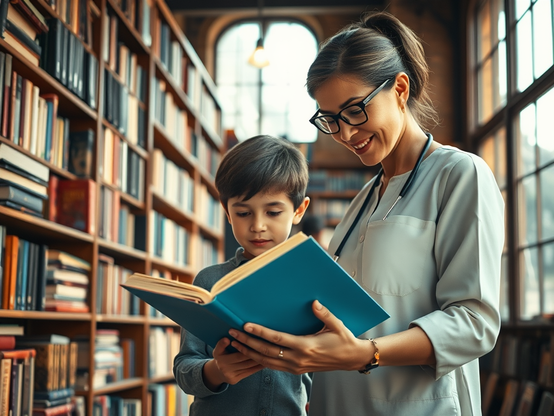
Photo by Raul Rosas / UnsplashThe Trump administration’s tariff regime and the elimination of fee exemptions for items under $800 is limiting resource sharing between university libraries, trapping some books in foreign countries, and reversing long-held standards in academic cooperation.
“There are libraries that have our books that we’ve lent to them before all of this happened, and now they can’t ship them back to us because their carrier either is flat out refusing to ship anything to the U.S., or they’re citing not being able to handle the tariff situation,” Jessica Bower Relevo, associate director of resource sharing and reserves at Yale University Library, told me.
After Trump’s executive order ended the de minimis exemption, which allowed people to buy things internationally without paying tariffs if the items cost less than $800, we’ve written several stories about how the decision caused chaos over a wide variety of hobbies that rely on people buying things overseas, especially on Ebay, where many of those transactions take place.
Libraries that share their materials internationally are in a similar mess, partly because some countries’ mail services stopped shipments to and from the U.S. entirely, but the situation for them is arguably even more complicated because they’re not selling anything—they’re just lending books.
“It’s not necessarily too expensive. It’s that they don’t have a mechanism in place to deal with the tariffs and how they’re going to be applied,” Relevo said. “And I think that’s true of U.S. shipping carriers as well. There’s a lot of confusion about how to handle this situation.”
“The tariffs have impacted interlibrary loans in various ways for different libraries,” Heather Evans, a librarian at RMIT University in Australia, told me in an email. “It has largely depended on their different procedures as to how much they have been affected. Some who use AusPost [Australia’s postal service] to post internationally have been more impacted and I’ve seen many libraries put a halt on borrowing to or from the US at all.” (AusPost suspended all shipments to the United States but plans to renew them on October 7).
Relevo told me that in some cases books are held up in customs indefinitely, or are “lost in warehouses” where they are held for no clear reason.
As Relevo explains it, libraries often provide people in foreign institutions books in their collections by giving them access to digitized materials, but some books are still only available in physical copies. These are not necessarily super rare or valuable books, but books that are only in print in certain countries. For example, a university library might have a specialized collection on a niche subject because it’s the focus area of a faculty member, a French university will obviously have a deeper collection of French literature, and some textbooks might only be published in some languages.
A librarian’s job is to give their community access to information, and international interlibrary loans extend that mission to other countries by having libraries work together. In the past, if an academic in the U.S. wanted access to a French university’s deep collection of French literature, they’d have to travel there. Today, academics can often ask that library to ship them the books they want. Relevo said this type of lending has always been useful, but became especially popular and important during COVID lockdowns, when many libraries were closed and international travel was limited.
“Interlibrary loans has been something that libraries have been able to do for a really long time, even back in the early 1900s,” Relevo said. “If we can’t do that anymore and we’re limiting what our users can access, because maybe they’re only limited to what we have in our collection, then ultimately could hinder academic progress. Scholars have enjoyed for decades now the ability to basically get whatever they need for their research, to be very comprehensive in their literature reviews or the references that they need, or past research that’s been done on that topic, because most libraries, especially academic libraries, do offer this service […] If we can’t do that anymore, or at least there’s a barrier to doing that internationally, then researchers have to go back to old ways of doing things.”
See Also: Another version of this story online in the blog.
Continue/Read Original Article: https://www.404media.co/libraries-cant-get-their-loaned-books-back-because-of-trumps-tariffs/
#2025 #404Media #America #Books #DonaldTrump #Education #Health #History #InterlibraryLoan #International #Libraries #Library #LibraryOfCongress #LoanedBooks #Opinion #Politics #Resistance #Science #Technology #Trump #TrumpAdministration #TrumpSTariffs #UnitedStates #UniversityLibraries
 Public Knowledge Project
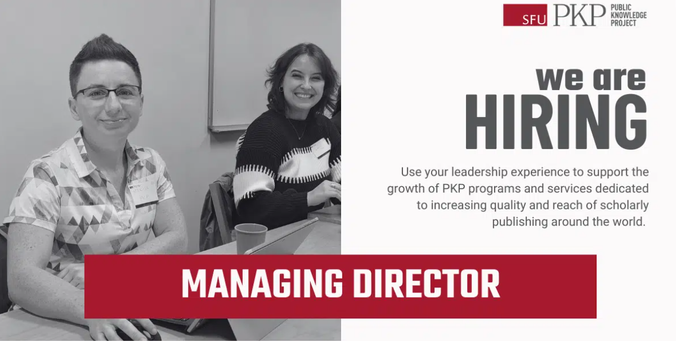
🔊 Unique employment opportunity with @PublicKnowledgeProject -- lead an impactful, mission and values driven team that works to advance quality & global reach of scholarly publishing!
This could very well be what you've been seeking in your change-making, management career:
https://pkp.sfu.ca/2025/09/17/hiring-managing-director/?mtm_cpn=C1
#AcademicChatter #AcademicMastodon #ScholComm #ScholarlyPublishing #OpenAccess #Leadership #FOSS #AcademicLibraries #UniversityLibraries #OpenInfrastructure #PublicKnowledge
“I Don’t Think Librarians Can Save Us”: The Material Conditions of Information Literacy Instruction in the Misinformation Age | Willenborg | College & Research Libraries
Link courtesy of Library Link of the Day
http://www.tk421.net/librarylink/ (archive, rss, subscribe options)
Home > Vol 86, No 4 (2025) > Willenborg
“I Don’t Think Librarians Can Save Us”: The Material Conditions of Information Literacy Instruction in the Misinformation Age
By Amber Willenborg and Robert Detmering*
This national qualitative study investigates academic librarians’ instructional experiences, views, and challenges regarding the widespread problem of misinformation. Findings from phenomenological interviews reveal a tension between librarians’ professional, moral, and civic obligations to address misinformation and the actual material conditions of information literacy instruction, which influence and often constrain librarians’ pedagogical and institutional roles. The authors call for greater professional reflection on current information literacy models that focus on achieving ambitious educational goals, but which may be unsuitable for addressing the larger social and political crisis of misinformation.
Introduction
Donald Trump’s unlikely presidential victory in 2016 has become inextricably associated with growing public concern about the potentially negative impact of false and deceptive information on democratic society (Allcott & Gentzkow, 2017; Tenove, 2020). While media saturation and political distortion eventually rendered phrases such as “fake news” and “alternative facts” virtually meaningless, ongoing waves of COVID-19 skepticism, QAnon cultism, and 2020 election denialism suggest that various forms of misinformation and disinformation will continue to play a worrisome role in political discourse going forward. Misinformation—defined broadly to encompass disinformation and related concepts—is not a new problem for democracy; however, in today’s environment, online social networks facilitate the rapid and widespread circulation of misinformation into the larger media ecosystem, making verification exceedingly difficult and enabling interference in political campaigns and elections (Muhammed & Mathew, 2022; Tenove et al., 2018). Unsurprisingly, as long-time information literacy educators and advocates, many librarians feel professionally and morally obligated to address this crisis.
In recent years, innumerable scholarly works, think pieces, and statements from professional organizations have asserted that librarians have an especially important role to play in helping students and other library users evaluate information sources more effectively against the backdrop of civic discord and online propaganda (ALA, 2017; Batchelor, 2017; Cooke, 2017; Eva & Shea, 2018; Fister, 2021a; IFLA, 2018; Jaeger et al., 2021; Musgrove et al., 2018). Succinctly encapsulating what has become the consensus view, Beene and Greer (2021) state, “Librarians are uniquely poised to prepare learners for a lifetime of critical thinking, analytical reasoning, and information literacy” (p. 3). Based purely on the literature, the outpouring of classes, workshops, events, online guides, and other content focusing on fake news and related topics indicates that instruction librarians have largely accepted some measure of responsibility for combating misinformation as part of their efforts to advance information literacy on a broad scale (De Paor & Heravi, 2020; Revez & Corujo, 2021).
At the same time, while there appears to be general agreement that librarians should involve themselves in teaching students to identify misinformation, there is controversy surrounding the nature of that involvement. For example, librarians have been criticized for their apparent lack of engagement with research from other disciplines regarding the psychological and emotional dimensions of misinformation, specifically cognitive biases such as motivated reasoning, as well as imperfections in human memory, that can lead people to cling to false beliefs, even after they have been corrected (Sullivan 2019). Librarians have also been called out for their reliance on checklist heuristics that stress evaluating the superficial features of web sources in isolation, rather than thinking critically and holistically about sources in relation to one another (Beene & Greer, 2021; Faix & Fyn, 2020; Lor, 2018; Ziv & Bene, 2022). The popular “CRAAP Test” (Blakeslee, 2004) is perhaps the most notable—and now increasingly notorious—example of this problematic checklist approach. Additionally, to more fully understand how librarians and other educators are teaching students to evaluate information, several researchers have conducted content analyses of library and university websites (Bangani, 2021; Lim, 2020; Wineburg et al., 2020; Ziv & Bene, 2022). This body of scholarship consistently shows that such websites emphasize outdated, inadequate, and counterproductive evaluation guidance, as opposed to what Ziv and Bene (2022) refer to as “networked interventions,” (i.e., proven techniques such as lateral reading that focus on evaluation within the context of the larger web) (p. 917). Although providing a certain level of insight into the instructional approaches employed by librarians and offering fully justifiable critiques of those approaches as they appear online, these studies are necessarily limited by their dependence on websites, which, divorced from the context of lived experience, may ultimately tell us very little about how librarians actually teach their students about misinformation.
Editor’s Note: Read the rest of the story, at the below link.
Continue/Read Original Article Here: “I Don’t Think Librarians Can Save Us”: The Material Conditions of Information Literacy Instruction in the Misinformation Age | Willenborg | College & Research Libraries
#America #CollegeLibraries #DonaldTrump #Health #Library #LibraryOfCongress #Politics #Reading #Resistance #Science #Technology #TrumpAdministration #UniversityLibraries
 Columbus - Feeds
Lucy’s Little Library: Compelling love stories that stray from the script
“The Art Thief” by Michael Finkel, “The Guernsey Literary and Potato Peel Pie Society” by Annie Barrows and Mary Ann Shaffer and “The Swan’s Nest” by Laura McNeal Lucy’s Little Library is a monthly book column that recommends three must-reads to Ohio State’s literature lovers. Dear reader, romance is a fulfilling but fickle mistress. Across […]
 Robert H. McDonald
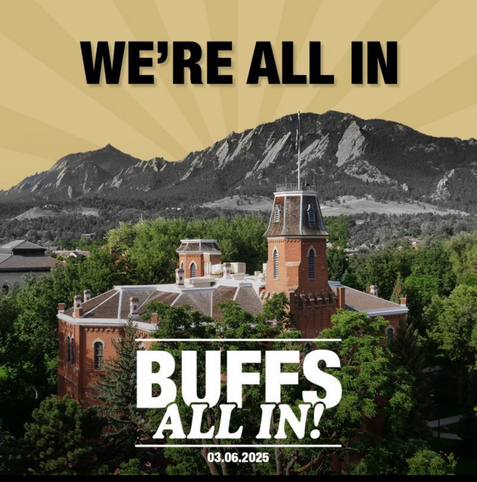
Join me today (March 6) and contribute to support CU Boulder and the community we love. #BuffsAllIn #CUBoulder #UniversityLibraries https://giveto.colorado.edu/schools/UniversityofColoradoBoulder/buffs-all-in/pages/libraries
 Tobias Zeumer
What’s gained, what’s lost in the evolving university library
"It’s not just that the era of peak books on campus has passed—peak reading itself appears to be in decline"
Recently noticed more frequent reports with regard to university teaching that reading/being able to read long texts is no longer a matter of course for freshmen. Maybe it's a more broader issue than just "everything used to be better"
#libraries #universityLibraries #education #reading #digitization
