#WorldSystem #UnequalExchange: "More than 900 million tonnes of #materials, 4 million km2 of #land, & 53 billion hours of #labor. This is the scale of #resources that the Global North net appropriated from Latin America thrgh international #trade in 2020"
https://phys.org/news/2026-05-unequal-global-north-latin-america.html?utm_source=nwletter&utm_medium=email&utm_campaign=daily-nwletter
How unequal trade with Global North leaves Latin America supplying land, labor and raw materials

More than 900 million tonnes of materials, 4 million km2 of land, and 53 billion hours of labor. This is the scale of resources that the Global North net appropriated from Latin America through international trade in 2020 alone, according to a new study by the Institute of Environmental Science and Technology of the Universitat Autònoma de Barcelona (ICTA-UAB) which analyzes ecologically unequal exchange and economic dependency.

Phys.org

Energy poverty "occurs through the commodification of energy and the capture of resources, infrastructure and strategic knowledge by dominant sectors."

"There are many cases in regions such as Latin America and North Africa where investment and technical cooperation agreements aim to establish veritable private estates for wind and solar photovoltaic production, the megawatts from which will be destined for green hydrogen plants.
"One of the central objectives is to invest in the technological development of ‘green’ energy commodities. Since it is not possible to export wind and solar energy directly to other distant continents, the approach is to use them as an electricity source for the production of green hydrogen and even conversion into green ammonia, which in turn can be exported for use as fuel or fertilisers."

https://the.ecocene.blog/i/193983969/what-we-mean-by-energy-poverty

#exports #sovereignty #electricity #energy #commodities #Cuba #polycrisis #Brazil #unequalExchange #privatisation #Lula #dependency

On unequal energy exchange and vulnerability in a world at war

A lot of talk about investing in energy and industry in the Global South, but the practice is still hijacked by the global market. It shows we're still more vulnerable to global shocks than we think.

Ecocene - Sabrina Fernandes

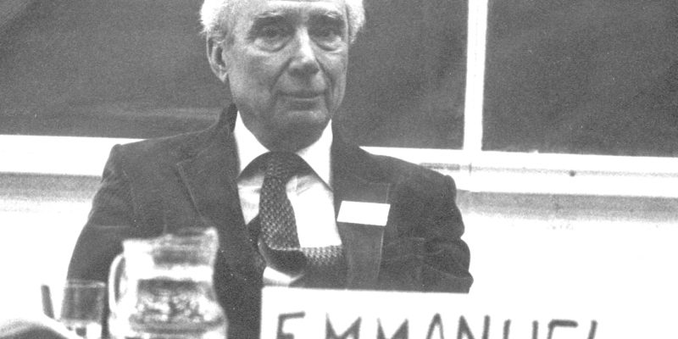
Arghiri Emmanuel et l’échange inégal : comment le commerce international exploite les pays pauvres

Arghiri Emmanuel applique la théorie marxiste de l'exploitation aux échanges internationaux : le commerce mondial est un processus d'exploitation des pays pauvres par les pays riches via l'échange inégal. Les bas salaires du Sud dévaluent les exportations, transférant la valeur vers le Nord. #UnequalExchange #ArghiriEmmanuel #Marx #Imperialism #GlobalSouth #Capitalism

https://homohortus31.wordpress.com/2026/05/29/arghiri-emmanuel-et-lechange-inegal-comment-le-commerce-international-exploite-les-pays-pauvres/

Arghiri Emmanuel et l’échange inégal : comment le commerce international exploite les pays pauvres

Arghiri Emmanuel applique la théorie marxiste de l’exploitation aux échanges internationaux : le commerce mondial est un processus d’exploitation des pays pauvres par les pays riches vi…

Homo Hortus

💡👚Policy Brief: Clothing the Planet Within Limits: A Degrowth Approach to Fashion. Authored by Marula Tsagkari.

It’s time to reimagine how we produce and consume clothing.

🔗Link to the full policy brief here: https://degrowth.org/projects/policy-briefs/

#policybrief #degrowth #fashion #exploitation #unequalexchange

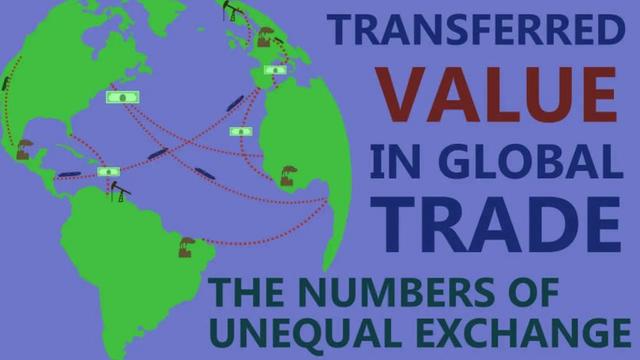
Underdevelopment by Design: The Metrics of Unequal Exchange

https://tankie.tube/w/dRV4XPL3TokoMuWC3raZ3N

Underdevelopment by Design: The Metrics of Unequal Exchange

PeerTube

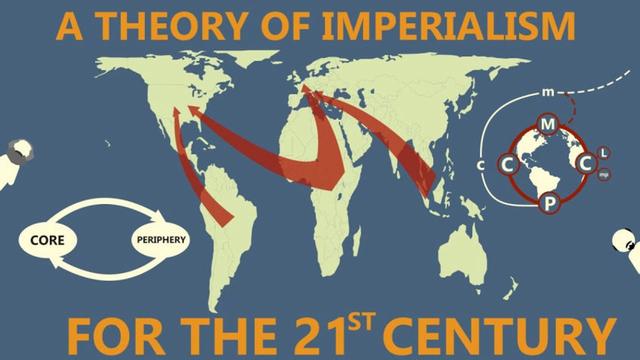
Imperialism Today: Unequal Exchange and Globalized Production

https://tankie.tube/w/p6fyWW2N5zsucZrQXgJgvp

Imperialism Today: Unequal Exchange and Globalized Production

PeerTube

"#ValueCapture is the deviation between value realisation and production. Results show that China is the largest giver of value while the USA is the largest capturer of value in the world economy. Unproductive activities (real estate, finance, trade) and capital-intensive industries (manufacturing, mining, oil) are value capturers. Labour-intensive industries (health, education, construction, agriculture, services) transfer value away."
https://tomasrotta.com/2025/01/13/value-capture-and-value-production-in-the-world-economy-a-marxian-analysis-of-global-value-chains-2000-2014/

#unequalExchange #economics #value

Value Capture and Value Production in the World Economy: A Marxian Analysis of Global Value Chains, 2000-2014

. The journal Environment and Planning A: Economy and Space has just published (open access) my most recent study on the production and capture of economic value on a global scale. The paper title …

Tomas Rotta
🌍 Join us today at 15:00 CET for an online talk by Morena Hanbury Lemos (ICTA-UAB) on rethinking global economic structures and strategies for economic sovereignty. Part of the REAL-Postgrowth seminar series. 🔗 www.uab.cat/web/sala-de-... #PostGrowth #UnequalExchange #DecolonizeEconomics

Join our Cloud HD Video Meetin...
Online talk:

The REAL-Postgrowth project (Post-growth – REAL – A Post-Growth Deal) is excited to announce that our colleague Morena Hanbury Lemos, a doctoral...

UAB Barcelona

OnlineFirst - "Value capture and value production in the world economy: A Marxian analysis of global value chains, 2000–2014" by Tomás N. Rotta:

#worldeconomy #globalvaluechains #valuecapture #valuetransfer #unequalexchange

https://journals.sagepub.com/doi/full/10.1177/0308518X241299315

#Neoimperalism #Neocolonialism

Wealthy nations rely on a large net #appropriation of labour and resources from the rest of the world through #unequalexchange in international trade and global commodity chains.

Our levels of consumption are only possible by exploitation of the global South

Unequal exchange of labour in the world economy

https://www.nature.com/articles/s41467-024-49687-y

Unequal exchange of labour in the world economy - Nature Communications

Hickel and colleagues find that, in 2021, the economies of the global North net-appropriated 826 billion hours of embodied labour from the global South, across all skill levels and sectors. Unequal exchange is understood to be driven in part by systematic wage inequalities. They find Southern wages are 87-95% lower than Northern wages for work of equal skill. While Southern workers contribute 90% of the labour that powers the world economy, they receive only 21% of global income.

Nature