#WorldSystem #PlutOligarchy: "The Handala files contain thousands of records concerning Barak’s and #Epstein’s efforts to control oil, gas, and minerals across the African continent during the 2010s"
https://www.dropsitenews.com/p/epstein-barak-congo-israel?utm_source=post-email-title&publication_id=2510348&post_id=203325913&utm_campaign=email-post-title&isFreemail=true&r=7fhf4&triedRedirect=true&utm_medium=email
How Jeffrey Epstein’s Israeli Network Shaped Congo’s Deadly Mineral Trade

Leaked documents reveal how military contractors linked to Israeli intelligence secretly trained a special operations strike force in mineral-rich eastern Congo.

Drop Site News
#WorldSystem: "Before the crisis, 60% of south-east #Asia’s imports of crude oil & a third of its imports of gas came from the Middle East, according to the IEA. The region’s #energy import bill is projected to reach $160bn this year–double the $80bn bill in 2024." https://www.theguardian.com/environment/2026/jun/23/iran-war-oil-prices-hormuz-el-nino-south-east-asia-impact#img-1
‘Compound shock effect’: why the Middle East crisis and El Niño could spell disaster in south-east Asia

Millions of tonnes of the world’s food could be lost amid the uncertainties surrounding the strait of Hormuz and the dangers of a ‘Godzilla-strength’ El Niño

The Guardian
#WorldSystem #EnergySystems: "Some nations spend up to 25% of their #GDP on securing #fuel, even before this year's price spikes. In recent months, authorities in the Marshall Islands and Tuvalu announced emergency measures to conserve fuel."
https://phys.org/news/2026-06-fuel-crisis-pacific-hard-region.html?utm_source=nwletter&utm_medium=email&utm_campaign=daily-nwletter
The fuel crisis has hit the Pacific hard. The region is responding—but tough choices lie ahead

The past five years have not been easy for the people of the Pacific. COVID restrictions disrupted tourism and upended supply chains, while global fuel shocks raised prices and hit island economies hard.

Phys.org
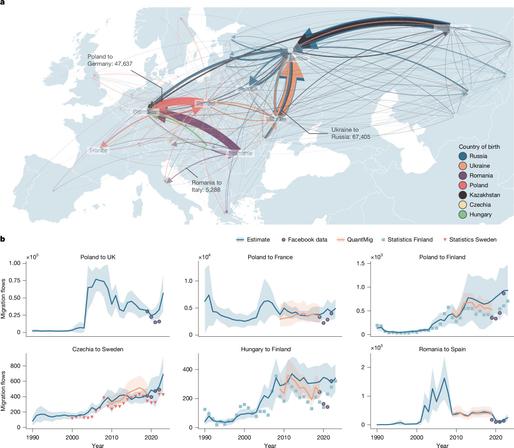
#WorldSystem: "Global #migration has risen sharply from approximately 13 million people per year in 2000 to around 35 million people per year in 2023."
https://phys.org/news/2026-06-annual-global-migration-tripled-reshaping.html?utm_source=nwletter&utm_medium=email&utm_campaign=daily-nwletter
Annual global migration has nearly tripled since 2000, reshaping where and how people move

Global migration has risen sharply from approximately 13 million people per year in 2000 to around 35 million people per year in 2023. This is according to a new dataset on human migration published in Nature by researchers from the London School of Economics and Political Science (LSE), IIASA and the University of Hong Kong.

Phys.org

Marxisme décolonial : changer la carte du monde

Le marxisme décolonial ne fait pas qu’ajouter la colonisation à Marx : il change le point de départ. En remettant au centre l’empire, la race, l’extraction et la périphérie, il propose une lecture mondiale du capitalisme bien différente. #Marxism #Decoloniality #AntiColonialism #WorldSystem #Capitalism Oui, un marxisme décolonial produit forcément un résultat très différent du marxisme classique dès qu’on se place à…

https://homohortus31.wordpress.com/2026/06/20/marxisme-decolonial-changer-la-carte-du-monde/

Marxisme décolonial : changer la carte du monde

Le marxisme décolonial ne fait pas qu’ajouter la colonisation à Marx : il change le point de départ. En remettant au centre l’empire, la race, l’extraction et la périphérie, il propose une lecture …

Homo Hortus
#WorldSystem #Biodiversity: "more than half of the impacts are attributable to #consumption in other countries. The #EuropeanUnion, #China and the #UnitedStates together account for more than 80% of these externalized impacts" https://phys.org/news/2026-06-palm-oil-coconut-soybean-species.html?utm_source=nwletter&utm_medium=email&utm_campaign=daily-nwletter
Palm oil, coconut and soybean drive more species extinction than previously thought

Oils from crops such as coconut, palm oil and soybean are used in a range of applications, from cosmetics and makeup to margarine and spreads, and from medicines to animal feed. These oil crops, as they are known, are increasingly consumed and cultivated. This has an impact on the environment. But what exactly is that impact?

Phys.org
#WorldSystem/#Decoupling/#Recoupling: "Import competition from China also reduces emissions from Danish companies, but #emissions in China rise significantly more, so global #emissions actually increase."
https://phys.org/news/2026-06-competition-chinese-imports-emissions-globally.html?utm_source=nwletter&utm_medium=email&utm_campaign=daily-nwletter
Competition from Chinese imports is causing CO₂ emissions to rise globally, research reveals

Danish companies emit less CO₂ when they relocate certain tasks abroad. At the same time, emissions rise correspondingly in those countries. However, global emissions increase when companies are under pressure from cheap imports from China. This is shown by new research from the University of Copenhagen.

Phys.org
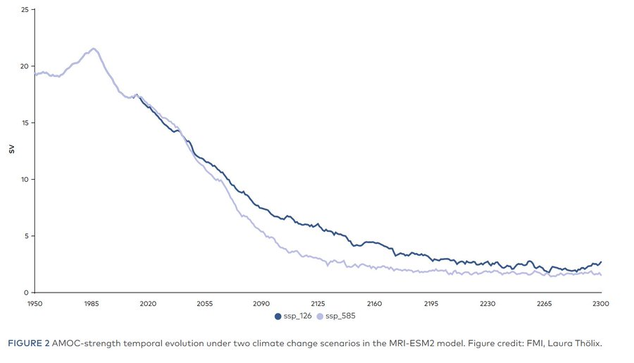
#EarthSystem #WorldSystem: "Due to lack of research, our understanding of the #AMOC #collapse impacts on the socio-ecological systems is incomplete." https://pub.norden.org/temanord2026-504/2-impacts-of-an-amoc-collapse.html
#WorldSystem: "Industrial-scale #mining in #Africa to support global supply chains is leading to unprecedented #deforestation across the continent, with 34 hectares of forest removed for every single hectare of active mine site." https://phys.org/news/2026-06-infrastructure-african-destroying-forests.html?utm_source=nwletter&utm_medium=email&utm_campaign=daily-nwletter
Infrastructure for African mines destroying forests at 34 times the rate of the mines themselves

Industrial-scale mining in Africa to support global supply chains is leading to unprecedented deforestation across the continent, with 34 hectares of forest removed for every single hectare of active mine site.

Phys.org
#WorldSystem/#Imbalances: "this essay argues that the mainstream narrative rests on flawed accounting interpretations, selective #history and a neglect of production realities." https://warwickpowell.substack.com/p/the-savings-glut-myth-production?triedRedirect=true
Beggar Thy Neighbour and The Savings Glut Myth: Production, Offshoring and the Real Origins of Trade “Imbalances”

Why deficit-country capital, fiat liquidity and historical North-South extraction — not surplus-country thrift — drive today’s global patterns

Warwick Powell's Substack