In the Manner of a Corpse

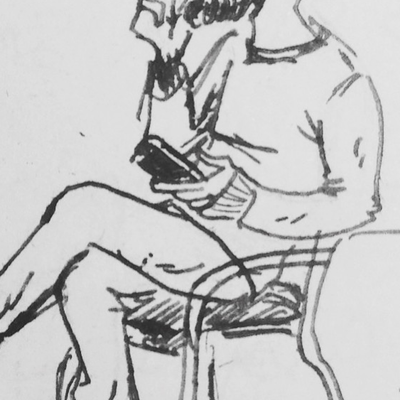
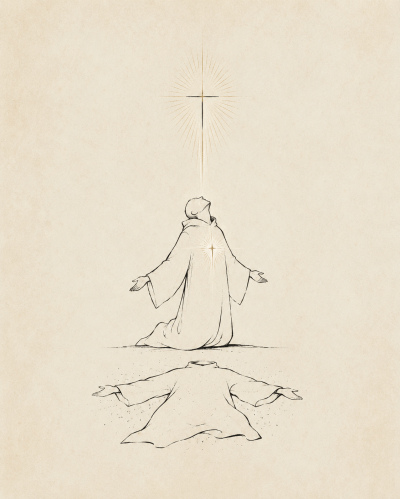
The phrase perinde ac cadaver means “as if a corpse” or “in the manner of a dead body.” It is associated especially with Ignatius of Loyola and Jesuit obedience. In the Jesuit context, the idea was that one living under religious obedience should allow oneself to be “carried and governed” by divine providence through one’s superiors, as a dead body can be carried wherever another wills. A Jesuit Studies summary notes that Ignatius’s teaching on obedience was centered on Christ and extended beyond outward action toward the will and understanding, while still allowing a person to represent difficulties to a superior. (Portal to Jesuit Studies) A 1908 quotation of the relevant Latin renders the image starkly: the obedient person should be like a body that “allows itself to be carried in any direction and treated in any way.” (The Spectator Archive)

So the phrase has a dangerous edge. It can become a theology of domination: the living person reduced to a usable instrument. But it also touches an older ascetic question: how does the self become free from the tyranny of self-will? The problem is not desire itself, nor personality, nor conscience, nor agency. The problem is the ego enthroned — the self that must be obeyed, defended, admired, justified, and protected at all costs.

A Caelinian Reflection: Concerning the Corpse, the Cross, and the Living Self

From the lesser folios of Brother Caelinius, copied in the dim cloister of the Morastery, concerning the death that is not death, and the life that is not possession.

There is a saying among the old disciplined orders: perinde ac cadaver — as if a dead body.

And many have trembled before it, as well they should.

For no phrase that compares the soul to a corpse ought to be handled without fear. A corpse cannot speak. A corpse cannot protest. A corpse cannot discern whether the hands that carry it are gentle or cruel. Therefore let no abbot, bishop, prince, pastor, committee, empire, army, market, or machine take this phrase into its mouth too easily. For there are many who love obedience in others because they love power in themselves.

But there is another reading, hidden beneath the severe garment of the words.

Not the corpse of domination.
Not the corpse of erased conscience.
Not the corpse of holy silence before unholy command.

Rather, the corpse of the false self.

For the ego too must die.

Not the self God created.
Not the face beloved before the foundation of the world.
Not the child laughing in the garden of being.
Not the soul with its strange music, its wounds, its gifts, its tears, its fire.

That self must live.

But the other self — the swollen self, the defended self, the self that must always be seen, always be right, always be vindicated, always be centered, always be special, always be wounded more deeply than all others, always be praised for its humility — that self must be laid out upon the table.

Let it be washed.
Let it be wrapped.
Let it be carried away.

For there is a death that does not destroy the person, but releases the person from the prison of self-occupation.

This is not becoming zero in the sense of becoming nothing. It is becoming unowned by the ego. It is the long, daily, humiliating, merciful work of dying to the self that has mistaken itself for God.

Christ does not say, “Erase the image of God within you.”

Christ says, “Deny yourself, take up your cross, and follow me.”

And what is denied?

Not love.
Not conscience.
Not joy.
Not beauty.
Not creativity.
Not the holy ache of being alive.

What is denied is the little throne within the breast, where the anxious monarch sits and demands tribute from every room it enters.

The ego says:
“Who noticed me?”
“Who ignored me?”
“Who has more than I have?”
“Who threatens my place?”
“Who failed to honor my pain?”
“Who saw my brilliance?”
“Who wounded my image?”
“Who must I defeat so that I may exist?”

But the soul alive in Christ learns another speech:

“I am already seen.”
“I am already held.”
“I do not need to win in order to be real.”
“I do not need to dominate in order to be safe.”
“I do not need to disappear in order to be humble.”
“I may become small because I am held by a Love too large to measure.”

Here, then, is the mystery: the one who dies to self does not become less alive, but more alive.

The corpse-image fails if it ends in passivity. But it becomes fruitful if it passes through the tomb into resurrection.

For the Christian is not called merely to be dead.

The Christian is called to be dead to sin and alive to God in Christ Jesus.

Dead to the old compulsions.
Alive to mercy.

Dead to rivalry.
Alive to communion.

Dead to the hunger to possess.
Alive to receiving.

Dead to the need to be the hero of every story.
Alive to becoming a servant within God’s story.

Dead to reputation as an idol.
Alive to faithfulness in secret.

Dead to vengeance.
Alive to reconciliation.

Dead to the clenched fist.
Alive to the open hand.

Thus Brother Caelinius writes:

Blessed is the one whose ego has become a corpse,
yet whose heart has become a garden.
For such a one is not carried by tyrants,
but raised by Christ.

The work continues because the ego is not slain once only. It is a many-headed thing. It dies in the morning and returns by noon. It dies in prayer and rises in conversation. It dies in confession and reappears in ministry. It dies in one wound and returns disguised as wisdom.

Therefore the disciple must not say, “I have no ego.”
That is usually the ego wearing a monk’s robe.

The disciple says instead:

“Lord Jesus Christ, have mercy on me.
Teach me to notice the old self without obeying it.
Teach me to lay down the false self without despising the true self.
Teach me to die without becoming dead.
Teach me to live without needing to be enthroned.”

For the goal is not corpse-like obedience to human hierarchy.

The goal is cruciform freedom.

Not the dead body as object, but the living body of Christ. Not the person emptied for use, but the person emptied for love. Not submission to domination, but surrender to resurrection.

And so the old phrase is taken down from the wall of fear and placed upon the altar of discernment.

Perinde ac cadaver — yes, but only if what lies dead is the tyranny of ego.

And beyond it, written in brighter ink:

Vivo autem, iam non ego, vivit vero in me Christus.

“I live; yet not I, but Christ lives in me.”

#aliveInChrist #AnabaptistReflection #BrotherCaelinius #ChristianArt #ChristianReflection #contemplativePrayer #cruciformLife #devotionalArt #Discipleship #DyingToSelf #egoDeath #falseSelf #Humility #IgnatiusOfLoyola #JesuitObedience #kenosis #minimalistArt #monasticSpirituality #mysticalTheology #perindeAcCadaver #resurrection #selfEmptying #spiritualFormation #surrender #symbolicIllustration #trueSelf
i wish for all of us that we can shutout the noise and find our true selves and live as we want and hopefully happily.

https://www.bbc.com/culture/article/20260501-why-mary-bennet-is-austens-most-relatable-heroine

#wish #TrueSelf #happiness

The Other Bennet Sister: Mary Bennet is the Austen heroine for the 21st Century - here's why

Based on the novel The Other Bennet Sister, a new TV imagining of Mary Bennet's life has won the hearts of British viewers. Here's why this Austen character is so relatable today.

BBC

What is a ‘true self’ and what is a ‘false self’?

I’ve always been instinctively suspicious of Winnicott’s notion of the ‘true self‘. Not because I doubt that it’s a frequent experience to find oneself relating in a manner which is in some fundamental way fake, somehow untrue to who we are. To the extent this is a routine feature of human experience it implies as a corollary forms of relating which are in some fundamental sense true to who we are. Likewise it is a common experience that these forms of relating feel good in some diffuse yet profound way. In essence I understand Winnicott to have been saying that relating from the true self keeps us in touch with our fundamental creativity, enabling us to act spontaneously in terms of who we are rather than acting defensively in order to comply with the (imagined) expectations of those around us. In essence the false self acts as a defensive carapace which forms to protect ourselves developmentally when we encounter situations in which we cannot be ourselves in this more spontaneous way. It’s what Gabor Mate describes with admirable clarity as the tension between attachment and authenticity:

The seed of woe does not lie in our having these two needs, but in the fact that life too often orchestrates a face-off between them. The dilemma is this: What happens if our needs for attachment are imperiled by our authenticity, our connection to what we truly feel? What happens, in other words, when one nonnegotiable need is pitted by circumstance against the other? These circumstances might include parental addiction, mental illness, family violence and poverty, overt conflict, or profound unhappiness—the stresses imposed by society, on children as well as adults. Even without these, the tragic tension between attachment and authenticity can arise. Not being seen and accepted for who we are is sufficient.

Myth of Normal, pg 147

As Mate later observes, “That some attachments may not survive the choice for authenticity is one of the most agonizing realizations one can come to” (pg 476). In this sense we could think of Winnicott’s concept as a way of describing how this tension plays itself out (or fails to) i.e. the manner in which we learn to pretend to be something other than what we are in pursuit of a sense of safety in our relations with others. In its more extreme forms this issues in a complete compliance with our environment and the demands we encounter within it, even preemptively so such that we are contorting ourselves to demands which no one is actually making of us. This is part of all childhood experience, as I understand Winnicott, with the difference being the degree to which the false self crowds out the true self and how deeply embedded the legacy of this becomes in adult life and with what consequences.

The problem I see is the tacitly essentialist register of ‘true self’ and ‘false self’. Not only does it lend itself so readily to simplification, such that we might simply seek to replace the (bad) ‘false self’ with the (good) ‘true self’, it fails to register the dynamic character of the process which is being captured. As I understand it these are more like psychic sources which become more or less integrated into the structure of our quotidian engagement with the world around us: the source of spontaneous and creative action which keeps us rooted in the present and the anticipatory and fearful action which is orientated to the future. It’s untenable to live entirely in the first mode as an adult so it’s more a question of how readily accessible that source is and how much it infuses our interaction with others and the world around us. Likewise the second mode provides a necessary feature for survival in an unpredictable world but it can squeeze out the possibility for authentic relating such that it makes any relating in the first mode untenable. Everything becomes about projection, performance and preparation rather than simply being and doing. The tension isn’t a one-time trade off, particularly outside of clinical settings, but rather a life long struggle between two modes that are essential to being human and thriving in a complex and open world. This is why I like so much Christopher Bollas who talks about this as an idiom:

Winnicott’s important statement that the true self is the inherited ‘personality potential’. From my point of view, this is exactly what it is: a complex inherited core of personality present at birth, an idiom of being and relating that will evolve and become activated according to the infant’s experience of the mother.

Essential Aloneness, loc 395

The other main quality of the true self is ‘spontaneity’: the gesture made real. We see somebody we would like to talk to, and we approach them and introduce ourselves. This is the gesture made real. If we merely think about doing this but we don’t actually move towards the person, the gesture is accomplished only as an inner mental representation. So one of the ways to evaluate the evolution of an individual’s true self is to note the extent to which their gestures have been made real.

Essential Aloneness, loc 407

It’s this movement from internal towards external gesture which is mediated by caregivers who meet the infant’s developing idiom and support its elaboration. For Bollas our personal idiom is defined through such elaboration as we relate to objects, including crucially cultural objects, in a manner which unfolds a particular sense in which I’m this person relating to these objects in this specific way. I develop my own specific idiom through the objects I select, how I engage with them and the way I’m changed in the process. There are objects which, as he puts it in Being a Character, act as ‘keys’ which unlock elements of our idiom:

Certain objects, like psychic “keys,” open doors to unconsciously intense—and rich—experience in which we articulate the self that we are through the elaborating character of our response. This selection constitutes the jouissance of the true self, a bliss released through the finding of specific objects that free idiom to its articulation.

Loc 208

The people we feel an affinity with. The places we find we belong. The music which moves us. The books which leave us changed after reading. As he puts it in Hysteria loc 100:

So each self will find particular individuals more attractive than others, will find certain actual objects — works of fiction, pieces of music, hobbies, recreational interests — of more interest than others, and in the course of living a life will have constructed a world which, although holding objects in common with other selves, will have shaped them into a form as unique as their fingerprint.

To be a ‘true self’ involves living in a way that is consistent with our idiom. This also means living in a way that calls for the continual elaboration of our idiom because to live with it consistently involves a continual encounter with objects that provoke this potential through their relations. The objects call forth experiences in us, activate potential that were previously latent, leaving us changed in all manner of ways. This I think is what is at work when cultural bingeing is edifying rather than deadening, a sense of being immersed in something that moves you rather than being caught in the circuits of drive to avoid something else. Indeed I’m currently bingeing on Bollas because I’m finding things here which express my idiom, particularly in the intellectual register of the sociological account of psychodynamics I’ve inarticulately groped towards over a long period of time. There is something about how I see the world, as well as how I want to account for what I see, which is being elaborated through reading his work. In doing so I’m changed in a manner which is deeply satisfying.

It suggests to me that cultural engagement can be a crucial source of connection to spontaneity. To write because you have the ‘feel of an idea’ (in my favourite phrase of C Wright Mills) rather than because you want to elicit a response in your readers. To read something because it’s gripping you rather than because you want to be someone seen to read things like that or to be someone who has read it. To listen to what moves you and leaves you feeling alive in the immersion. In the jouissance associated with these experiences we connect to something fundamental in ourselves: our personal idiom or ‘true self’. That enjoyment can be rich and generative because it touches something fundamental about who we are. Why am I the person so moved by this music? Why am I the person so fascinated by this author? It follows from Bollas that I think we ought to sit with these experiences, to linger in them so that we can sensitise ourselves to what is at work in them without allowing analysis to substitute for immersion. It’s how to really enjoy cultural engagement but it also has a broader psychic significance as a manner in which we connect with ourselves and what matters to us.

It’s less clear to me though what this means interpersonally. There’s a greater complexity to our object relating with people because they are, well… people. They too have their own idiom. The ruthlessness in object relating which Winnicott argued was essential to our psychic development becomes potential sources of harm in our relating with others. But conversely the fear of hurting others can be a stifling constraint on the possibility of authentic relating. The term which comes to mind here is atmosphere: the space that exists interpersonally and what it means for the possible expressions of idiom in the reciprocal relating that takes place. It’s also the question of what’s energising and what isn’t. How does it feel to be-with a particular person? Do you come across feeling energised or depleted? Do you feel elaborated or diminished? Do you feel sharper edged or somehow blurry? The complexity arises because relating in terms of our personal idiom can be genuinely harmful for the other. Indeed as Mate observes attachment and authenticity often cannot be reconciled. But there’s something here I think about finding who your people are as a matter of converging idioms and the atmosphere which prevails as a consequence of this convergence.

#christopherBollas #falseSelf #gaborMate #objectRelations #relating #trueSelf #Winnicott

True self and false self - Wikipedia

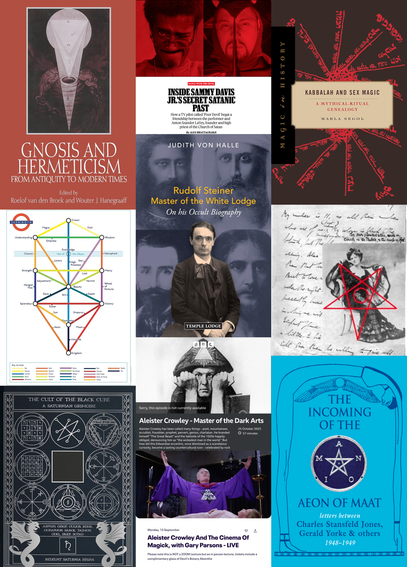
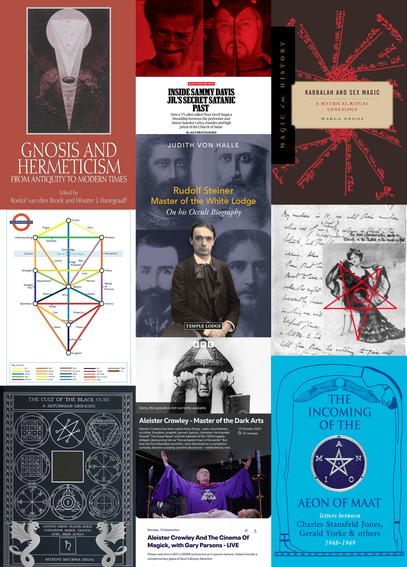
Top ten posts in 2025 https://library.hrmtc.com/2026/01/01/top-ten-posts-in-2025/ #2025 #AA #aeon #aeonOfHorus #AeonOfMaat #AeonOfTruthAndJustice #Aiwass #alanMoore #aleisterCrowley #AlexBhattacharji #amalantrahWorking #antiquity #AntonLaVey #ArthurMoros #asAbove #bbc #bestPosts #bestTen #bibliography #blackCube #cathars #charlatan #CharlesStansfeld #christianSects #ChristianTheosophy #churchOfSatan #cinema #darkArts #DavidBeth #divine #doctrinalFaith #ElizabethMarshall #ElsieGrayParker #encounter #fraterAchad #fraudster #GaryParsons #genius #geraldYorke #gnosis #gnostics #god #grimoire #groundOfBeing #hermeticPhilosophy #hermeticism #hermetics #historicalDevelopment #humanBody #innerEnlightenment #ItalianHumanistRenaissance #Jewish #JewishEsotericism #JewishStudies #JohnCoulthart #johnSymonds #Jones #JudithVonHalle #justice #kabbalah #kabbalisticCosmology #karlGermer #KennethGrant #LeslieOdomJr #Liber31 #LondonUnderground #MaIaon #maat #magic #magicalSon #magick #MarlaSegol #master #medievalKabbalah #MichaelBarnam #michaelStaley #middleAges #modernTimes #mountaineer #myth #newAge #NewAgeMovement #OTO #occult #occultism #occultist #PaulMorley #pervert #poet #poetry #postEnlightenment #poster #presentDay #Promethea #prophet #pureRationality #Radio4 #relationship #religion #religiousTraditions #RenaissanceHermeticists #revelatoryExperience #ritual #ritualPractice #RoelofVanDenBroek #RollingStone #romanticism #rosicrucianism #rudolfSteiner #SammyDavisJr #Saturnian #sexMagic #sexuality #soBelow #spiritualAlchemy #summary #summaryOfTheYear #TheBookOfTheLaw #TheEquinoxOfTheGods #TheGreatBeast #theWickedestManInTheWorld #TomasVincente #topPosts #topTen #treeOfLife #trueSelf #truth #westernEsotericism #WesternSexMagic #WhiteLodge #worldView #WouterJHanegraaff
Unleash the Power Within: A Deep Dive into Curletha Campbell’s Guide to Spiritual Resilience
In an era where the noise of social media, the pressure of professional expectations, and the weight of personal responsibilities can feel suffocating, many find themselves searching for a beacon of hope. Curletha Campbell, in her transformative book Unleash the Power Within; . More details… https://spiritualkhazaana.com/unleash-the-power-within-resilience/
#unleashthepowerwithin #poweroffaith #personalempowerment #trueself #knowyourworth

A quotation from Thomas Carlyle

A man always is to be himself the judge of how much of his mind he will show to other men; even to those he would have work along with him. There are impertinent inquiries made: your rule is to leave the inquirer uninformed on that matter; not, if you can help it, misinformed; but precisely as dark as he was!

Thomas Carlyle (1795-1881) Scottish essayist and historian
Lecture (1840-05-22), “The Hero as King,” Home House, Portman Square, London

More info about this quote: wist.info/carlyle-thomas/22409…

#quote #quotes #quotation #qotd #thomascarlyle #discretion #impertinence #innerself #privacy #privatelife #snooping #trueself

Another day, another 0 interactions I get, but ironically, Threads is asking me to pay for my true self (the verified badge). I have the right to have suspicions toward Threads and Meta. I have the right to accuse them of shadow-banning me and being ableist.

#SocialMedia #Authenticity #Threads #Meta #ShadowBanning #MentalHealth #DisabilityAwareness #UserRights #OnlineCommunity #DigitalIdentity #SocialJustice #Inclusion #Accessibility #TrueSelf #SocialMediaStruggles