 kurtsh
Love this 80s song.
▶️ Dan Hartman - I Can Dream About You
https://youtube.com/watch?v=621Nk3Ubz4A&si=vtwf1w5j6ayWlRb7
#StreetsOfFire #danhartman #80s #genx

Love this 80s song.
▶️ Dan Hartman - I Can Dream About You
https://youtube.com/watch?v=621Nk3Ubz4A&si=vtwf1w5j6ayWlRb7
#StreetsOfFire #danhartman #80s #genx
Streets of Fire, Three Dekopon, and My Rock ’n’ Roll Mum
(Tonight Is What It Means to Be Young)
Streets of Fire (1984)
Music produced by Jim Steinman
Closing theme: “Tonight Is What It Means to Be Young”
When my mother was transferred to a rehabilitation hospital on a cold day this January, I brought her a small present: three dekopon, her favourite citrus.
She looked at them, smiled, and told me to take one home.
Good things are never meant to be hoarded in her world — they are meant to be shared. That has always been her way: divide the last piece in two, make sure someone else eats first, quietly take the smaller share for herself.
That night, I peeled the dekopon at my kitchen table.
The first segment was absurdly sweet — bright, almost electric.
It tasted nothing like hospital corridors and paperwork. It tasted of all the years she had quietly kept our household running: the meals, the “have you eaten?”, the way she always pushed the best bit across the table to someone else.
Somewhere between the bitterness of the pith and the sweetness of the flesh, a line from Streets of Fire ran through my head: tonight is what it means to be young, and before you know it, it’s gone.
For someone in their twenties, “tonight” is a flash of neon — a single bright scene before the credits roll. For my 82-year-old mother, it has become something else: not a fleeting party, but a single point where all the years compress. Youth and age, gain and loss, all folded into one moment at a kitchen table with a piece of fruit.
And I realised: my 82-year-old mother is living inside a Jim Steinman song.
If you know the film Streets of Fire and its closing song, “Tonight Is What It Means to Be Young”, you’ll remember the world it paints: a city that feels permanently midnight, neon and rain on the streets, engines growling somewhere under the music, two people who have already taken more than their share of blows and still choose to walk back into the fire.
It is not a polite song.
The drums don’t ask permission; the modulation hits like a motorbike coming over the hill. The singer throws everything into a promise that is half love song, half battle cry.
We are surrounded, we’re exhausted, everything is stacked against us — and even so, tonight we are going to burn as if we were young and invincible.
That is exactly the kind of world my mother walks through.
On paper, there is nothing romantic about her situation.
At 82, she has lived with schizophrenia for more than 30 years and developed drug-induced Parkinsonism from the medication.
One eye is blind from age-related macular degeneration.
Her fingers are twisted and painful with Heberden’s nodes.
Part of her intestine has been removed after bowel obstruction.
Her right breast is gone after cancer.
Her spine is fragile from osteoporosis; this January she suffered her second compression fracture and lost more of her height.
Add high blood pressure, regular medication, and the long shadow of 3.11 — the Fukushima nuclear accident — with years of low-dose exposure in the background.
A true “department store of illnesses”. All those diagnoses stack up like walls of bone and scar and pain around her.
Our family home, which my parents worked so hard to buy, is also gone now — for reasons entirely separate from the earthquake, but painful all the same.
On the chart, she looks like someone who has every excuse to lie down and stay there.
Instead, on the very first day she arrived at the new clinic, she started walking practice.
Not a graceful stroll: the kind of raw, shaky first steps where you can see every gram of effort. The occupational therapist stands close by, and my mother grips the parallel bars as if they were the neck of an electric guitar.
She is not doing it because she believes some bright future is waiting for her. There is no promise of recovery, no guarantee that today’s effort will be rewarded in any measurable way. She walks because walking is the best thing she can do with the body she has, today. That is enough reason for her.
If you have seen the last scene of Streets of Fire, you’ll remember the band playing full power in a world that is still broken, still dangerous, but held back for a few minutes by sheer volume.
That is what her face looks like during rehab: not comfortable, not resigned, but absolutely committed to one more verse.
She also has a very clear reason.
There are two granddaughters — my nieces.
For the elder one, she spent years knitting a complex lace sweater by hand: the kind of pattern you can only manage when your hands are steady and your eyesight still co-operates. She started it when the girl was still an infant; this year, with her granddaughter in her final year of high school and about to graduate this spring, she finally managed to give it to her.
The younger granddaughter’s sweater is still unfinished.
“I can’t possibly die before I finish hers as well.”
In Steinman’s universe, heroes stand in the fire for someone they love, with guitars howling underneath and impossible promises on their tongues. They talk about dreams that are small and fragile and still somehow everything they have.
My mother’s version is quieter, but it’s the same contract.
Her battlefield is a hospital corridor. Her weapon is a pair of knitting needles waiting for her at home. Her dream is modest — two sweaters, a clean kitchen, a grandson and granddaughters who know they were loved — and it is absolutely all she has, and all she needs.
No one would blame a woman with that history, at her age, for deciding to take it easy, to skip the pain of rehab and accept the wheelchair. She knows that. She walks anyway.
There is always a choice: make things worse, or make them a little better.
She keeps choosing “better”, one painful step at a time.
Our finances over the last couple of years would look, from the outside, like an opening shot from the film: a city where the lights are going out one by one.
Household income has fallen to roughly a quarter of what it was.
Both my mother and I have lost a great deal of weight — not as a lifestyle choice, but as a side effect of simply having less.
Even so, when she talks about the future, she does not use the language of despair. She speaks in the language of work to be finished.
From her point of view, the equation is simple:
if she can come home and take on as much of the housework as she used to, then I will have time to continue my research and writing, and if I can keep publishing, perhaps the world her granddaughters — and their children, and their descendants — inherit will be a little kinder than the one she grew up in.
She believes it — completely.
It is an outrageous belief, very much in the Steinman tradition: a ronin’s son in Fukushima, convinced that his equations can nudge the structure of the world by half a degree.
She believes it.
And because she believes it so fiercely, I have no choice but to try to live up to it.
Sitting by her bed, watching her practised determination, I find myself thinking that this — more than any theory — is what a non-fungible soul looks like. You cannot swap her out for another statistically similar woman and get the same story. The trajectory is unique.
What it really means to be young
I want my mother to spend her remaining years quietly, with a full heart and as little pain as possible. In my ideal version of the story, her late life would be peaceful: good books, small treats, time to nap in the afternoon sun.
The woman in front of me in the hospital bed was not peaceful at all.
Even on the ward, with monitors humming and curtains half closed, there was a hard light in her eyes. Her body is down to around 40 kg and still falling, but her heart is on fire.
A small woman in her eighties, 40 kg and falling, standing up in a hospital, determined to support her son who insists on nudging the structure of the world with his equations.
So this is what it really means to be young.
When I close my eyes, that one scene is sharper than any frame from Streets of Fire: no neon, no stage, no crowd. Just a small, scarred body forcing itself upright one more time, because someone she loves is still trying to push the world by half a degree and she refuses to let him do it alone. One day, the walls that pen her in — bone and muscle and pain — will finally come down; when they do, I suspect she’ll be moving faster than any dream.
So this is what it really means to be young.
#Fukushima #FukushimaJustLife #JimSteinman #RockNRoll #Schizophrenia #StreetsOfFire


Some actors cannot produce emotion, which looks very bad. But a lot of bad actors over-act. Which is not good either. Today, watching the 1984 Walter Hill movie Streets of Fire, I think I finally saw an over-directed film. Is this a bad thing? No! The film is a blast. But it is not your typical movie. It is trying so hard that it crosses the line into avant-garde cinema, while remaining a dumb action film.
From: blenderdumbass . org
Some actors cannot produce emotion, which looks very bad. But a lot of bad actors over-act. Which is not good either. Today, watching the 1984 Walter Hill movie Streets of Fire, I think I finally saw an over-directed film. Is this a bad thing? No! The film is a blast. But it is not your typical movie. It is trying so hard that it crosses the line into avant-garde cinema,...
Read: https://blenderdumbass.org/reviews/streets_of_fire_1984_is_walter_hill_over-directing_a_bit
#StreetsOfFire #WalterHill #film #reivew #movies #cinemastodon
Some actors cannot produce emotion, which looks very bad. But a lot of bad actors over-act. Which is not good either. Today, watching the 1984 Walter Hill movie Streets of Fire, I think I finally saw an over-directed film. Is this a bad thing? No! The film is a blast. But it is not your typical movie. It is trying so hard that it crosses the line into avant-garde cinema, while remaining a dumb action film.
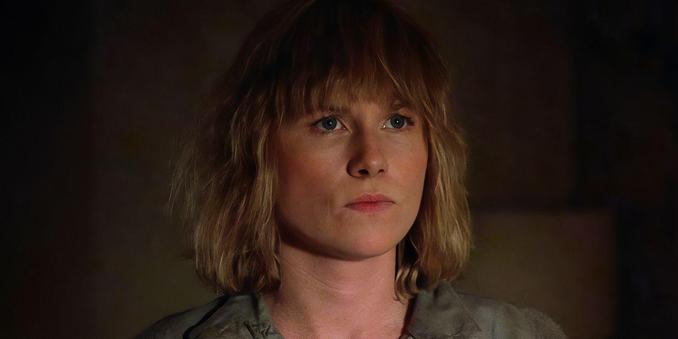

Streets of Fire: A Music Video Fantasy Undermined by Macho Tropes
Streets of Fire (1984) plays like a feature-length music video for a song by Jim Steinman—whose compositions, as anyone familiar with Meat Loaf’s videography can attest, lend themselves unusually well to cinematic treatment. Steinman penned the movie’s opening and closing songs (one of which is the anthemic “Tonight Is What It Means to Be Young”), while the score is a Ry Cooder leftover from some other movie—and you could certainly do a lot worse than that. Unsurprisingly, the music is by far the best thing about the film, making me wish it had gone all-in as a full-blown musical.
The story opens with Ellen Aim and the Attackers in concert, performing “Nowhere Fast.” Never mind the unfortunate band name; Ellen looks and sounds great, thanks to Diane Lane’s stage presence and the vocal work of Laurie Sargent and Holly Sherwood. The show comes to an abrupt end when the Bombers, a motorcycle gang led by Raven Shaddock (Willem Dafoe), crash the stage and kidnap Ellen. Raven absconds with her to the Battery—a part of town the police won’t even enter. So Billy Fish (Rick Moranis), Ellen’s boyfriend and manager, offers Tom Cody (Michael Paré) $10,000 to bring her back. Billy doesn’t know it yet, but Tom is Ellen’s ex. The two are joined by McCoy (Amy Madigan), a tough girl with little tolerance for assholes.
The action plays out like an MTV montage—a deliberate aesthetic choice. The sets are elaborate and detailed without ever pretending to be more than movie sets. Each actor’s look perfectly matches the character they’ve been assigned, which is very convenient because what we see is exactly what we get.
Moranis, unsurprisingly, makes the most of his character. He constantly has to look up at his interlocutors yet invariably talks down to them. “I don’t know what’s more pathetic, the way you talk or the way you dress,” McCoy tells him—and since Billy is supposed to be pathetic, he not only looks but also sounds exactly the way he’s supposed to.
As for Dafoe, with his leather fetish and Misfits hairdo, he endows Raven with what we may have to describe, for lack of a better term, as a sort of teenage Count Orlok quality.
The real disappointment is Paré—and by extension, the romance between Tom and Ellen. We don’t know what they see in each other except that they’re both physically attractive, which ironically makes her relationship with Billy seem like it’s built on a potentially more lasting foundation. Either way, we don’t really care whether Tom and Ellen end up together.
Although some hard feelings linger between them, that doesn’t even come close to justifying the movie’s single, truly WTF moment. We’re all familiar with that old cliché wherein the protagonist knocks out his sidekick, ironically to prevent the latter from “getting hurt” when all hell breaks loose. However, Streets of Fire may be the only film I can think of where the supposed hero deliberately puts his fist through the face of the woman he supposedly loves—and we’re still expected to root for him.
Yes, Ellen behaves like a spoiled bitch when she finds out her ex-boyfriend had the audacity to charge her current boyfriend for saving her life when even the police wouldn’t lift a finger—but punching her lights out is nevertheless totally uncalled for. The fact that she—this essentially being a live-action cartoon—looks no worse for wear once she regains consciousness only makes it worse, as if violence against women were a consequence-free, victimless crime.
This moment doesn’t just sour the relationship between Tom and Ellen—it exposes the deeper problem with Streets of Fire. The film sells itself as a stylized rock-and-roll fantasy where attitude and aesthetic trump character depth or plot logic. But in trying to be everything at once—part sincere fairy tale, part ironic genre pastiche, part nihilistic tough-guy fantasy—it bungles all three. Instead of subverting outdated macho clichés, it indulges them without irony and even dresses them up as romantic gestures. What’s left is a hollow spectacle that looks like a music video, moves like a cartoon, and thinks like a bar fight.
Joke’s on Billy, though. He’s the one stuck with a famous girlfriend who sings longingly in public about the guy who toyed with her emotionally and assaulted her physically. Then again, as her manager, this probably makes him feel a little less bad about collecting his 10%.
Works Cited
Streets of Fire. Directed by Walter Hill, performances by Michael Paré, Diane Lane, Rick Moranis, Willem Dafoe, and Amy Madigan, Universal Pictures, 1984.
Steinman, Jim. “Nowhere Fast” and “Tonight Is What It Means to Be Young”. Performed by Fire Inc., MCA Records, 1984.
Meat Loaf: Hits Out of Hell. Directed by Arnold Levine, performances by Meat Loaf, Sony Music Video Enterprises, 1985.
Cooder, Ry. Streets of Fire: Music from the Original Motion Picture Soundtrack. MCA Records, 1984.
Related
https://www.youtube.com/watch?v=vVNXpQOHnAo&pp=ygUXc3RyZWV0cyBvZiBmaXJlIHRyYWlsZXI%3D
 Toshisada Utsunomiya
 50+ Music
 Mr Creosote
 Blender Dumbass
 Blender Dumbass ( J.Y.Amihud )
 Curt Johnson - Indie Genius
 Raurquiz
 jp
jp
 90% of Everything is Crap