Seven simple questions for #DecisionMakers:

1️⃣ How big? How much? How many?
2️⃣ Compared to what?
3️⃣ Why not a rate?
4️⃣ Per what? The diabolical denominator.
5️⃣ How were things defined, counted or measured?
6️⃣ What was taken into account (what was controlled for)?
7️⃣ What else should have been taken into account (controlled for)?

Source:
➡️ http://www.statlit.org/pdf/2022-Schield-SJIAOS.pdf

#CriticalThinking #Statistics #StatisticalLiteracy #InformationLiteracy #DataLiteracy #Data #Policy #Politics #Business #LabPlot

"In real life, we weigh the anticipated consequences of the decisions that we are about to make. That approach is much more rational than limiting the percentage of making the error of one kind in an artificial (null hypothesis) setting or using a measure of evidence for each model as the weight."
Longford (2005) http://www.stat.columbia.edu/~gelman/stuff_for_blog/longford.pdf

#modeling #nullHypothesis #probability #probabilities #pValues #statistics #stats #statisticalLiteracy #bias #inference #modelling #regression #linearRegression

Surveys, coincidences, statistical significance 🧵

"What Educated Citizens Should Know About Statistics and Probability"
By Jessica Utts, in 2003: https://ics.uci.edu/~jutts/AmerStat2003.pdf via @hrefna

@edutooters

#nullHypothesis #probability #probabilities #pValues #statistics #stats #education #higherEd #statisticalLiteracy #bias #media #causalInference

5/ Meditation time 🤔 Another of Paul F. Velleman's Fourteen Data Aphorisms for Data Analysis to contemplate on:

@[email protected]

#Aphorism #DataAnalysis #DataScience #Data #DataViz #Science #Statistics #CriticalThinking #STEM #StatisticalLiteracy #LabPlot #FOSS #FLOSS #OpenSource

📊 Excited to share my interview with renowned sociologist Dr. Joel Best, where we dive into the complex interplay of #statistics, storytelling, and narrative creation! Learn how to spot dubious data and critically assess numbers shaping our world. 🧠📚

Watch now: https://youtu.be/PsTEF9OU4Ik 👀🔗

#JoelBest #StatisticalLiteracy #Data #Research #Sociology #Storytelling

It's the next big Issue! Dr. Joel Best Explains how Narratives are created!

YouTube
In my humble opinion, this book should be a must-read in all classes of quantitative methodology in social sciences (and not only). #StatisticalLiteracy #dataanalysis #rstats @sociology

@ZeroCovidColin While short of the PROOF you demand, you probably know this excellent RCT on a related topic? ✈️ 🪂 🤣

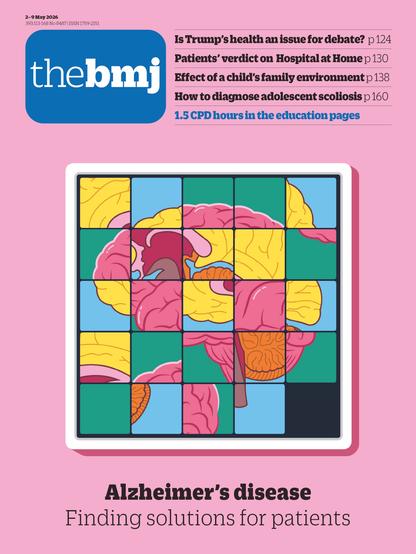
Parachute use to prevent death and major trauma when jumping from aircraft: randomized controlled trial
https://www.bmj.com/content/363/bmj.k5094

#parachute #RCT #EBM
#stats #statistics #StatisticalLiteracy
#Covid #Covid19 #EvidencePluralism

Parachute use to prevent death and major trauma when jumping from aircraft: randomized controlled trial

Objective To determine if using a parachute prevents death or major traumatic injury when jumping from an aircraft. Design Randomized controlled trial. Setting Private or commercial aircraft between September 2017 and August 2018. Participants 92 aircraft passengers aged 18 and over were screened for participation. 23 agreed to be enrolled and were randomized. Intervention Jumping from an aircraft (airplane or helicopter) with a parachute versus an empty backpack (unblinded). Main outcome measures Composite of death or major traumatic injury (defined by an Injury Severity Score over 15) upon impact with the ground measured immediately after landing. Results Parachute use did not significantly reduce death or major injury (0% for parachute v 0% for control; P>0.9). This finding was consistent across multiple subgroups. Compared with individuals screened but not enrolled, participants included in the study were on aircraft at significantly lower altitude (mean of 0.6 m for participants v mean of 9146 m for non-participants; P<0.001) and lower velocity (mean of 0 km/h v mean of 800 km/h; P<0.001). Conclusions Parachute use did not reduce death or major traumatic injury when jumping from aircraft in the first randomized evaluation of this intervention. However, the trial was only able to enroll participants on small stationary aircraft on the ground, suggesting cautious extrapolation to high altitude jumps. When beliefs regarding the effectiveness of an intervention exist in the community, randomized trials might selectively enroll individuals with a lower perceived likelihood of benefit, thus diminishing the applicability of the results to clinical practice.

The BMJ

The Seven Unnatural Acts of Statistical Thinking acc. to Richard D. De Veaux and Paul F. Velleman

1. Think Critically.
2. Be Skeptical. Question authority and the current theory.
3. Think about variation rather than about center.
4. Focus on what we don’t know.
5. Perfect the Process. Our best conclusion is often a refined question.
6. Think about conditional probabilities and rare events.
7. Embrace vague concepts (Center, Outlier, Linear...).

#StatisticalThinking #StatisticalLiteracy

Just explained to family member why local temperatures in some areas can decrease, despite global temperature increase.

#statisticalLiteracy

A critical statistics education that fits on a postcard

A critical statistics education that fits on a postcard

Boing Boing