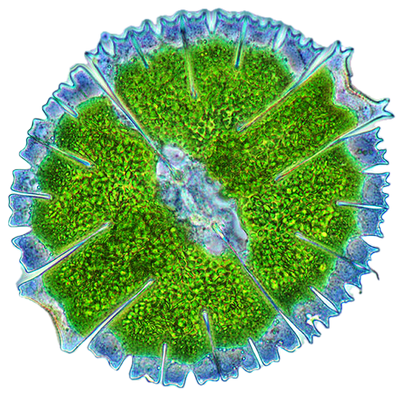
This is not a #virus! #CryoEM is delivering beautiful and insightful images of #retrotransposon in action. See for instance Klumpe and coll., 2025 (https://www.sciencedirect.com/science/article/pii/S009286742500159X), where they show viral-like particles making lattice cluster structures in the nuclei of #Drosophila cells.

Day 10: Retrotransposons are genetic elements that copy and insert themselves into other parts of the genome, virtually increasing genetic material. They are highly active in the hippocampus, a region crucial for learning and memory. Their activity is particularly noticeable during neurogenesis, as the hippocampus is one of the few areas in the adult brain where new neurons are formed.

Their exact role is currently unclear, but after learning tasks, retrotransposition events appear to increase, suggesting a link to memory formation. Retrotransposons might help neurons adapt by altering gene expression or facilitating functional diversity within neural networks, supporting the flexibility needed for learning and memory.

#ShyButSharing365 #neuroscience #learning #memory #dna #retrotransposon #genome

Yung-Heng Chang & @Joshdubnau explore a #plosbiology study revealing that the #retrotransposon gag protein of Copia forms virus-like capsids that transfer its own RNA across the fly neuromuscular junction to regulate #synapse formation Paper: https://plos.io/3X71IDa Primer: https://plos.io/4i6rzmC
Capsid transfer of the retrotransposon Copia controls structural synaptic plasticity in Drosophila

Transposons are parasitic genome elements that serve as raw material for the evolution of new cellular functions. In this study, the capsid of the virus-derived retrotransposon Copia is shown to mediate synaptic plasticity at the Drosophila neuromuscular junction.

Haluaako joku nähdä mun gradun 😊: https://drive.google.com/file/d/1uqoGasTIUk-MelDa5blAtQE7Gmfkypnt/view

Se on juurikin näistä retrotransposoneista, jotka täyttävät meidänkin DNA:stamme melkein puolet (sic!)

#retrotransposon #progradu

Pro gradu Mikko Kolkkala.pdf

Google Docs
Ancient retroviruses played a key role in the evolution of vertebrate brains, suggest researchers

Researchers report in the journal Cell that ancient viruses may be to thank for myelin—and, by extension, our large, complex brains.

Phys.org
DNA element with a murky past is borrowing cell's repair machinery

Like its viral cousins, a somewhat parasitic DNA sequence called a retrotransposon has been found borrowing the cell's own machinery to achieve its goals.

Phys.org

`Together, our study reveals that alt-EJ is essential in driving the propagation of #parasitic #genomic #retroelements. Our study uncovers a conserved function of this understudied #DNA #repair process, and provides a new perspective to understand—and potentially control—the #retrotransposon life cycle`

https://www.nature.com/articles/s41586-023-06327-7

Retrotransposons hijack alt-EJ for DNA replication and eccDNA biogenesis - Nature

Retrotransposons hijack the alternative end-joining DNA repair process of the host for a circularization step to synthesize their second-strand DNA.

Nature
A not-so-selfish 'genetic parasite' helps to preserve fertility

Ribosomal DNA (rDNA) sequences are essential parts of many species' genomes. The highly repetitive nature of these DNA sequences makes them susceptible to shrinkage over time—and if they shrink too much, cells die. If rDNA shrinks too much in germ cells, the cells that become eggs and sperm, then individuals may become infertile and their lineages may go extinct.

Phys.org
#Retrotransposon activation during #Drosophila metamorphosis conditions adult #antiviral responses https://www.nature.com/articles/s41588-022-01214-9
Retrotransposon activation during Drosophila metamorphosis conditions adult antiviral responses - Nature Genetics

Expression of mdg4 retrotransposons during Drosophila metamorphosis activates the antiviral NF-κB factor Relish. Silencing of mdg4 or Relish at the pupal stage leads to an inability to clear exogenous viruses in adulthood.

Nature