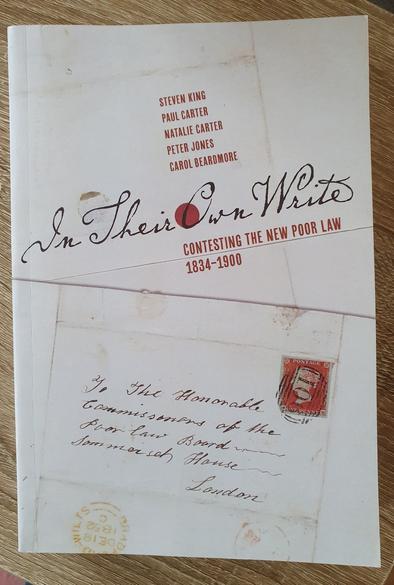
In the Poor Law Amendment Act of 1834, politicians made the workhouse the centrepiece of the New Poor Law, a more ‘efficient’ and cheaper way to relieve the poor in England, Wales and Cornwall. Workhouses were intended to discipline the poor by forcing idlers to work and shirkers to become strivers. But in practice, they became populated disproportionately by single mothers, widows, orphans, the old and the chronically sick. As a consequence, many of our nineteenth century forebears would have ended their days in the workhouse.
Before the New Poor Law there was the Old Poor Law. This was managed by local parish vestries who appointed their own overseers of the poor. The Old Poor Law was less efficient and cost the ratepayers more but on the whole it was more humane. Some workhouses had begun to appear in the larger parishes by the late 1800s but in the main the poor received aid while living in their own homes. The Gwennap Poor Law records give us an insight into the operation of the poor law at the beginning of the 1800s.
Railway Terrace, Carharrack a hundred years later. The railway is the Redruth & Chacewater line. The population of Gwennap was recorded as just under 4,600 in the 1801 census, making it one of Cornwall’s more populous parishes. This was a recent development as the parish had grown rapidly during the eighteenth century as miners turned the land inside out in their search for copper. Mining flourished and people flocked to the villages of St Day, Carharrack and Lanner. Nonetheless, the mining boom had not eliminated poverty. In 1799 between 450 and 500 persons had received some form of poor relief, around ten per cent of the population.
How were they helped? Here’s the first 20 entries in the list of 68 recipients of poor relief agreed at the vestry meeting of the 7th January 1800. (The spelling has been updated, e.g. two pair of shoes for ‘to pear of shoues’.)
- George Bray’s wife – swaddling clothes, inside petticoat, gown and waistcoat for the boy
- Thomas Perry’s maid [probably daughter rather than servant] – shoes, shift, shoes and waistcoat for Thomas Perry, shift and shoes for wife
- Anthony James – to clothe his son some dowlas [a coarse calico]
- Kate Gregor – pair of shoes
- Cath Carvolth – low price rug
- Richard ‘Rimpre’ [probably Remphry] – ten yards of dowlas and ‘checks’ [chequered cloth], pair of shoes
- Christian Kneebone – shift
- Jane Bawden – shift and shoes
- Cath Francis – bed sheet
- James Cannon – pair of shoes and eight yards of dowlas
- Alex Holman – shoes, shirt and a waistcoat
- John Seppe [?] – 15 yards of dowlas and shoes for his wife
- Alice Webb – blanket and shift
- Richard Odger – goods
- John Brown – in necessity five shillings and sixpence
- Edwards Rimpre’s wife – swaddling clothes
- Kate Cornish – rent for Leaches [it’s not clear whether Leaches referred to a place or a family. There were families with that surname in Gwennap at this time so my guess is that Kate Cornish was the landlady to whom the rent was due]
- John Brown – waistcoat, breeches [trousers] and cotton shirt
- Ann Nicholas – seven and a half yards of dowlas and five yards of baize
- Blanch Lean – a ‘stuff’ gown [possibly woollen as opposed to cotton or other material]
As we can see, virtually all of the relief was in kind, most being items of clothing or shoes. Almost three quarters of the total relieved on that day were women, probably widows and single mothers, although this is not stated in the records. The total cost of the relief given in January 1800 was £8, two shillings and six pence, equivalent to around £850 today.
[from Gwennap Poor Law Records, 1799-1808, transcribed by W.L.Bawden]
The costs of maintaining this website are constantly rising. If you’ve enjoyed it then making a small donation would help to keep it ad-free.
https://bernarddeacon.com/2024/11/09/the-old-poor-law-in-gwennap/
#Gwennap #poorLaw
 This Is My Glasgow
 Cornish studies resources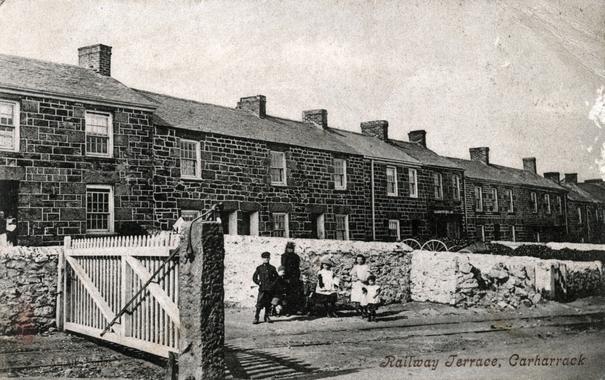

 Jonathan Wright
 Peter Gray
 Carol Hughes
 Andrea Povey
 Carole