 PugJesus
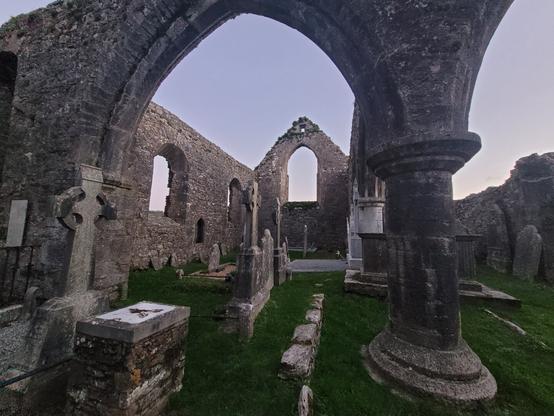
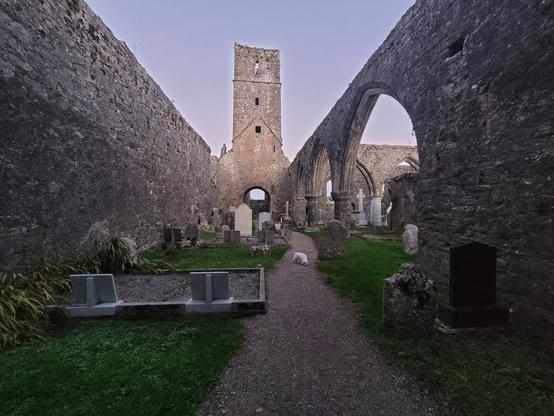
Ennis Friary, Ireland
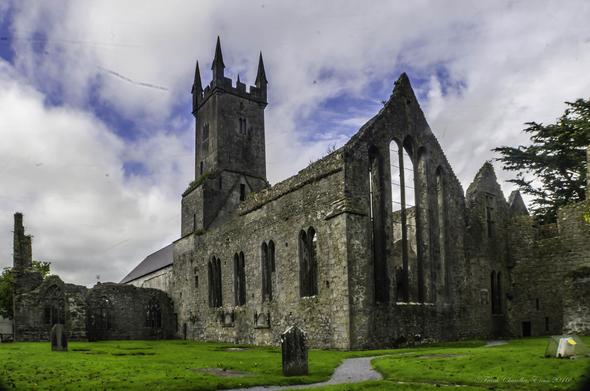
White Friars and Lepers: the thread about Greenside’s chapel and hospital
Apropos recent world events (at the time of writing in December 2021) I thought it was worthwhile taking a few minutes to spare a thought for Lepers in 16th century Edinburgh, who lived life according to incredibly strict terms that we we might now call “lockdown“.
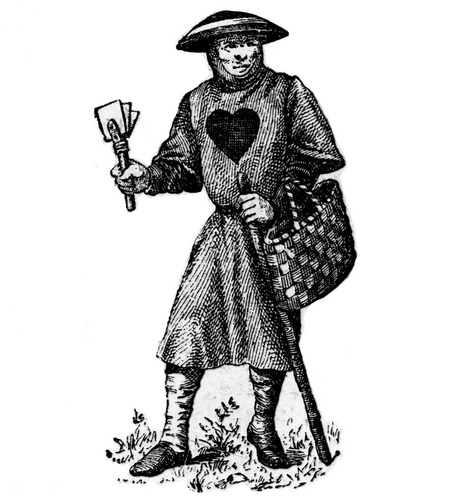
A 16th century leper. The clapper, broad hat, cowl and cloak are a recurrent image of leprosy sufferers of this period. CC-BY-SA 4.0 Wellcome CollectionThere had been a leper hospital in Edinburgh since medieval times, but there is no positive record as to where it may have been. There is a story you sometimes hear that the placename Liberton derives from “leper town“, but that is easily debunked by the fact the place name predates the arrival of the word leper into Scots language by centuries. By the 16th century, after the reformation, the leper hospital was located at Greenside, outside the city boundary at the time and actually in the neighbouring Barony of Restalrig. The approximate location was between the junction of London Road and Leith Walk and Greenside Church. We know this not only because it was helpfully marked up on those old Ordnance Survey maps but also there are surviving records, a contemporary illustration and archaeological evidence uncovered during the interminable tram works.
OS 1849 town Plan overlaid on modern aerial imagery showing the general location of the Leper hospital / Carmelite Friary of Greenside. Drag the slider to compare. Highlighted are the site of the “Rood Well of Greenside” and the “Monastery of Carmelite Friars (1536) subsequently Greenside Hospital for Lepers (1591)”. Reproduced with the permission of the National Library of ScotlandThe use of this site goes back centuries before the hospital however and its earliest recorded use was as the site of the Rude Chapel. The Rude refers either to a Rood Screen – a feature of medieval churches – to an existing cross (or Rude) near the site, or to the nearby Augustinian Abbey of Holyrood (which refers to the Holy Rood or cross upon which Jesus was crucified). This chapel may have been founded around 1456 when King James II gave the valley of Greenside to the town as a “sporting” field, one for the medieval sorts of sports like jousting and open air theatre. In 1554 the Queen Regent Mary of Guise attended an open air production of David Lindsay’s epic play “Ane Pleasant Satyre of the Thrie Estaits, in Commendation of Vertew and Vituperation of Vyce“; all 9 hours of it.
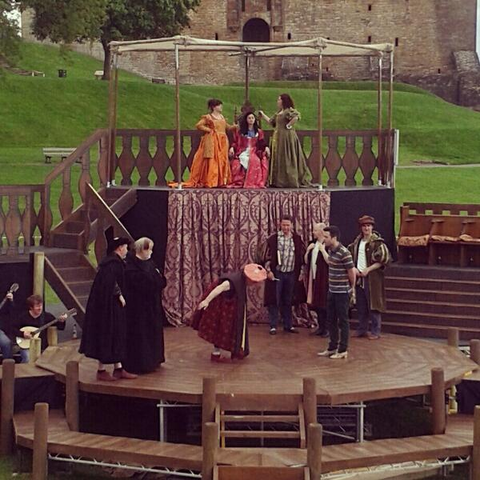
A 2013 production of “A Satire of the Three Estates” in renaissance costume at Linlithgow Palace, by Staging the Scottish CourtLittle is known of the Rude Chapel, not even which saint it was dedicated to, and it had fallen fell out of use by 1518 when James Hamilton – Earl of Arran and Lord Provost of the city at that time – conveyed it to the Order of the Brothers of the Blessed Virgin Mary of Mount Carmel: the Carmelite order, also known as the White Friars on account of the colour of their cloaks.
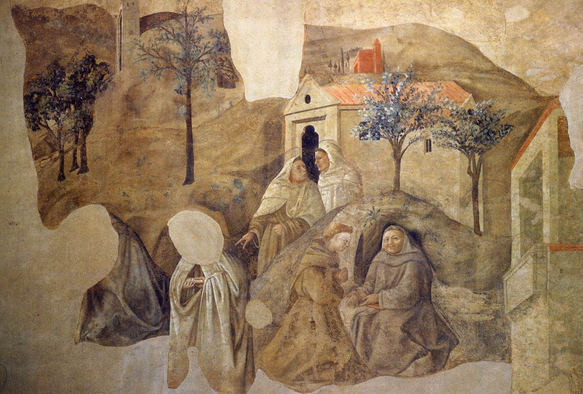
“Conferimento della Regola del Carmelo” – Confirmation of the Carmelite Rule – a 1430 Fresco in Florence by Filippo LippiThe other friars in Edinburgh at this time were the Dominicans or Black Friars in the Canongate (see also Blackfriars Street) and the Franciscans or Grey Friars where the Kirk of that name now is. In addition, in Leith there were the Augustians at St. Anthony’s Preceptory, near the Foot of the Walk whose chapel still exists as a ruin on the slopes of Arthur’s Seat. The Carmelites were well established in the Lothians with friaries at Linlithgow and South Queensferry, which Greenside fell under the patronage of. George Hutton’s sketches of the late 18th century give us an idea of what the Queensferry Friary looked like before later repairs.
Carmelite Church at South Queensferry, from Hutton Drawings. CC-BY-SA National Library of ScotlandIn 1557 the Prior of Greenside, David Balbirnie, is recorded as being in office at Queensferry. This was perhaps as a result of Greenside having being left in ruins by the English Army in 1544 during the Burning of Edinburgh.
“A Coloured Plan, or Bird’s Eye View, of the Town of Edinburgh“, the English Army marches from Leith towards Edinburgh via the Calton Hill. A 1544 watercolour, probably by the military engineer Richard Lee.The cluster of buildings shown on the above illustration on the right hand side of the image, below the castle and on the reverse slope of Calton Hill, are probably the Greenside priory and its doo’cot. The friars probably ran some sort of hospital here in the medieval meaning of the word – spiritual care on a Biblical basis, to prepare the soul for the next life – rather than the sort of medical institution that we would now think of.
This collection of buildings on the northwest slopes below Calton Hill, in a walled enclosure with a dovecot is probably the Greenside priory. Credit: With permission, from the British Library archive, Cotton Augustus I. ii. 56In 1534 two Protestant heretics, David Straiton and Norman Gourlay, were condemned to be burnt at the stake, a gruesome sentence that was carried out within the walls at Greenside. The priory was out of use by the time of the Reformation when the only other contemporary image shows it a roofless complex of buildings on the 1560 map of the Siege of Leith – probably also by the same Rirchard Lee – which records its name as the Roode Chappelle. There is also a partial wall shown, but no dovecot.
“Roode Chappell” from the 1560 “Petworth House Map” of the Siege of Leith. PHA 4640, Reproduced by the kind permission of Lord Egremont and with acknowledgements to the County Archivist, West Sussex Record OfficeBy the 1580s the friary and chapel were both long abandoned and when the city was casting around for a site to locate a leper hospital their ruins were a potential candidate. St. Paul’s Work, a charitable house in the Waverley Valley next to the Trinity College Kirk, was also mooted but was found to be unsuitable and so in 1589 the Magistrates of the city approved that a Leper House was to be provided at Greenside. This was financed by John Roberstson, a wealthy merchant of the city, in response to his prayers for an act of mercy being answered.
The hospital provided for seven inmates, and inmates was the right word. Although they were admitted to the “care” of the hospital voluntarily, this was a hard bargain and the price of admittance was forfeiting nearly all rights as an individual. These first seven patients were Robert Mardow, James Garvie, Johnn MacRere, James Wricht, and Johnn Wilderspune. Also incarcerated (voluntarily) with them were two of ht men’s wives; Isobel Barcar (Mrs Mardow) and Janet Galt (Mrs Garvie).
No manner of Lipper persone, man nor woman, fra this tyme forth, cum amangis uther cleine personis, nor be nocht fund in the kirk, nor fleshe merket, nor no other merket within this burghe, under the payne of burnyng of their cheik and bannasing off the toune
1530 Act of the Scottish Parliament against lepers.The inmates had to abide by the strict rules of the hospital on penalty of death. To underline the seriousness of this threat there was a gallows erected on the gable end of the hospital and the keeper had power of carrying out that sentence, on the spot, for any infraction. The local name for the confines of the hospital wall was reportedly The Hangman’s Acre. The inmates were forbidden to leave the confines of its walls, all except the two wives (who were not Lepers) and who could do so only on market days to shop for themselves and the patients. The wives were strictly forbidden to do anything else outside the walls of the hospital. The doors of the hospital were to be kept locked from sunset until sunrise. The patients had the privilege during the hours of daylight to sit at the door, one at a time in turns, and shake “ane clapper” to attract the attention of passers buy to donate alms.
Late 15th century image of a leper begging at the walls of a town. Again shown with long cloak and cowl, wide had and leather clapper. “Leper with a clapper”, from Bartholomeus AnglicusLepers didn’t ring bells (metal and casting was very expensive), instead they had wood and leather clappers that they shook to make a loud noise. Such devices are commonly seen in medieval illustrations. The inmates at Greenside were forbidden from begging under any other circumstances and in any other manner than that which was prescribed.
Leper clappers.There were no holidays for the hospital and no visitors were allowed within its walls, apart from those “placit with thame thairin at command of the said Councall and Session“. The alms collected from the door were to be shared equally and declared to the council on a weekly basis when the appointed keeper made his visit. In addition to this a pension of 4 shillings Scots (4 English pence) was provided. The only comfort afforded for them beyond this (and it would have been an important one at the time), was the appointment of “ane ordinair reider to reid the prayeris everie Sabboth to the said lepperis“; every Sunday somebody would come to read them prayers.
It should therefore be clear that the Lepers and their wives were fundamentally locked inside the hospital on their own, to care and provide for themselves as best as they could and saw only the weekly visit of their prayer reader and council clerk. There is also every chance that not all of the Lepers even had that disease, any severe illness of the skin may have been described as such at that time and gotten you sentenced to Greenside.
After its establishment the hospital seems to disappear from the record and it may have been that it only existed for what remained of the lives of its initial residents. The colony was likely abandoned by the early 17th century. Its last resident may have been Thomas Weir – the infamous Major Weir – in 1670, who was confined as a prisoner here untile his execution by garrotting and burning at the stake for witchcraft, bestiality, incest and adultery nearby at the Gallowlee (Shrubhill).
The Devil’s fiery coach, which apparently conveyed Weir to Dalkeith to hear of news of the defeat of the Scots Army at the battle of WorcesterThe 2013 excavations at what was the London Road roundabout in advance of the city’s notorious tram project uncovered remains of a graveyard in this area. The archaeological write up does not mention precise dating or any signs of leprosy on the skeletons, but pottery dated the interments to between the 15th and 17th century.
Report of the 2013 archaeological excavations at Greenside as part of the Trams projectThe Greenside Well is believed to date back to the time of the chapel / priory / hospital and may indeed have been the reason that these institutions had been established at this exact location. It existed as a public water source until the middle of the 19th century and is shown on maps of this time.
Ainslie’s 1804 Town Plan, showing the well and an adjacent washing house. Reproduced with the permission of the National Library of ScotlandIn a very odd hark back to the distant past of Scotland before the Reformation, until the 20th century the Catholic Church in Rome still had an official on its payroll who was “il Padre Priori di Greenside“; the Priory Father of Greenside.
Note to readers: unfortunately in April 2026, a third-party plug-in more than exceeded its authority and broke many of the image links on this site. No images were lost but I will have to restore them page-by-page, which may take some time. In the meantime please bear with me while I go about rectifying this issue.
If you have found this site useful, informative or amusing then you can help contribute towards its running costs by supporting me on ko-fi. This includes my commitment to keeping it 100% advert and AI free for all time coming, and in helping to find further unusual stories to bring you by acquiring books and paying for research.
Or please do just share this post on social media or amongst friends and like-minded people, sites like this thrive on being shared.
Explore Threadinburgh by map:
Travelers' Map is loading...These threads © 2017-2026, Andy Arthur.
NO AI TRAINING: Any use of the contents of this website to “train” generative artificial intelligence (AI) technologies to generate text is expressly prohibited. The author reserves all rights to license uses of this work for generative AI training and development of machine learning language models.
#Lochend #Logan #Restalrig #StMargaret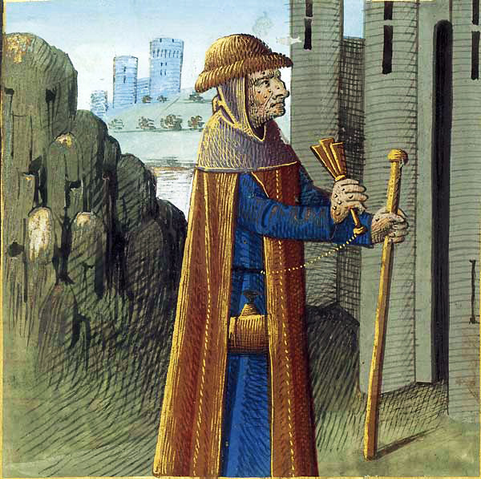
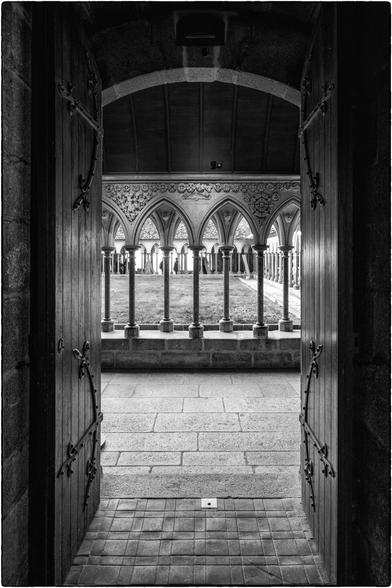
cloître
Kreuzgang Mont-Saint-MIchel.
NIKON Z 7II | 24mm | f/4 | 1/40s | 24/11/2024
#hess_photography #photography #fotografie #abbey #architecture #blackandwhite #blackandwhitephotography #bnw #bnw_mood #bnwmood #bnwphotography #BW #cloister #conventual #France #friary #LeMontSaintMichel #monastery #monochromatic #monochrome #Normandie #Reisen #sacralbuilding #sacredbuilding #sacredstructure #schwarzweiss #schwarzweissfoto #schwarzweissfotografie #schwarzweissphoto #swfoto #swfotografie
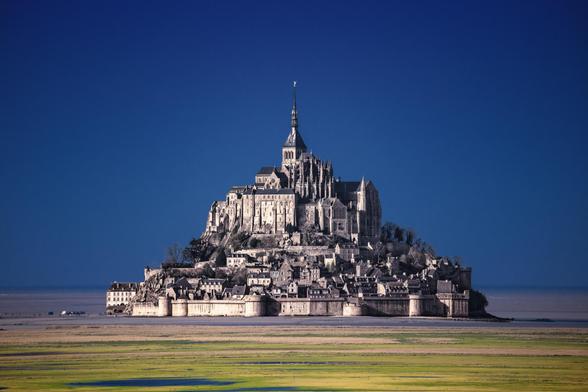
Le Mont-Saint-Michel
#abbey #architecture #cloister #conventual #fotografie #France #friary #hess_photography #LeMontSaintMichel #monastery #Normandie #photography #sacralbuilding #sacredbuilding #sacredstructure #landscapephotography
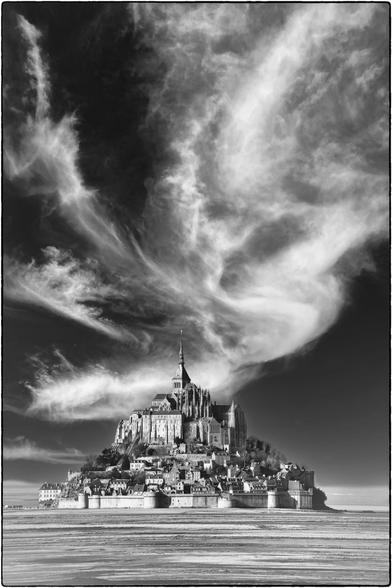
Le Mont-Saint-Michel
#hess_photography #photography #fotografie #abbey #blackandwhite #blackandwhitephotography #bnw #bnw_mood #bnwphotography #cloister #conventual #friary #monastery #monochromatic #monochrome #Normandie #schwarzweiss #MontSaintMichel #clouds
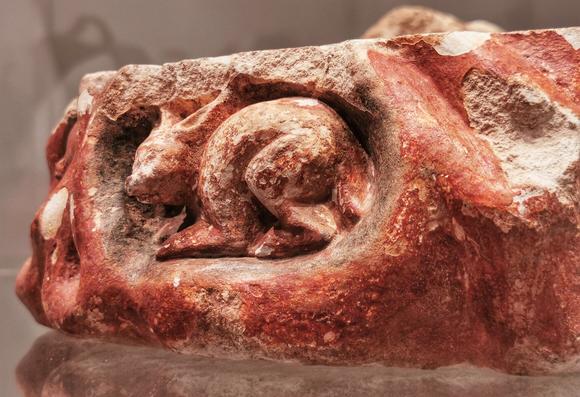
Rabbits in a warren, from a section of a column, c. 1500, from the Dominican friary on the site of Princesshay in Exeter. Apparently as a stone carving of a warren it is unique.
That's not the best bit, though. The best bit is that a medieval mason has carved a rabbit disappearing into its burrow, so we get the rear end of the rabbit with a fluffy tail!
#exeter #devon #medieval #history #friary #rabbit #FluffyTail
In 1317, Edward II granted the friary of St Augustine a license to purchase land in Skirbeck in Lincolnshire and by 1328 there were twenty friars living there. By the time of the dissolution, the total area was calculated as covering about ten acres - half an acre of this was adjacent to St John’s churchyard.
Three centuries later, when the Poor Laws were enacted it became the responsibility of the local parish to provide for the poor and they were housed in workhouses. Boston was built on land that belonged to the friary. All that remains now is its frontage.
The building was designed by architect George Gilbert Scott (image two) and what remains today is used by Lincolnshire Social Services.
#lincolnshire #boston #skirbeck
#friary #staugustine #edwardII #workhouse #poorlaw #19thcentury #architecture #georgegilbertscott
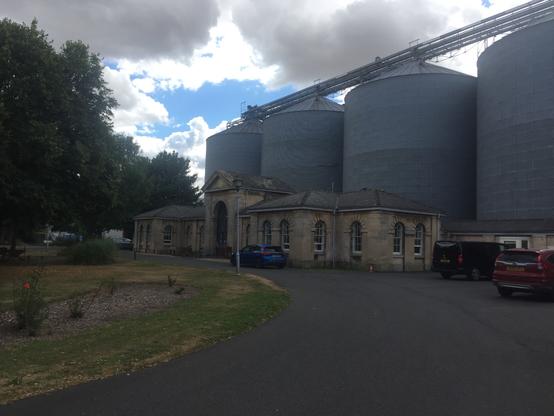
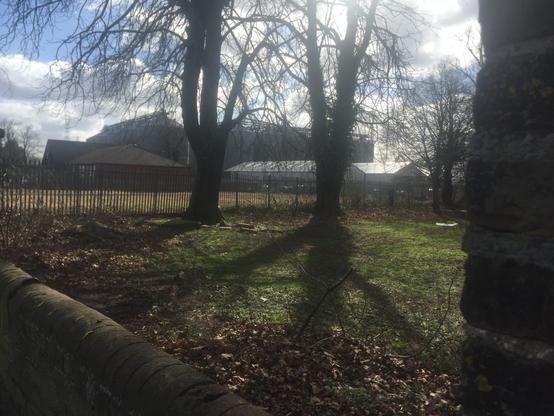
On this side of the fence that runs along the centre of my photo is the land on which St John’s Church once stood. On the other side is a piece of land that was known as St Augustine’s Pasture, and behind that, where six grain silos stand, is the site of St Augustine’s Friary founded in 1317 by the Tilney family.
In the July of 1930, in the old friary pasture, a firm of timber merchants were digging foundations for their new sheds when they found human skeletons just four feet below the surface.
#lincolnshire #boston #skirbeck #staugustine #friary #stjohnschurch #knightshospitaller #knightshospitallersofstjohnofjerusalem #tilney #familyhistory #localfamilyhistory #lincolnshirefamilyhistory
 Andy Arthur - Threadinburgh
 Samuel Hess
 Morrisman
 Andrea Povey
 Magnus Matt
 Anja
Anja