 Topi L
Jos on olemassa "planetaarinen ruokavalio", niin millaiset olisivat "planetaarisen elämäntavan" ohjeet?
#PlanetaarinenRuokavalio #planetarydiet #PlanetaarinenElämäntapa #PlanetaryLifestyle
Jos on olemassa "planetaarinen ruokavalio", niin millaiset olisivat "planetaarisen elämäntavan" ohjeet?
#PlanetaarinenRuokavalio #planetarydiet #PlanetaarinenElämäntapa #PlanetaryLifestyle
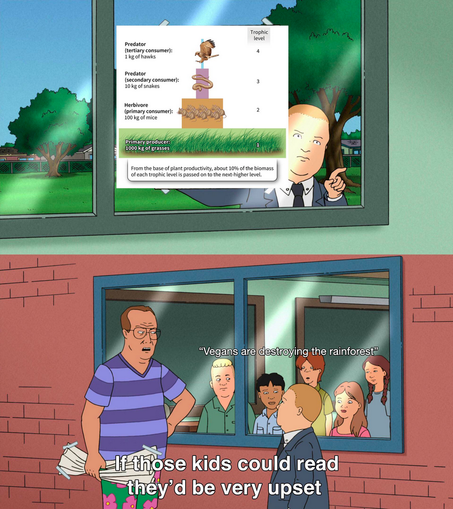
So, of course, the "salvation tech" of insect farming just ends up as more animal feed ('proteic concentrates'), which is more of a waste than usual since it's adding *another layer of animals* to the artificial trophic levels of the animal farming sector.
There is no logical alternative to eating plants. Eat plants, don't eat animals.
#Massentierhaltung als Treiber der #Vogelgrippe
Wir müssen weg von der Massentierhaltung - aus Gründen des Tierschutzes, des Klimaschutzes und letztlich auch im Sinne unserer eigenen #Gesundheit
Wir essen derzeit mehr Fleisch, als gut für uns ist. Mehr pflanzliche Kost tut uns allen gut.
https://www.sueddeutsche.de/wissen/vogelgrippe-artenvielfalt-deutschland-li.3331363?reduced=true
What the Slow Food Movement Is — and Whether It’s Actually Better for People and the Planet
https://sentientmedia.org/slow-food-movement/
<💬>
The Plant the Future report notes that access can be a concern for people who live in low income areas, stating, “Proteins, whether of plant or animal origin, cannot be good and clean if they are not also fair for everyone, and thus both affordable for consumers and capable of providing a dignified living to producers.” But the report does not offer a solution when it comes to making slow food affordable for all.
</💬>
The world is complicated. Wasting food by feeding food to "food" isn't. Food decommodification starts with going vegan.
#slowfood #plantBased #planetaryDiet #sustainability #foodSecurity #goVegan #decommodification #capitalism
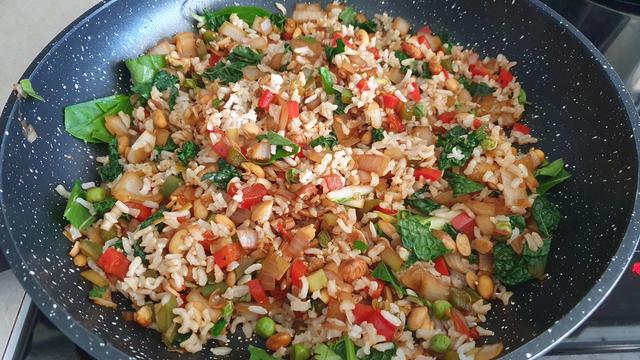
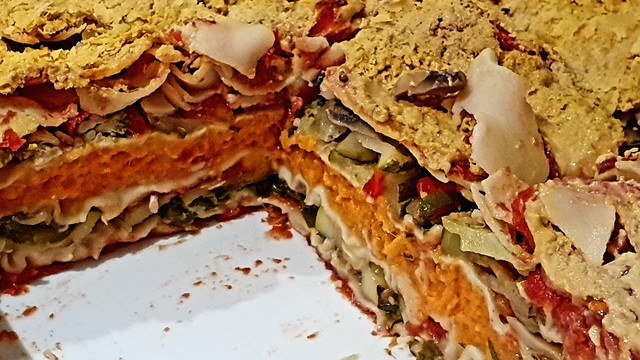

Purpose Metabolic health phenotypes exist across the body mass index spectrum. Diet may be an important modifiable risk factor, yet limited research exists on dietary patterns in this context. We investigated associations between dietary patterns, reflecting dietary quality, healthfulness and inflammatory potential, and metabolic health phenotypes in adults living with and without obesity. Methods This cross-sectional study included 2,040 middle- to older-aged men and women randomly selected from a large primary care centre. The Dietary Approaches to Stop Hypertension score, Healthy Eating Index, Dietary Inflammatory Index, overall, healthful and unhealthful plant-based dietary indices and Nutri-Score were derived from validated food frequency questionnaires. Descriptive and logistic regression analyses were used to examine diet score relationships with metabolic health phenotypes (Metabolically Healthy/Unhealthy Obese (MHO/MUO) and Non-Obese (MHNO/MUNO)), defined using three separate metabolic health definitions, each capturing different aspects of metabolic health. Results In fully adjusted models, higher unhealthful plant-based dietary scores were associated with a lower likelihood of MHO (OR = 0.96, 95% CI: 0.93–1.00, p = 0.038) and MHNO (OR = 0.97, 95% CI: 0.95–0.99, p = 0.006). Higher Nutri-Score values were associated with an increased likelihood of MHNO (OR = 1.06, 95% CI: 1.01–1.13, p = 0.033). Conclusion These findings provide evidence that more unhealthful plant-based diets may be linked with unfavourable metabolic health status, irrespective of BMI.
 VeganPizza69 ⓋⒶ
 Elisabeth

 Paul Peace
 considerate