Meet Saida Affouneh at An Najah University, an #OEAward25 #Winner in the Individual is celebrated as a Leader who advances Open Education.

Read more 📖 https://twp.ai/WprcgV

This is the excellence that inspires #OEAwards nominations. Who do you know that is doing this kind of work?

The 2026 #OEAwards are open for nominations until June 19. Recognize their leadership.

Nominate 🔜 https://twp.ai/E5CduF

#OEAwards26 #OpenEducation #PeopleOfOpen

URL Shortener, Branded Short Links & Analytics | TinyURL

Meet Ana Michelle Téllez Ferrer at almafuertelab, an #OEAward25 #Winner in the Individual is celebrated as an Educator who advances Open Education.

Read more 📖 https://twp.ai/S9CNUS

This is the excellence that inspires #OEAwards nominations. Who do you know that is doing this kind of work?

The 2026 #OEAwards are open for nominations until June 19. Share their story.

Nominate 🔜 https://twp.ai/Ilrt6K

#OEAwards26 #OpenEducation #PeopleOfOpen

URL Shortener, Branded Short Links & Analytics | TinyURL

We shouldn't be satisfied with open licences to release open resources. With the democratisation and institutionalisation of openness movements, but also because of the contemporary crisis, a copyright reform must be a target in our mind.

Open licenses are a complex system, weapons of the weak.

In 1976, the US copyright Act started to protect software with software industry increasingly closing their code source. In reaction in 80's, Richard Stallman started the free software movement while creating the first open licence (Emacs/GNU General Public License) to guarantee software freedom.

Near 1998, Lawrence Lessig fought at the Supreme Court against the Copyright Term Extension Act to counter this extension of over 70 years after author's death (!) to protect the public domain. They failed, and it led to the creation of the organization @Creative Commons and their licences in 2001.

Open licenses exist because the copyright framework does not provide a way to share outside complex licensing mechanisms. Licenses are bad; it's private law based on tools provided by private organisations.

« CC licenses are a patch, not a fix, for the problems of the copyright system. » Creative Commons organization on copyright reform: https://creativecommons.org/about/policy-advocacy-copyright-reform/reform/

A copyright reform would be about integrating a new human right, the right to share.

It's about transforming the public domain which is inconsistent worldwide, where death may be one of the best ways to contribute to it without providing necessarily modification rights.

In fifty years, the landscape changed and open models are becoming mainstream. The EU open source strategy just few days ago, the UNESCO recommendation on open science with a proliferation of national policies on that matter, the UNESCO recommendation on open education with also national policies emerging.

It will be time to flip the table, to change the rules and contribute to the collapse of the open licensing system in order to build the future. We are wasting a tremendous amount of energy because of this inefficient system.

A necessary evil today, but a proper education in licensing should provide a critical framework and not merely explain how it works.

The current copyright system is primarily designed to serve economic interests. In the face of crises, with the need to widely disseminate knowledge and solutions to problems, the entire philosophy behind the copyright system needs to be rethought.

It's a collective battle against powerful forces — this is an ideological conflict for the sake of society.

#openmodels #openscience #openeducation #openhardware #opensoftware #opensource #digitalcommons #creativecommons #copyrightReform

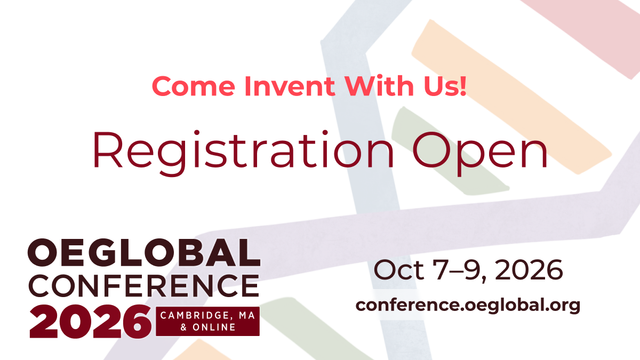
The 2026 Open Education Global Conference (#OEGlobal26) is organized around five tracks that reflect where Open Education is today, and where it's heading:

→ Hacking the Open Ecosystem and Praxis for the Public Good
→ Innovating Open Content to Democratize Knowledge
→ Catalyzing Human Connection, Creativity, and Curiosity to Thrive
→ (Re)Inventing our Shared Global Vision Together
→ Exploring Emergent Technologies and the Future of Openness

#OpenEducation #OER #OEGlobal
1/2

Meet Delmar Larsen at University of California, Davis; LibreTexts Project, an #OEAward25 #Winner in the Individual is celebrated as a Leader who advances Open Education.

Read more 📖 https://twp.ai/WprcgX

This is the excellence that inspires #OEAwards nominations. Who do you know that is doing this kind of work?

The 2026 #OEAwards are open for nominations until June 19. Help us celebrate them.

Nominate 🔜 https://twp.ai/Ilrt6L

#OEAwards26 #OpenEducation #PeopleOfOpen

URL Shortener, Branded Short Links & Analytics | TinyURL

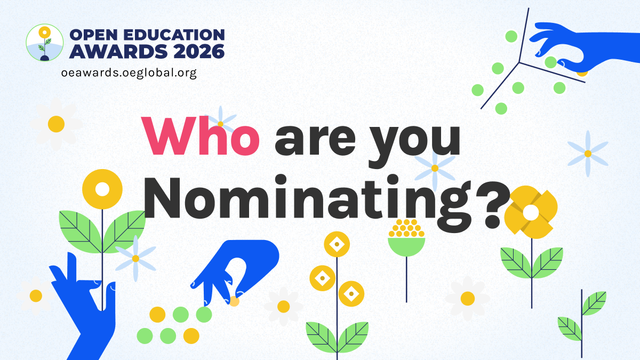
🌱 Nominations are open for the 2026 Open Education Awards for Excellence – Individual Leaders category!

Who is advancing Open Education in your community? An educator, researcher, advocate, or technologist making learning more open and accessible?

📝 Nominate them: https://twp.ai/IlroL3
⏰ Deadline: 19 June (midnight UTC)

#OEAwards26 #OpenEducation #PeopleOfOpen

Meet Leticia Kanywuiro at Thompson Rivers University, an #OEAward25 #Winner in the Individual is celebrated as a Student who advances Open Education.

Read more 📖 https://twp.ai/S9CNUU

This is the excellence that inspires #OEAwards nominations. Who do you know that is doing this kind of work?

The 2026 #OEAwards are open for nominations until June 19. Recognize their leadership.

Nominate 🔜 https://twp.ai/NSX8IQ

#OEAwards26 #OpenEducation #PeopleOfOpen

URL Shortener, Branded Short Links & Analytics | TinyURL

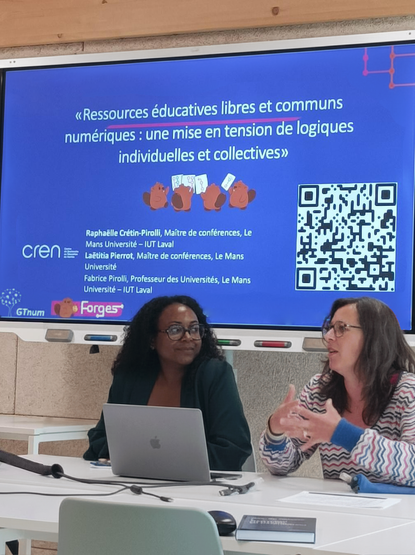
Raphaëlle Crétin-Pirolli et Laëtitia Pierrot se sont rendues en Suisse pour présenter le projet GTnum Forges et parler de REL. 🇨🇭

Du 1er au 3 juin, elles ont participé au colloque Runed 2026 à Fribourg, un espace centré sur les approches critiques du numérique en éducation et en formation.

Représentant le laboratoire CREN, elles y ont exposé leurs recherches lors de la session dédiée aux REL avec la communication :
🔎 "Ressources éducatives libres et communs numériques : une mise en tension de logiques individuelles et collectives."

Merci aux stagiaires d'eikonlab pour la mise en place de l'installation Eduform, ainsi qu’au comité d'organisation pour la tenue de ce colloque.

#Runed2026 #GTnumForges #REL #EdTech #OpenEducation

Un projet #GTnum financé par le Ministère de l'Éducation nationale.

@imarfisi
@bmarne
@FabricePirolli
@raphaelle_cretinpirolli
@laetitiapie
@framaka
@lelibreedu

Meet Adéṣínà Ghani Ayeni at Yobamoodua Cultural heritage, an #OEAward25 #Winner in the Individual is celebrated as a Leader who advances Open Education.

Read more 📖 https://twp.ai/S9CNUN

This is the excellence that inspires #OEAwards nominations. Who do you know that is doing this kind of work?

The 2026 #OEAwards are open for nominations until June 19. Share their story.

Nominate 🔜 https://twp.ai/Ilrt6F

#OEAwards26 #OpenEducation #PeopleOfOpen

URL Shortener, Branded Short Links & Analytics | TinyURL

The confusion surrounding the concept of « open source » is probably going to have major political implications. The brand new EU open source strategy doesn't seem to be purely a software strategy.

- EU open source strategy: https://digital-strategy.ec.europa.eu/en/policies/open-source-strategy

In 2020, the institution released specifically a policy named « Open source software strategy », but software disappeared this time which could be a signal from a shift to a broader vision beyond « open source ».

With current documents, it seems to have a tension over the use of the term by including both open source software and open source hardware under this umbrella.

On one side, it's a software centric policy where they also specify in their COM(2026)503 documents "for the purpose of this Communication, ‘open source’ refers to software released under licences that comply with the Open Source Initiative’s Open Source Definition".

On the other side, they declare to "Prioritise open source funding in key areas like semiconductors" while stating "semiconductors: to develop, under the Chips Act 2.0, open source hardware IP such as the one based on RISC-V, targeted investment in open source electronic design automation tools;"

And this is where true confusion comes up for me: what is precisely open source hardware IP ? RISC-V is an open standard, with both open and closed hardware implementation. [https://semiengineering.com/open-source-hardware-risks/]

But open (source) hardware is about providing editable design, this sentence being confused by potentially conflating standard and design files.

The Chips Act 2.0 is more about empowering the production of semiconductors at manufacturers level, but does not seem to cover the open IP part. The open source strategy and this Chips act could be therefore two complementary layers with unclear links. [https://www.techpolicy.press/how-the-eus-tech-sovereignty-package-finally-puts-open-source-to-the-test/]

This little semantic confusion may have an impact on the entire industrial strategy of the EU. Will critical hardware components such as semi-conductors produced in the open source hardware philosophy ? Based only on open standard or requiring entire designs/source files available for production ?

The meaning and definition of « open source » remain confused, it can be a billion(s)-dollar question.

[Thought related to the work « Open Source 2.0 : From Open Source Software to Open Source Resources? » : https://doi.org/10.5281/zenodo.20257010]

Credit: Photo by Sumaid pal Singh Bakshi, Unsplash

#openmodels #opensource #opensoftware #openhardware #openscience #openeducation #EU #Europe #policy #sillyOSI