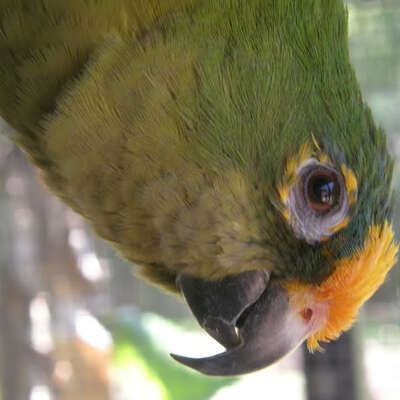
 peachfront
so little
so cute
so full of fury!
all your purple flowers
are belong to him
#Bird #Hummingbird #BirdPhotography #BirdsInFlightPhotography #BirdsOfMastodon #Biodiversity #Pollinators #Neotropical
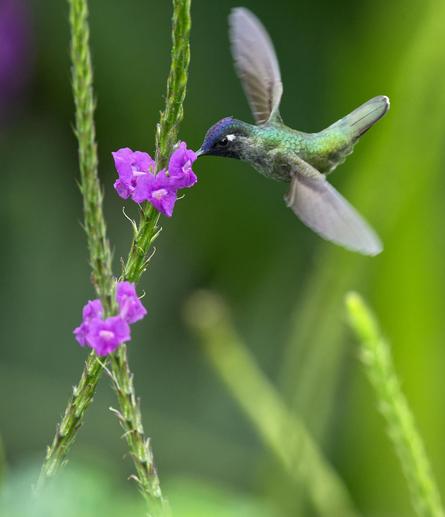
so little
so cute
so full of fury!
all your purple flowers
are belong to him
#Bird #Hummingbird #BirdPhotography #BirdsInFlightPhotography #BirdsOfMastodon #Biodiversity #Pollinators #Neotropical
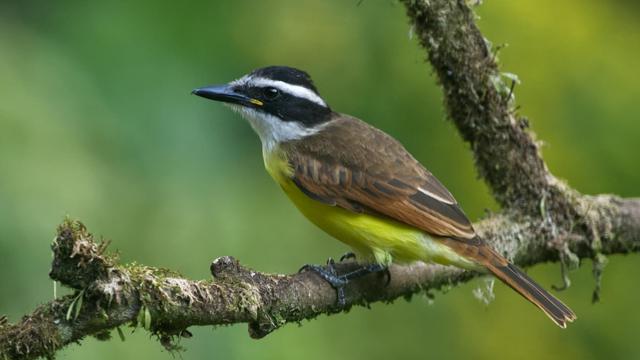
"i am the great kiskadee -- and modest too"
#Bird #Birding #Flycatcher #Neotropical #BirdsOfMastodon #Photograph #PhotoMonday #Fotomontag #BirdPhotography
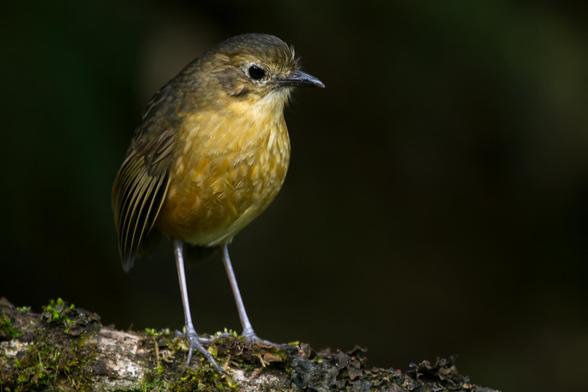
skinny legs
#Bird #Birding #Antpitta #Neotropical #CloudForest #Andes #Mountains #Fotomontag #PhotoMonday
#Human #activity can be a factor in allowing #sympatry of similar #species. Case-in-point, giant and neotropical otters in the #Amazon.
In this new study, Norris and Michalski (2023) observed that #giant #otters tended to avoid human activity while #neotropical otters did not.
OA 🔗 https://peerj.com/articles/15742/
We #influence our #ecosystems in many ways. While not always and inevitably detrimental, we need to be aware of our #impacts.

Background Previous studies suggest coexistence between sympatric neotropical (Lontra longicaudis) and giant otters (Pteronura brasiliensis) maybe facilitated by temporal and spatial differences in activity. Yet, to date there has been no systematic evaluation of activity of these species in sympatry. Here we use extensive multi-year field data to compare temporal and spatial patterns in the diurnal activity of sympatric giant and neotropical otters to answer three questions: Do temporal patterns in daytime river use change in relation to seasonal river levels (low, rising, high and declining river levels), do they change due to human disturbances (boats and fishing nets) and do patterns in neotropical otter activity change due to the presence of the larger sized giant otter? Methods Direct observations of both species were recorded using standardized boat surveys along 218 km of rivers over 53 months during nine years (2011–2013 and 2015–2020). Complementary techniques (Generalized Additive Models, Kernel density estimates and non-parametric tests,) were used to compare diurnal activity patterns along rivers subdivided into 41 river reaches. Results The presence of giant otters decreased threefold from 67% of the least disturbed reaches (few boats no fishing nets) to 18% of the most disturbed reaches with many boats and fishing nets. In contrast neotropical otter presence nearly doubled from 44% of the least disturbed to 73% of the most disturbed reaches with fewest giant otter detections. Both species were observed across all daytime hours but were observed rarely on the same day. There was no evidence to suggest simultaneous use of the same reach. When species were detected on the same day, they were separated spatially (median distance between species 12.5 km) and temporally (median time difference 3.0 hours). There was little change in activity of either species among seasons. Giant otters were less active in river reaches with fishing nets and boat use, whereas neotropical otter activity did not appear to be strongly affected by these activities. Conclusions Our findings support evidence that diurnal activity in both otter species is flexible, with daytime activity changing due to human disturbances in the case of giant otters.
Interesting new paper on The #Empty #Forest #Syndrome that occurs with the extirpation of large #vertebrates, particularly #predators.
I can see this interacting (negatively, #synergistically) with Pauly's #Shifting #Baseline Syndrome. And is it time to coin a similar conceptual model and terms for the disappearance of #insects and other small #fauna?
Title: Beyond the “empty forest”: The defaunation syndromes of #Neotropical forests in the #Anthropocene
Open Access: https://www.sciencedirect.com/science/article/pii/S235198942200364X
 Dezene Huber 🌻
 Flo Grattarola