https://doi.org/10.1016/j.isci.2025.114156
#MetagenomicsMonday #SPAAM #aDNA #palaeogenetics #ancientDNA
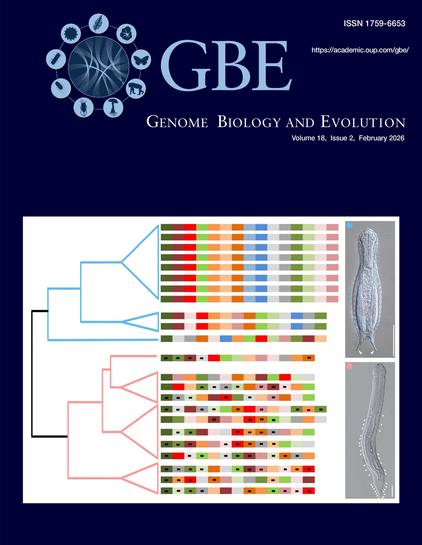
Kosakyan et al. sequenced mitogenomes of species from the two main lineages of the Gastrotricha; they found stable mitogenomes in the mostly freshwater Chaetonotida, but a dynamic pattern in the the marine Macrodasyida.
The cover of February's issue of Genome Biology and Evolution features the work of Kosakyan et al. on the evolution of mitochondrial genomes in the Gastrotricha.
Good discussion here of the peopling of #Sahul by a 'long chronology', that is reaching New Guinea and Australia by 60,000 years.
Previous data showing Aus and PNG populations carry the signature of Neanderthal interbreeding (some 55-50 Kya in the Middle East) suggests the 'chronology' was more recent OR all the first wave left no descendants today. But these calibrated #mtDNA results suggest different, people do descend from the early pioneers, entering via two routes, the main one N Indonesia-Philippines, and another southerly one.
#archaeogenetics #maritimearchaeology
https://phys.org/news/2025-12-guineans-aboriginal-australians-descend-groups.html

A collaboration between the University of Huddersfield's Archaeogenetics Research Group and the University of Southampton's Center for Maritime Archaeology, has clarified the first settlement of New Guinea and Australia by modern humans, Homo sapiens—refining our understanding of the origins of seafaring and maritime mobility.
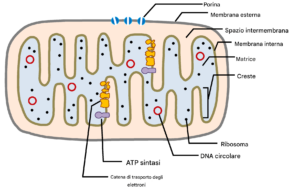
In Folge M unserer Serie ABC der Genetik sprechen wir über die mitochondriale DNA (mtDNA), das kleine zweite Genom unserer Zellen. Sie steckt in den Mitochondrien, den „Kraftwerken“ der Zelle, und wird fast ausschließlich über die Mutter vererbt. Mit unserer Genetik-Expertin Prof. Dr. Julia Schulze-Hentrich klären wir, warum Mitochondrien eine eigene DNA besitzen, wie mtDNA weitergegeben wird, welche Rolle sie in Forensik und Paläogenetik spielt und wie mtDNA-Veränderungen zu sehr unterschiedlichen Erkrankungen führen können.
Primary mitochondrial diseases (PMD) are caused by pathogenic variants in over 350 genes, 37 of which are located in mitochondrial DNA (mtDNA). While more than 100 mtDNA variants have confirmed disease associations, there are few reports of ...
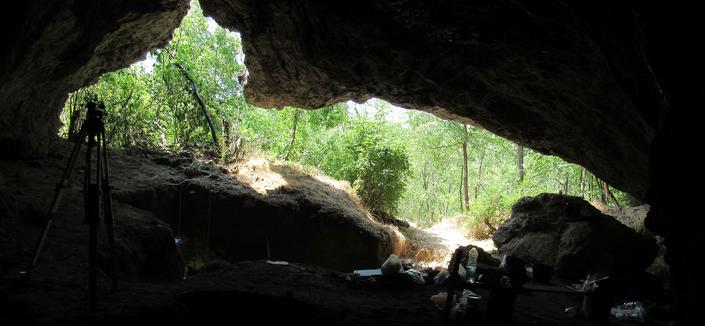
#Neanderthals deep into #Asia. New #mtDNA from Crimea, Starosele
https://www.sciencenews.org/article/dna-neandertals-traveled-asia