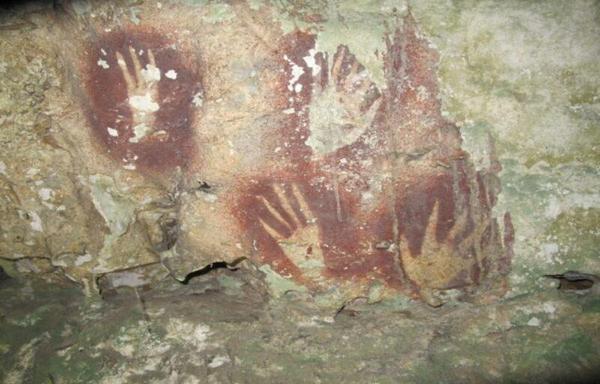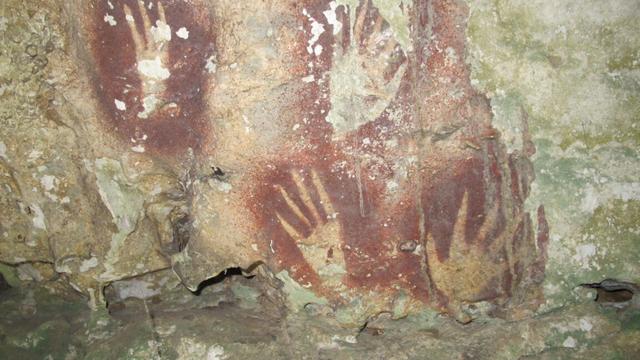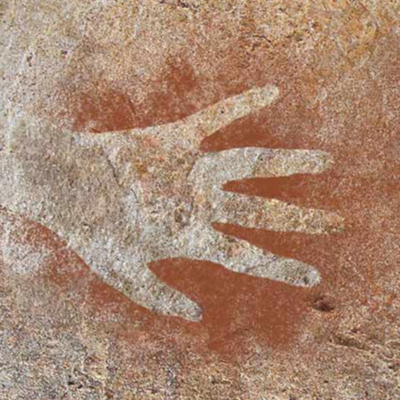
This 67,800-year-old hand stencil is the world’s oldest human-made art

The world’s oldest art has an unintentional story to tell about human exploration.


https://arstechnica.com/science/2026/01/this-67800-year-old-hand-stencil-is-the-worlds-oldest-human-made-art/#anthropology #archaeology #australia #cave-art #hominins #human-migration #indonesia #rock-art #sahul #science

This 67,800-year-old hand stencil is the world's oldest human-made art

The world's oldest art has an unintentional story to tell about human exploration.

Ars Technica

Good discussion here of the peopling of #Sahul by a 'long chronology', that is reaching New Guinea and Australia by 60,000 years.

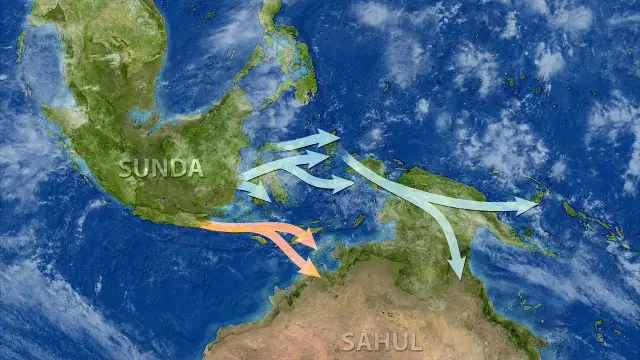
Previous data showing Aus and PNG populations carry the signature of Neanderthal interbreeding (some 55-50 Kya in the Middle East) suggests the 'chronology' was more recent OR all the first wave left no descendants today. But these calibrated #mtDNA results suggest different, people do descend from the early pioneers, entering via two routes, the main one N Indonesia-Philippines, and another southerly one.

#archaeogenetics #maritimearchaeology

https://phys.org/news/2025-12-guineans-aboriginal-australians-descend-groups.html

New Guineans and Aboriginal Australians descend from two groups who arrived 60,000 years ago, research suggests

A collaboration between the University of Huddersfield's Archaeogenetics Research Group and the University of Southampton's Center for Maritime Archaeology, has clarified the first settlement of New Guinea and Australia by modern humans, Homo sapiens—refining our understanding of the origins of seafaring and maritime mobility.

Phys.org
New genomic evidence suggests humans reached Sahul around 60,000 years ago via two distinct routes. The findings highlight early seafaring, deep population roots, and complex migrations shaping Indigenous Australian and Papuan ancestry. #Anthropology #Archaeogenetics #Sahul #HumanOrigins https://www.anthropology.net/p/the-first-horizon-how-ancient-genomes
The First Horizon: How Ancient Genomes Redraw the Story of Australia’s Earliest Peoples

New genetic evidence strengthens the case for a much earlier and more complex human arrival in Sahul.

Anthropology.net
The epic story of Australia and its first peoples — like you've never seen it

The story of Australia and its peoples is vast and deep. It's one you should know, but possibly one you've never been told. Well, not like this anyway.

Deep Time - ABC News

my features published in #CurrentBiology this year, issue 11: with some 70,000 years of human history, #Australia is actually more ancient than Europe.

https://proseandpassion.blogspot.com/2024/06/ancient-australia.html
#science #anthropology #migration #sahul #OutOfAfrica

ancient Australia

From a European / Western perspective, we're used to thinking of Australia as a new world that has only recently been discovered and settled...

Scientists map the lost 'Atlantis' continent that lies off Australia

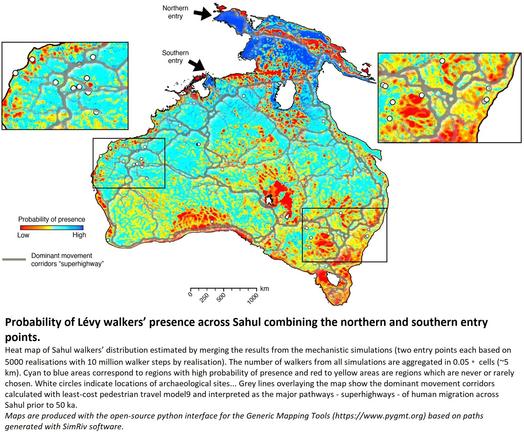
A new simulation reveals how Australia's first inhabitants migrated across Sahul, before it became modern-day Australia.

Live Science
Researchers reconstruct landscapes that greeted the first humans in Australia around 65,000 years ago

Seventy thousand years ago, the sea level was much lower than today. Australia, along with New Guinea and Tasmania, formed a connected landmass known as Sahul. Around this time—approximately 65,000 years ago—the first humans arrived in Sahul, a place previously devoid of any hominin species.

Phys.org

Researchers reconstruct landscapes that greeted the first humans in Australia around 65,000 years ago
https://phys.org/news/2024-04-reconstruct-landscapes-humans-australia-years.html

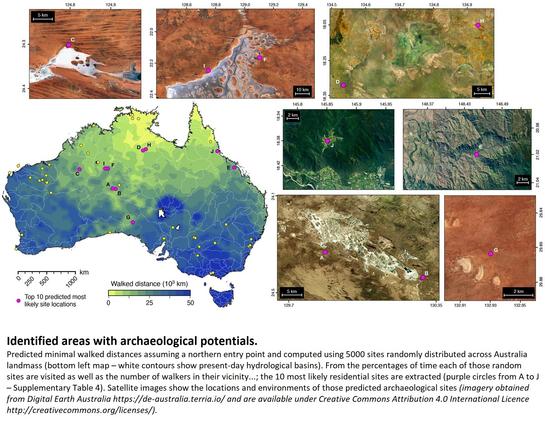
Physiography, foraging mobility, and the first peopling of Sahul https://www.nature.com/articles/s41467-024-47662-1

"Seventy thousand years ago, the sea level was much lower than today. #Australia, #NewGuinea, and #Tasmania formed a connected landmass known as #Sahul. Around this time the first humans arrived in Sahul, a place previously devoid of any #hominin species."

Researchers reconstruct landscapes that greeted the first humans in Australia around 65,000 years ago

Seventy thousand years ago, the sea level was much lower than today. Australia, along with New Guinea and Tasmania, formed a connected landmass known as Sahul. Around this time—approximately 65,000 years ago—the first humans arrived in Sahul, a place previously devoid of any hominin species.

Phys.org
Australien hatte ein „Doggerland“ des Südens. Versunkene Landmasse Sahul war für erste Menschen Passage und Refugium zugleich. #Sahul #Australien #Eiszeit #Landbruecke #Erdgeschichte
https://www.scinexx.de/news/geowissen/australien-hatte-ein-doggerland-des-suedens/
Australien hatte ein "Doggerland" des Südens

Versunkenes Land: Während der Eiszeit gab es im Norden Australiens eine riesige Landfläche, die bis nach Neuguinea reichte. Dieser "Sahul" getaufte

scinexx | Das Wissensmagazin