29 and 30 Years Already: A Legacy of Struggle for Peru’s Present

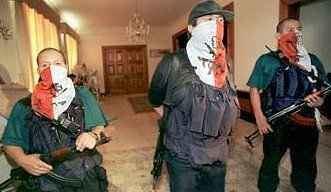
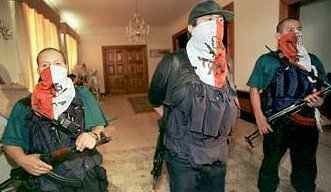
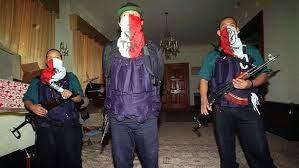
Today, April 22, marks 29 years since the dictatorship of “Chino -bastard- Fujimori” executed the 14 members of the MRTA who had taken over the residence of the Japanese Ambassador in Peru (with hostages included), when the crème de la crème of the Peruvian power and Japanese authorities, celebrated the birthday of the Emperor of that Asian country on December 17, 1996 (this year marks the 30th anniversary of this heroic deed led by the historic leader of the MRTA, Néstor Cerpa).

This heroic act had the power to change the course of Peruvian history. Those 14 dignified lives that dared to confront the regime forever altered the destiny of Peru. Although the dictatorship of Chino and the sensationalist press (empowered by Montesinos) boasted of their betrayal of the negotiations and the execution of the 14 revolutionaries, the emergence of the MRTA changed the fate of that country. There is no doubt that it was a turning point, a true historical rupture.

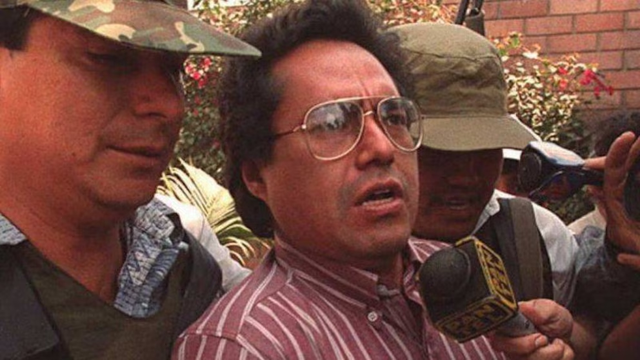
The MRTA had long sought an event of this magnitude, one capable of seizing the national and international stage and bringing Peruvian reality to the forefront, particularly regarding political imprisonment and the living conditions of the majority of its people under the Fujimori regime, which had staged a self-coup in April 1992. In this quest for a breakthrough, the late Miguel Rincón Rincón was arrested along with an MRTA operational group as they were finalizing the details of an attack on the National Congress. The arrest was met with fierce gunfire.

The hostage situation was flawless; in the blink of an eye, the MRTA’s Edgard Sánchez Command had the government cornered, forcing it into negotiations. The operation was based on its simplicity, meaning it wasn’t overly complex in its design, which allowed it—among other things—to go unnoticed by the government’s intelligence agencies. That December 17, 1996 is not only forever etched in Peruvian history but also in world history and in the collective memory of revolutionaries worldwide.

The negotiations lasted a little over four months, enough time for the entire world to learn about the reality in Peru and the ethical and dignified conduct of the MRTA revolutionaries. The Catholic Church, represented by the then Archbishop of Ayacucho, Juan Luis Cipriani Thorne (who years later was accused of sexually abusing a minor), betrayed its role as guarantor of the negotiations, granting the government time and logistical support (including the introduction of microphones into the residence) to orchestrate and execute Operation Chavín de Huántar, which Fujimori morbidly celebrated. It has been proven that the order was to execute MRTA militants using the Instinctive Selective Shooting (ISS) tactic, which consists of “firing three shots in two seconds at the enemy’s vital organs (head or torso) and then firing a safety shot to the enemy’s head to ensure they are out of action.”

I don’t know what the MRTA is doing today; I don’t know if it still exists, but I do know something about the MRTA’s importance in Peruvian history. For the sake of historical accuracy, I will refer to that importance within the context of the struggle.

The Túpac Amaru Revolutionary Movement (MRTA) was a revolutionary organization in Peru founded in 1982. Although the Peruvian government has always labeled it a terrorist organization, history has made it abundantly clear—whether people like it or not—that its origins are revolutionary. Guevarist in nature, based on the monumental legacy of Mariátegui and inspired by the warrior example of Túpac Amaru, the MRTA forged its own distinct path, thus transcending its initial composition as a convergence of various factions. The MRTA relentlessly attacked Peruvian democracy and the interests of U.S. imperialism in Peru, establishing itself as a genuine alternative for a different and better life for the Peruvian masses.

The actions of the Edgard Sánchez Command—as mentioned above—challenged Peruvian power; indeed, they marked the beginning of the end for the Alberto Fujimori regime. Although they did not achieve their objective immediately in the 1990s and were assassinated, they undeniably revealed to the entire world the reality of political imprisonment in Peru and the daily struggle for survival faced by the vast majority of the country’s population. This paved the way for substantial changes in Peruvian society and served as both the prelude and catalyst for the Truth and Reconciliation Commission (CVR). Among other things, the CVR enabled new trials for Peruvian subversives, trials that were no longer conducted by anonymous judges and, in many cases, resulted in changes to sentences, securing the freedom of many who had been condemned to never leave prison again.

From the moment the hostage crisis erupted at the Japanese ambassador’s residence in Peru, the entire world began to more directly question Fujimori’s perverse actions. His massacres, forced sterilizations, the workings of his intelligence apparatus, and his torture and executions became more widely known. National and international pressure intensified, bringing down the regime of “El Chino,” who ended up imprisoned, along with his advisor Montesinos and several of his agents. In other words, while justice was not fully achieved and the overall situation in the country did not improve, the actions of the Edgard Sánchez Command did bring about changes in Peruvian reality; their heroic gesture was by no means in vain.

Peruvian democracy is a clear example of the decay and staleness of that satellite-like conception and logic of the Yankee American dream. It’s abundantly clear that the solution lies elsewhere. Peruvian power is the epitome of corruption and bribery, and this democratic model (just like Chile’s) is, by definition, broad for the elites and narrow for the people. After a carousel of presidential impeachments, with former presidents in jail and one who committed suicide (the coward Alan García) to avoid prison, new presidential elections were recently held. Out of 35 candidates, Keiko Fujimori made it to the second round, and it’s still undecided who will face her in the runoff.

Twenty-nine years after the assassination of the MRTA militants and thirty years after the attack on the Edgard Sánchez command post, the MRTA made it abundantly clear that the path to transforming the lives of millions lies in revolution, not in the alternation of democratic administration. The hatred born of capitalism, in response to the MRTA’s just and ethical decision to take up arms, has not ended; the viciousness against its historic leaders continues. Miguel Rincón Rincón died in prison, and his body was not released to his family for a proper burial; he was cremated, and his ashes were scattered in an unknown location. Víctor Polay, having already served his 35-year sentence, was subjected to a new trial, accused of an incident in Tarapoto while he was in prison. Lucero Cumpa, who lives in exile, has been subjected to yet another trial by Peruvian capitalism, which aims to send him back to prison for decades.

We honor the courage and gallantry of the Edgard Sánchez Command; they risked everything, died true to their revolutionary principles, and changed the course of their country’s history.

Editorial Chile Popular. Resumen Latinoamericano April 24, 2026

https://abolitionmedia.noblogs.org/?p=31888 #guerrilla #MRTA #peru #southAmerica
Today in Labor History February 4, 1979: Six workers were killed by police in the massacre of Cromotex, Lima Peru. The workers had taken over the factory after it went bankrupt and its owners tried to close it down. Led by a hardline revolutionary, Hemigidio Huertas, workers armed with sticks took the premises over. They held out for a week, killing a police captain in the process. When police later stormed the factory, they killed six workers including Huertas. One of the survivors, Nestor Cerpa, was arrested and jailed for 10 months. After his release, he went underground and started to organize the MRTA, or Tupac Amaru Revolutionary Movement.

#workingclass #LaborHistory #Peru, #tupacamaru #MRTA #massacre #policebrutality #tupac #union #strike #police #Revolutionary

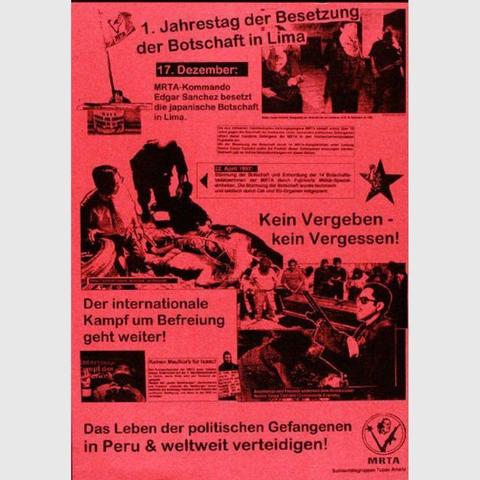
1. Jahrestag der Besetzung der Botschaft in Lima

1998

#politicalposter #berlinposter #mrta #b1712 #keinvergebenkeinvergessen

🔒 „Länger inhaftiert als Nelson Mandela“
Víctor Polay, Mitgründer der MRTA, sitzt seit 35 Jahren im Gefängnis. Wird er 2026 freikommen?
Sein Anwalt César Oyola spricht über Haft, politische Aufarbeitung & Perus Umgang mit der Vergangenheit. 🇵🇪

#MRTA #Peru #Menschenrechte #Polay
https://lateinamerika-nachrichten.de/artikel/laenger-inhaftiert-als-nelson-mandela/

„Länger inhaftiert als Nelson Mandela“ - Lateinamerika Nachrichten

„Länger inhaftiert als Nelson Mandela“ - Lateinamerika Nachrichten

Lateinamerika Nachrichten
#Bangkok's #GreenLine future in doubt: Will 20-baht fare survive?
"Transferring ownership to #MRTA cld ensure te line operates profitably at a 20-baht fare for at least 30yrs, largely due to substantial revenue fr te project’s #properties & #advertising space.. there’s a significant challenge: te Green Line currently carries a #debt of THB37.2bil fr #operational & #maintenance costs"
🧐To prevent #socializing #graft to #taxpayers & #commuters, #audit #integrity of tt debt?
https://thethaiger.com/news/bangkok/bangkoks-green-line-future-in-doubt-will-20-baht-fare-survive
Bangkok's Green Line future in doubt: Will 20-baht fare survive? | Thaiger

As the Green Line’s concession ends in 2029, TCC prepares a study exploring four models to maintain the 20-baht fare.

Thaiger

Today in Labor History February 4, 1979: Six workers were killed by police in the massacre of Cromotex, Lima Peru. The workers had taken over the factory after it went bankrupt and its owners tried to close it down. Led by a hardline revolutionary, Hemigidio Huertas, workers armed with sticks took the premises over. They held out for a week, killing a police captain in the process. When police later stormed the factory, they killed six workers including Huertas. One of the survivors, Nestor Cerpa, was arrested and jailed for 10 months. After his release, he went underground and started to organize the MRTA, or Tupac Amaru Revolutionary Movement.

#workingclass #LaborHistory #Peru, #tupacamaru #MRTA #massacre #policebrutality #tupac #union #strike #police #Revolutionary

(Chile) Ha muerto el compañero Alejandro Astorga
Recibido al mail

La noche del 1 de enero de éste año (2025) se informó la muerte del compañero revolucionario Alejandro Astorga Valdés, de 55 años, luego de ser diagnosticado hace cuatro meses con tres tumores cerebra
https://informativoanarquista.noblogs.org/post/2025/01/09/chile-ha-muerto-el-companero-alejandro-astorga/
#General #AlejandroAstorga #Anticarcelario #Chile #MIR #MRTA #muerte #Prisin anarquista informativoanarquista

(Chile) Ha muerto el compañero Alejandro Astorga – Informativo Anarquista

MRTA Statement on Death of Alejandro Astorga Valdés, Internationalist and Tupacamarista Comrade

Alejandro Astorga Valdés. An Internationalist at the Service of the Great Homeland

In resignation, there is only death; In resistance, there is the desire to live.
Alejandro Astorga Valdés

To the international community,
To the Peruvian people,
To the Tupacamaristas:

On January 1, 2025, the Tupacamarista comrade Alejandro Astorga Valdés, an internationalist who from a very young age embraced the cause of the Chilean proletariat, physically departed. He fought tirelessly against the dictatorship in his country together with his comrades from the Revolutionary Left Movement MIR. Later, moved by his proletarian ideological firmness and his commitment to justice, he decided to join the Túpac Amaru Revolutionary Movement – MRTA, convinced that the liberation of Chile, Peru and all of Latin America should be a joint struggle against capitalist exploitation and imperialism.

Comrade Alejandro leaves us not only a legacy of struggle, but also an accumulation of victories that strengthen the new generations of Tupacamaristas, who continue to fight on the different fronts of struggle against the Peruvian oligarchy and U.S. imperialism, historical enemies of the peoples. His combative morale and revolutionary mystique will continue to illuminate the path of those who struggle for the emancipation of the peoples and the construction of a great socialist homeland, a project of national and social liberation that can only be achieved through the unity of the working and popular masses.

To his family and his fighting companions, we extend our most sincere revolutionary hug of solidarity. It is a pride to have shared with fellow Alejandro revolutionary tasks that marked milestones in popular resistance. His bravery was demonstrated by heroically resisting Fujimori’s corrupt dictatorship, without ever bending over adversities. In his revolutionary praxis, he embodied the love of social transformation and the spirit of proletarian internationalism, faithful to the Guevarista motto of homeland or death.

Alejandro’s example, his sacrifice and his firmness in the revolutionary struggle, are impregnated in the struggles of the countryside and the city. His immortal spirit will live on in every Tupacamarista, inspiring those who fight the oppression and plundering of our resources by transnational capital.

Neither the class enemy in Peru nor in Chile managed to bend his will to fight. His example will remain alive in the firmness and commitment of the new revolutionary generations, which will live up to the challenges imposed by history.

Until victory always, comrade Alejandro Astorga Valdés!
Alejandro Astorga Valdés… ¡Presente!
With your example… We will win!
When a Tupacamarista dies… He never dies!
With the masses and the weapons, homeland or death… we will win!

January 3, 2025

National Directorate
MRTA

https://abolitionmedia.noblogs.org/?p=13539

#AlejandroAstorgaValdés #chile #latinAmerica #MRTA #peru #rip #southAmerica #Tupacamarismo

MRTA Statement on Death of Alejandro Astorga Valdés, Internationalist and Tupacamarista Comrade – Abolition Media

Peru. After 29 Years in Prison, MRTA Revolutionary Miguel Rincón Dies

COMMUNIQUÉ:

A revolutionary has died.

Long live the revolution.

Miguel Rincón R. was 2nd secretary general of the MRTA.

In his intense political life, at the time of being secretary general of the Peruvian communist youth, he led a tendency that proclaimed the political-military struggle, and joined the ranks of the MRTA with 80% of the communist youth. In 1980.
It was a substantial contribution that allowed Tupacamarismo to make the leap from armed struggle in the fields, jungles and mountains of Peru. Throughout the ’80s and much of the ’90s, he led the political front of the MRTA (People on the Move, and then Free Homeland) and was political advisor for the newspaper CAMBIO, an unofficial spokesman for Tupacamarismo.
After the fall into prison of the general commander of the MRTA, comrade Victor Polay Campos, in June 1992, Commander Nestor Cerpa Cartolini assumed the general command. And, Miguel the 2nd in command.
In this condition he was arrested on November 30, 1995, in Lima, after a whole night of combat, the most important urban combat in the history of the guerrillas in Peru. This happened when the party had an important military force of commandos concentrated in Lima, to take over the national congress, deal a hard blow to the Fujimori dictatorship and demand the release of all its brothers and sisters who were political and war prisoners. In number, approximately 500.
The imperialist bourgeois enemy frustrated this central task of the organization.
From prison, the comrade carried out an intense campaign of comprehensive training of cadres, preparing us for the next liberation that the party was preparing.
This was the seizure of the Japanese ambassador’s residence.
The story is known.

After this new tactical defeat of the revolutionaries, the comrade was transferred to the military prison of the Callao naval base.
There, together with Victor, they faced with dignity and consistency a brutal extermination prison of the Peruvian state.
This did not prevent them from continuing to develop revolutionary theory and write several books each, which will be a source of knowledge for our people and our militants.
Here is the result.
He died with 29 years in prison.
He was sentenced to 35.

Miguel, brother, you are one of the dead who never die.
An example of integral revolutionary.
COMMANDER MIGUEL RINCÓN, YOUR CONDORS ARE WAITING FOR YOU SINGING SONGS OF STRUGGLE AND VICTORY.

UNTIL VICTORY ALWAYS‼️‼️

Santiago, 11 December 2024

Resumen Latinoamericano, December 11, 2024.

https://abolitionmedia.noblogs.org/?p=13089

#armedStruggle #MiguelRincón #MRTA #peru #PoliticalPrisoners #rip #southAmerica #Tupacamarismo

Perú. Tras 29 años de prisión, muere en la cárcel el revolucionario del MRTA, Miguel Rincón - Resumen Latinoamericano

Por Ricardo Jiménez, Resumen Latinoamericano, 11 de diciembre de 2024. Ha muerto un revolucionario. Viva la revolución. Miguel Rincón R. era 2do secretario general del MRTA. En su intensa vida política, al momento de ser secretario general de las juventudes comunistas peruanas, encabeza una tendencia que proclamaba la lucha político militar, y se integra con […]

Resumen Latinoamericano
Monorails safe to use insists #MRTA
"reputation of #Bangkok's newly opened #monorail lines took a blow, aft an incident at e start of 2024 saw a guide wheel of a #YellowLine #train come off, damaging a car.. how cld such a mishap take place on a newly launched train line tt cost 🇹🇭 #government billions of baht to build & is only few months old? Tis isn't e 1st accident.. Nuttapat assured tt PATS & EBM wld shoulder e cost of upgrading e trains" >& #clawback thru #fare rise?
https://www.bangkokpost.com/thailand/general/2894637/monorails-safe-to-use-insists-mrta
Monorails safe to use, insists MRTA

<p>Wuhu: The reputation of Bangkok's newly opened monorail lines has taken a blow, after an incident at the start of the year saw a guide wheel of a Yellow Line train come off, damaging a car on the road below.</p>

Bangkok Post