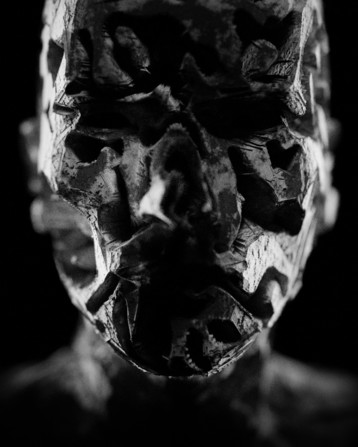
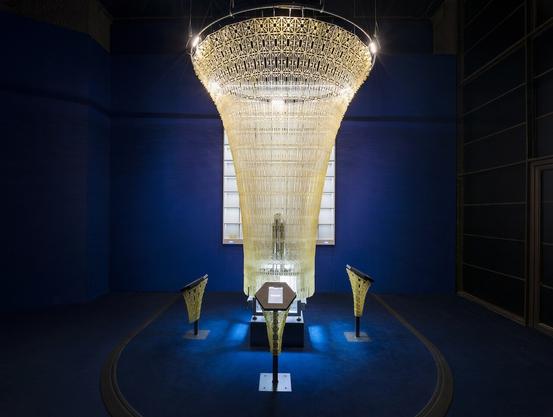
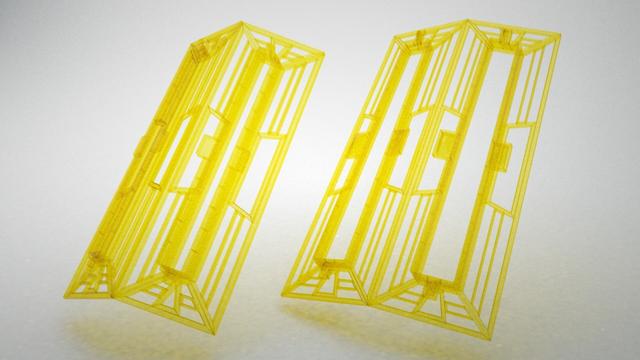
#genuary2023 Art Deco. In 2013/4 I (over)worked on one of the largest and most exhausting #GenerativeArt projects of my life: Co(de)factory was an interactive installation piece for the Digital Revolutions/DevArt exhibition, commissioned by Google & The Barbican Centre London. The centerpiece was a DIY 3D resin printer used to publicly fabricate objects designed by visitors via a custom WebGL-based visual programming environment (which was pain to get running on Chrome on the Nexus tablets embedded in the plinths). This design tool (written in back then still pre-mature #ClojureScript) was based around my https://thi.ng/morphogen DSL which defines 8 basic tree operators (e.g. reflection, subdivision, skewing, tapering etc.) to generate complex geometries via recursive transformations of a single arbitrary seed box. Not going to talk much more about the project here (maybe another time), other than to say the large 3D printed canopy structure/sculpture (3 meters tall, 2.4m diameter) surrounding the printer, as well as the cladding for the plinths were all created from hundreds of small modules designed with the Morphogen DSL and used the "golden era" of 1920s American Art Deco as main inspiration... You can find the entire source code for all components (incl. the design tool, server backend, fabrication files etc.) on GitHub:
https://github.com/postspectacular/devart-codefactory/
#3Dprint #LuxRender #Clojure
 pafurijaz

 Karsten Schmidt


 OpenSoul




 Patrice Ferlet aka MΣƬΛᄂ3D
 Earthnuker
 Midge "Mantissa" Sinnaeve