Tænkte I her på platformen også lige skulle have en julehilsen med på vejen!

Det har ikke været et helt nemt år for mig. Mentalt, men jer herinde har bestemt hjulpet på det!

Hvis der er et forum hvor man ikke drukner i toxic positivism, eller hvor der ikke er en konstant negativ tone, så er det her. Der er alt fra kattebilleder, henover strikketøj, og videre til fødselsdagshilsner. Der bliver snakket film og bøger, musik og teater. Og langt det meste på et plan hvor alle kan være med.

Her er nørder af alle afskygninger. Og det er bare fedt!

Elsker at knappe min mastodon app op. Der er altid noget sjovt eller hyggeligt at se.

Så tak fordi I er jer og deler det hyggelige, morsomme, og det ai brænder for. Tak for i år, god jul og godt nytår!

#godJul #julehilsen #Jul25

AMG’s Unsigned Band Rodeö: Blindfolded – What Seeps through Threads By Dolphin Whisperer

“AMG’s Unsigned Band Rodeö” is a time-honored tradition to showcase the most underground of the underground—the unsigned and unpromoted. This collective review treatment continues to exist to unite our writers in boot or bolster of the bands who remind us that, for better or worse, the metal underground exists as an important part of the global metal scene. The Rodeö rides on.”

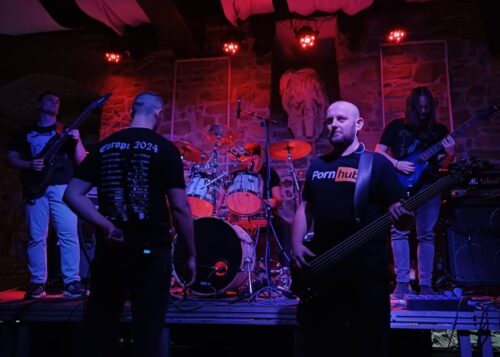
Though it may present a bit hyperbolic to say that Poland’s black and death metal scenes trample those of many other countries, the tension of young fervor and tradition weighs heavy in the hearts of riffslingers with something to say. We don’t wish turmoil on anyone, but with great struggles often comes an urge for loud, clear, and calamitous expression. New to the scene, Tarnobrzeg’s Blindfolded steps forth with their debut full-length What Seeps through Threads, a culmination of deathly tactics learned and refined over the course of their six years as a band. Boasting a range of influences from the swinging low-end drama of Gojira to the tumultuous fretboard fire of Decapitated, Blindfolded has a vision for something new from paths well-loved in the listening community. The Rodeö, however, is unforgiving. But every now and then, something comes out of left field to spark our spurs with fascination. – Dolphin Whisperer

Blindfolded // What Seeps through Threads [July 1st, 2025]

Gardenstale: This year’s Dormant Ordeal is an easy lister in my books, so it should come as no surprise that a Rodeö candidate using a pretty similar sound with a proggy twist elicits a big FUCK YEAH from me. Blindfolded brings an ingenious, potent mixture of Polish death metal with winding, labyrinthine structures, plenty of melodic licks, and burly, Vader-esque vocals. No fear of getting lost in wank, these guys hijack the hippocampus and the frontal cortex alike. “Frenzy of Exultations” alone should provide you with enough neck-snappery to use your vertebrae for confetti. It’s one of those rare albums that manage to unite groove, melody, technical chops (including an excellent drummer!), and sheer blunt brutality. And though it starts strong, it only gets better as it rolls on, with “Gates of Janus” building to an unforgiving steamroller with a hypnotic Gojira-esque riff and what might be the solo of the year. Death metal shouldn’t be too polished, but apparently, it can never be too Polish.1 4.0/5.0

What Seeps Through Threads by Blindfolded

Dolphin Whisperer: One part ambitious song structure and one part ferocious death metal groove, the young Polish Blindfolded strikes a hook-loaded balance of Oldpethian grandeur and riff-aggressive PolDeath whiplash. And, as a culmination of this fusion, a churning atmosphere embodies the acoustic intros and amplified tear-aways that propel What Seeps through Threads across a generous and genre-honing fifty-some-odd minutes. While retaining a modern compression in guitar attack and drum composition that helps throttle knotty fretwork into headbanging ears (“Great Day of His Wrath,” “Uneasy Absence of Fair Judgement”), the nimble troupe finds expressive string jangle in the longform lurches, like expositional title track or closing hop of “Gates of Janus.” No matter how long any track extends here, with the stankface-loaded “Frenzy of Exultations” even pushing the ten-plus minute mark, Blindfolded retains a sense of smart riff development, coordinated phlegmy mic assault, and punchy rhythmic adornments that keeps What Seeps stepping ever closer to greatness. Blindfolded hardly sounds like an act whose deathscapades totaled a mere ten minutes before this full-length sweep. And with as weighty a sound as they’ve assembled, it’s only a matter of a little refinement in transition and spaciousness in sound capture that sees the young Poles going toe-to-toe with their celebrated countrymen and hyped deathmongers alike. 3.5/5.0

Alekhines Gun What a debut! Forming in 2019, Blindfolded seek to make a serious impression in their first outing. What Seeps through Threads is a well-crafted release which manages to meld theatrical songwriting with a Blood Mantra-era Decapitated sense of frantic assault. Weaving Opeth song structures throughout, Blindfolded manage to shift from chug-riddled pain-bringing (“Aeonian Lie”) to the moody solos which lend pathos and dynamics in song structure. A spacious mix lets everything ring out, from bass warbles to Bartłomiej Fucia’s gruff vocals, which maintain an understandable intonation instead of leaning in on sheer brutality. Despite all of the songs being rather lengthy, (the shortest coming in at just shy of six minutes), a healthy ebb-and-flow throughout keeps riffs from repeating often or devolving into monotony. What Seeps through Threads nails the “album as a journey” aesthetic, rendering its near-hour-long runtime far shorter than it sounds. A keen sense of drama in the composition imbues each song with its own identity, while still serving the greater album narrative. I don’t know if this was a concept album or not, but if it isn’t, Blindfolded should certainly pursue such ideas as they have the talent and skill for a high-class of aural storytelling. In the meantime, come and enjoy a remarkably mature release from Poland’s newest offspring. 3.5/5.0

Thyme: When it comes to death metal, I’m like Lynyrd Skynryd, which is to say a “Simple Man.” Give me a heaping plate of meat ‘n’ taters death and I’m good to go, but that’s not to say I can’t enjoy a platter requiring a more refined palate. With debut album What Seeps through Threads, Blindfolded, and not that bunch guided sightlessly into the forest, offer a plate full of progressive death metal requiring me to dress nice, sit up straight, and know which is the fucking salad fork. Hailing from Poland, these five relative unknowns are poised to crash my impending end-of-year party with their Opeth-meets-Archspire brand of techened death. Kacper Wąsik and Marcel Kucharski present a shredding tour de force, showcasing myriad guitar skills comprised of massive, vicious riffs and a maelstrom of solo work that flows from the technically precise to the emotionally melancholy (“The Great Day of His Wrath,” “In The Eye of Maelstrom”) and, for some added spice, silky smooth jazz-guitar interludes (“Uneasy Absence of Fair Judgment”) that you won’t see coming but won’t kick out of bed. Bartloniej Fucia’s voice—a perfect blend of Mikael Åkerfeldt and Oliver Rae Aleron—complements the instrumentation, rounded out by Zygmunt Haliniarz’s bass and Kacper Rajfur’s stellar drumming. From the opening piano strains of “What Seeps through Threads” to the impeccable closer “Gates of Janus,” Blindfolded presents an album full of dramatic tension and incredible performances. Beautifully brutal, What Seeps through Threads was not on my 2025 bingo card, but it’s likely you’ll see Blindfolded’s name pop up again, at least for me, come list season. 4.0/5.0

#2025 #AngryMetalGuySUnsignedBandRodeo #AngryMetalGuySUnsignedBandRodeo2025 #Archspire #Blindfolded #DeathMetal #Decapitated #DormantOrdeal #Gojira #IndependentRelease #Jul25 #Opeth #PolishMetal #ProgressiveDeathMetal #SelfRelease #Vader #WhatSeepsThroughThreads
Thumos – The Trial of Socrates [Things You Might Have Missed 2025] By Mystikus Hugebeard

Say one thing about the AMG readerbase, say that they harbor absolutely zero ambiguity within themselves as to what kind of music they’re not interested in. I anticipate that some who wander these halls will gawk at ThumosThe Trial of Socrates: a colossal two-hour, fully instrumental collection of doomy post-prog metal. Indeed, it’s not what I’d call the most accessible album I’ve written about, so who am I to judge? However, if I were to say another thing about the AMG reader base, I’d say that they can appreciate artistry more than the average listener. To that effect, I believe that those who attend The Trial of Socrates will discover an album that is intelligent, creative, and captivating.

Sixteen songs, sixteen different Socratic dialogues transposed into music. The Trial of Socrates is undeniably high-concept, but Thumos expertly keeps the listener engaged with immediate, yet endlessly thoughtful songcraft. The Trial is full of massive, memorable riffs that hide tons of depth in their execution. “The Parmenides” is a damn strong opener that sets a pensive tone with wistful guitar notes, before leading into a heavy riff that’s carried by a crystalline, piercing guitar melody. The Trial doesn’t typically adhere to traditional song structure, but songs are far from aimless. Oftentimes a single theme will be explored with chorus-adjacent repetition even as various ideas or riffs are added and iterated upon, like in the excellent “The Gorgias,” while other songs take a more progressive approach like the epic “The Apology.” These structures give the songs a conversational cadence, as themes are explored and interrogated with a Socratic thoroughness.

The Trial of Socrates by Thumos

Perhaps Thumos’ greatest achievement here is how they maintain a vital pace across The Trial’s long runtime. Someone more versed than I in Socratic philosophy might be able to recognize something approaching a narrative or chronology across The Trial, but even lacking context, the music alone compensates with excellent pacing and variety. The songs across The Trial shift across a healthy spectrum of fast and heavy (“The Thaeatetus,” “The Philebus”), pointed melody-driven drama (“The Parmenides,” The Apology”) or grand pathos (“The Sophist,” “The Phædo”). Even as individual songs can be lengthy, they’re always followed by something new, up until you reach the sublime end. The climax of “The Phædo” is a resplendent, tragic outpour of emotion that strips away any need for context with sheer force, ushering the end of The Trial in “The Menexenus,” a nigh funeral dirge.


The Trial of Socrates
is exactly the kind of metal I love: something that excels in both passive and active listening. The adherence to its source material and striking imagery pokes and prods at your curiosity, encouraging you to wander the labyrinth with the deepest focus, even as the post-doom riff work provides a comfortable space to rest in and bask in the diverse, stellar musicianship. Yeah, it’s long as hell, but to be frank, I grow tired of feeling like I must apologize for The Trial’s runtime, sheepishly imploring you to listen despite it. Thumos has a lot to express about their choice of inspiration, and there is little, if anything, I might suggest be removed. The Trial of Socrates is an intelligent and captivating piece, one that is worth your time.

Tracks to Check Out: ”The Parmenides,” “The Protagoras,” “The Gorgias,” “The Sophist,” “The Phædo”

#2025 #DoomMetal #Jul25 #PostMetal #ProgressiveMetal #SnowWolfRecords #TheTrialOfSocrates #ThingsYouMayHaveMissed2025 #Thumos

Sådär, nu är alla julklappar bärgade, nytt rekord för mig tror jag.

#julstök #jul25

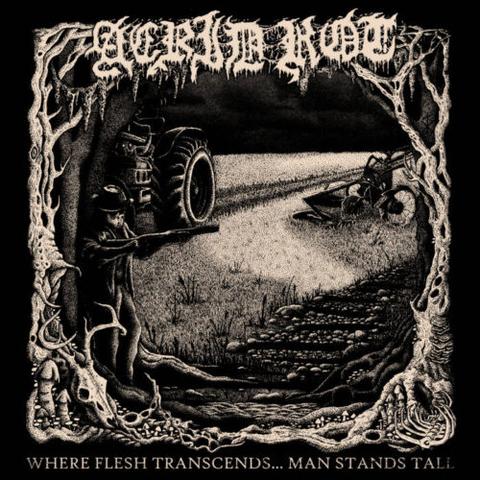
AMG’s Unsigned Band Rodeö: Acrid Rot – Where Flesh Transcends… Man Stands Tall

By Killjoy

“AMG’s Unsigned Band Rodeö” is a time-honored tradition to showcase the most underground of the underground—the unsigned and unpromoted. This collective review treatment continues to exist to unite our writers in boot or bolster of the bands who remind us that, for better or worse, the metal underground exists as an important part of the global metal scene. The Rodeö rides on.”

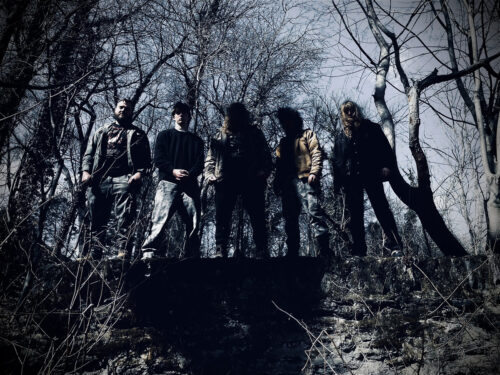
Surprise! You probably noticed that I am not, in fact, Dolph. Welcome to a special edition of the Unsigned Band Rodeö exclusively featuring all five members of the Freezer Crew.1 Originally admitted as part of the 2021 casting call, our n00b class was summarily put on ice for a few years until management remembered us the Internet was ready to receive our correct opinions. Due to these unorthodox circumstances, we of the Crew are firm believers in the “better late than never” philosophy. This proved fortunate for the death/doom/sludge group Acrid Rot, who sent us their debut album Where Flesh Transcends… Man Stands Tall on the very day of its release. Normally, this is a good way to not get a review, but in this case they get five! Without further ado, let’s examine how well this young spitfire band from Pennsylvania capitalizes on the second chance they’ve been given. – Killjoy

Acrid Rot // Where Flesh Transcends… Man Stands Tall [July 21st, 2025]

Alekhines Gun: ”Wiser, Older, Still Hates Sludge” is one of our many banner themes in these hallowed halls. And yet, for every subgenre we hate2 there comes such a well-constructed illustration of the idea that it defies the sn00tiness of even such “above it all” outfits as us, The Freezer Crew. Acrid Rot classify themselves as doom/death/sludge, and while there isn’t really all that much doom, there’s definitely some well-crafted sludgy death. Where Flesh Transcends… is a moody beast, littered in modern The Acacia Strain gloom and an approach to emotive riff-craft adjacent to Terminal Nation and Fuming Mouth. “Where Fangs Supplant Teeth” is as clear of an album mission statement as any, with a chug-centric, lead-slathered construction seemingly showing the whole album’s hand. And yet, the deeper you go, the more Acrid Rot unfurl tendrils in other directions, with “The Torment of Mending” recalling the years of metalcore before that was a dirty word. Surprisingly, acoustic interludes (“A Night Upon the Mire”, “Blood Upon the Cabin Floor”) don’t come across as filler, instead adding more to the mood pervasive through the album in a vein similar to Morbid Angel’s “Desolate Ways.” Some switched-up track sequencing might help Where Flesh Transcends…feel less like an album with two sides (particularly the back half featuring cleans which, while not bad, definitely sound dated and out of place). Otherwise, Acrid Rot have dropped a debut to redeem the honor of deathly sludge in these halls and is worthy of your time. 3.5/5.0

Killjoy: Acrid Rot’s identity seems to be in a constant state of flux, even for a new band. Where Flesh Transcends… Man Stands Tall initially struck me as a post-ier Warcrab, ricocheting between death, doom, sludge, and post metal with reckless abandon. The common denominator is lots of grimy yet groovy riffs which, when coupled with Matt Weisberg’s venomous growls yields a pleasurably abrasive result. Acrid Rot makes a positive first impression with opener “Where Fangs Supplant Teeth,” successfully navigating nearly 8 minutes with a feral statement of intent before transitioning to a crushing doom section midway through. There are still some good times to follow, but after this point the pacing becomes choppy and a bit puzzling at times. “To Wallow in Infirmity” is a coarse death metal-leaning track with a slightly underdeveloped outro. “Desidarium” and “The Torment of Mending” both mine similar veins of weighty death-doom, the latter experimenting with clean vocals to middling effect. The two acoustic guitar-picked interludes, “A Night Upon the Mire” and “Blood Upon the Cabin Floor,” don’t add a whole lot, and just one (or none) of them would have sufficed. Where Flesh Transcends… Man Stands Tall is worthy of at least a few spins but the overall quality isn’t quite consistent enough to have much staying power for me. 2.5/5.0

Owlswald: Formed in 2022, Pennsylvania-based death/sludge quintet Acrid Rot is a young band and it shows on their debut album, Where Flesh Transcends…Man Stands Tall. Although the record shows glimmers of potential, its consistency and execution are frustratingly uneven. Acrid Rot is at its best when the group finds its focus. Tracks like “Desidarium” and the title track are highlights, featuring tight arrangements, quality songwriting and potent, hooky Edge of Sanity-esque riffing that hint at a promising future once the fivesome fully hones its voice. Unfortunately, these standout moments are too few and far between and, as a whole, the album feels more like a rough draft than a final product. While the riffs and vocals lay a raw, powerful foundation, the drumming holds back the songwriting. It feels loose and lacks the precision and energy needed on tracks like “Salvation’s Pointed Knife,” “To Wallow in Infinity” and “The Torment of Meaning.” Other songs, like “Where Fangs Supplant Teeth” and “The Weight of Impermanence,” overstay their welcome without offering enough originality, leaning on repetitive riffs and breakdowns that occasionally stray into generic groove and nu-metal territory. In the end, Where Flesh Transcends…Man Stands Tall is a disappointing effort that lacks the polish and creativity for lasting appeal, leaving me to hope that this debut is a mere stepping stone for Acrid Rot and not a sign of what’s to come. Disappointing.

Thyme: Come now, all ye listeners of other things, and prepare to have thy face stanked and thy neck destroyed via vigorous whipped lashings. Pennsylvania’s new sludge act, Acrid Rot, dropped their big ugly Crowbar of a debut album, Where Flesh Transcends…Man Stands Tall in July. Flush with enough fat, meaty riffs to keep even the snobbiest of sludge-esieurs satiated, there’s tons o’ melody in them thar hills as well (“Where Fangs Supplant Teeth,” “The Weight of Impermanence”). Once the two-man project of multi-instrumentalist Dax Giglio and vocalist Matt Weisberg, Acrid Rot has expanded into a full-fledged five-piece with enough chops to suggest a group that has been together for way longer. My nod to Crowbar stands as the best comparison, as Acrid Rot execute perfectly on the template that those Nola-ns established with ’91’s Obedience Through Suffering. Weisberg matches Kirk Windstein blow for blow, his gruff, sludgy grunts and gravelly tones (“The Torment of Mending”) a dead ringer for Crowbar’s front man, but with the ace of some absolutely guttural, deathly growls up his sleeve (“Desidarium”) to slide out and win the hand. Where Flesh Transcends…Man Stands Tall is one monstrous riff-fest of a debut, and aside from a couple of much-needed acoustic interludes that I enjoyed as well, there wasn’t a moment of this forty-three-minute monster that didn’t have me testing the boundaries of my cervical spine. Why Acrid Rot aren’t signed yet is a mystery, but I’ll guarantee you they won’t stay unsigned for long. 3.5/5.0

ClarkKent: That stench pervading Pennsylvania is none other than Acrid Rot, a group of young upstarts unleashing their debut album on the unwitting masses. Where Flesh Transcends… contains a set of rancid sludge that seamlessly alternates between the creep of doom to more up-tempo death metal. The musicians have a restrained discipline in their approach to the music, allowing ideas to fester develop organically without feeling overlong. It helps that the riffs are a cut above average, and there’s a fair amount of variety. Speaking of variety, vocalist Matt Weisberg is all over the place, and I don’t mean that in a bad way. He alternates between punky shouts and powerful doom growls, but he also manages to surprise with some old school Beastie Boys-like yells (“To Wallow in Infinity”) and slam gurgles (“Where Flesh Transcends…Man Stands Tall”). This variety helps prevent the record from growing stale. With a DR 9, Where Flesh Transcends… is well-produced and sounds appropriately putrid, but for something that leans doom I found the drums to be a bit on the weak side. The compositions are the work of mature musicians—a little more bite to the instruments would have elevated the whole package. Nonetheless, Acrid Rot prove themselves a promising new face in the sludge scene. 3.0/5.0

#2025 #AcridRot #AmericanMetal #AngryMetalGuySUnsignedBandRodeo #AngryMetalGuySUnsignedBandRodeo2025 #BeastieBoys #Crowbar #DeathMetal #DoomMetal #EdgeOfSanity #FumingMouth #Jul25 #MorbidAngel #Review #Reviews #SelfRelease #SludgeMetal #TerminalNation #TheAcaciaStrain #Warcrab #WhereFleshTranscendsManStandsTall

Stuck in the Filter: July 2025’s Angry Misses

By Kenstrosity

If you thought June was hot, you aren’t ready for what July has in store. The thin metallic walls of these flimsy ducts warp and soften as the sweltering environs continue to challenge the definition of “habitable.” But I must force my minions to continue their work, as this duty is sacred. Our ravenous appetites cannot be slaked without the supplementary sustenance the Filter brings!

Thankfully, we rescued just enough scraps to put together a meager spread. Enjoy in moderation!

Kenstrosity’s Blackened Buds

Echoes of Gloom // The Mind’s Eternal Storm [July 12th, 2025 – Self-Release]

Queensland isn’t my first thought when considering locales for atmospheric black metal. A genre so often built upon frigid tones and icy melodies feels incongruous to the heat and beastliness of the Australian landscape. Yet, one-man atmoblack act Echoes of Gloom persists. Masterminded by one Dan Elkin, Echoes of Gloom evokes a warm, muggy, and morose spirit with debut record The Mind’s Eternal Storm. But unlike many of the atmospheric persuasion, Echoes of Gloom also injects a classic heavy metal attack and a vaguely punky/folky twist into their formula to keep interest high (“Immortality Manifest,” “Throes of Bereavement I”). Furthermore, Echoes of Gloom weaponizes their energetic take on depressing atmoblack such that even as my head bounces to the riffy groove of surprisingly propulsive numbers like “The Wandering Moon” and “Great Malignant Towers of Delirium,” a palpable pall looms ever present, sapping all color from life as I witness this work. This in turn translates well to the long form, as demonstrated by the epic two-part “Throes of Bereavement” suite and ripping ten-minute closer “Wanderer of the Mind’s Eternal Storm,” boasting dynamics uncommon in the atmospheric field. In sum, if you’re the kind of metal fan that struggles with the airier side of the spectrum, The Mind’s Eternal Storm might be a good place to start.

Witchyre // Witchy Forest Dance Contest [July 14th, 2025 – Self-Release]

Germany’s Witchyre answer a question nobody asked but everyone should: what would happen if black metal and dance music joined forces? With debut LP Witchy Forest Dance Contest, we get to experience this mad alchemy firsthand, and it is an absolute joy! The staunchly anti-fascist Witchyre take the raw sound everyone knows and pumps it full of groove, bounce, and uninhibited fun for a raucous 46 minutes. Evoking equal parts Darude and Darkthrone, bangers like “Let There be Light…,” “Witchy Forest Dance Party,” and “Lost in a Dream” burst with infectious energy that feels demonic and exuberant at the same time. The raw production of the metallic elements shouldn’t work with the glossy sheen of electronic doots, but Witchyre’s often pop-punky song structure that develops as these divergent aesthetics collide adeptly bridges the gap (“Spirits Twirling,” “The Vampire Witch,” “Dragon’s Breath”). My main gripe is that even at a reasonable 46 minutes, each song feels a bit bloated, and some dance elements feel recycled in multiple places (“The Spirits Robbed My Mind”). But don’t let that scare you away. Witchyre is a delightful little deviation from convention fit for fans of Curta’n Wall and Old Nick, and everyone should give it a whirl just for fun!

Owlswald’s Hidden Hoots

Sheev // Ate’s Alchemist [July 11th, 2025 – Ripple Music]

While stoner can be hit-or-miss, Ripple Music often delivers the goods. And with Berlin’s Sheev, they can add another notch to their sativa-flavored belt. Since 2017, the four-piece has been brewing their unique, progressive-infused stoner rock sound. On their second full-length, Ate’s Alchemist, Sheev doubles down on their sonic elixir, with a throwback prog-rock vibe that evokes the likes of Yes and Jethro Tull, but with heavy doses of grunge, jam and modern rock. Vocalist Nitzan Sheps’ provides a stripped-down and authentic performance, sounding like a cross between Muse’s Matt Bellamy and Alice in Chains’ Layne Staley. The rhythm section is particularly great here. Drummer Philipp Vogt’s kit work is exceptionally musical, with intricate cymbal patterns on tracks like “Elephant Trunk,” “Cul De Sac,” and “King Mustard II” that fuel deep-pocket grooves. He also provides Tool-like syncopated rhythms on tracks like “Tüdelüt” and “Henry” that lock with bassist Joshan Chaudhary. Chaudhary’s bass playing is rare in its prominence and clarity in the mix. He maintains a tight pocket while also venturing out regularly with nimbler, adventurous flurries that highlight his technical skill. Yeah, a couple of the longer songs get a little lost, but the album is packed with killer musicianship and vocal hooks that stick with you, so it barely matters. Overall, Sheev has delivered a solid record that I’ll be spinning a lot—and you should too.

Dephosphorus // Planetoktonos [July 18th, 2025 – Selfmadegod Records/7 Degrees Records/Nerve Altar]

Space…the final grind-tier. On their fifth album, Planetoktonos (“Planetkiller”), Greek astro-grind quartet Dephosphorus rejects normal grind classifications and instead annihilates worlds with a brutal, interstellar collision of grind, blackened death, and hardcore. Taking inspiration from the harsh sci-fi of James S.A. Corey’s The Expanse, Planetoktonos is a relentless twenty-eight-minute assault—a sonic asteroid belt of thick, menacing distortion and time-warped drumming that channels Dephosphorus’ raw, furious energy. “The Triumph of Science and Reason” and “After the Holocaust” attack with the ruthless speed of Nasum while others, such as “The Kinetics of a Superintelligence Explosion,” “Hunting for Dyson Spheres,” and “Calculating Infinity,” punctuate sludgy aggression with razor-sharp, shredding passages reminiscent of early Mastodon that offer contrasting technical and rhythmic hostility. Vocalist Panos Agoros’ despairing howls are a particular highlight, full of a gravelly, blackened urgency that sounds the alarm for an interplanetary attack. Gang vocals on tracks like “Living in a Metastable Universe” and “The Kinetics of a Superintelligence Explosion” add extra weight to his frantic performance, proving Dephosphorus can incinerate worlds and still have a blast doing it. Raw, intense, and violent, Planetokonos is a must-listen for fans seeking Remission-era energy.

Tyme’s Tattered Treats

Mortual // Altars of Brutality [July 4th, 2025 – Nuclear Winter Records]

From the fetid rainforests of Costa Rica, San Jose’s Mortual dropped their sneaky good death metal debut, Altar of Brutality, on Independence Day this year. Free of frills and fuckery, Justin Corpse and Master Killer—both have guitar, bass, and vocal credits here—go for the jugular, providing swarms of riffs entrenched in filthy, Floridian swamp waters and powdered with Jersey grit. Solo work comes fast, squealy, and furious as if graduated from the Azagthothian school of shred (“Dominion of Eternal Blasphemy,” “Skeletal Vortex”), as hints of early Deicide lurk within the chugging chunks of “Altar of Brutality” and whiffs of early Monstrosity float amongst the speedier nooks and crannies of “Divine Monstrosity.”1 Incantationally cavernous, the vocals fit the OSDM mold to a tee, sitting spaciously fat and happy within Dan Lowndes’ great mix and master, which consequently draws out a bestial bass sound that permeates the entirety of Altar of Brutality with low-end menace. Chalo’s (Chemicide) drum performance warrants particular note, as, from the opening tom roll of “Mortuary Rites,” he proceeds to bash skulls throughout Altar of Brutality’s swift thirty-five-minute runtime with a brutal blitz of double-kicking and blast-beating kit abuse. Embodying a DIY work ethic that imbues these tracks with youthful energy and a wealth of death metal character, Mortual aren’t looking to reinvent the wheel as much as they’d like to crush you under its meaty treads, over and over again.

Stomach // Low Demon [July 18th, 2025 – Self-Release]

Droney, doomy, sweaty, and sludgy as fuck, Stomach’s blast furnace second album, Low Demon, is the antithesis of summer-fun metal. Hailing from Geneva, Illinois, Stomach is drummer/vocalist John Hoffman (Weekend Nachos) and guitarist Adam Tomlinson (Sick/Tired, Sea of Shit), who capably carry out their cacophonous work in such a way as to defy the fact that they’re only a duo.2 At volume, and believe me, you’ll want to crank this fucker to eleven, Low Demon will have you retching up all that light beer you drank by the pool and crying for yer mom, as “Dredged” oozes, rib-rattling from the speakers, a continuous, four-and-a-half-minute chord-layered exercise in exponentially applied tonal pressure. With five tracks spanning just over forty-three minutes, there’s not a lot on Low Demon that’s in a hurry, and aside from sections of up-tempo doom riffs (“Get Through Winter”) and some downright grindery (“Oscillate”) offering respite from the otherwise crushing wall of sound, listening to Stomach is akin to being waterboarded with molasses. Heavy influences from Earth, Sunn O))), Crossed Out, and Grief—whose Come to Grief stands as a sludge staple—form the basis for much of Stomach’s sound, and while Primitive Man and Hell draw apt comparisons as well, I’m guessing you know what you’re getting into by now. Maniacally cinematic and far from light-hearted, Stomach’s Low Demon was everything I didn’t think I needed during this hot and humid-as-an-armpit-in-hell summer.

Killjoy’s Flutes of Fancy

Braia // Vertentes de lá e cá [July 10th, 2025 – Self-Release]

Bruno Maia is one of the most inventive and hardworking musicians that I know of. Best known for the whimsical Celtic folk metal of Tuatha de Danann, he also has his own folk rock side project, Braia. Vertentes de lá e cá explores the rich history and culture of the Minas Gerais state in his native country, Brazil.3 Bursting with more sweetness than a ripe mango, Vertentes de lá e cá sports a huge diversity of musical styles and instruments. A combination of flute, viola, and acoustic guitar forms the backbone of most of the songs, like the Irish jigs in “Vertentes” or the flitting melodies of “Princesa do Sul.” My ears also detect accordion (“O Cururu do Ingaí”), saxophone (“Serra das Letras”), harmonica (“Hipólita”), banjo (“Carrancas”), and spacey synth effects (“Pagode Mouro”). That last one might sound out of place, but it makes more sense after learning of the local tales of extraterrestrial encounters. Maia sings in only two of the twelve tracks (“Emboabas” and “Rei do Campo Grande”), but all 41 minutes should be engaging enough for listeners who are typically unmoved by instrumental music. Though thematically focused on one specific location, Vertentes de lá e cá deserves to be heard by the entire world.

Storchi // By Far Away [July 25th, 2025 – Self-Release]

I would guess that the “experimental” tag causes some degree of trepidation within most listeners. However, occasionally an artist executes a fresh new vision so confidently that I can’t help but wonder if it’s secretly been around for a long time. Storchi, an instrumental prog group from Kabri, Israel, utilizes a flute in creative ways. Its bright, jazzy demeanor almost functions as a substitute for a vocalist in terms of expressiveness and personality. The Middle Eastern flair combined with modest electronic elements reminds me of Hugo Kant’s flute-heavy multicultural trip-hop. The chunky palm-muted guitar and bass borrow the best aspects of djent alongside eccentrically dynamic drum tempos. There is premeditation amidst the chaos, though. The triplet tracks “Far,” “Further,” and “Furthest” scattered throughout By Far Away each offer a unique rendition of the same core flute tune. “Lagoona” and “Smoky” make good use of melodic reprisals at the very end to neatly close the loop on what might have otherwise felt like more disjointed songs. Despite frequent and abrupt stylistic shifts, Storchi manages to make the 31-minute runtime of By Far Away feel more enjoyable than jolting. Flute fanatics should take note.

ClarkKent’s Addictive Addition

Daron Malakian and Scars on Broadway // Addicted to the Violence [July 19th, 2025 – Scarred for Life]

Since System of a Down disbanded, guitarist Daron Malakian has gone on to release 3 full-length albums under the moniker Scars on Broadway between 2008 and 2025. This spinoff project has proven Malakian to be the oddball of the group, and this goofiness hasn’t mellowed since SOAD’s debut released 27 years ago. The energetic set of tunes on Addicted to the Violence mixes nu-metal, groove rock, and pop with plenty of synths to create some fun and catchy beats. Sure, you have to delve through some baffling lyrics,4 such as when Malakian sings that there’s “a tiger that’s riding on your back / And it’s singing out ‘Rawr! Rawr!'” (“Killing Spree”). Malakian also turns to the familiar theme of drug addiction that he and Serj have explored from “Sugar” to “Heroine” to “Chemicals.”5 This time around, it’s “Satan Hussein,” where he mixes Quaaludes and Vicodin with Jesus Christ. To offset the repetition within songs, Malakian has the sense to mix things up. There’s the nu-metal cuts of “Satan Hussein” and “Destroy the Power,” featuring energetic vocalizations and grooves, but there’s also a lot of pop (“You Destroy You”). The riffs may not be as wild or creative as times past, but Addicted to the Violence makes use of a variety of instruments that keep things fresh, from an organ (“Done Me Wrong”) to a mandolin (“You Destroy You”) to some sweet synth solos. There’s even a brief saxophone appearance to conclude the album. Yes, I know exactly what you’re thinking: “This sounds awesome!”

#2025 #7DegreesRecords #AddictedToTheViolence #AliceInChains #AltarsOfBrutality #AmericanMetal #AteSAlchemist #AtmosphericBlackMetal #AustralianMetal #BlackMetal #BlackenedDeathMetal #Braia #BrazilianMetal #ByFarAway #Chemicide #CostaRicanMetal #CrossedOut #CurtaNWall #Dance #Darkthrone #DaronMalakianAndScarsOnBroadway #Darude #DeathMetal #Deathgrind #Deicide #Dephosphorus #Doom #DoomMetal #Drone #Earth #EchoesOfGloom #EDM #ExperimentalMetal #FolkMetal #FolkRock #GermanMetal #Gindcore #GreekMetal #Grief #GrooveMetal #Hardcore #Hell #HugoKant #InstrumentalMetal #IsraeliMetal #JethroTull #Jul25 #LowDemon #Mastodon #MelodicBlackMetal #Monstrosity #Mortual #Muse #Nasum #NerveAltar #NuMetal #NuclearWinterRecords #OldNick #Planetoktonos #PopMetal #PrimitiveMan #ProgressiveMetal #RawBlackMetal #Review #Reviews #RippleMusic #ScarredForLife #SeaOfShit #SelfRelease #SelfmadegodRecords #Sheev #SickTired #Sludge #SludgeMetal #Stomach #StonerDoom #StonerMetal #Storchi #StuckInTheFilter #StuckInTheFilter2025 #SunnO_ #SystemOfADown #TheMindSEternalStorm #Tool #TuathaDeDanann #VertentesDeLáECá #WeekendNachos #WitchyForestDanceContest #Witchyre #Yes

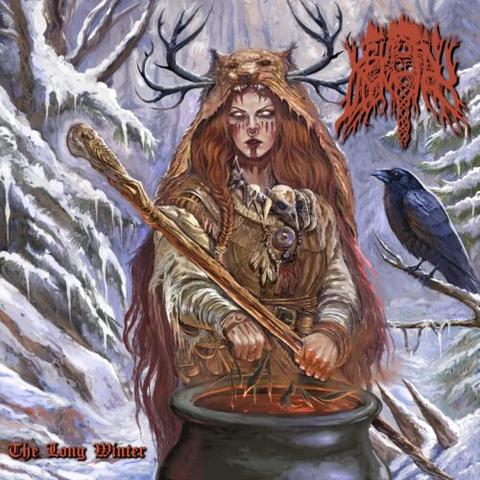
Burden of Ymir – The Long Winter Review

By Twelve

Joe Caswell of Sudbury, Canada first caught the attention of this blog in 2023, as the sole member of Drowstorm and Burden of Ymir. Both projects released albums in 2023, impressing all who wrote about them. In my case, Heorot was a fantastic introduction to the latter band, a blackened-yet-folky display of Viking metal that appealed to both my appreciation for mythologically-themed metal and my longheld belief that the accordion is the most metal of all the instruments. Now, just over two years later, Burden of Ymir return with its sixth full-length release (in as many years!): The Long Winter, with an album cover that promises just as much blackened goodness as we’ve come to hope for. At this point in the year, I’d love a long winter, but I’ll settle for some frosty metal if that’s what’s being offered!

At first glance, The Long Winter is exactly what you expect from Caswell and Burden of Ymir; the Norse influence is tangible, the black metal is blisteringly fast, and the accordion is present. And yet, The Long Winter is a darker, heavier record than its predecessor. Caswell does not hold back in the riffs department, and it’s a testament to his songwriting that The Long Winter feels heavy for the full forty-five minutes without sounding forced. Compared to Heorot, The Long Winter sees Burden of Ymir treading slightly less folk-y waters, focusing more on its black metal influences and allowing the concept to do some more of the lifting on the folk side. Songs like “Like Blood in the Snow” are angry, pulling no punches and letting riffs and blast beats shine. It’s recognizably Burden of Ymir, but sees a definitive step in a new—but still familiar—direction.

Still, folky fusion and blackened metal are two things Burden of Ymir do extremely well, and having the metal heavier only enhances the union. Opener “As Witches Under Cloak of Night” is a multifaceted gem with hooks, moody, tense interludes, and a galloping chorus that’ll have you setting sail before you know it. “Strange Craft” builds around an accordion lead in its intro into an unsettling, melodic journey through dark magic and black forests before exploding into black metal fury. “Another Seed of Yggdrasil” breaks out the clean singing for a mystical chorus that counterbalances Caswell’s rasps—as up to the task as ever, but at their most effective working alongside these more melodic elements. All this is to say that Caswell’s ability to blend black metal and Viking themes is as strong as ever, and The Long Winter is more enjoyable for it.

I’ve mentioned that The Long Winter dials back a bit on the “Viking” quality that was so apparent in Heorot, resulting in a listen that ultimately leans blacker and heavier than folky. The aforementioned accordion makes a few, brief appearances, and Caswell’s clean singing is much diminished. More notably, the hooky writing from Heorot is curiously absent; more songs are carried by riffs than leads, resulting in an overall less melodic listen. This makes tracks like “Strange Craft” and “As Witches Under Cloak of Night” stand out—they’re generally more energetic than the rest of the album, particularly the closing third. While it’s certainly all strong, it feels like the blend doesn’t quite mesh the way it should. There are a bunch of songs I love here, several that I like, and a few that feel like they’re there to beef up The Long Winter more so than entertain. They are entertaining—I can’t stress that enough—but I would hazard a guess that Burden of Ymir has a slightly different vision for The Long Winter than what I’ve personally experienced.

Still, Caswell is a great songwriter, strong guitarist, and knows his mythologies, meaning The Long Winter is a fun listen that continues his hot streak over several one-man projects, styles, and album releases. If black metal is your thing, there’s something for you here. If Viking folk is your thing, there’s something for you here. I won’t say it all comes together perfectly, but it doesn’t really have to. It just has to be enjoyable to listen to for most of an hour, and it is. If you like any of the above styles, I would happily recommend you take a break from the awful weather we’re having (read: warm) and enjoy a long winter instead.

Rating: 3.0/5.0
DR: 6 | Format Reviewed: 320 kb/s mp3
Label: Flowing Downward
Websites: burdenofymir.bandcamp.com | facebook.com/BurdenOfYmir
Releases Worldwide: July 4th, 2025

#2025 #30 #BlackMetal #BurdenOfYmir #CanadianMetal #Drowstorm #FlowingDownward #FolkMetal #Jul25 #Review #Reviews #TheLongWinter #VikingMetal

Record(s) o’ the Month – July 2025

By Angry Metal Guy

In this mad dash towards relevance and timeliness, it can be tough to come up with things to say that don’t feel a little cliché. But the reality is that this whole path has been leading here. I had hoped to have a really special surprise ready for this day, but alas, I have pulled a classic Attention Deficit Disorder Guy move, filling my schedule up with stuff that hits me right in the dopamine. I’ve got reviews to write, n00bs to torture, and I have a fancy new vacuum cleaner that both vacuums and mops, so my apartment is as clean as it has ever been. I watched that K-pop Demon Hunters movie, and listened to this incredible vocal cover of it from the singer of Twilight Force way too many times. I got a crash course in super cheesy Latin ballads since the 1980s. I wrote a long-ass post about Why Spotify Sucks n’ Shit and then fought with everyone in the comments for days. I am an unregulated, but surprisingly productive, bench.1 So, sans surprise, I am soldiering on to bring you the Record(s) o’ the Month for July 2025, as close as I’ve been to on time all year. Incidentally, the Record o’ the Month matches my messy bench energy pretty much perfectly.

I told you that Calva Louise’s most recent opus—entitled Edge of the Abyss [Bandcamp] and out July 11th, 2025, from Mascot Records—was going to be my most controversial Record o’ the Month since Our Oceans.2 I don’t think it should be, of course. I think it should be appreciated for the fascinating blend of genres that it represents, as well as the talent—and sheer drive—of a band that truly has dragged itself through the dregs of a dying music industry with an incredible DIY ethic to produce a kick ass record with a gorgeous and powerful blend of ideas. Edge of the Abyss is an act of becoming, a sketch, a step towards finally getting one’s vision down on paper, tape, or film. It’s adventurous, thoughtful, beautiful, and diverse—an invigorating assemblage of ideas ranging from groovecore to Viennese classical to música llanera, spanning the globe and decades for inspiration. It’s music that is truly progressive, if not overly technical. But setting that aside, Edge of the Abyss just works. The fragments have a cinematic feel that the band carries through to its visual profile, with strong songwriting and a cinematic universe that they have been trying to bring into being for four albums. As an overly excited Me Myself gushed to anyone who would listen: “Some records sound big, and some records feel big. Edge of the Abyss does both. It feels big because it has ideas, and it succeeds because it commits to those ideas with zero regard for genre gatekeeping or scene politics. It’s weird, catchy, and gleefully sophisticated, with every song bringing something unique to the table. Every idea and every arrangement counts. It’s a banger parade,” and it’s a promise that there’s so much more to come.

A special note: Calva Louise will be going on their first headlining tour of the US this September [find dates and tickets]. Go see them and tell them that Angry Metal Guy sent you.

Runner(s) Up:

Sarastus // Agony Eternal [July 1st, 2025 | Dominance of Darkness Records | Bandcamp] — One of the best things about being Angry Metal Guy is being able to ask people during arguments which of us has “the eponymous website that hundreds of thousands of people visit monthly.” A close second is discovering shit that no one has heard of and throwing it into the chat, all “Oh, Grier, you need to check out Sarastus! Great black metal without the label atmospheric anywhere near it!” Because I knew from the word go that Agony Eternal was something special and whatever It is, Sarastus has It in spades.3 There’s a specific vibe here that reminds me not just of the sound of late-90s/early-00s melodic black metal, but the feel—hungry, heavy, and addictive. Sarastus doesn’t lean away from attack, but neither do these Finns just blanket the world in blast beats; they find strength in diversity and slick songwriting. Agony Eternal is the kind of record that reminds you of why black metal was such a vital gateway to extreme metal once upon a time. Fast, heavy, extreme, and melodic, it evokes the exact feeling that I need from my black metal: Agony Eternal. And I wasn’t alone, an excited, nimble-fingered Kenfrenstrosity swiped Sarastus from both Myself and Grier, and then rode that hype machine over the cliff like a Once and Future King: “Agony Eternal is a nonstop party. With almost poppy energy, Sarastus captured with remarkable simplicity and undeniable effectiveness the passion and conviction that made black metal of this kind a sensation. But I hear more than just black metal purism. I hear a confident, exuberant soul rooted in rock n’ roll rebellion, forged in timeless techniques, and steeped in metallic traditions across the spectrum.” Sarastus, Life of the Party!

Impureza // Alcázares [July 11th, 2025 | Season of Mist | Bandcamp] — When it comes to inventive ways to make your death metal cooler, Impureza has one of my favorites. The blending of flamenco—one of the world’s coolest non-metal styles of music—and death metal is a hard row to hoe, but somehow these French death metallers have gotten the balance right. This wasn’t always the case, but Alcázares is the perfect refinement of what was already a pretty well-developed idea. What’s fun is that Impureza has started taking on an almost melodic death feel at times, reminiscent of Æeternam at their best.4 But there’s a brutality evocative of the era in death metal history when Black Seeds of Vengeance was considered to be the peak of death metal evolution. And at this point, I’m just fucking here for all of it. In My Frothy Excitement, I sandblasted the Internet with words: “Alcázares is Impureza at their most ambitious: historically immersed, sonically expansive, blasphemous, and super into alternative histories of colonialism.5 Alcázares is a violent, poetic invocation of Spain’s medieval imagination, and it sports an enchanting vibe that recalls some of the best records I own. Seven years of development resulted in a record full of tight riffs, beautiful guitar work, intense compositions, and somehow a Necromancer. I would say that I hope to see something from them soon, but I’m happy to wait another seven years for another record of this quality.” Enjoy ov Orphaned-Land-Sized Breaks between Albums. I’ll be ready for you to blow my mind again in 2032.

Phantom Spell // Heather & Hearth [July 18th, 2025 | Cruz del Sur Music | Bandcamp] — Phantom Spell was a real surprise for me. Sometimes you go into a record knowing you like the band. But Phantom Spell, I wouldn’t have looked twice at it if I hadn’t just clicked play on the promo. And man, it’s risky having a 12-minute track as the opener for your album. But that’s the kind of risk that Kyle McNeill takes and, honestly, it paid off. I knew Heather & Hearth was going to be quality when I bobbed my head through the whole 11 minutes and 51 seconds of “The Autumn Citadel,” only to look up and realize it was 11 minutes and 51 seconds long. And that’s the trick with Heather & Hearth; it catches you off guard. Whether it’s the organ tones stolen directly from The Snow Goose, the guitar solos that taste like shag carpet, or the vocal harmonies that make Mikael Åkerfeldt jelly, everything works to perfection while sounding great. Rather than feeling like nostalgiacore, Phantom Spell feels authentic, powerful, and is a truly addictive listen. As I babbled as loudly as anyone would allow me: “This is a great record, and the only thing left for Heather & Hearth to prove is that it has staying power. From the opening ‘bew bew bews’ of the organs, to the *insert nature sounds here* that close the album out, Heather & Hearth is a triumphant exploration of songwriting from a different time. Phantom Spell makes me genuinely long for a time when it would have been impossible for Phantom Spell—a solo project—to exist. And that’s an amazing success.”

#2025 #AgonyEternal #Alcázares #BlogPost #CalvaLouise #EdgeOfTheAbyss #Gazpacho #HeatherHearth #Impureza #Jul25 #MascotRecords #MúsicaLlanera #PhantomSpell #Sarastus #TwilightForce

No Shelter. – Remission/Resolve Review

By Angry Metal Guy

Written By Nameless_n00b_605

These days, it seems everywhere I turn, I can’t help but run into a great band from Germany. I don’t know what’s in the water over there, but with groups like Kanonenfieber, Unhallowed Deliverance, and classic acts like Sodom releasing great records, it’s no surprise that yet another talented group hails from Deutschland. No Shelter. is a five-piece from Münster that peddles in D-beat brutalization with a heaping helping of Boss HM-2 pedal worship. Its latest, Remission/Resolve, is a bass-driven freight train of Swedish-coded blackened death metal, crust punk, and hardcore, conjuring direct comparisons to genre stalwarts like Nails, Rotten Sound, and Trap Them. Can No Shelter. stand in the spotlight with some of the most vicious rippers around, or is it flying too close to the sun, wax wings ready to send it to hell with the rest of the copycats?

No Shelter. is relatively new to the scene (forming in 2017), but it sounds like a veteran unit. Every element of the band feels honed for their specific brand of violence. Thick, earth-shaking bass drives the album, while HM-2-infused riffage switches between blackened death blasts and Pantera-esque grooves. Bolstered by intricate drum fills and classic hardcore 2-step energy, the vocals are equally caustic, calling to mind a truly evil combo of Ringworms James Bulloch and Nails’ Todd Jones. No Shelter. plays with no holds barred throughout the entire album, and each band member takes to their role with a reckless abandon more than fitting for their genre inspirations.

The brutally sludgy bass is the adrenaline-juiced heart that keeps Remission/Resolve pumping. Where bands like Job for a Cowboy and Horrendous use bass to shore up their technicality and the spaciness of their sound, No Shelter. uses it as a sledgehammer. Bass is integral to metal, making riffs deeper, heavier, and more impactful overall, and No Shelter. just gets it. Every riff is complemented by slapping destruction, and the bass gets to fly free or drive breakdowns such as on tracks “Rotten,” “Doomed,” and “Ultimate Disgust”. No Shelter. suplexes the trend of bass-less metal right into the dumpster with And Justice for All.

Another element where No Shelter. pulls its sound from the Swedish death metal sewer is the production. The band wears its Entombed inspiration on its sleeve proudly (if the “Wolverine Blues” cover didn’t already give it away), and the HM-2 pedal is all over Remission/Resolve. Production was something No Shelter. wanted to nail, and Remission/Resolve is borderline perfect in this area. The bass is suitably nasty without sounding like a punchline (sorry Primus, I still love you), the snare drum hits hard without becoming tinny, and the vocals are discernible while still retaining the rawness and emotionality required for D-beat destruction. To cap it all off, the guitar brings cohesion to Remission/Resolve with that classic chainsaw tone that would make bands like Hath, Dismember, and Dormant Ordeal proud.

Remission/Resolve isn’t perfect, although where it stumbles isn’t in songwriting or musicianship. This LP lasts a blistering 32 minutes, but the collection of twelve tracks starts with an intro, features two interludes, and a cover as the final track. While I appreciate the interludes as breaks from the aural onslaught on Remission/Resolve, they vary in quality. The unoriginally titled “Intro” (at least it knows what it is) is suitably sinister and builds up anticipation, but the two interludes are almost too simple musically and seem to only exist to let the listener breathe. An admirable idea, and one that is necessary for a lot of albums in this genre, but these moments would be better served attached to the end of already existing tracks. On top of that, I wish they would loop back in on the musical themes established across the album and in the intro, as it stands, the two interludes “I” and “II” feel like they come from a different album.

No Shelter. ends up with a very good record that stands nearly toe-to-toe with its genre inspirations and rightfully lives up to the bands it references so heavily. Therefore, it is fitting that Remission/Resolve closes things with a rip-roaring cover of Entombed’s “Wolverine Blues,” a song that slides so well into the band’s sound, it took me a minute to realize it was a cover in the first place. “Wolverine Blues” ends up feeling perfectly placed right alongside the best tracks on the album and works as a self-referential closer to an album chock-full of Swedish buzzsaw worship. No Shelter. doesn’t so much rock the boat with its brand of blackened hardcore as it does slap a fuckin’ motor on it and violently rocket across the lake.

Rating: 3.5/5.0
DR: 7 | Format Reviewed: 320 kb/s mp3
Label: This Charming Man Records
Websites: noshelter.bandcamp.com | facebook.com/NoShelterBand
Releases Worldwide: July 25th, 2025

#2025 #35 #BlackenedDeathMetal #Crust #DBeat #Dismember #DormantOrdeal #Entombed #GermanMetal #Hardcore #Hath #Jul25 #Kanonenfieber #Nails #NoShelter_ #Primus #RemissionResolve #Review #Reviews #RottenSound #Sodom #SwedishDeathMetal #TrapThem #UnhallowedDeliverance

Sad Serenity – Tiny Miracles Review

By Angry Metal Guy

Written By: Nameless_n00b_606

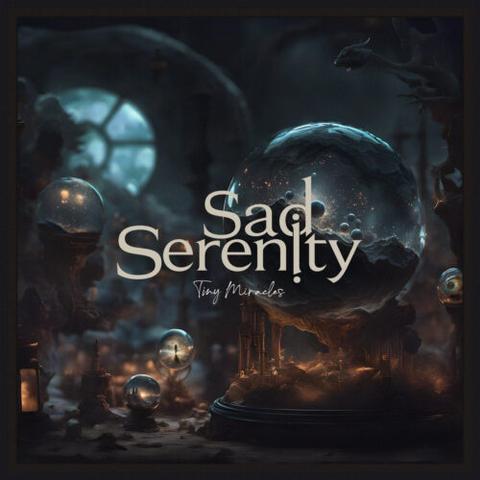
Perhaps more than any other subgenre of metal, prog requires work. Prog metal’s penchant for long, complex compositions can make an entire album feel like a chore, but the genre also dazzles with displays of virtuosic musicianship that prompt repeat listens. For prog metal collective Sad Serenity, German multi-instrumentalist Marcell Kaemmerer handles all the composing (music, lyrics, arrangements) and is responsible for much of the virtuosity, playing guitars, keyboards, and bass. Like their 2023 debut, The Grand Enigma, Tiny Miracles is a 70-plus-minute opus, comprised of what Sad Serenity describes as “6 mostly overlong songs of up to 23 minutes.”1 Sounding more like a warning than an invitation, this description makes prospective listeners wonder if Tiny Miracles will provoke—and reward—sustained attention.

Abounding with virtuosic performances, Tiny Miracles sounds like Dream Theater, especially their early 2000s output (Six Degrees of Inner Turbulence, Train of Thought). In his roles as Petrucci, Rudess, and Myung, Kaemmerer shines, crafting songs with chunky guitar riffs, bass-driven verses, and textural keyboards (“Tell the Moon”). Filling out the core of Sad Serenity is Greek vocalist George Margaritopolous, who reminds more of Cedric Bixler-Zavala (The Mars Volta) than he does Jame LaBrie when he belts the high notes. And though it would be hard to out-drum Mike Portnoy, Brazilian drummer Vinny Silva more than holds his own, effortlessly moving between machine gun double bass, double-time beats, and tight rim work (“Torn”). As a collective, Sad Serenity also benefits from contributions by musicians across the world, including Australia (violin), Croatia (transverse flute), and Kaemmerer’s native Germany (accordion). Björn von Känel balances all these elements in a deceptively airy mix. In its instrumental plentitude, technical prowess, and pristine production, Tiny Miracles sounds like a heavy metal symphony.

Sad Serenity says that Tiny Miracles revolves around “the small, miraculous and too often overlooked aspects of life,” yet all but one track takes inspiration from the grandiose domain of literature. “Alter Ego,” an adaptation of Stevenson’s Strange Case of Dr Jekyll and Mr Hyde, is the album’s shortest song and a banger, turning the dissonance-draped opening riff into a Tool-esque verse, sweet shredding, and some concluding prog nuttiness. “Torn,” the one song with no literary reference, is another (relatively) shorter track that slaps, twisting chunky rhythms and nifty riffs around an infectious chorus. Meanwhile, “A Cabin in the Woods”—the second longest track—sets a disjointed tone as the album opener; the placid verses and woodwinds evoke the naturalism of its source material (Thoreau’s Walden), but the pulsing synths and syncopated chugs aren’t exactly rustic. And then there’s “The Elemental Dance,” the obligatory multi-part prog suite. Sad Serenity’s version comes in five movements and is based on Goethe’s “Der Zauberlehrling” (“The Sorcerer’s Apprentice”). It has impressive moments, but some movements resonate more than others; one must ask why Sad Serenity didn’t separate this 23-minute Gargantua into five digestible tracks for the digital album. Given the band’s statement that Tiny Miracles spotlights overlooked minutiae, it’s fitting that the ‘smaller’ songs demand the most attention.

There’s no overlooking the powerful pipes of George Margaritopolous. Tiny Miracles contains songs with traditional structures that allow Margaritopolous to drop some supremely catchy hooks. There’s the aforementioned “Torn,” and then there’s “Tiny Miracles,” which slowly amplifies its anthemic chorus before adding urgency to its final iteration. But for the most part, Margaritopolous sings recitativo-style narratives from Kaemmerer’s literature-inspired libretto.2 In both “A Cabin in the Woods” and “Alter Ego,” shifts from third- to first-person perspective don’t clearly map onto compositional shifts. This may seem like a minor discrepancy, but it illustrates the dangers of favoring virtuosic yet functional vocals over vocal hooks—it puts pressure on the lyrics to carry more weight.

Having put in work to understand Tiny Miracles and its enormous compositions, I will say that Sad Serenity has a flawed but ultimately enjoyable sophomore album on its hands. The ‘shorter’ songs stand out the most, blending traditional structures with the jaw-dropping excursions that prog metal fans crave (“Torn,” “Alter Ego”). Conversely, the longer songs, in their grander narrative scale, contain fewer vocal hooks and sometimes meander (“A Cabin in the Woods,” “Tell the Moon”). Afficionados of the genre will garner appreciation from subtleties heretofore unmentioned: melodic modulations, mixed-mode chord progressions, etc. But to the metal fan in general, consider this a cautious invitation; Tiny Miracles is indeed overlong, but it does reward repeat listens.

Rating: Good!
DR: 8 | Format Reviewed: 320 kb/s CBR MP3
Label: Self-Release
Websites: sadserenity.bandcamp.com | patreon.com/sadserenityofficial
Releases Worldwide: July 25th, 2025

#2025 #30 #DreamTheater #GermanMetal #Jul25 #ProgMetal #ProgressiveMetal #Review #Reviews #SadSerenity #TheMarsVolta #TinyMiracles #Tool