𝑳𝒂 𝒎𝒖𝒋𝒆𝒓 𝒒𝒖𝒆 𝒈𝒂𝒏𝒐́ 𝒖𝒏 𝑶́𝒔𝒄𝒂𝒓 𝒚 𝒂𝒖́𝒏 𝒂𝒔𝒊́ 𝒔𝒆𝒈𝒖𝒊́𝒂 𝒔𝒆𝒏𝒕𝒂𝒅𝒂 𝒂𝒑𝒂𝒓𝒕𝒆  

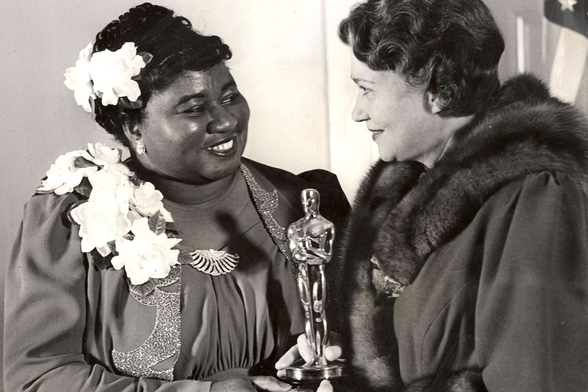
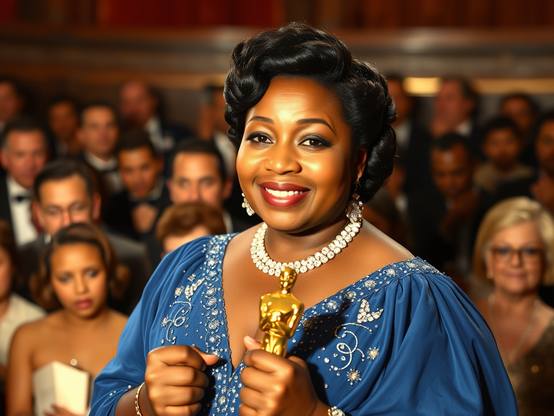
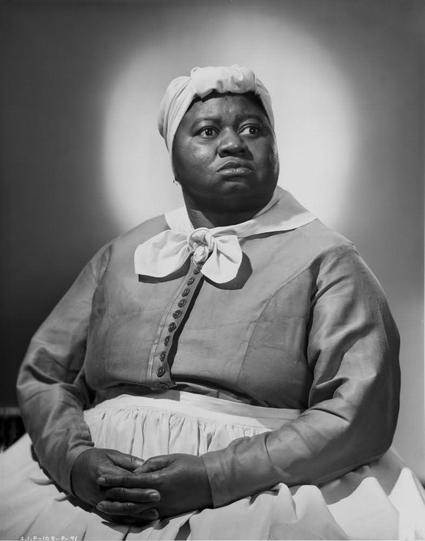
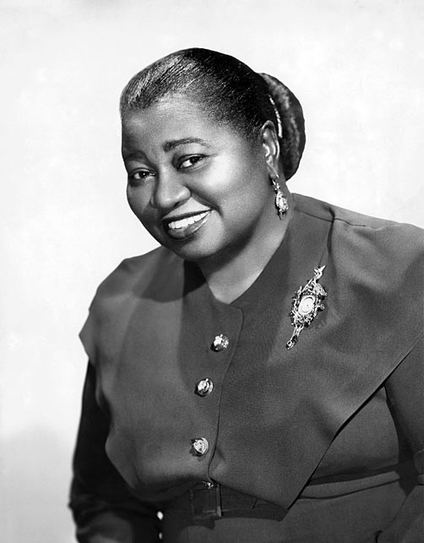
Hattie McDaniel hizo historia en 1940 cuando se convirtió en la primera persona afroamericana en ganar un Óscar.
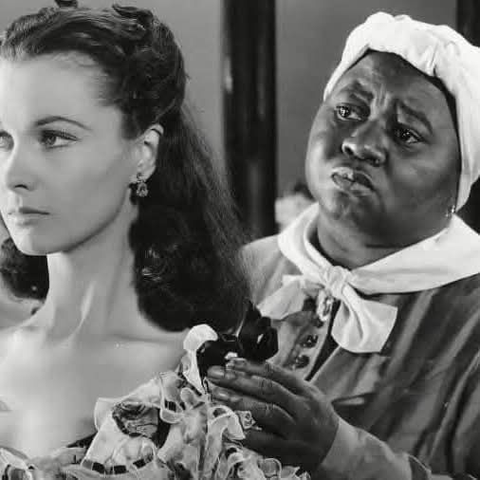
Fue por su papel de Mammy en "Lo que el viento se llevó".
Pero la escena que debería haber sido solo celebración tuvo algo difícil de ignorar: la segregación seguía mandando incluso dentro del propio Hollywood.

Aquella noche, en el hotel Ambassador de Los Ángeles, el ambiente estaba dividido de forma muy literal.
Aunque era invitada como nominada y futura ganadora, no pudo sentarse junto al resto del reparto de la película.
La colocaron en una mesa apartada, en una zona más discreta del salón.
Separada.
Como si el premio no borrara las normas del mundo real.

Cuando subió a recoger la estatuilla, lo hizo con una calma que contrasta con todo lo que la rodeaba.
Su discurso fue breve, sin dramatismo, pero con una dignidad que muchos recuerdan como uno de los momentos más fuertes de aquella gala.

Hattie no llegó a Hollywood desde el privilegio.
Empezó como cantante, trabajó en radio y radio seriales, y fue la primera mujer negra en cantar en la radio estadounidense.
Más tarde encontró trabajo en el cine, pero casi siempre encasillada en papeles de criada o sirvienta.
Era el tipo de industria que te aplaude en público mientras te encierra en un molde.

Por eso su frase se volvió tan conocida: "prefería interpretar a una criada que ser una criada".
No era conformismo, era supervivencia en un sistema que no ofrecía muchas más salidas.

Después del Óscar, su carrera no cambió tanto como uno podría imaginar.
Siguió apareciendo en papeles secundarios, siempre dentro de los límites que Hollywood imponía a las actrices negras en aquella época.
El reconocimiento no rompió la barrera, solo la hizo más visible.

Murió en 1952 con 57 años.
Quiso ser enterrada en el Cementerio de Hollywood, entre estrellas del cine, pero su petición fue rechazada por su color de piel.
Acabó en el Angelus Rosedale, en Los Ángeles, lejos de ese lugar simbólico que había contribuido a construir.

Décadas después, el propio cementerio que la había rechazado cambió de manos y pasó a llamarse Hollywood Forever.
Intentaron corregir la historia ofreciéndole un lugar allí, pero su familia decidió dejarla donde estaba.
En su memoria se levantó un monumento, como una forma de reparación tardía.

Hay otro detalle que a veces se menciona y que encaja con su historia: su Óscar, que donó a la Universidad Howard, desapareció durante los años convulsos de los movimientos por los derechos civiles y nunca se recuperó.
En 2023 la Academia entregó una réplica para sustituirlo.

La vida de Hattie McDaniel tiene algo incómodo, porque no es solo una historia de triunfo.
Es también la prueba de que se puede romper una barrera simbólica sin que el sistema deje de ser injusto.

Ganó el premio más importante del cine… pero eso no cambió el lugar que le asignaban en la sala.

▣▣▣▣▣▣▣▣▣▣▣▣▣▣▣▣▣▣

#hattiemcdaniel #hollywood #oscar #historia #racismo #cineclásico #derechosciviles #mujeresenelcine #historiareal #curiosidadeshistóricas #loqueelvientosellevó #actrices #memoriahistorica
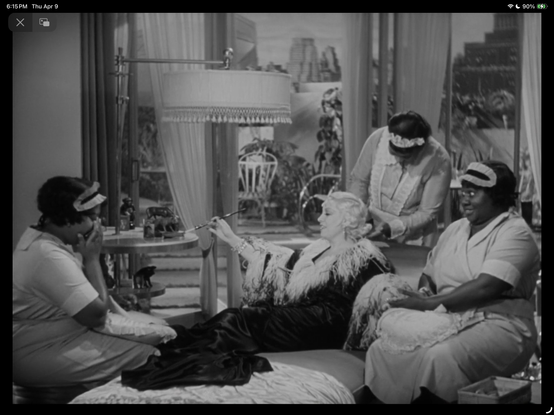
While Libby Taylor, Hattie McDaniel, Gertrude Howard weren’t even fully credited for their work in “I’m No Angel” (1933) and they played domestics, the fact that Mae West hired 3 Black American actresses was pretty groundbreaking
#RetroView #ImNoAngel #PreCodeApril #LibbyTaylor #HattieMcDaniel #GertrudeHoward
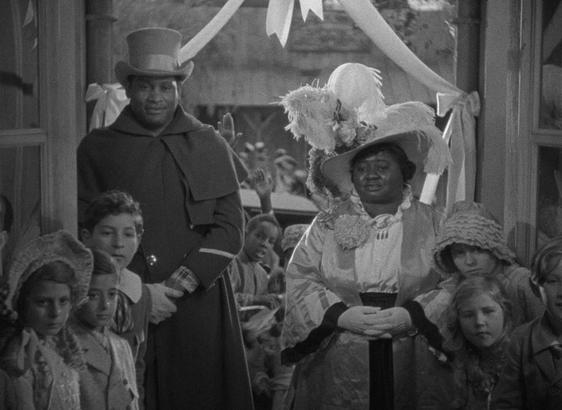
Oscar winning trailblazing actress Hattie McDoniel and legendary activist and mutlihyphenate (he was a professional athlete, a lawyer, singer, writer AND actor) Paul Robeson with “Ah Still Suits Me” (https://youtu.be/I9MfCFAcQEE?si=tjZB7gUlgXWU-fZq) from the 1936 film version Show Boat”
#RetroView #HattieMcDaniel #PaulRobeson #BlackHistoryMonth

BLAZING A TRAIL | Vanity Fair | Awards Extra Oscars Edition 1 2020

 BLAZING A TRAIL

Hattie McDaniel wasn’t allowed to attend the Gone With the Wind premiere in Atlanta because of her race. Shortly afterward, she won an Oscar for her performance and earned an indelible place in movie history

Awards Extra Oscars Edition 1 2020 John Florio, Ouisie Shapiro

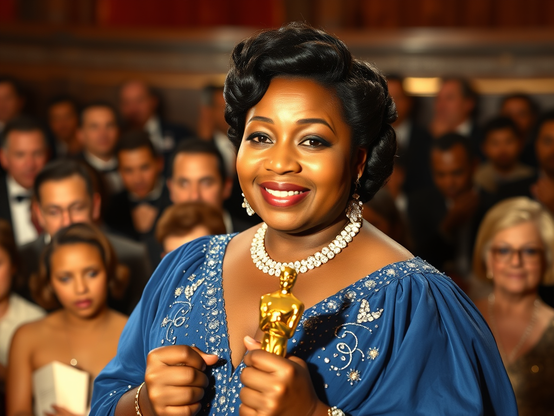
Eighty years ago, in 1940, the Academy Awards were held at the Ambassador Hotel in Los Angeles. Hattie McDaniel, radiant in a rhinestone-studded blue evening gown, was relegated to a small table along a side wall, apart from Vivien Leigh, Clark Gable, and the rest of her Gone With the Wind castmates. The reason was as simple as it was outrageous: The hotel had a no-blacks policy. Months earlier, McDaniel had been excluded from the movie’s premiere in Atlanta for the same reason. If not for the film’s producer, David O. Selznick, having called in a favor, she wouldn’t have been permitted inside the Ambassador, either.

Upon receiving the Oscar for her role as the sassy maid, Mammy, McDaniel told the audience—which was all white, save for her escort, F.P. Yober— ” I sincerely hope I shall always be a credit to my race and to the motion picture industry.”

Seventy years later, when Mo’Nique won an Oscar for her role in the movie Precious, she wore white gardenias in her hair, just as McDaniel had done. ” I want to thank Ms. Hattie McDaniel for enduring all that she had to so that I would not have to,” she said when accepting the award.

Mo’Nique has kept a framed 8-by-10 photo of McDaniel in her closet ever since she started in the industry, and she remembers the evening as a shared victory: “I felt that that night my sister’s voice, my sister’s name, would be heard all over the world. I [hoped] that people would look her up and see her brilliance and her beauty and understand that she never got her just due.”

McDaniel couldn’t change Hollywood’s culture, but she did succeed in fighting racism in other ways. In the 1940s, she marshalled a group of black neighbors in a battle against segregated housing. The case, which she and her neighbors won, served as a precedent for the Supreme Court, which later struck down racially restrictive covenants, thus ending such discriminatory practices in Los Angeles.

As for her acting career, McDaniel continued to portray characters similar to Mammy. To black critics who condemned the roles she accepted, she said, “I’d rather play a maid and make $700 a week than be a maid and make $7.”

Continue/Read Original Article Here: BLAZING A TRAIL | Vanity Fair | Awards Extra Oscars Edition 1 2020

#1940s #2020 #AcademyAwards #Atlanta #AwardsExtraOscarsEdition #BlazingATrail #California #EightyYearsAgo #Georgia #GoneWithTheWind #HattieMcDaniel #LosAngeles #MoNique #MovieHistory #NoBlacksPolicyAtVenue #Precious #RaceInAmerica #SegregatedHousing #VanityFair #WonOscar
Mark J. Masek, Author of the Celebrity Cemetery Guidebook ‘Hollywood Remains to Be Seen,’ Dies at 68

With a great sense of history and “without spectacle,” he wrote about the gravesites of Douglas Fairbanks Sr., Liberace, Al Jolson, Marlyn Monroe and many others.

The Hollywood Reporter
Juanita Moore: “Lana Turner was not only a star. She was also wonderful, talented, and intelligent”

Juanita Moore (1914-2014) was an American actress whose film career spanned nearly seven decades. She is best remembered for her groundbreaking role in the Lana Turner film “Imitation of Life” (195…

FILM TALK

This is quite an interesting article about #HattieMcDaniel.

i remember a school outing to a cinema in the city (Naarm) to see #GoneWithTheWind. as a catholic schoolgirl in the 60s i was clueless about a lot of things, had no great idea what the story was about and most of what i remember is that i was bored witless.
in later years, i did come to wonder about McDaniel’s participation in and poor treatment in such a crap industry.

a parallel oscar story must surely be that of Octavia Spencer, best supporting actress winner for the 2011 film, #TheHelp. it’s a problematic film on lots of levels (white saviourism, for starters).
I think i read somewhere that magazines re-write themselves every four years, cos there is a fixed number of topics/angles to explore. Don’t know what the cycle length is for film, but even white-ish movies like the help provide a service; they present each succeeding generation of mainly white audiences with a dose of truth they are unlikely to encounter elsewhere, and the help introduced people to the Jim Crow era all over again (as well as the economic class known as white trash, and the subservience of women generally).
the help is mediocre and cringeworthy at times, but there were some knockout performances. Viola Davis was robbed - she deserved a best actress oscar for this, and Jessica Chastain should have got best supporting actress. the film has lots of cringeworthy moments, but giving the oscar to octavia spencer for playing a likeable maid who helped the poor white lady was the worst, just on principle. (None of this is to criticise Octavia Spencer or her performance, it’s just the oscar politics I’m on about here.)

anyway, there are worse things in the world…

https://carvehername.org.uk/hattie-mcdaniels-oscar/

Hattie McDaniel and her Oscar - Carve Her Name

The story of Hattie McDaniel's Oscar reflects her own complicated place in history. We take a look at the controversy that surrounded it.

Carve Her Name

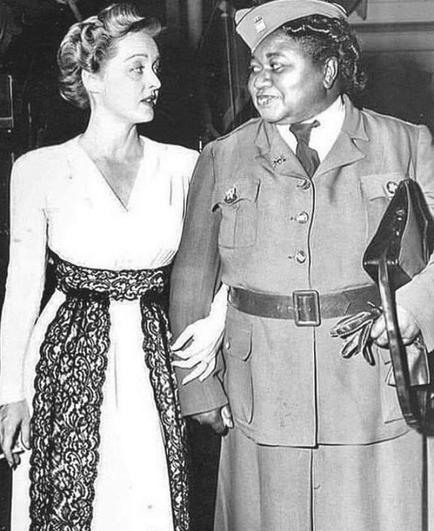
Bette Davis with Hattie McDaniel. Davis was the only white member of McDaniel’s troupe of performers to perform for black servicemen during WWII. McDaniel was the Chairman of the Negro Division of the Hollywood Victory Committee. She formed the troupe.

#bettedavis #HattieMcDaniel #blackhistory #womeninhistory #fyp #fypシ゚viral

I got this from the FB page “Women In World History.”
#HattieMcDaniel
#BetteDavis

Bette Davis with Hattie McDaniel. Davis was the only white member of McDaniel’s troupe of performers to perform for black servicemen during WWII. McDaniel was the chair of the Negro Division of the Hollywood Victory Committee. She formed the troupe.