#statstab #507 Nonlinear models in {flocker}
Thoughts: I'm thinking these are useful if my theory predicts some natural limit (L) for a process. Like memory recall.
#nonlinear #glmm #brms #mem #asymtotic #flocker #r #rstats
https://www.maths.bris.ac.uk/R/web/packages/flocker/vignettes/nonlinear_models.html
Nonlinear models in flocker
Due to a recent discussion with colleagues on whether and when to use #LinearMixedModels (#LMM), I wrote a blog post comparing LMM to other approaches using simulated data. I thought, it may also be useful for others working with hierarchical data structures in #neuroscience and beyond.
🌍 https://www.fabriziomusacchio.com/blog/2026-01-31-linear_mixed_models/
#Python #Statistics #DataScience #MixedModels #Statsmodels #ANOVA #ANCOVA #GLMM #regression
Fitting GAMs with brms: part 1
Regular readers will know that I have a somewhat unhealthy relationship with GAMs and the mgcv package. I use these models all the time in my research but recently we’ve been hitting the limits of the range of models that mgcv can fit. So I’ve been looking into alternative ways...
#statstab #401 Common issues, conundrums, and other things that might come up when implementing mixed models
Thoughts: GLMMs are cool, but come with their own quirks.
#glmm #lmer #brms #mixedeffects #hierarchicalmodels #r
https://m-clark.github.io/mixed-models-with-R/issues.html

Issues | Mixed Models with R
This is an introduction to using mixed models in R. It covers the most common techniques employed, with demonstration primarily via the lme4 package. Discussion includes extensions into generalized mixed models, Bayesian approaches, and realms beyond.
【💡High Cited 2020-2022 】
glmm.hp: an R package for computing individual effect of predictors in generalized linear mixed models
#CommonalityAnalysis | #FixedEffect | #GLMM | #HierarchicalPartitioning | #RelativeImportance | #VariancePartitioning
https://doi.org/10.1093/jpe/rtac096
Extremely nice review of REML estimation for generalized linear mixed models.
Covers a couple of important papers that I was not aware of (e.g. Schall 1991 and Stiratelli 1984) until today, but also the work of Simon Wood in
#rstats mgcv
#GAM #GLMMRestricted maximum likelihood ...Extremely nice review of REML estimation for generalized linear mixed models.
Covers a couple of important papers that I was not aware of (e.g. Schall 1991 and Stiratelli 1984) until today, but also the work of Simon Wood in
#rstats mgcv
#GAM #GLMMhttps://buff.ly/405IaB0
Restricted maximum likelihood estimation in generalized linear mixed models
Restricted maximum likelihood (REML) estimation is a widely accepted and frequently used method for fitting linear mixed models, with its principal advantage being that it produces less biased estimates of the variance components. However, the concept of REML does not immediately generalize to the setting of non-normally distributed responses, and it is not always clear the extent to which, either asymptotically or in finite samples, such generalizations reduce the bias of variance component estimates compared to standard unrestricted maximum likelihood estimation. In this article, we review various attempts that have been made over the past four decades to extend REML estimation in generalized linear mixed models. We establish four major classes of approaches, namely approximate linearization, integrated likelihood, modified profile likelihoods, and direct bias correction of the score function, and show that while these four classes may have differing motivations and derivations, they often arrive at a similar if not the same REML estimate. We compare the finite sample performance of these four classes, along with methods for REML estimation in hierarchical generalized linear models, through a numerical study involving binary and count data, with results demonstrating that all approaches perform similarly well reducing the finite sample size bias of variance components. Overall, we believe REML estimation should more widely adopted by practitioners using generalized linear mixed models, and that the exact choice of which REML approach to use should, at this point in time, be driven by software availability and ease of implementation.
Extremely nice review of REML estimation for generalized linear mixed models.
Covers a couple of historically important papers that I was not aware of (e.g. Schall 1991 and Stiratelli 1984) until today, but also the work of Simon Wood in
#rstats mgcv
#GAM #GLMMhttps://buff.ly/405IaB0Restricted maximum likelihood estimation in generalized linear mixed models
Restricted maximum likelihood (REML) estimation is a widely accepted and frequently used method for fitting linear mixed models, with its principal advantage being that it produces less biased estimates of the variance components. However, the concept of REML does not immediately generalize to the setting of non-normally distributed responses, and it is not always clear the extent to which, either asymptotically or in finite samples, such generalizations reduce the bias of variance component estimates compared to standard unrestricted maximum likelihood estimation. In this article, we review various attempts that have been made over the past four decades to extend REML estimation in generalized linear mixed models. We establish four major classes of approaches, namely approximate linearization, integrated likelihood, modified profile likelihoods, and direct bias correction of the score function, and show that while these four classes may have differing motivations and derivations, they often arrive at a similar if not the same REML estimate. We compare the finite sample performance of these four classes, along with methods for REML estimation in hierarchical generalized linear models, through a numerical study involving binary and count data, with results demonstrating that all approaches perform similarly well reducing the finite sample size bias of variance components. Overall, we believe REML estimation should more widely adopted by practitioners using generalized linear mixed models, and that the exact choice of which REML approach to use should, at this point in time, be driven by software availability and ease of implementation.
Extremely nice review of REML estimation for generalized linear mixed models.
Covers a couple of historically important papers that I was not aware of (e.g. Schall 1991 and Stiratelli 1984) until today, but also the work of Simon Wood in
#rstats mgcv
#GAM #GLMMhttps://buff.ly/405IaB0Restricted maximum likelihood estimation in generalized linear mixed models
Restricted maximum likelihood (REML) estimation is a widely accepted and frequently used method for fitting linear mixed models, with its principal advantage being that it produces less biased estimates of the variance components. However, the concept of REML does not immediately generalize to the setting of non-normally distributed responses, and it is not always clear the extent to which, either asymptotically or in finite samples, such generalizations reduce the bias of variance component estimates compared to standard unrestricted maximum likelihood estimation. In this article, we review various attempts that have been made over the past four decades to extend REML estimation in generalized linear mixed models. We establish four major classes of approaches, namely approximate linearization, integrated likelihood, modified profile likelihoods, and direct bias correction of the score function, and show that while these four classes may have differing motivations and derivations, they often arrive at a similar if not the same REML estimate. We compare the finite sample performance of these four classes, along with methods for REML estimation in hierarchical generalized linear models, through a numerical study involving binary and count data, with results demonstrating that all approaches perform similarly well reducing the finite sample size bias of variance components. Overall, we believe REML estimation should more widely adopted by practitioners using generalized linear mixed models, and that the exact choice of which REML approach to use should, at this point in time, be driven by software availability and ease of implementation.
#statstab #204 GLMMadaptive: Generalized Linear Mixed Models using Adaptive Gaussian Quadrature
Thoughts: No clue what this package is does, but seems useful. Maybe someone can explain some use cases.
#glmm #gaussian #modelling #r #stats
https://drizopoulos.github.io/GLMMadaptive/
Generalized Linear Mixed Models using Adaptive Gaussian Quadrature
Fits generalized linear mixed models for a single grouping factor under
maximum likelihood approximating the integrals over the random effects with an
adaptive Gaussian quadrature rule; Jose C. Pinheiro and Douglas M. Bates (1995)
<doi:10.1080/10618600.1995.10474663>.
 Dr Mircea Zloteanu 🌺🌞🍃
 Fabrizio Musacchio

 Journal of Plant Ecology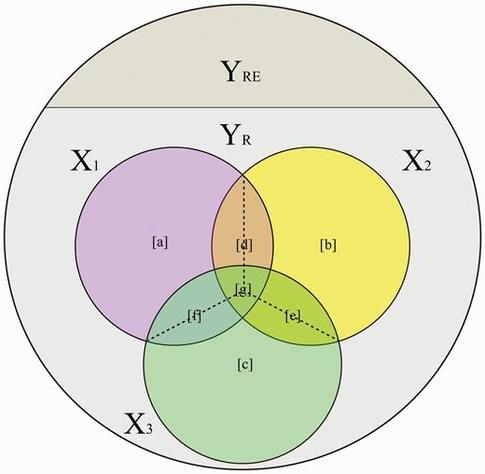
 Christos Argyropoulos MD, PhD, FASN 🇺🇸 0kale/acc
 Christos Argyropoulos MD PhD
 Christos Argyropoulos
 Christos Argyropoulos MD, PhD