 Hacker News
The Global Fertility Crisis Is Worse Than You Probably Think
https://www.derekthompson.org/p/why-the-whole-world-stopped-having
#HackerNews #GlobalFertility #CrisisAwareness #PopulationDecline #FutureOfHumanity #SocialIssues
The Global Fertility Crisis Is Worse Than You Probably Think
https://www.derekthompson.org/p/why-the-whole-world-stopped-having
#HackerNews #GlobalFertility #CrisisAwareness #PopulationDecline #FutureOfHumanity #SocialIssues
We’re Going Back
By Cliff Potts
Baybay City, Leyte, Philippines — May 4, 2026 — 07:05 AM PhST
Why This Moment Matters
There are moments in history when a decision does not belong to one nation.
It belongs to everyone.
This is one of those moments.
We’re going back to the Moon. Not as a flag-planting exercise, not as a Cold War rerun, and not as a national trophy case. This time, the goal is broader and more serious: to begin learning how humanity operates beyond Earth in a sustained way.
The program is called Artemis, and it represents the first real attempt in decades to move human presence off a single planet and keep it there (NASA, 2024).
Artemis II: The Door Reopened
That future is no longer theoretical.
Artemis II has already completed its mission.
The crew launched aboard the Space Launch System rocket and traveled in the Orion spacecraft on a free-return trajectory around the Moon. They conducted system checks in deep space, tested life-support systems with humans aboard, evaluated navigation and communication at lunar distance, and captured high-resolution imagery of both the lunar surface and Earth from deep space (NASA, 2025).
They orbited the Moon, passed behind it, and returned safely to Earth.
No drama. No failure.
Just proof.
Proof that we can send humans back to lunar distance and bring them home again.
That single fact changes everything. The question is no longer whether we can reach the Moon.
The question is whether we will finish the job.
Artemis III: The Step That Counts
The next mission, Artemis III, is the one that matters most.
That is the mission intended to land astronauts on the lunar surface for the first time since Apollo. It is designed not just as a visit, but as the beginning of a longer-term effort to operate on the Moon, particularly near the south pole where water ice may exist in permanently shadowed regions (NASA, 2024).
Water means survival.
Water means fuel.
Water means the possibility of staying.
That is the shift from exploration to presence.
The Argument We Always Hear
Every time humanity reaches for something like this, the same argument appears.
Why go to the Moon when there are problems on Earth?
It sounds responsible. It sounds grounded.
It is also incomplete.
We heard this argument when the Apollo program ended. We were told resources should be redirected toward fixing conditions on Earth. That was a reasonable claim at the time.
But those problems were not solved.
They did not disappear when exploration stopped. Many of them remain, decades later, largely unchanged.
Stopping exploration did not fix Earth.
It only limited what we were willing to attempt.
The Cost Reality
There is another misconception that deserves to be addressed clearly.
Space exploration is not what is draining national budgets.
NASA’s funding represents a small fraction of total government spending, often less than one percent (Office of Management and Budget, 2025). Even significant increases in that budget would not materially alter broader fiscal priorities.
This is not an either-or decision.
We can address problems on Earth and continue exploring beyond it.
We have the capacity to do both.
What Exploration Actually Does
Exploration is not separate from life on Earth.
It feeds into it.
Technologies developed through space programs contribute to advancements in communications, materials science, navigation systems, and medical research. These benefits return to Earth and become part of everyday infrastructure over time (National Research Council, 2011).
But beyond technology, exploration changes perspective.
It expands what people believe is possible.
It reminds us that progress is still an option.
A Species-Level Decision
This is not about the United States.
It is not about prestige.
It is about whether humanity chooses to remain confined to one planet or begins the process of becoming something more resilient.
A species that exists on a single world has a single point of failure.
A species that learns to operate beyond it does not.
That is the long-term meaning of this effort.
Where We Stand
We have already returned to lunar orbit.
We have already proven the path.
Now comes the harder part.
Landing. Operating. Surviving. Returning.
None of it is guaranteed. Timelines may shift. Systems may fail. Political priorities may change.
But those are not reasons to stop.
They are part of doing something difficult.
The Choice
We have been here before.
We reached the Moon, and then we chose to stop.
Now we are at that same decision point again.
Do we continue forward?
Or do we turn back and tell ourselves, once again, that there are more important things to do?
History suggests that waiting does not solve those other problems.
It only narrows what we attempt.
Closing
We have already gone back.
Now we decide whether we finish what we started.
Not as one country.
As a species.
We’re going back.
References
National Aeronautics and Space Administration. (2024). Artemis program overview. https://www.nasa.gov/artemis
National Aeronautics and Space Administration. (2025). Artemis II mission details and objectives. https://www.nasa.gov/artemis-ii
National Research Council. (2011). Recapturing a future for space exploration: Life and physical sciences research for a new era. National Academies Press.
Office of Management and Budget. (2025). Historical tables: Budget of the U.S. government. https://www.whitehouse.gov/omb
If this work helps you understand what’s happening, help me keep it going: https://www.patreon.com/cw/WPSNews
For more from Cliff Potts, see https://cliffpotts.org
#ArtemisIIMission #ArtemisIIILanding #ArtemisProgram #futureOfHumanity #MoonExploration #NASAProgram #spacePolicy
The End of Visual Trust
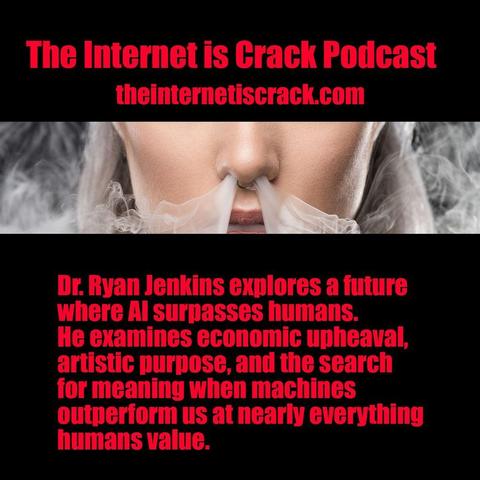
A single comment can plant doubt—and that’s enough. Dr. Ryan Jenkins examines how AI-generated media reshapes trust, alongside deeper questions about purpose and human value in an automated world.
Full episode here: https://youtu.be/gJToM1x-pIE
#AI #Deepfake #DigitalTrust #FutureOfHumanity #Ethics #Technology
When machines surpass us… what gives life meaning?
🎧 New episode out now — join the conversation.
https://youtu.be/gJToM1x-pIE
The Economics of Novelty is a possible future economics system where the human potential for novelty is key.
The 『 Economics of Novelty 』is a another layer of abstraction following the『 Possibility Space Ethics 』and 『 Interesting World Hypothesis 』.
Unpredictability is where AI systems are most vulnerable
From accidents to sudden road closures, edge cases remain difficult for autonomous systems to handle. Prof. Alan Winfield explores how these limitations connect to broader risks in robotics and AI — and their impact on humanity’s future.
🎧 Listen to Part 2 now — Part 1 also live
👉 https://youtu.be/eh7GPXdNxmA
#AI #Robotics #RobotEthics #AIethics #AutonomousVehicles #FutureOfHumanity
NEW EPISODE — PART 2: The real risks of robots and AI, and what they mean for humanity’s future
🎧 Listen to Part 2 now — Part 1 also live
👉 https://youtu.be/eh7GPXdNxmA
#NewEpisode #Part2 #AI #Robots #RobotEthics #AIethics #FutureOfHumanity #TechPodcast

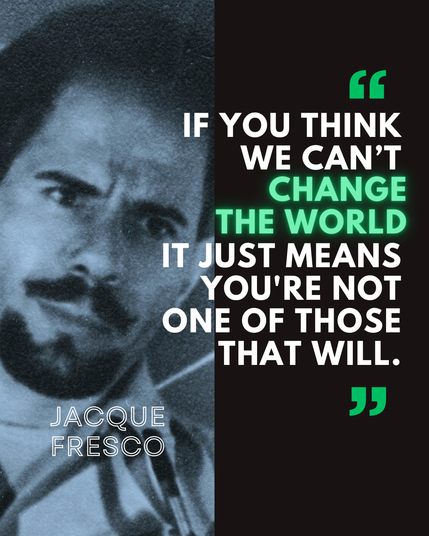
🕉️ "The question is not whether there is intelligent life out there, the question is, whether there is intelligent life down here. As long as you have war, police, prisons, crime, you are in the early stages of civilization." ~ Jacque Fresco
Do you agree with Jacque that we're still in the early stages of civilization?
🏷️ T a g s #JacqueFresco #civilization #FutureOfHumanity #SocialChange #VenusProject
We are living through a strange moment in history.
For the first time, humans are beginning to understand aging not as fate, but as biology — something influenced by habit, environment, knowledge, and intention.
Longevity research, biohacking, philosophy, and technology are slowly converging into a single question:
What does it mean to consciously evolve?
I’ve been quietly collecting my experiments, writings, tools, and ongoing projects into one place — a living archive of ideas for those who feel curiosity about human potential, healthspan, and the future of thought itself.
Not an advertisement.
More like an invitation.
If you enjoy reflective exploration rather than noise, you may find something worthwhile here:
Evolution once happened to us.
Now, perhaps, we participate in it.
#Mastodon #Biohacking #Longevity #Healthspan #Transhumanism #Philosophy #DigitalHumanism #FutureOfHumanity #SelfImprovement #ScienceCommunication #HumanPotential #TechnologyAndSociety #SlowThinking #DeepThought


 WPS News
 The Internet is Crack
 Fae Initiative
 N-gated Hacker News
 Braye S.
 Lexmilian S. R. B. de Mello