Wow:

'We've Been A Little Bit Too Romantic About The Idea That We Should Have Employees And Give People Long-term Job Security' Is An Extraordinary Thing For A Video Games CEO To Say On Record
By Luke Plunkett
April 28, 2026

While we all know deep down that CEOs are monsters who would fire all of you in a heartbeat just to keep a line going up, there's a charade most of them feel compelled to take part in where they pretend publicly to care about their workers and the lives those workers lead.

Or, at least that's how it used to be. [..] Ustwo Games CEO Maria Sayans has decided that quite frankly she doesn't need to bother with it at all anymore.

#VideoGames #aftermath #labour #labor #explotation #development #software

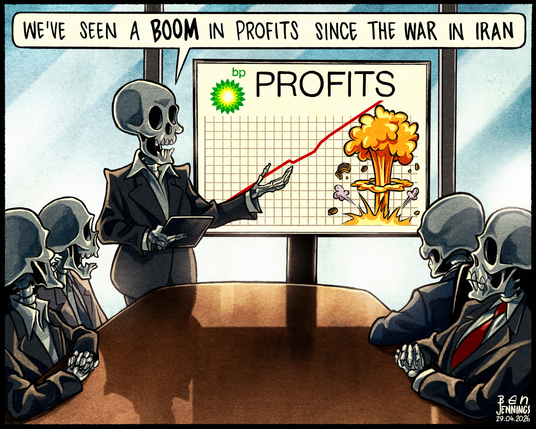
War is good for some. Although the pesky realisation that extending investment in renewables might not be for fossil fuel companies.

https://www.reuters.com/business/energy/bp-profit-beats-expectations-32-billion-2026-04-28/

#Iran #Israel #USA #War #Profit #Explotation #Finance #Economy #Cartoon #BenJennings

> Report: Illinois Bill Would Stop Publishers From Charging Libraries More Than Public For E-Books and Audiobooks
https://www.infodocket.com/2026/04/23/report-illinois-bill-would-stop-publishers-from-charging-libraries-more-than-public-for-e-books-and-audiobooks/

Watch the extortionists (oops, #publishers) throw hissy fit and swear they'll just stop doing business in Illinois and other place threatening this action. Overall, it's a criminal racket what publishers do to #libraries when it comes to electronic resources.

#BadEconomy #corruption #books #reading #explotation #extortion #fuckery

Report: Illinois Bill Would Stop Publishers From Charging Libraries More Than Public For E-Books and Audiobooks - Library Journal infoDOCKET

From the Chicago Tribune: “More and more taxpayer-funded library budgets are being eaten up by this licensing at unreasonably high prices,” [Monica] Harris [executive director of the Reaching Across Illinois Library System] said. “The hold list gets longer and longer for the constituents who are trying to, you know, use these materials and many libraries […]

Library Journal infoDOCKET

Water Wars: How Global Water Shortages Are Being Taken Advantage Of By Big Business

As water shortages intensify across the globe, access to clean and reliable freshwater is becoming one of the defining geopolitical struggles of the 21st century. Nearly half the world’s population now faces severe water scarcity for at least part of the year, and international institutions warn that humanity has entered an era of “water bankruptcy,” where demand exceeds nature’s ability to replenish supply. Yet beyond the humanitarian emergency lies another reality: global superpowers and economic elites are increasingly turning scarcity itself into an opportunity for profit, leverage, and strategic control.

Water has long been viewed as a basic human necessity, but in today’s global economy it is also a commodity, a tool of diplomacy, and a source of immense corporate gain. Wealthy nations and multinational firms invest heavily in desalination technologies, privatized water systems, bottled water industries, irrigation infrastructure, and dam construction in water-stressed regions. While these projects are often framed as solutions, they frequently allow powerful states and corporations to extract long-term profits from countries facing climate stress and weak governance. In many developing regions, foreign-backed infrastructure loans for dams, pipelines, and reservoirs create dependency, giving lenders political influence over critical resources.

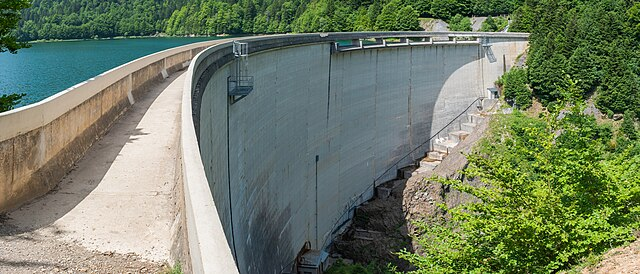
Large dams normally provide lucritive building contracts while also creating more strict controls over water supplies. Wikimedia

This pattern extends beyond business into direct geopolitical strategy. Countries positioned upstream on major river systems—such as Turkey on the Tigris-Euphrates basin or Ethiopia on the Nile—gain enormous leverage over downstream nations that rely on those waters for agriculture and electricity. Water thus becomes a strategic asset comparable to oil in the twentieth century. Experts increasingly describe this as hydro-politics, where control over rivers, aquifers, and desalination capacity translates into regional power. For global superpowers, supporting one side of these disputes through financing, arms sales, or infrastructure deals can open profitable pathways into broader energy, trade, and security agreements.

The same logic applies to other natural resources. Water shortages are deeply connected to control over farmland, lithium, rare earth minerals, fossil fuels, and arable land. As drought reduces crop yields, wealthier states and sovereign investment funds increasingly buy farmland abroad, particularly in Africa and Latin America, securing “virtual water” through imported food grown with another country’s dwindling freshwater reserves. In effect, powerful nations externalize their own water demands by absorbing the resources of more vulnerable states. This process mirrors the global scramble for minerals essential to batteries, semiconductors, and military technology, where scarcity inflates prices and concentrates profits among dominant powers.

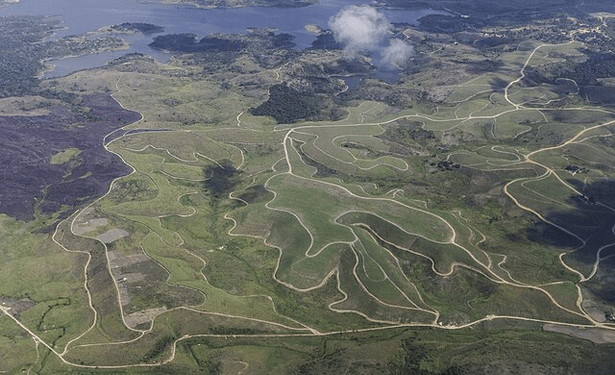
As companies buy up water supplies, other resources tend to follow, such as farmland. Wikimedia

Climate change intensifies this unequal system. Droughts disrupt shipping canals, hydropower production, and agricultural exports, creating volatility in global markets. Rather than reducing dependency, this instability often increases the influence of states and corporations that control infrastructure, insurance, commodity trading, and logistics. Scarcity becomes monetized through higher food prices, speculative investment, water rights markets, and privatized emergency supply systems. In this sense, crisis itself becomes profitable.

Ultimately, global water shortages reveal a larger truth about modern power: natural resources are no longer simply extracted from the earth, but from instability itself. Superpowers and multinational interests do not always create these shortages, but they are often best positioned to benefit from them. As freshwater, energy, and mineral resources grow scarcer, the struggle will not only be about survival, but about who controls scarcity—and who profits from it.

#agriculture #climateChange #company #dam #environment #explotation #geopolitics #globalization #land #Politics #shortage #sustainability #water

Émission riche sur comment fonctionne et se développe l'#IntelligenceArtificielle, avec ses impacts sur les processus socio-économiques :

#Explotation, #destruction et #TechnoFascisme : la face cachée de l'#IA

@blast

https://www.youtube.com/watch?v=qlTLP54MO_s

EXPLOITATION, DESTRUCTION ET TECHNO-FASCISME : LA FACE CACHÉE DE L'IA

YouTube

"Akter’s dreams, however, along with the dreams of the millions like her in Bangladesh, remain out of reach.

That’s despite big promises made by Canadian companies like Joe Fresh after the collapse of a massive garment factory in Bangladesh a decade ago that killed more than 1,100 workers and injured another 2,500" #loblaws #joefresh #explotation #deaths

https://www.cbc.ca/newsinteractives/features/made-in-bangladesh

Made in Bangladesh: 10 years later

After the collapse of a factory in Bangladesh that made Joe Fresh clothing killed 1,134 workers a decade ago, its Canadian parent company promised safe factories and fair wages. Ten years later, an investigation by The Fifth Estate raises questions of whether Loblaw has delivered on that promise.

Y aquí tenéis el resultado unas semanas después en el trailer del nuevo update del #FriendsVsFriends. Porque como dicen Los Javis: los sueños se cumplen! El mío era trabajar hasta en sueños y aquí estamos.

--------
And here you have the result a few weeks later in the trailer for the new update of #FriendsVsFriends. Because, as some spanish aholes say: dreams come true! Mine was to work even in dreams, and here we are.

#GameDev #Explotation #SleepCrunch #Music

https://mastodon.social/@Paroxia/111767042565061242

The deadly intersection of labor exploitation and climate change

"The current design of our economic system privileges the well-being of only 1 percent of all humans. Whether it’s a deadly virus or the deadly climate, unless we clearly identify the systemic problems and redesign our economic system to center the well-being of all human beings, the future will not be livable, rendering discussions of “productivity” moot in the deadliest possible way."

https://www.alternet.org/deadly-intersection-labor-climate-change/

#climatechange #explotation #labor #classstruggle #climatejustice #socialjustice #globalwarming

The deadly intersection of labor exploitation and climate change

Neither the corporate media nor our politicians who are beholden to corporate lobbyists honestly address the common root causes of (and solutions to) worker exploitation and climate change.As temperatures soar in the United States this summer, some among us are lucky enough to be able to remain in a...

Alternet.org