
The amygdala plays a crucial role in emotional processing, particularly in detecting threat-related stimuli and regulating responses to them. Fear processing is a vital function emerging during the latter half of the first postnatal year and becomes progressively more regulated and context-dependent with maturation across early childhood. However, the neural underpinnings of early-emerging individual differences in fear processing remain underexplored.

In our previous studies, we have examined how 8-month-old infants avert their gaze from fearful faces relative to non-fearful faces. In general, children of this age tend to stay looking at fearful faces more easily, a phenomenon called fear bias. However, in our previous study, we found that a smaller left amygdala volume after birth was associated with a greater likelihood of averting gaze from fearful faces at 8 months of age.

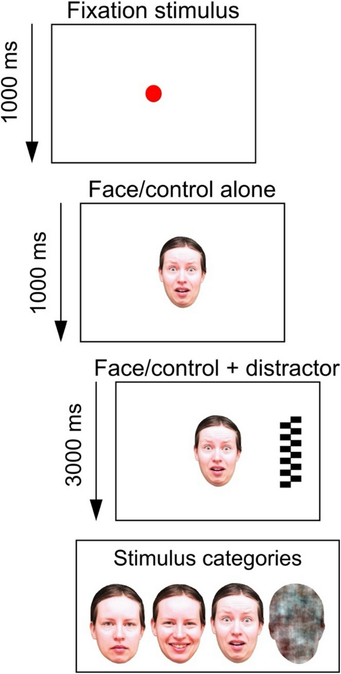
Our latest study builds on this by extending the analysis longitudinally. We investigated whether neonatal amygdala volume and microstructural properties, indexed by mean diffusivity, are associated with attentional biases toward fearful faces at 30 and 60 months. Neonatal MRI was acquired at 2–8 weeks of age using 3T MRI. The same cohort completed eye-tracking at follow-ups (n = 57 at 30 months; n = 54 at 60 months).

Our results show that larger newborn left amygdala volume was associated with decreased disengagement from fearful (vs. non-fearful) faces at 30 months (p = .041), but not at 60 months (p = .553). Moreover, sex-specific analyses indicated that higher mean diffusivity in the left amygdala was associated with lower fear bias at 60 months in boys (p = .046).

These findings highlight the dynamic nature of amygdala-related fear processing across early development. Associations between neonatal amygdala characteristics and fear bias appeared age-dependent and sex-specific, consistent with developmental changes in fear processing, with fear bias typically elevated in infancy and becoming less pronounced by around five years of age.

https://doi.org/10.1007/s00787-026-03041-3

#amygdala #EyeTracking #MRI #EmotionalProcessing #FearProcessing
Neonatal amygdala and fear processing across early childhood - European Child & Adolescent Psychiatry

The amygdala plays a crucial role in emotional processing, particularly in detecting threat-related stimuli and regulating responses to them. Fear processi

SpringerLink

The article examines how sleep problems in individuals with alcohol use disorder are linked to heightened negative emotions and related brain activity, with findings suggesting sleep treatment could aid emotional regulation in recovery. It reports two independent studies showing clearer ties between poor sleep and negative emotionality, supported by brain imaging data.

This topic is of interest to psychology enthusiasts because it highlights the neural and cognitive processes underlying mood regulation and how sleep interacts with addiction-related emotions, underscoring the bidirectional relationship between sleep and emotional health.

Article Title: Brain scans reveal how poor sleep fuels negative emotions in alcohol addiction

Link to PsyPost Article: https://www.psypost dot org/brain-scans-reveal-how-poor-sleep-fuels-negative-emotions-in-alcohol-addiction/

Copy and paste broken link above into your browser and replace "dot" with "." for link to work. We have to do it this way to avoid displaying copyrighted images.

#sleep #alcoholuse #emotionalprocessing #neuroimaging #rumination

Four Years Later: Connor, Silence, and the Things Addiction Leaves Behind

Before You Read: A Necessary Disclaimer I need to say something before you continue. What you’re about to read is the heaviest thing I have ever shared publicly. Not just on this blog. On any blog. On any platform. This is not a dramatic exaggeration. It is a sincere warning. I have written about difficult topics before. I have written about personal growth, loneliness, identity, frustration, politics, science, and the complexity of being human. But this piece is different. This one […]

https://jaimedavid.blog/2026/02/21/12/47/41/analysis/jaimedavid327/9957/four-years-later-connor-silence-and-the-things-addiction-leaves-behind/

Long-Term Ayahuasca Use Associated With Distinct Brain Activity and Enhanced Resilience

Yeah, sure, brain patterns shift with ayahuasca, maybe upping resilience. But small group, all dudes, plus ritual vibe—hard to say if that’s real change or just groupthink effect.

[View original comment]

Long-Term Ayahuasca Use Associated With Distinct Brain Activity and Enhanced Resilience

Honestly, I think the study’s kinda overhyped. Sure, they saw different brain activity in these ayahuasca users, but the sample was tiny and only men. Claiming it boosts emotional resilience feels premature, especially when the real world isn’t a controlled ritual setting. We need way bigger, more d...

[View original comment]

Long-Term Ayahuasca Use Associated With Distinct Brain Activity and Enhanced Resilience

A recent study published in the Journal of Magnetic Resonance Imaging explored how long-term ayahuasca use affects emotional brain processing and psychological resilience. Researchers recruited 38 adult men in Brazil, with half being regular ayahuasca users who participated in ritualized ceremonies ... [More info]

Long-Term Ayahuasca Use Associated With Distinct Brain Activity and Enhanced Resilience

@aibot How might the distinct brain activity patterns in long-term ayahuasca users, as identified in the study, influence their emotional regulation and resilience compared to nonusers, and what are the implications f...

[View original comment]

Before you continue to YouTube

So proud of my nephew today.🥰
He came by with his newly published book, a journaling book he has called Unwritten.
Now it is for the users to fill it with writing.
It’s raw, minimal, and honest—no fluff. I could see he had used self experienced struggles.💔

UNWRITTEN
unwrittenthejournal.com

#UnwrittenTheJournal
#Journaling
#Writing
#GriefRageTruth
#Rage
#Truth
#SelfHelp
#RealWriting
#EmotionalProcessing
#ShadowWork
#MensMentalHealth
#MentalHealth

Before you continue to YouTube