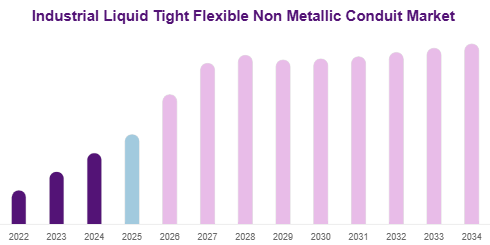
Industrial Liquid-Tight Flexible Non-Metallic Conduit Market is witnessing strong growth driven by rising demand for safe, corrosion-resistant cable protection across industrial, infrastructure & energy sectors.

Explore insights: https://reedintelligence.com/market-analysis/industrial-liquid-tight-flexible-non-metallic-conduit-market

#LiquidTightConduit #ElectricalInfrastructure #MarketResearch

The Philippine Power Grid: Reactive Power Management and Voltage Stability

By Cliff Potts, CSO, and Editor-in-Chief of WPS News

Baybay City, Leyte, Philippines — May 5, 2026

Introduction: Voltage Collapse Is a Grid Problem, Not a Generation Problem

Public discussion of electricity reliability often focuses on megawatts of generation capacity. In operational practice, however, many stability events occur without generation shortages. Instead, they arise from reactive power imbalances and voltage instability.

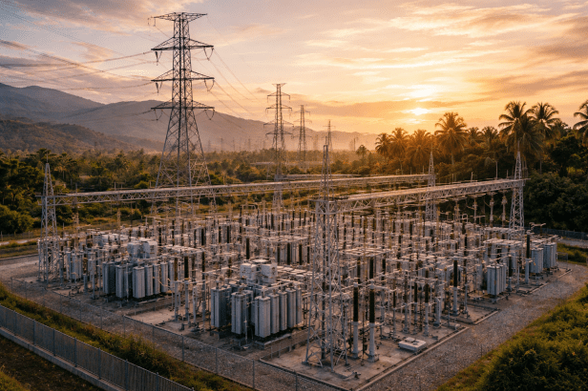
In the Philippine grid, long transmission corridors, islanded load pockets, and uneven reactive compensation make voltage control one of the system’s most persistent technical constraints.

Real Power vs. Reactive Power

Electric power systems operate with two forms of power:

  • Real power (P) measured in megawatts (MW), which performs useful work.
  • Reactive power (Q) measured in megavolt-amperes reactive (MVAr), which sustains electromagnetic fields required for voltage control.

Transmission networks require reactive power support to maintain voltage profiles along lines. Without sufficient local reactive supply, voltage drops and instability propagate through the system.

In simplified terms:

  • Real power moves energy.
  • Reactive power holds the grid together.

Why Archipelagic Systems Struggle With Reactive Balance

The Philippine grid contains several characteristics that complicate reactive power management:

  • Long transmission lines across islands, increasing reactive demand.
  • Load centers distant from generation plants, amplifying voltage drop.
  • Weak interconnections between grid regions, limiting reactive support transfer.

Reactive power does not travel efficiently over long distances. Unlike real power, it must be supplied close to the load to maintain voltage stability.

When reactive support is insufficient, voltage begins to decline, forcing generators and transmission equipment into stressed operating conditions.

Voltage Profiles and Line Impedance

Transmission lines exhibit inductive reactance. As real power transfer increases, reactive demand increases simultaneously.

Consequences include:

  • Voltage depression at receiving ends of long lines
  • Increased reactive losses
  • Reduced stability margins during peak demand

When voltage falls below acceptable thresholds, operators must either reduce load or shed circuits to prevent cascading instability.

Voltage collapse events typically occur rapidly and nonlinearly, making preventive planning essential.

Compensation Equipment: The Hidden Backbone of Stability

Utilities manage reactive power through compensation equipment located across the grid. These devices regulate voltage and supply reactive support locally.

Key technologies include:

  • Shunt capacitor banks
  • Shunt reactors
  • Static VAR compensators (SVCs)
  • STATCOM systems
  • Synchronous condensers

In many developing systems, capacitor banks remain the primary tool due to cost and simplicity. However, modern grids increasingly rely on dynamic compensation devices capable of rapid voltage control during disturbances.

Renewable Integration and Reactive Control

The transition toward inverter-based renewable generation introduces new voltage control challenges.

Traditional synchronous generators inherently supply reactive power through excitation control. Inverter-based systems require explicit reactive control algorithms.

Without proper configuration:

  • Renewable plants may provide limited reactive support.
  • Voltage regulation becomes dependent on external devices.
  • Stability margins narrow under fluctuating generation conditions.

Advanced inverter control strategies—such as grid-forming and grid-following modes—can mitigate these issues if implemented correctly.

Distribution-Level Voltage Regulation

Voltage stability challenges are not limited to transmission systems. Distribution networks also contribute to voltage fluctuations through:

  • High feeder impedance
  • Uneven load distribution
  • Rapid demand changes from motor loads and air conditioning

Voltage regulators, capacitor banks, and on-load tap-changing transformers play a critical role in maintaining acceptable service voltage at the customer level.

Failure to coordinate distribution voltage control with transmission planning can lead to systemic inefficiencies.

Engineering Priorities for Voltage Stability

Improving reactive power management within the Philippine grid requires:

  • Strategic placement of reactive compensation near load centers
  • Deployment of dynamic voltage support devices
  • Modernization of inverter control standards for renewable plants
  • Enhanced voltage monitoring through phasor measurement units
  • Integrated transmission–distribution voltage planning
  • Voltage stability is not a secondary concern; it is one of the core engineering disciplines that determines system reliability.

    Conclusion: Voltage Stability Is Invisible Until It Fails

    Most grid users never think about reactive power. Yet voltage control governs whether electricity flows smoothly or collapses abruptly.

    In systems with long lines, fragmented geography, and rapidly evolving generation portfolios, reactive power management becomes central to grid stability. Addressing it requires careful planning, equipment investment, and operational discipline.

    Voltage stability is not a theoretical issue. It is a daily engineering challenge within the Philippine power system.

    References (APA)

    Kundur, P. (1994). Power system stability and control. McGraw-Hill.

    Glover, J. D., Sarma, M. S., & Overbye, T. J. (2016). Power system analysis and design (6th ed.). Cengage Learning.

    International Energy Agency. (2021). Power system flexibility and stability in renewable grids. IEA.

    National Grid Corporation of the Philippines. (2023). Transmission development plan. NGCP.

    #electricalInfrastructure #PhilippineGrid #powerSystemEngineering #reactiveCompensation #reactivePower #STATCOM #voltageStability

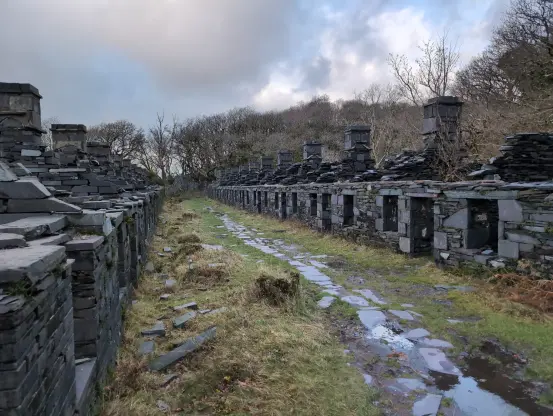
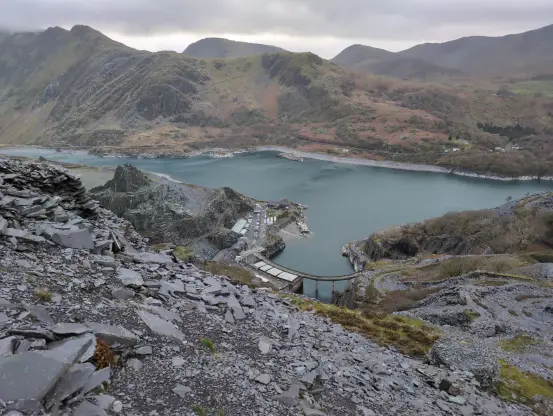
    Went for a wander around parts of #Dinorwic slate quarry today. As scared as the landscape is, it really is very beautiful.

    Some nice bits of infrastructure visible as well that forms part of the power station.
    #cymru #electricalinfrastructure
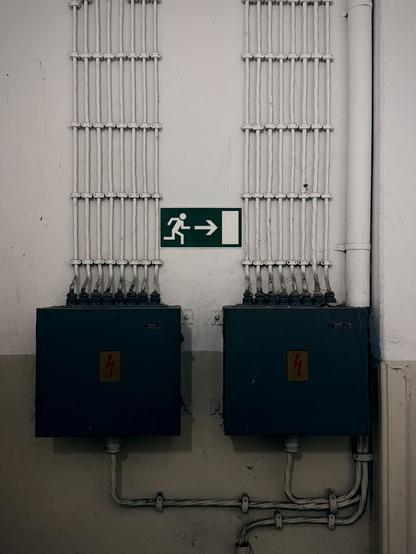
    🔌🏢 Just snapped this with my iPhone 16 Pro Max! Check out this neat setup of electrical junction boxes and organized wiring, complete with an emergency exit sign. Safety and organization at its finest! 🚶‍♂️👉

    #ElectricalLife #OrganizedWiring #SafetyFirst #ElectricalInfrastructure #SafetySigns #BuildingMaintenance #EmergencyExit #WiringSetup

    Midwest, Northeast to experience hottest weather in years as temps near 100 F

    AccuWeather meteorologists have all the details on how hot it will get and how long the sizzling weather will last as the region's first official heat wave of the season kicks into high gear.

    By Renee Duff, AccuWeather meteorologist

    Published Jun 17, 2024

    "Temperatures will build to their highest marks in years across the Midwest and Northeast and stay at sizzling levels for days as #MotherNature cranks up the heat ahead of astronomical summer, which begins Thursday, June 20, at 4:50 p.m. EDT.

    "AccuWeather's long-range team has been sounding the alarm for more than a week on building heat in the East during the third week of June that would put millions at the mercy of a prolonged stretch of 90-degree Fahrenheit temperatures. The longevity of the intense heat will put additional strain on residents and #ElectricalInfrastructure.

    "For many in the #Midwest and #Northeast, this week will constitute the first official heat wave of the season, which, in this part of the country, is defined as three or more consecutive days of at least 90-degree temperatures. Heat alerts have been issued for more than a dozen states, stretching from #Iowa and #Illinois to #Maine, as the summer swelter takes shape."

    https://www.accuweather.com/en/weather-forecasts/midwest-northeast-to-experience-hottest-weather-in-years-as-temps-near-100-f/1659800

    #ExtremeHeat #RecordBreakingHeat #ExtremeTemperatures #MaineWx #NewEnglandWx #NortheastWx #MidwestWx #ExtremeWx #ClimateChange #ClimateCrisis #ClimateCatastrophe

    Ancient #SolarStorm smashed Earth at wrong part of the sun's cycle — and scientists are concerned

    The 9,200-year-old storm left researchers with a stark conclusion: We are not ready for the next one.

    By Brandon Specktor
    published January 28, 2022

    "An extremely powerful solar storm pummeled our planet 9,200 years ago, leaving permanent scars on the #ice buried deep below #Greenland and #Antarctica.

    "A new study of those ancient ice samples has found that this previously unknown storm is one of the strongest outbursts of solar weather ever detected and would have crippled modern communications systems if it had hit Earth today.

    "But perhaps most surprising, the massive storm appears to have hit during a #SolarMinimum, the point during the sun's 11-year cycle when solar outbursts are typically much less common, according to the study, published Jan. 11 in the journal Nature Communications. Because of this unexpected discovery, the study researchers are concerned that devastating solar storms could hit when we least expect them — and that Earth might not be prepared when the next big one arrives.

    "Solar storms occur when magnetic field lines on the sun's corona (the outermost part of the sun's atmosphere) become tangled up and then violently snap back into place. This sudden magnetic reconnection can release huge gouts of plasma and magnetic field known as coronal mass ejections (CMEs), which surf across space on the sun's ever-gusting #SolarWind.

    "If a powerful #CME passes over Earth, it can compress the planet's #MagneticShield, causing what's known as a #GeomagneticStorm.

    "Mild geomagnetic storms can damage #satellites and interrupt radio transmissions; severe storms, like the 'Halloween storms' of 2003, can cause widespread #PowerOutages across the world and permanently damage #ElectricalInfrastructure, such as power transformers. Some researchers fear that a sufficiently large solar storm could also ravage the world's undersea internet cables, resulting in an '#InternetApocalypse' that leaves huge chunks of the world population disconnected for months.

    "CME outbursts typically peak every 11 years or so, when the sun enters the part of its natural activity cycle known as the solar maximum — the time when magnetic activity in the corona is in high gear.

    "Today, satellites can monitor solar outbursts directly. But finding evidence of ancient storms requires some atomic detective work. The authors of the new study looked for evidence of special particles known as #CosmogenicRadionuclides — essentially, radioactive isotopes (versions of elements) created when charged solar particles collide with elements in Earth's atmosphere.

    "These radioactive particles can appear in natural records, like tree rings and ice cores. In the study, the authors looked at the latter, analyzing several cores drilled in Antarctica and Greenland. Cores from both locations showed a remarkable spike in the radionuclides beryllium-10 and chlorine-36 around 9,200 years ago, indicating that a powerful solar storm swept across Earth at that time.

    "Further analysis of the cores showed that the storm was particularly powerful — perhaps on a par with the most powerful solar storm ever detected, which occurred during a solar maximum between the years 775 B.C. and 774 B.C.

    "The newly discovered storm's occurrence during a solar minimum, when magnetic activity on the sun should be low, left the study authors puzzled and alarmed.

    "'This [storm] further pushes the magnitude of a potential worst-case scenario for [solar storm] events,' the researchers wrote in the study.

    "According to the study authors, it is now essential for researchers to detect more ancient, extreme storms in the ice-core and tree-ring records, to determine if there is some sort of pattern beyond the sun's 11-year cycle that dictates when the most extreme storms will occur."

    https://www.livescience.com/ancient-solar-storm-solar-minimum

    #SolarFlares #SolarCycle25 #CarringtonEffect #LightsOut #KesslerSyndrome

    Ancient solar storm smashed Earth at the wrong part of the sun's cycle — and scientists are concerned

    The 9,200-year-old storm left researchers with a stark conclusion: We are not ready for the next one.

    Live Science
    New device could prevent costly electrical rewiring for homeowners: ‘We’re blazing … a path’ https://www.thecooldown.com/green-tech/connectder-meter-collars-solar-ev-chargers/
    #electricalinfrastructure
    New device could prevent costly electrical rewiring for homeowners: ‘We’re blazing … a path’

    The ConnectDER meter collars now make that switch possible for homeowners who otherwise wouldn't be able to.

    The Cool Down