"ETOPO 2022 is an updated topographic–bathymetric dataset at 15 arcsec global resolution that incorporates bare-Earth datasets with forests and buildings removed. ETOPO 2022 integrates more than a dozen source datasets for land topography, sea bathymetry, lake bathymetry, and ice-sheet bed elevation data, all of which have been carefully evaluated for quality, accuracy, and seamless integration."
Quality controlled with nearly a trillion #ICESat2 #LIDAR shots.
Did some successful microwave keyhole shots back in the day, using #SRTM data. This would have been even better.
Abstract. Here we present Earth TOPOgraphy (ETOPO) 2022, the latest iteration of NOAA's global seamless topographic–bathymetric dataset. ETOPO1, NOAA's prior release at 1 arcmin resolution, has been a widely used benchmark global digital elevation model (DEM) since its initial release in 2009 (Amante and Eakins, 2009). Tsunami forecasting, modeling, and warning systems critically rely upon accurate topographic and bathymetric data to predict and reproduce water movement across global ocean surfaces, wave heights at the coastline, and subsequent land inundation. ETOPO 2022 is an updated topographic–bathymetric dataset at 15 arcsec global resolution that incorporates bare-Earth datasets with forests and buildings removed. ETOPO 2022 integrates more than a dozen source datasets for land topography, sea bathymetry, lake bathymetry, and ice-sheet bed elevation data, all of which have been carefully evaluated for quality, accuracy, and seamless integration. We evaluate the relative and absolute vertical accuracies of all land-elevation input datasets, as well as the final ETOPO 2022 tiles, using a geographically optimized, independent database of bare-Earth elevation photons from NASA's ICESat-2 satellite mission over the calendar year 2021. Measured against more than 960 billion lidar measurements from ICESat-2 that span nearly the entire globe, ETOPO 2022 measures a global RMSE of 7.17 m. ETOPO 2022 is publicly available in both ice surface and bedrock versions that portray either the top layer of the ice sheets covering Greenland and Antarctica or the bedrock below, and both versions are also available in GeoTIFF and NetCDF formats in 15×15° tiles, as well as global tiles at 30 and 60 arcsec resolutions. ETOPO 2022 provides a new publicly available seamless, globally validated elevation dataset to meet the present and future needs of the scientific global hazard and mapping communities. Datasets for the ETOPO 2022 15 Arc-Second Global Relief Model are available at https://doi.org/10.25921/fd45-gt74 (NOAA National Centers for Environmental Information, 2022).
I was going to ask the #Earth #Observation community, including @EOMasters, if there were good online resources to access and process #DigitalElevationModel (DEM) data.
But just found out that my ace colleague @LukeDataManager had done a detailed workflow and published it online.
https://nordatanet.github.io/Exploring_FAIR_data_with_Python/Global_and_regional_bathymetry.html
Note to self: be more like Luke and publish my workflows
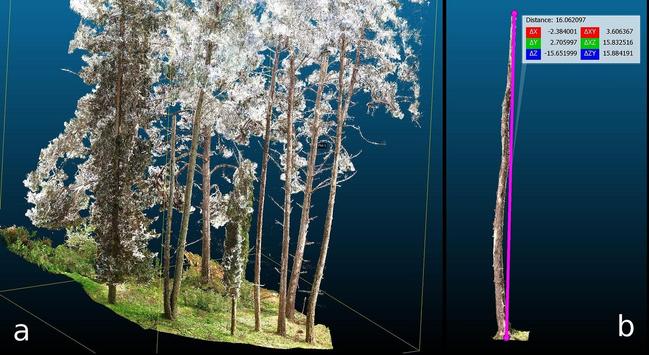
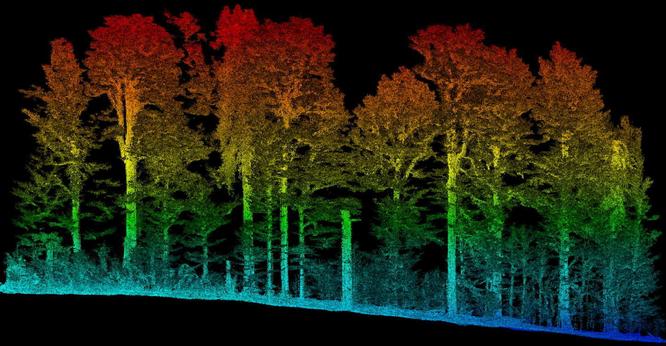
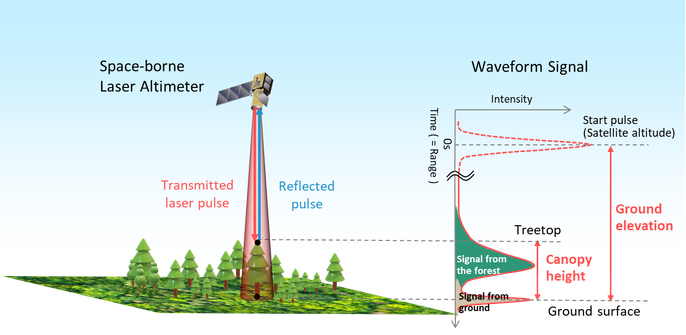
LiDAR or Light Detection and Ranging is an active remote sensing system that can be used to measure vegetation height across wide areas. This page will introduce fundamental LiDAR (or lidar) concepts including:
🇦🇹 Dear colleagues, the session 𝗡𝗼𝘃𝗲𝗹 𝗱𝗮𝘁𝗮, 𝗺𝗲𝘁𝗵𝗼𝗱𝘀 𝗮𝗻𝗱 𝗮𝗽𝗽𝗹𝗶𝗰𝗮𝘁𝗶𝗼𝗻𝘀 𝗶𝗻 𝗚𝗲𝗼𝗺𝗼𝗿𝗽𝗵𝗼𝗺𝗲𝘁𝗿𝘆 at European Geosciences Union (EGU) 2024 is scheduled for Mon, 15 Apr, 10:45–12:30 (CEST) in Room G1 🟪 (orals) and 16:15–18:00 (CEST) in Hall X1 🟪 (posters)
👉 Join us to attend great oral & poster contributions!
📋 Full list of contributions & info about the session:
https://lnkd.in/dtSkqt6V
#EGU2024 #geomorphometry #spatialanalysis #spatialdata #geomorphology #lidar #digitalelevationmodel
Does anyone know of any concrete ways the old USGS scribed map products or their derivatives are used today?
For a while, the line work was turned into raster products, I believe, and then into digital elevation models?
Do any part of of the old topo map products still have use or relevance, or have they seen their last hurrahs?