𓏲ּ𝄢 Check out our newest writing “From Data to Display: Infrastructures of Openness in the Making” 𓏲ּ𝄢
The text was written at the very beginning of our research project Sharing Knowledge in the Arts @critical media lab and, well… good things take time. Or in our case: roughly two babies later 𓏲ּ𝄢𓏲ּ𝄢 and with the project now already entering its final year, it finally found its way into print.
The chapter offers an early glimpse into questions that still shape our work today: How can we design knowledge infrastructures that are not only open, but also reflexive, situated, and community-oriented?
Drawing on feminist critiques of #OpenScience and #DataFeminism, Lucie Kolb and me argue that openness is not merely a technical issue of access, but an ethical and political practice.
If you’d like an early insight into our research project (and dissertation journey), feel free to have a read https://www.openbookpublishers.com/books/10.11647/obp.0528/chapters/10.11647/obp.0528.10
𓏲ּ𝄢𓏲ּ𝄢
#DigitalHumanities #OpenData #KnowledgeInfrastructures #CriticalDataStudies #ArtisticResearch
RE: https://fedihum.org/@sarahalang/116673007554262774

The results are in!
This poll about #DataFeminism in #DH really surprised me 😱

My line of thought was that DF is misunderstood in DH but most people think DH simply doesn’t care.
Important concerns about the term feminism were raised in the responses.

If you responded, could you elaborate more that your line of thinking was? 🤔

@SemAntiKast these are good and valid points and, after all, I didn’t invent the label (so I don’t have any stakes in it). For me, the issue of foregrounding (what in #DH are most often binary) gender issues and thus invisiblizing other aspects (such as decolonization and more, even though such topics are explicitly part of the #DataFeminism manifesto) has always been the bigger issues. I hadn’t focused much on the name itself so far (beyond it hiding any aspects beyond women).

When #DataFeminism came out in 2020, it felt like a perfect match for Digital Humanities.

Here was a framework that took data seriously as a site of power, bias, and politics: exactly the kind of concerns some #dh scholars have been circling for years. And yet, a few years on, I can’t say the field has really embraced it.😢

Why is that?

https://latex-ninja.com/2026/05/31/why-the-digital-humanities-havent-embraced-data-feminism/

Data Feminism is misunderstood
0%
DH does not care
73.3%
Practical challenges
6.7%
Other
20%
Poll ended at .
Why the Digital Humanities Haven’t Embraced Data Feminism

When Data Feminism came out in 2020, it felt like a perfect match for Digital Humanities. Here was a framework that took data seriously as a site of power, bias, and politics: exactly the kind of c…

LaTeX Ninja'ing and the Digital Humanities

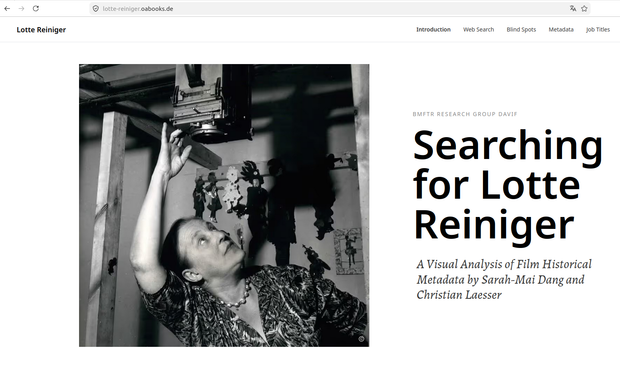
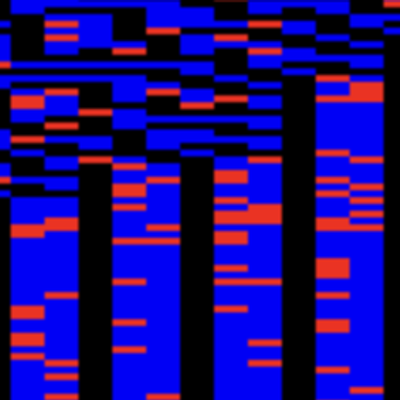
📽️ What can film historical #metadata tell us about Lotte Reiniger?

Explore my latest #datavisualization about the work of the pioneering filmmaker: https://lotte-reiniger.oabooks.de/

Together with media designer Christian Laesser, I analyze how Reiniger is represented across three key databases: the DFF – Deutsches Filminstitut & Filmmuseum, the Women Film Pioneers Project, and #Wikidata.

Questions and comments are very welcome!

#womenandfilm #datafeminism #digitalfilmhistory #missingmetadata

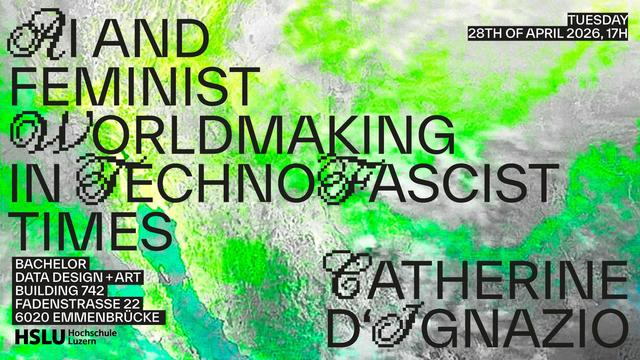
I am very pleased to share that Data Design + Art first public lecture will host none other than Catherine D'Ignazio.

Like for many others, Catherine D'Ignazios work, for example the seminal book «Data Feminism» (MIT Press 2020), co-authered with Lauren Klein, has been an invaluable inspiration to combine data work with questioning dominant power structures. It is a book that I, but also our students, keep coming back to time again and again.

«AI and Feminist Worldmaking in Technofascist Times»
by Catherine D'Ignazion

Author of «Data Feminism» / Associate Professor of Urban Science & Planning / Director, Data + Feminism Lab Department of Urban Studies & Planning
Massachusetts Institute of Technology MIT

Tuesday 28th of April 2026, 17H
The lecture will be held in person & in english. / Attendance is free but place is limited. / Please reserve a spot at [email protected]

Data Design + Art
Building 742
Fadenstrasse 22
6020 Luzern-Emmenbrücke

#datafeminism #technofascism #datadesign

DEADLINE EXTENDED: The Open Public Peer Review for the Working Paper "Beyond Data Feminism. Towards Ethical Data Work in the (Digital) Humanities" by @sarahalang and Elena
Suárez Cronauer has been extended until 12.06.2026. Take the opportunity to participate in this community driven process.
For the paper: https://zfdg.de/wp_2026

@hab_wf @MWWForschung #openscience #datafeminism #review #ethicaldata #digitalHumanities

Beyond Data Feminism. Towards Ethical Data Work in the (Digital) Humanities | ZfdG - Zeitschrift für digitale Geisteswissenschaften

The working paper discusses the toolkit Catherine D'Ignazio's and Lauren F. Klein's Data Feminism Manifesto provides with its feminist principles and how to address bias and ethics in the Digital Humanities.

RE: https://fedihum.org/@ZfdG/116278537781324610

Another hot take 🔥
Is it time to move beyond Data Feminism?

If that statement provokes your thoughts 🔥
why don’t you give us feedback in the open peer review process (which has been prolonged!)?

#DataFeminism #DH

#DH recommender system:

If you liked what I had to say about #DataFeminism (https://zfdg.de/wp_2026), you may also like what I have to say about the role of data work in computational history:
https://doi.org/10.3390/histories6020026

#DigitalHumanities #ComputationalHumanities #history

Beyond Data Feminism. Towards Ethical Data Work in the (Digital) Humanities | ZfdG - Zeitschrift für digitale Geisteswissenschaften

The working paper discusses the toolkit Catherine D'Ignazio's and Lauren F. Klein's Data Feminism Manifesto provides with its feminist principles and how to address bias and ethics in the Digital Humanities.

REMINDER: The Open Public Peer Review for the Working Paper "Beyond Data Feminism. Towards Ethical Data Work in the (Digital) Humanities" by @sarahalang and Elena
Suárez Cronauer is still open until 17.04.2026. Take the opportunity to participate in this community driven process.
For the paper: https://zfdg.de/wp_2026

@hab_wf @MWWForschung #openscience #datafeminism #review #ethicaldata #digitalHumanities

Beyond Data Feminism. Towards Ethical Data Work in the (Digital) Humanities | ZfdG - Zeitschrift für digitale Geisteswissenschaften

The working paper discusses the toolkit Catherine D'Ignazio's and Lauren F. Klein's Data Feminism Manifesto provides with its feminist principles and how to address bias and ethics in the Digital Humanities.