
Frontiers | Modeling Illustrates That Genomic Selection Provides New Opportunities for Intercrop Breeding
Intercrop breeding programs using genomic selection can produce faster genetic gain than intercrop breeding programs using phenotypic selection. Intercroppin...
Paper of the week - week 41:
Smulders et al., 2025
Resilience through diversity: The potential of modelling species and variety interactions to enhance resilience of production systems
https://nph.onlinelibrary.wiley.com/doi/10.1002/ppp3.70095
#cropdiversification #benediktspapersoftheweek
Paper of the week - week 40:
Huan et al. 2024
Cultivar mixtures increase crop yields and temporal yield stability globally. A meta-analysis
https://link.springer.com/article/10.1007/s13593-024-00964-6
#benediktspapersoftheweek #CropDiversification

Cultivar mixtures increase crop yields and temporal yield stability globally. A meta-analysis - Agronomy for Sustainable Development
Cultivar mixtures have been proposed as a way to increase diversity and thereby improve plant production, but our understanding of the effects of mixing cultivars on crop diseases and resource-use efficiency remains fragmentary. We performed a meta-analysis to assess the effects of cultivar mixtures on crop yield, yield stability, resource-use efficiency, and disease severity compared with monocultures of twelve major crops. We found that, overall, mixing of cultivars increased crop yield by 3.82%. Yield gains from mixing cultivars were highest in rice (+16.1%), followed by maize (+8.5%), and were lowest in barley (+0.9%) and sorghum (no increase). Temporal yield stability increased with the number of cultivars in the mixtures. Overall, mixing cultivars increased crop biomass, leaf area index, photosynthetic rate, and Water-use efficiency by 5.1, 7.2, 8.5 and 4.3%, respectively, and decreased disease incidence by 24.1%. Cultivar mixtures were more effective in mitigating diseases and increasing yields in studies performed at lower latitudes, higher mean annual temperatures, and higher mean annual precipitation. Our study complements and adds to previous research, indicating that cultivar mixtures reduce crop losses to disease and enhance resource-use efficiency compared with monocultures globally. We conclude that the targeted use of cultivar mixtures with appropriate management practices can reduce resource and pesticide inputs while maintaining high yields, thereby promoting sustainable and productive agriculture. Graphical abstract
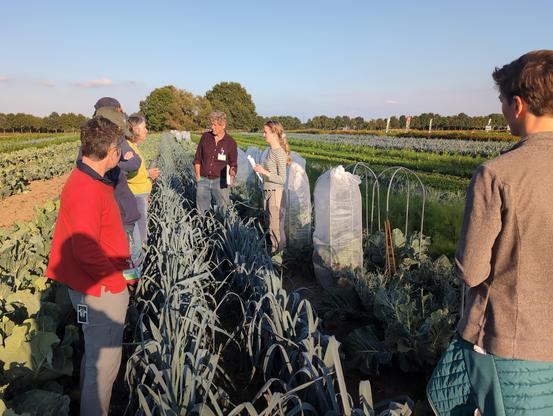
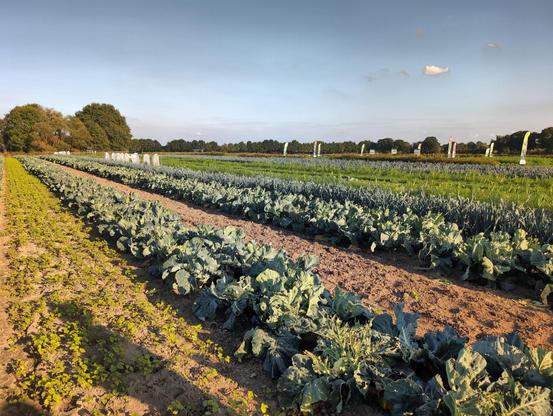
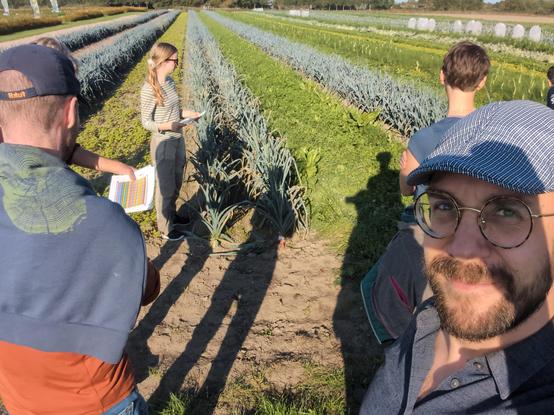
Field visit with #WUR colleagues at Vitalis (organic vegetable breeding branch od Enza Zaden today), close to Zutphen, The Netherlands.
Lots of research and breeding for strip cropping.
#cropdiversification #organic #plantbreeding
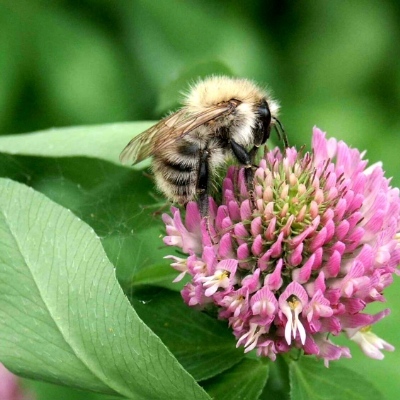
New study: #CropDiversification can help pollinators without taking land out of agricultural production, but only some #pollinator species may benefit. We highlight mechanisms on the spatial
and temporal #diversity of crops. Led by Thijs Fijen
https://link.springer.com/article/10.1007/s10980-024-02027-3
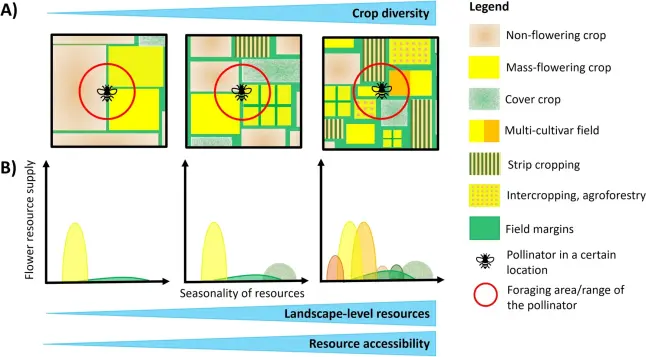

Crop diversification for pollinator conservation - Landscape Ecology
Context Intensive agriculture drives insect decline impacting insect-mediated ecosystem services that support production. Crop diversification shows promise in increasing crop productivity and enhancing ecosystem services, however, the impact on biodiversity conservation, particularly of pollinators, is unclear. Objectives Here, we synthesize the mechanisms and current evidence base of how increasing the spatial and temporal diversity of crops within and across agricultural fields can benefit pollinator biodiversity. Methods We focus on research in the highly intensified agricultural regions, in Western Europe and North America, from which we know a lot about pollinator decline, but use inspiration from tropical regions. Results We find that higher crop diversity, with sequentially flowering cultivars, intercropping practices, and a larger coverage of flowering crops, for example through integrating the cultivation of forgotten, novel, and woody crops increases flower resource availability throughout the active flight period of pollinators. All practices can increase landscape heterogeneity, which is further enhanced by decreasing field sizes. As a result, the functional connectivity increases, which improves the flower accessibility within the foraging ranges of pollinators. Conclusions Our review highlights the potential benefit of various crop diversification measures for supporting pollinating insects without taking land out of production, as well as the limitations, including that only a subset of pollinator species may benefit. Empirical evidence suggest that diversification practices could benefit pollinators, but landscape-wide studies are needed to properly evaluate the true potential of crop diversification for pollinator conservation as part of the solution for bending the curve of pollinator decline.
South Australian grape growers are facing another year of prices below production costs due to the wine industry downturn. However, with the world drinking less wine, a global olive oil shortage presents a new opportunity. Diversifying crops is key, and some growers are now turning to olive farming.
#Agriculture #WineIndustry #GrapeGrowers #OliveOil #CropDiversification #SouthAustralia #FarmingOpportunities
https://www.youtube.com/watch?v=H-16CFZgTJs

Wine grape growers eye olives amid global shortage | Stateline | ABC News
 Benedikt Haug
 Mediterranean Diet
 The-14
 FuncAgroEco
 Mojo ♻️