Quote of the day, 3 March: Pope John XXII

It behooveth thee to grant a favor and confirmation to my holy and devout Order of Carmel

For centuries the faithful who held a pious devotion to the Brown Scapular of Our Lady of Mount Carmel believed in an apparition of the Blessed Virgin to Pope John XXII in Avignon. Based on that supposed apparition, the sovereign pontiff issued a Papal Bull, Sacratissimo uti culmine, dated 3 March 1322 from Avignon; it is in the text of the Bull that the pope mentions the apparition. The historical difficulty with this document lies in the fact that the Bull is mentioned nowhere prior to 1752, according to Joseph Hilgers.

Modern-day spiritual descendants of St. Simon Stock also have written and published volumes concerning the Brown Scapular as a sacramental. Former Carmelite Prior General Joseph Chalmers wrote, “In any case, the symbolism of the scapular as a sign of consecration to Mary, the Mother of Carmel, was and remains very important.”

Citing the Carmelite friar, Mathias of St. John, Father Chalmers added one important qualifier: “It would be far better to have holiness under a worldly habit than a worldly heart under a holy habit.” Fr. Chalmers concluded, “wearing the scapular is intended to be an outward reminder of what should be going on within” (Cf. Chalmers J 2009, Mary the Contemplative, Edizione Carmelitani, Rome).

Discalced Carmelite scholar Father Kieran Kavanaugh, O.C.D. discusses the historical problems head-on in his article, Brown Scapular: a Silent Devotion. He reviews the scapular as the habit of the Carmelites from their humble beginnings in the Holy Land to their spread throughout western Europe. In particular, Father Kieran describes the painstaking research undertaken by the Discalced Carmelites in defense of Carmelite Marian devotion following the Second Vatican Council, and how their careful documentation led to the restoration of the feast day of Saint Simon Stock to the Church’s liturgical calendar in 1979, in part thanks to the exhaustive research of Father Nilo Geagea, O.C.D.

But more important, Father Kieran explains with great precision where the Church stands today in regard to the Brown Scapular devotion:

“No mention is made of the vision of St. Simon Stock or of that of Pope John XXII in relation to the Sabbatine privilege, which promises that one will be released from Purgatory on the first Saturday after death.”

Nonetheless, the Carmelites have also been authorized to freely preach to the faithful that they can piously believe in the powerful intercession, merits, and suffrages of the Blessed Virgin, that she will help them even after their death, especially on Saturday, which is the day of the week particularly dedicated to Mary, if they have died in the grace of God and devoutly worn the scapular. But no mention is made of the “first” Saturday after their death.

One particular reflection that this great Discalced Carmelite scholar offers is rather consoling:

“If some day an historian were to prove beyond any reasonable doubt that there are no grounds to the Marian apparition to St. Simon Stock or the scapular promise, the scapular devotion would still maintain its value. The Church’s esteem of it as a sacramental, her appreciation of its meaning and of the good that has come about through its pious use on the part of the faithful is all that is needed.”

Perhaps Saint John Paul II summarized the Church’s teaching and the Carmelite scapular catechesis best in his 2001 Message to the Carmelite Family. The saint wrote, “the scapular is essentially a habit.”

For our readers who are history buffs, we have researched the Bull Sacratissimo uti culmine and found the text in Satolli’s Dictionnaire de Droit Canonique. An English translation is available from blogger Brother Hermenegild.

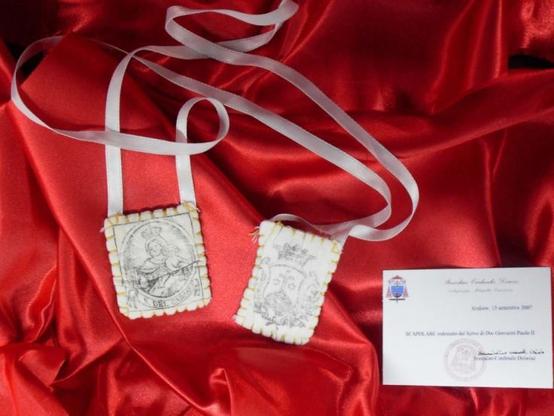
Brown Scapular worn by Saint John Paul II, a gift to the Discalced Carmelite parish in Wadowice, Poland | Photo credit: Discalced Carmelite Order (by permission)

“The professed brethren of the said Order shall be loosed from guilt and punishment; and when they depart this world, they shall swiftly enter purgatory. I, the Mother, will graciously descend on the Saturday after their death; all whom I find there I shall release and lead to the holy mountain of eternal life.”

SACRATISSIMO UTI CULMINE

JOANNES EPISCOPUS SERVUS SERVORUM DEI,
Universis et singulis Christifidelibus, tam praesentibus quam futuris, praesentes literas inspecturis, salutem et apostolicam benedictionem.

Sacratissimo uti culmine Paradisi angelorum tam suavis et dulcis reperitur melodia, modulamine visionis, dum paterno Jesus Numini circumspicitur adumatus, dicendo: Domine, Ego et Pater unum sumus, et qui videt me, videt et Patrem meum, et angelorum chorus non desinit dicere: Sanctus, Sanctus, Sanctus; ita Synodus non cessat laudes effundere celsæ Virgini, dicendo Virgo, Virgo, Virgo, sis speculum nostrum pariter et exemplum. Quoniam munere munitur gratiarum, sicut sancta cantat Ecclesia: Gratia plena et Mater misericordiae. Sic ille mons reputatur de Carmelo Ordine cantibus extollendo, et hanc gratiarum Genitricem commendando et dicendo: Salve Regina, Mater misericordiæ et spes nostra.

Sic mihi flexis genibus supplicanti Virgo visa fuit Carmelita, sequentem effata sermonem:

0 Joannes, o Joannes, vicarie mei dilecti Filii, veluti a tuo te eripiam adversario, te Papam facio solemni dono Vicarium, meis coadjuvantibus supplicationibus, a dulcissimo meo Filio petens, quod gratiose obtinui, ita gratiam et amplam meo sancto ac devoto Carmelitarum Ordini confirmationem debeas praeconcedere, per Eliam et Eliseum in Monte Carmeli inchoato. Quod unusquisque professionem faciens, Regulam a meo servo Alberto, patriarcha, ordinatam observabit et inviolatam obtinebit, et per meum dilectum filium Innocentium approbatam, ut veri mei Filii Vicarius debeas in terris assentire, quod in cœlis meus statuit et ordinavit Filius; quod qui in sancta perseverabit obedientia, paupertate et castitate, vel qui sanctum intrabit Ordinem, salvabitur; et si alii, devotionis causa, in sanctam ingrediantur Religionem, sancti Habitus signum ferentes, appellantes se Confratres et Consorores mei Ordinis prænominati, liberentur et absolvantur a tertia eorum peccatorum portione, a die quo præfatum Ordinem intrabunt, castitatem, si vidua est, promittendo; virginitatis, si est virgo, fidem præstando; si est conjugata, inviolati conservationem matrimonii adhibendo, ut sancta mater imperat Ecclesia.

Fratres proféssi dicti Ordinis supplicio solvantur et culpa, et die quo ab isto se culo recedunt, properato gradu accelerant purgatorium, ego Mater gratiose descendam sabbato post eorum obitum, et quot inveniam in purgatorio liberabo, et eos in Montem sanctum vitæ æternæ reducam.

Verum quod ipsi Confratres et Consorores te neantur Horas dicere Canonicales, ut opus fuerit, secundum Regulam datam ab Alberto; illi, qui ignari sunt, debeant vitam jejunam ducere diebus quos sacra jubet Ecclesia, nisi, necessitatis causa, alicui essent traditi impedimento; mercurio ac sabbato debeant se a carnibus abstinere, præterquam in mei Filii Nativitate. Et hoc dicto, evanuit ista sancta visio.

Istam ergo sanctam Indulgentiam accepto, roboro et in terris confirmo, sicut, propter merita Virginis Matris, gratiose Jesus-Christus concessit in coelis. Nulli ergo omnino hominum liceat hanc paginam nostræ Indulgentiæ, seu statuti, et ordinationis irritare, vel ei ausu temerario contraire. Si quis autem hoc attentare præsumpserit, indignationem Omnipotentis Dei, et Beatorum apostolorum Petri et Pauli se noverit incursurum.

Datum Avenione, tertia die Martii, Pontificatus nostri anno sexto

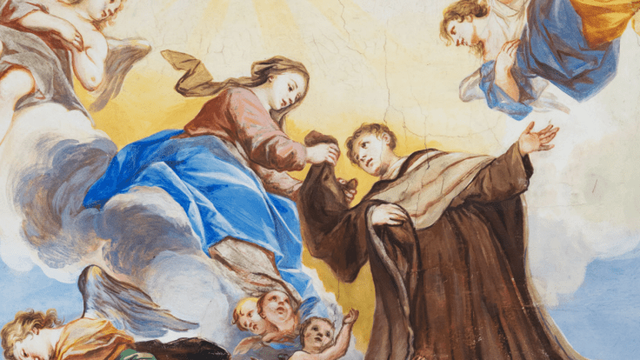
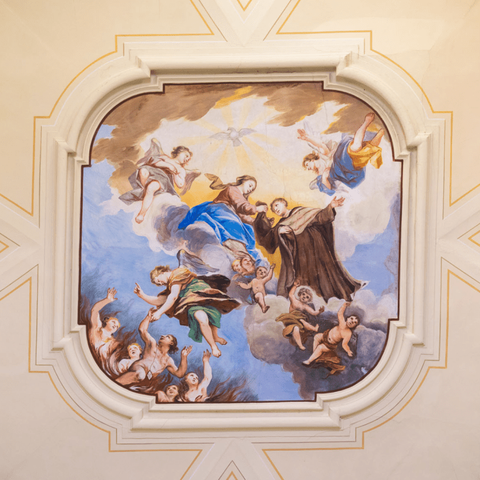
Saint Simon Stock receives the scapular of Our Lady of Mount Carmel, ceiling fresco, Church of Our Lady of Mount Carmel, Marostica, Italy.
Image credit: isaac74 / Adobe Stock

#Avignon #BrownScapular #FrKieranKavanaughOCD #MarianDevotion #OurLadyOfMountCarmel #PopeJohnXXII #SabbatinePrivilege #sacramental #SacratissimoUtiCulmine #StSimonStock

Quote of the day, 12 August: Blessed Isidore Bakanja

“If you see my mother, or if you go to the judge, or if you meet a priest, tell them that I am dying because I am a Christian.”

Blessed Isidore Bakanja

On April 24, 1994, Blessed Isidore Bakanja, layman and martyr of the Scapular of the Virgin Mary of Mount Carmel, was beatified by Pope John Paul II. Today, the Order comes together to celebrate the 30th anniversary of the Church’s recognition of the holiness of this Congolese Catholic who would not give up his scapular.

Isidore Bakanja was born in Bokendela (Democratic Republic of Congo) around 1885. Leaving his village, he moved to Mbandaka, where he was baptized on May 6, 1906, and confirmed a few months later, on November 25, 1906. He was heavily influenced by the witness of the Trappist missionaries, cultivating a special devotion to Jesus and the Blessed Virgin Mary.

Despite the difficulties he encountered at work because of his fidelity to Christ, he remained steadfast in his faith. On February 2, 1909, he suffered an atrocious scourging because he refused to get rid of the scapular of the Virgin Mary of Mount Carmel, which he wore over his shoulders. Following a terrible beating and sensing his impending death, he received the anointing of the sick on July 24, 1909. Just as Christ died having forgiven his wrongdoers, so Bakanja died having forgiven his executioner: “The white man hit me; that’s his business. It’s up to him and God. When I get to heaven, I’ll pray a lot for him and ask God to forgive him.”

Bakanja died on the Feast of the Assumption, August 15, 1909, at the age of 24. In imitation of Christ, whom he had followed from the moment of his baptism, Isidore Bakanja lived in his own way, like Saint Paul, who wrote: “For me, to live is Christ.” (Philippians 1:21). “For me, to live is to be a Christian.”

On June 7, 1917, his remains were exhumed and buried at the Immaculate Conception Parish in Bokote. He was proclaimed Blessed on April 24, 1994. His cause for canonization is now underway. Popes Benedict XVI and Francis have recognized and proposed Blessed Isidore Bakanja as an authentic witness and example of faith for all Christians in the world. In his post-synodal Apostolic Exhortation Christus vivit, Pope Francis named Blessed Isidore Bakanja among the young saints who today mobilize Christians in their quest for holiness and inspire new conversions. In short, Blessed Isidore Bakanja is a spiritual and ecclesial heritage for the world.

Vice-Postulator of the Cause of Isidore Bakanja

Carmelite Family Celebrates 30th Anniversary of the Beatification of Blessed Isidore Bakanja

Vice-Postulator of the Cause of Isidore Bakanja 2024, ‘Carmelite Family Celebrates 30th Anniversary of the Beatification of Blessed Isidore Bakanja’, Order of Carmelites, viewed 10 August 2025, https://www.ocarm.org/en/item/6346-30th-anniversary-of-the-beatification-of-blessed-isidore-bakanja.

Featured image: Blessed Isidore Bakanja, image from his beatification banner. Image credit: Carmelite Order

#beatification #BlessedIsidoreBakanja #BrownScapular #DemocraticRepublicOfTheCongo #forgiveness

Quote of the day, 16 July: St. Oscar Romero

The Virgin offers us a promise of salvation, but this is not a salvation that occurs only after death. It is a salvation that demands work here in history, among temporal realities. This salvation also demands interior renewal, for the kingdom of God is already beginning on this earth, in our own hearts.

First of all I say that the scapular of the Virgin of Mount Carmel is a sign of the hope for salvation that all persons have in their souls, in their hearts, in their lives. Those who die wearing this scapular will not see the flames of hell. This is a promise of salvation. But I want to tell many people frankly that it is not a false promise; it is not a promise that is unrelated to the reality of each one of us.

The Virgin’s promise is intended to awaken in each person’s heart an eschatological sense, that is, hope in what lies beyond. We should work on this earth with our whole soul and with our heart set on heaven, knowing that no one is permanently installed in this world; we are on a voyage toward eternity.

The realities of earth will pass, but what is eternal remains. This is the meaning of transcendence! The Virgin, like Christ and like the Church, offers us a transcendental message which means that the Church offers something unique, something which no other promise of liberation can offer.

Thus, if the scapular is a message about eternity and the hereafter, an eschatological message, it is also a message about the here and now. The scapular is a message about the demands of this earth, about the fulfillment of our duties in this world, and that is what the Church is stressing at this time.

I pray this morning that the Virgin of Mount Carmel will strengthen her faithful followers who fill this church and so many other churches of Carmelite inspiration.

Saint Oscar Romero

Homily, Solemnity of Our Lady of Mt. Carmel, 16 July 1977 (excerpts)
Read more homilies at the Romero Trust website

“The scapular is essentially a habit” (St. John Paul II, 2001). The scapular Saint Oscar Romero was wearing when he was martyred. Image Credit: Carmelite Order

Featured image: Our Lady of Mount Carmel with Saint Teresa and Saint John of the Cross in an oil on canvas painting created by Juan Rodríguez Juárez (1675–1728). It comes from the collections of the Museo Nacional del Arte, Mexico (Public domain).

#BrownScapular #OurLadyOfMountCarmel #promises #salvation #StOscarRomero

Marie du jour, 16 May: St. Edith Stein

We give thanks that our dear Lady has clothed us with the “garment of salvation.” […] In the year 1251 [according to tradition] the Blessed Virgin appeared to the general of the Order, Simon Stock, an Englishman, and gave him the scapular.

Saint Edith Stein

On the History and Spirit of Carmel (1936-1937)

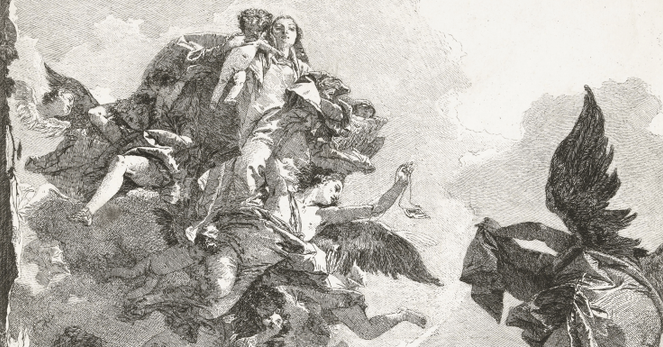
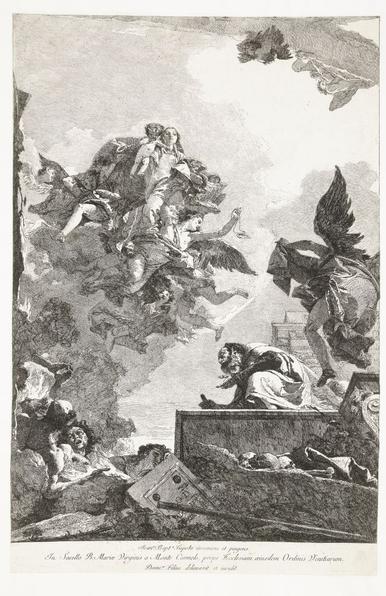
This dramatic print illustrates the traditional Carmelite vision of the Blessed Virgin Mary appearing to St. Simon Stock, presenting him with the brown scapular as a sign of her maternal protection over the Carmelite Order. The composition is rich with movement and symbolism: Mary appears in glory, surrounded by angels; below, St. Simon kneels in awe to receive her gift; and in the lower left foreground, souls are delivered from purgatory—visually reinforcing the scapular promise. The Latin inscription at the bottom of the engraving says: In the chapel of the Blessed Virgin Mary of Mount Carmel, near the church of the same Order in Venice. Sister Fideles drew and saw [this].

Stein, E. 2014, The Hidden Life: hagiographic essays, meditations, spiritual texts, translated from the German by Stein, W, ICS Publications, Washington DC.

Featured image: The Virgin Appears to Saint Simon Stock (1749), etching by Giovanni Domenico Tiepolo after Giovanni Battista Tiepolo. Based on a vision or drawing by Sister Fideles, a Discalced Carmelite nun. Image credit: Rijksmuseum, Amsterdam. Public domain.

⬦ Reflection Question ⬦
Do I wear the brown scapular—and if so, how has it shaped my life of prayer, trust, or devotion to Mary?
Join the conversation in the comments.

#BlessedVirginMary #BrownScapular #inspiration #StEdithStein #StSimonStock

Quote of the day, 16 May: Hermann Cohen

There may still be some who, from deference to the naturally staid, impassive character of the English, would counsel Catholics to maintain a certain reserve in their devotion to Mary, as though, indeed, there were any other than Mary who was to crush the head of error; as though there could be danger or excess where God has so wondrously surpassed Himself: can the love of Catholics for Mary ever rise to such a height, or can they honour her with glory so sublime, as that to which God Himself has chosen to exalt her?

As if this filial homage could be out of place in England, the birth-place of the devotion of the Holy Scapular, the favoured spot to which the Blessed Virgin came, bringing from heaven that pledge of salvation, to bestow it upon a Religious, not of Italy or of Spain, but on an English Saint, born and bred in England, English in his labors, in his mission, and in his election as General of the Carmelite Order.

This preference for England as the scene of that revelation, and the choice of an Englishman, St. Simon Stock, as the receiver of the promise attached to the Scapular is, to my mind, a pledge of the future conversion of that nation.

Servant of God Augustine of the Blessed Sacrament
Hermann Cohen

Lecture at Malines (3 September 1864)

Tierney, T  2017,  A Life of Hermann Cohen: From Franz Liszt to John of the CrossBalboa Press,  Bloomington, IN

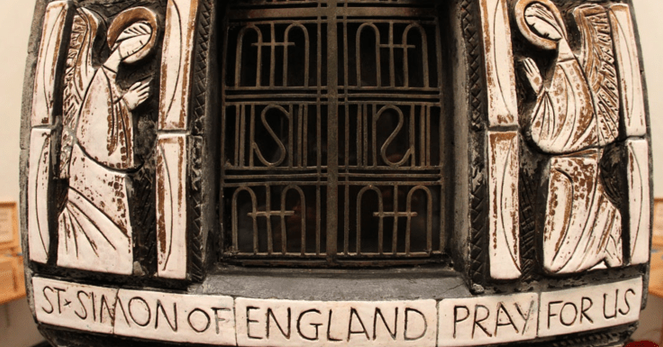
Featured image: This close-up photo shows the monumental reliquary of St. Simon Stock in the chapel of the Carmelite priory in Aylesford, England. Image credit: British Province of Carmelites / Flickr (Some rights reserved)

⬦ Reflection Question ⬦
Do I believe there can be “danger or excess” in loving Our Lady as God exalts her?
Join the conversation in the comments.

#BlessedVirgin #BrownScapular #CarmeliteOrder #Catholic #Catholics #conversion #England #HermannCohen #Mary #PriorGeneral #scapular #StSimonStock

A Life of Hermann Cohen

Hermann Cohen was a star pupil of the great composer/pianist Franz Liszt in Paris in the mid 1800s. Cohen became an international concert pianist in his own right and mixed with many of the famous names of the day. He provided piano accompaniment for Giovanni Mateo De Candia ( Mario), the Pavarotti

BalboaPressAU

Quote of the day, 8 May: St. John Paul II

Was Saint John Paul II a Carmelite?

Some years ago, a lively discussion arose online about whether Saint John Paul II was formally affiliated with the Discalced Carmelite Order.

In a 2001 message to the Carmelite family, the Holy Father wrote:

“I too have worn the Scapular of Carmel over my heart for a long time! Because I love the heavenly Mother we all share, whose protection I constantly experience, I hope that this Marian year will help all … to grow in her love and to radiate to the world the presence of this Woman of silence and prayer…”
Message to the Carmelite Family, 25 March 2001

When this question of official affiliation was raised in the Carmelites Unite Facebook group, a friar of the Krakow Province, Father Włodzimierz Tochmański, OCD—a friar with deep knowledge of the Discalced Carmelite Secular Order in Poland—responded that Karol Józef Wojtyła was never canonically affiliated with the Third Order of the Teresian Carmel.

However, Fr. Tochmański emphasized the Pope’s deep spiritual affiliation with Carmel, akin to the bond shared by members of the Scapular Confraternity.

Biographers also highlight the formative role of the Discalced Carmelite friars in Wadowice, the Pope’s hometown. Although St. Raphael Kalinowski, OCD, had died in 1908—twelve years before Karol Wojtyła was born—his legacy continued to shape Carmelite life in Wadowice for decades. As a young priest, Wojtyła studied in Rome, and in 1948 he successfully defended his doctoral dissertation at the Angelicum: “The Doctrine of Faith in St. John of the Cross.”

St. John Paul II and the Carmelite Scapular

In his homily for the Feast of Our Lady of Mount Carmel on 16 July 1988, delivered at the Alpini pilgrimage Mass on Mount Adamello, the Pope spoke warmly of the Scapular tradition:

“It is not the time to dwell on the particular devotion to Our Lady of Mount Carmel. I will only cite a few words of Pius XII, who wrote in an authoritative document: ‘No one surely is ignorant of how much the love for the most blessed Mother of God contributes to enlivening the Catholic faith and to amending lives, especially through those expressions of devotion which, more than others, seem to enrich minds with supernatural doctrine and move souls to the devout practice of the Christian life. Among these must be mentioned the devotion of the Sacred Scapular of Carmel, which, by its simplicity, adapts to the character of everyone and is widely spread among the Christian faithful, with abundant spiritual fruits.’”
Homily on Mount Adamello, 16 July 1988

Just over a week later, in his Angelus address of 24 July 1988, the Pope returned to the theme:

“In Carmel, and in every deeply Carmelite soul, an intense life of communion and closeness with the Blessed Virgin flourishes. This becomes a ‘new way’ to live for God and continue here on earth the love of Jesus the Son for His Mother Mary.”
Angelus, 24 July 1988

He also affirmed the Scapular as “a particular grace” passed on by Mary, recalling the tradition tied to St. Simon Stock, and described it as: “A sign of affiliation with the Carmelite Order… a means of tender and filial Marian devotion.”

A Personal Word

In a visit to the Carmelite parish of Santa Maria in Traspontina in Rome on 10 February 1991, Pope John Paul II offered a personal memory:

“I lived as a child in a town and parish where there was also a Carmelite monastery and convent, where I learned this great Carmelite tradition… This tradition, rooted in the Old Testament with the prophet Elijah, renewed in the Middle Ages, has come down to us—even here near the Vatican—and to this Pope, who has been connected to it since his earliest youth.”
Address at Santa Maria in Traspontina, 10 February 1991

He closed with a blessing and a wish for all present:

“I wish you every blessing as you continue your journey under the protection of Our Lady of Mount Carmel and her Scapular, as we see in the Carmelite Third Order.”

Saint John Paul II

Translation from the Italian text is the blogger’s own work product and may not be reproduced without permission.

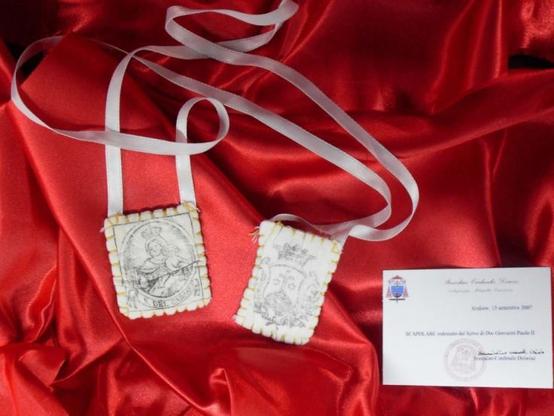
Featured image: Brown Scapular worn by Saint John Paul II, a gift to the Discalced Carmelite parish in Wadowice, Poland. Image credit: Discalced Carmelite Order (Used by permission)

⬦ Reflection Question ⬦
How might I grow closer to Carmel’s spirit of silence, prayer, and Marian devotion in my own life?
Join the conversation in the comments.

#BrownScapular #DiscalcedCarmelite #OCDS #Poland #StJohnPaulII #StRaphaelKalinowski #Wadowice

Message to the Carmelite Order (March 26, 2001) | John Paul II

Quote of the day, 3 May: Anders Arborelius, ocd

In Mary, we see the true face of the Church, for Mary wants to prepare us for the perfect union of love with Christ and to give us a part of her own relationship with Him. The scapular is the symbol and sign of this common vocation of all the members of the Church who are all called to holiness. In Mary, the Immaculate One, we see the perfect realization of this universal vocation of the entire Church.

“From the overflowing heart of the Virgin Mary, blessed by God, streamed the exultant hymn of the Magnificat,” Edith Stein says. The core of our ecclesial life is to live in praise and glory of God, just as Mary did.

This vocation to glorify God means that we, through grace, take part in His salvation of mankind. We can also say that letting ourselves be saved by Him means that we participate in His work of salvation—or rather, that His redemptive love given to us overflows to others. In the Church, spiritual treasures belong to all of us in common.

Mary lives this life of continuous adoration that implies a partaking in the act of salvation by letting herself be saved. The holy scapular reminds the Carmelite of this fact of our Faith, helping us to rely upon Mary’s maternal and sisterly care in the midst of all the hardships of life.

The scapular is a sign that we, just like Mary, are totally dependent on Jesus and His redemptive love for us and for the entire world. It helps us to see that life in the Church entails adoration and salvation at the same time.

The very act of adoring God implies an apostolic participation in Christ’s act of redemption. Thus, my more or less self-centered longing for my own spiritual fulfillment can be transformed and healed.

We could even say that the scapular, this humble little sign of Mary’s maternal protection, could help our contemporaries to be healed from the wounds of total independence, the main dogma of the pervasive individualism of our day.

The scapular helps us to find our true happiness in loving surrender and confident dependence on Jesus, through Mary. Of course, this truth needs to be explained very carefully in order to avoid the accusation of being mere sentimental and childish wish-wash.

However, I think it would be worthwhile to help our contemporaries, who desperately long for true surrender to God, to find their way through this humble and simple little object that we venerate in Carmel as the holy scapular of Carmel.

Cardinal Anders Arborelius, o.c.d.

Chapter 11, The Church in the Carmelite Tradition

Arborelius OCD, A. 2020, Carmelite Spirituality: The Way of Carmelite Prayer and Contemplation, EWTN Publishing, Irondale, Alabama.

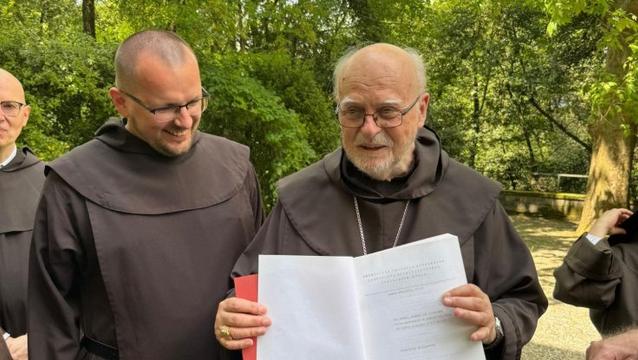
Featured image: Cardinal Anders Arborelius, o.c.d. is seen in this 2025 file photo, courtesy of the Discalced Carmelite General Curia (Used by permission).

⬦ Reflection Question ⬦
Where is Jesus inviting me to grow in loving dependence on Him, like Mary did?
⬦ Join the conversation in the comments.

#adoration #BrownScapular #CardinalAndersArborelius #CarmeliteSpirituality #church #redemption #StEdithStein #unionWithGod #VirginMary

CARMELITE SPIRITUALITY | EWTN Religious Catalogue

Shop for CARMELITE SPIRITUALITY at EWTNRC.com and support the ongoing mission of Mother Angelica. Religious books, artwork and holy reminders. Free shipping for online orders over $75.00. Or call 800-854-6317.

Quote of the day, 19 November: St. Raphael Kalinowski

We should praise and venerate the one who is the refuge of sinners here on earth and in heaven. We should love the Blessed Virgin, because she is the mother of us all: “Here is your mother.” She is a loving mother, because she not only carries us in her bosom, but with Jesus loves us as her children, and helps us in all our needs. She is a gracious and merciful mother for all sinners who draw near to her, a powerful mother because God gave his riches into her keeping. She wants to be loved as mother and says to us: “My son, give me your heart, a heart that is loving, grace filled, focused on my Son; this is what I expect from you first of all.” … Come, Mary, rule over us and direct us. As breathing is not only a sign of life, but also its cause, so the name of Mary should be constantly on the lips of the servants of God, it is a sign that the person is alive.

SAINT RAPHAEL KALINOWSKI

During the special congress of the Congregation for the Causes of Saints that met on March 18, 1980, to discuss Raphael Kalinowski’s heroic virtues, the first “relator” recalled in his vote the deep Marian devotion of the Servant of God, evoking his maxim, “Mary always and in everything.”

The Virgin Mary clearly played a very special role in the saint’s life and occupies a unique place in his spirituality. His Marian spirituality corresponds fully to the directives the Council offered us sixty years after the death of the saint. Contemporary Mariology, following the direction Vatican II marked out emphasized Mary’s greatness as mother of Christ and super-eminent member and mother of the Church. 

The theology of our times, therefore, treats the figure of the Blessed Virgin Mary in a Christological and ecclesiological context. Saint Raphael Kalinowski’s Mariology had such an orientation. His Marian spirituality does not stop with the figure of Mary, but through her leads to Christ, living and working in the Church, his Mystical Body. Let us briefly review the principal aspects of this spirituality:

  • His conversion took place after college on account of Mary, and led Joseph Kalinowski to Christ through the sacramental ministry of the Church; [“With her help, I have been able to build up my interior life. I recognized the value of familiar religious principles and, finally, I turned toward them.”]
  • His entrance into Carmel, the order of Mary, had as its goal to serve Christ more closely and to work for the unity of his Church; [“Precisely this Order should make the Eastern schismatics return to the breast of the Church of Rome.”]
  • The testimony of a religious life in imitation of Mary—“the Book where the eternal Word of God, Christ the Lord, is read to the world”—is confirmed and blessed by the Church;
  • Fidelity to the religious vocation of the Brothers [and Sisters] of the Blessed Virgin Mary does not consist of a sentimental love for her, but in “attending to her affairs,” [“We are her work and she does not cease calling us to be her ministers, to take care of her affairs.”] seeing in her the secure guide to Christ, in other words:
    • Accepting and accomplishing—like her—the will of God, contemplating and preaching his Word made flesh in Christ Jesus, author of our salvation, of which the Christ is now the sacrament;
    • Spiritually directing the souls of his brothers and sisters, pointing out to them the road ad Jesum per Mariam [to Jesus through Mary] or, better yet, ad Jesum cum Maria [to Jesus with Mary], taking as a base the common faith of the Church in her role as mediatrix of grace until all of the “old man” is stripped off and they put on the armor of the “new man”;
    • Propagating the scapular devotion—a sign of salvation and the Mother’s gift—a sacramental of the Church that helps sanctify every moment of life and attain the salvation accomplished by Christ.

    In the final analysis, Mary always and in everything, but inasmuch as she guides us to Christ and brings us to communion with him in his Church, “to make us living stones of this Church, willing servants of our brothers and sisters on this earth and, after death, participants in God’s glory forever.”

    Szczepan T. Praskiewicz, O.C.D.

    St. Raphael Kalinowski: An Introduction to His Life and Spirituality
    II. Elements of his spirituality (excerpt)

    Praskiewicz OCD, S 2016, Saint Raphael Kalinowski: An Introduction to his Life and Spirituality, ICS Publications, Washington DC.

    Tierney, T  2016,  Saint Raphael Kalinowski: Apprenticed to Sainthood in SiberiaBalboa Press,  Bloomington, IN

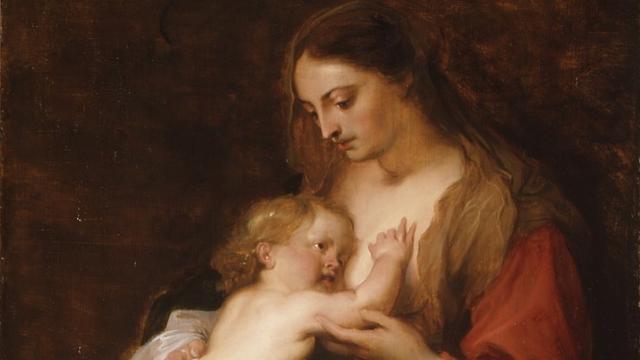
    Featured image: Virgin and Child is an oil on wood painting by Anthony Van Dyck (Flemish, 1599–1641) executed around 1620. It comes from the collections of the Metropolitan Museum of Art, New York (Public domain).

    #BlessedVirginMary #BrownScapular #Christ #conversion #MotherOfTheChurch #StRaphaelKalinowski #VirginMary

    Saint Raphael Kalinowski

    “If you see my mother, or if you go to the judge, or if you meet a priest, tell them that I am dying because I am a Christian.”

    Blessed Isidore Bakanja

    The 1994 beatification of Isidore Bakanja, a young African who died in 1909 after a brutal beating by a Belgian overseer in what was then the Belgian Congo and is now Zaire, offers a look at the twists and turns the Catholic Church faces when it elevates men and women to the status of the blessed.

    Here is a discussion of the case by Redemptus Maria Valabek, O.Carm., postulator of the cause of Mr. Bakanja, published in 1984 in the Carmelite periodical “Carmel in the World,” and translated by The New York Times….

    In the Report of the Particular Congress of Theologians assigned to study the cause of martyrdom of Isidore Bakanja, prepared on Dec. 4, 1992, the congress, headed by the General Promoter of the Faith, Very Rev. Antonio Petti, agreed that the cause of Isidore Bakanja was clearly proved to be a case of martyrdom for the faith even though a number of eventual difficulties to the cause were noted.

    While the testimonies gathered seemed to prove unequivocally that Bakanja had been beaten because he was a Christian, a fact confirmed by Bakanja himself, a few of the theological consultors expressed some doubts. The acts of the Position on the Martyrdom state:

    Nevertheless, there would seem to be missing in the servant of God, in the act of torture, the note of heroic strength that is usually found in the victims of vexation for the faith. Under the blows, in fact, poor Isidore “whimpered and screamed” and his cries were so loud that they awoke Van Cauter‘s concubines who were sleeping in a den some distance from the site where the whipping took place . . . .

    According to the testimonies, the medications and cures given to the servant of God in Isongu and Busira did not relieve him in any way: the wounds became gangrenous ulcers, and grew ever wider until his bones were uncovered. . . . On this point, in any case, there arise some doubts: if death was effectively provoked by the gangrene of the wounds.

    The servant of God was beaten on Feb. 2, 1909, and died on Aug. 15, 1909, that is, six months later, which is a considerable length of time. And here arises — or could arise — the suspicion that perhaps a factor other than the wounds could have provoked his death, perhaps an internal disease. . . .

    A few of the doubts, briefly mentioned, regarding the causal link between the wounds and the sores brought upon the servant of God during the cruel whipping inflicted upon him, and the death which followed six months after, do not seem to constitute a peremptory obstacle to beginning the cause “per viam martyrii” (by way of martyrdom) . . . Moreover, two of the theological consultors had reservations of a political nature.

    One of the consultors notes:

    “Given the current political situation in the ex-Belgian colony, we should ask ourselves what the reaction could be to the eventual elevation of Bakanja as a martyr (given that martyrdom will be proven) to the honors of the altar: that is, if this could suscitate a reawakening of the Zairian hatred against the old Belgian colonial masters (and, more generically, toward Europeans). . . .”

    Yet notwithstanding these reservations, the nine theological consultors unanimously voted affirmatively and Isidore Bakanja was beatified in due course.

    Elisabetta Povoledo

    Word for Word: Martyrology; Brutalized in Colonial Africa, 1909; Beatified in Rome, 1994 (excerpts)
    Sunday, January 29, 1995, page 136

    Featured image: Blessed Isidore Bakanja, image from his beatification banner. Image credit: Carmelite Order

    https://carmelitequotes.blog/2024/08/11/nyt-bakanja/

    #Africa #beatification #BlessedIsidoreBakanja #BrownScapular #challenges #DemocraticRepublicOfTheCongo #faithfulness #forgiveness #martyr #Vatican

    Quote of the day, 12 August: St. John Paul II

    As we remember Blessed Isidore Bakanja on his feast day, this “martyr of the Scapular” calls us to follow his example of fidelity to the Blessed Virgin. We share excerpts from the homil…

    Carmelite Quotes

    SEQUENCE HYMN

    Armatura
    fortis pugnantium
    furunt bella
    tende praesidium
    scapularis.

    Be our armor,
    valiant for Christ when war
    rages ’round us,
    hold high the scapular,
    strong and saving.

    SCRIPTURE

    As God’s chosen ones, holy and beloved, clothe yourselves with compassion, kindness, humility, meekness, and patience. Bear with one another and, if anyone has a complaint against another, forgive each other; just as the Lord has forgiven you, so you also must forgive. Above all, clothe yourselves with love, which binds everything together in perfect harmony. And let the peace of Christ rule in your hearts, to which indeed you were called in the one body. And be thankful. Let the word of Christ dwell in you richly; teach and admonish one another in all wisdom; and with gratitude in your hearts sing psalms, hymns, and spiritual songs to God. And whatever you do, in word or deed, do everything in the name of the Lord Jesus, giving thanks to God the Father through him.

    Colossians 3:12–17

    READING

    The book called The Way of Perfection written by Teresa of Jesus, a nun of the Order of our Lady of Mount Carmel. This book is intended for the discalced nuns who observe the primitive rule of our Lady of Mount Carmel.

    JHS

    This book deals with the advice and counsel Teresa of Jesus gives to her religious Sisters and daughters who live in the monasteries that, with the help of our Lord and the glorious Virgin Mother of God, our Lady, she founded. These monasteries follow the primitive rule of our Lady of Mount Carmel. She directs her counsel particularly to the Sisters at St. Joseph’s monastery in Avila, which was the first foundation and the place where she was prioress when she wrote this book.

    In all that I say in this book I submit to what our Mother the Holy Roman Church holds. If there should be anything contrary to that, it will be due to my not understanding the matter. And so I beg the learned men who will see this work to look it over carefully and to correct any mistake there may be as to what the Church holds, as well as any other mistakes in other matters. If there should be anything good in this work, may it be for the honor and glory of God and the service of His most Blessed Mother, our Lady and Patroness, whose habit I wear despite my being very unworthy to do so.

    Saint Teresa of Avila

    Way of Perfection: Foreword

    PRAYER

    O Most beautiful Flower of Mount Carmel,
    Fruitful Vine, Splendor of heaven,
    Blessed Mother of the Son of God,
    Immaculate Virgin, assist me in this my necessity.
    O Star of the Sea, help me and show me herein
    that you are my Mother.

    O Holy Mary, Mother of God, Queen of heaven and earth,
    I humbly beseech you from the bottom of my heart
    to succor me in this necessity.
    There are none that can withstand your power!
    O help me and show me herein that you are my Mother.

    (Here mention your requests)

    Our Lady, Queen & Beauty of Carmel,
    pray for me and obtain my requests!
    Sweet Mother, I place this cause
    in your hands!

    Our Father…

    Hail Mary…

    Glory be…

    Queen, Beauty of Carmel, pray for us.

    Catholic Church 1993, Proper of the Liturgy of the Hours of the Order of the Brothers of the Blessed Virgin Mary of Mount Carmel and the Order of Discalced Carmelites (Rev. and augm.), Institutum Carmelitanum, Rome.

    Teresa of Avila, St. 1985, The Collected Works of St. Teresa of Avila, translated from the Spanish by Kavanaugh, K; Rodriguez, O, ICS Publications, Washington DC.

    All scripture references are from the New Revised Standard Version Bible: Catholic Edition, copyright © 1989, 1993 the Division of Christian Education of the National Council of the Churches of Christ in the United States of America as accessed from the Bible Gateway website.

    Don’t become discouraged and give up prayer, says St. John of the Cross. We offer varying novenas to Our Lady of Mount Carmel, as well as novenas to St. Joseph, St. Teresa of Avila, St. John of the Cross, St. Thérèse of Lisieux, Sts. Louis and Zélie Martin, St. Elizabeth of the Trinity, and St. Edith Stein.

    Let us unite in prayer

    https://carmelitequotes.blog/2024/07/07/olmcnovena24-2/

    #AvilaSpain #BrownScapular #CarmelOfStJoseph #CarmeliteHabit #FlosCarmeli #humility #intercession #novena #OurLadyOfMountCarmel #prayer #service #StTeresaOfAvila

    Bible Gateway passage: Colossians 3 - New Revised Standard Version Catholic Edition

    The New Life in Christ - So if you have been raised with Christ, seek the things that are above, where Christ is, seated at the right hand of God. Set your minds on things that are above, not on things that are on earth, for you have died, and your life is hidden with Christ in God. When Christ who is your life is revealed, then you also will be revealed with him in glory. Put to death, therefore, whatever in you is earthly: fornication, impurity, passion, evil desire, and greed (which is idolatry).

    Bible Gateway