Quote of the day, 3 March: Pope John XXII

It behooveth thee to grant a favor and confirmation to my holy and devout Order of Carmel

For centuries the faithful who held a pious devotion to the Brown Scapular of Our Lady of Mount Carmel believed in an apparition of the Blessed Virgin to Pope John XXII in Avignon. Based on that supposed apparition, the sovereign pontiff issued a Papal Bull, Sacratissimo uti culmine, dated 3 March 1322 from Avignon; it is in the text of the Bull that the pope mentions the apparition. The historical difficulty with this document lies in the fact that the Bull is mentioned nowhere prior to 1752, according to Joseph Hilgers.

Modern-day spiritual descendants of St. Simon Stock also have written and published volumes concerning the Brown Scapular as a sacramental. Former Carmelite Prior General Joseph Chalmers wrote, “In any case, the symbolism of the scapular as a sign of consecration to Mary, the Mother of Carmel, was and remains very important.”

Citing the Carmelite friar, Mathias of St. John, Father Chalmers added one important qualifier: “It would be far better to have holiness under a worldly habit than a worldly heart under a holy habit.” Fr. Chalmers concluded, “wearing the scapular is intended to be an outward reminder of what should be going on within” (Cf. Chalmers J 2009, Mary the Contemplative, Edizione Carmelitani, Rome).

Discalced Carmelite scholar Father Kieran Kavanaugh, O.C.D. discusses the historical problems head-on in his article, Brown Scapular: a Silent Devotion. He reviews the scapular as the habit of the Carmelites from their humble beginnings in the Holy Land to their spread throughout western Europe. In particular, Father Kieran describes the painstaking research undertaken by the Discalced Carmelites in defense of Carmelite Marian devotion following the Second Vatican Council, and how their careful documentation led to the restoration of the feast day of Saint Simon Stock to the Church’s liturgical calendar in 1979, in part thanks to the exhaustive research of Father Nilo Geagea, O.C.D.

But more important, Father Kieran explains with great precision where the Church stands today in regard to the Brown Scapular devotion:

“No mention is made of the vision of St. Simon Stock or of that of Pope John XXII in relation to the Sabbatine privilege, which promises that one will be released from Purgatory on the first Saturday after death.”

Nonetheless, the Carmelites have also been authorized to freely preach to the faithful that they can piously believe in the powerful intercession, merits, and suffrages of the Blessed Virgin, that she will help them even after their death, especially on Saturday, which is the day of the week particularly dedicated to Mary, if they have died in the grace of God and devoutly worn the scapular. But no mention is made of the “first” Saturday after their death.

One particular reflection that this great Discalced Carmelite scholar offers is rather consoling:

“If some day an historian were to prove beyond any reasonable doubt that there are no grounds to the Marian apparition to St. Simon Stock or the scapular promise, the scapular devotion would still maintain its value. The Church’s esteem of it as a sacramental, her appreciation of its meaning and of the good that has come about through its pious use on the part of the faithful is all that is needed.”

Perhaps Saint John Paul II summarized the Church’s teaching and the Carmelite scapular catechesis best in his 2001 Message to the Carmelite Family. The saint wrote, “the scapular is essentially a habit.”

For our readers who are history buffs, we have researched the Bull Sacratissimo uti culmine and found the text in Satolli’s Dictionnaire de Droit Canonique. An English translation is available from blogger Brother Hermenegild.

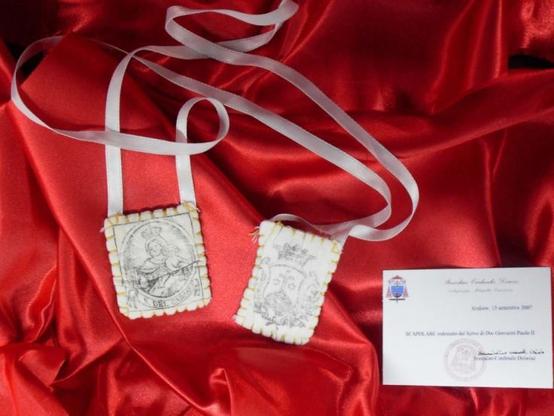
Brown Scapular worn by Saint John Paul II, a gift to the Discalced Carmelite parish in Wadowice, Poland | Photo credit: Discalced Carmelite Order (by permission)

“The professed brethren of the said Order shall be loosed from guilt and punishment; and when they depart this world, they shall swiftly enter purgatory. I, the Mother, will graciously descend on the Saturday after their death; all whom I find there I shall release and lead to the holy mountain of eternal life.”

SACRATISSIMO UTI CULMINE

JOANNES EPISCOPUS SERVUS SERVORUM DEI,
Universis et singulis Christifidelibus, tam praesentibus quam futuris, praesentes literas inspecturis, salutem et apostolicam benedictionem.

Sacratissimo uti culmine Paradisi angelorum tam suavis et dulcis reperitur melodia, modulamine visionis, dum paterno Jesus Numini circumspicitur adumatus, dicendo: Domine, Ego et Pater unum sumus, et qui videt me, videt et Patrem meum, et angelorum chorus non desinit dicere: Sanctus, Sanctus, Sanctus; ita Synodus non cessat laudes effundere celsæ Virgini, dicendo Virgo, Virgo, Virgo, sis speculum nostrum pariter et exemplum. Quoniam munere munitur gratiarum, sicut sancta cantat Ecclesia: Gratia plena et Mater misericordiae. Sic ille mons reputatur de Carmelo Ordine cantibus extollendo, et hanc gratiarum Genitricem commendando et dicendo: Salve Regina, Mater misericordiæ et spes nostra.

Sic mihi flexis genibus supplicanti Virgo visa fuit Carmelita, sequentem effata sermonem:

0 Joannes, o Joannes, vicarie mei dilecti Filii, veluti a tuo te eripiam adversario, te Papam facio solemni dono Vicarium, meis coadjuvantibus supplicationibus, a dulcissimo meo Filio petens, quod gratiose obtinui, ita gratiam et amplam meo sancto ac devoto Carmelitarum Ordini confirmationem debeas praeconcedere, per Eliam et Eliseum in Monte Carmeli inchoato. Quod unusquisque professionem faciens, Regulam a meo servo Alberto, patriarcha, ordinatam observabit et inviolatam obtinebit, et per meum dilectum filium Innocentium approbatam, ut veri mei Filii Vicarius debeas in terris assentire, quod in cœlis meus statuit et ordinavit Filius; quod qui in sancta perseverabit obedientia, paupertate et castitate, vel qui sanctum intrabit Ordinem, salvabitur; et si alii, devotionis causa, in sanctam ingrediantur Religionem, sancti Habitus signum ferentes, appellantes se Confratres et Consorores mei Ordinis prænominati, liberentur et absolvantur a tertia eorum peccatorum portione, a die quo præfatum Ordinem intrabunt, castitatem, si vidua est, promittendo; virginitatis, si est virgo, fidem præstando; si est conjugata, inviolati conservationem matrimonii adhibendo, ut sancta mater imperat Ecclesia.

Fratres proféssi dicti Ordinis supplicio solvantur et culpa, et die quo ab isto se culo recedunt, properato gradu accelerant purgatorium, ego Mater gratiose descendam sabbato post eorum obitum, et quot inveniam in purgatorio liberabo, et eos in Montem sanctum vitæ æternæ reducam.

Verum quod ipsi Confratres et Consorores te neantur Horas dicere Canonicales, ut opus fuerit, secundum Regulam datam ab Alberto; illi, qui ignari sunt, debeant vitam jejunam ducere diebus quos sacra jubet Ecclesia, nisi, necessitatis causa, alicui essent traditi impedimento; mercurio ac sabbato debeant se a carnibus abstinere, præterquam in mei Filii Nativitate. Et hoc dicto, evanuit ista sancta visio.

Istam ergo sanctam Indulgentiam accepto, roboro et in terris confirmo, sicut, propter merita Virginis Matris, gratiose Jesus-Christus concessit in coelis. Nulli ergo omnino hominum liceat hanc paginam nostræ Indulgentiæ, seu statuti, et ordinationis irritare, vel ei ausu temerario contraire. Si quis autem hoc attentare præsumpserit, indignationem Omnipotentis Dei, et Beatorum apostolorum Petri et Pauli se noverit incursurum.

Datum Avenione, tertia die Martii, Pontificatus nostri anno sexto

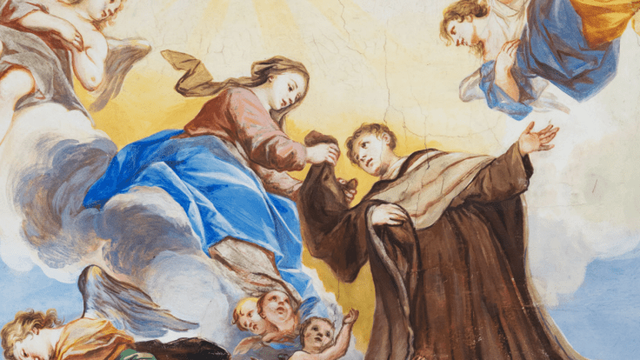
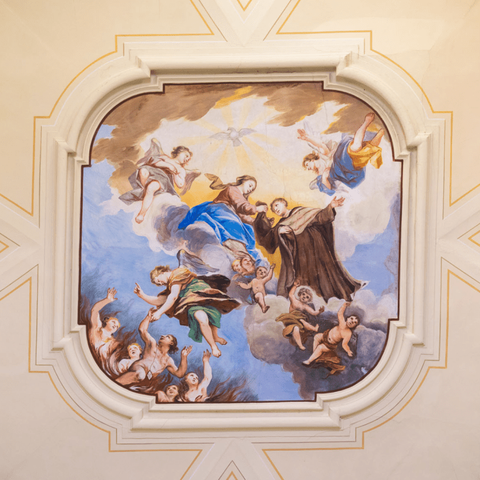
Saint Simon Stock receives the scapular of Our Lady of Mount Carmel, ceiling fresco, Church of Our Lady of Mount Carmel, Marostica, Italy.
Image credit: isaac74 / Adobe Stock

#Avignon #BrownScapular #FrKieranKavanaughOCD #MarianDevotion #OurLadyOfMountCarmel #PopeJohnXXII #SabbatinePrivilege #sacramental #SacratissimoUtiCulmine #StSimonStock

Quote of the day, 30 December: François de Sainte-Marie, OCD

If Christ and the Virgin unite souls closely to themselves, it is in order to continue their earthly mission until the end of time. Since they can no longer accomplish it by themselves, from on high they make use of Christians as “super-added humanity,” who complete in their own flesh what still remains to be fulfilled in the redemption of the world.

Jesus continues to be born, to grow, and to die in the course of history, according to the very rhythm of the liturgical year, which takes up and gives voice to all the aspirations, the sufferings, the joys, and all the love of his own. And the Virgin, beside her Son, continues her watch of love through the souls who are devoted to her.

While heaven and earth wear out like a garment, the attitudes she bears in her heart toward Christ do not grow old. They endure across the generations, retaining all their freshness. “May the soul of Mary be in each of us, to glorify the Lord within us; may the spirit of Mary be in each of us, to rejoice in God,” Saint Ambrose said long ago.

This presence of the Virgin within the soul has its demands. We come to resonate with her interior attitudes and to perceive her most delicate promptings only insofar as we have made ourselves wholly available to God and have let go of ourselves in the evangelical sense. For it is not a matter of adopting a role while clinging to our own self: we are called instead to be transformed in Christ by Love.

A true Marian devotion, therefore, has nothing sentimental or fictitious about it. It is terribly stripped down, as the Virgin herself was. It is not enough for us to speak; we must act. Above all, we must allow ourselves to be acted upon. The perfect abandonment by which the Virgin lived is what she asks of the souls she loves.

She often seems to say to us, as Christ said to Peter: “What I am doing you cannot understand now” (Jn 13:7). For she asks of us not so much understanding as a quiet assent. Perhaps even to impress upon us more deeply the truth that we are “unprofitable servants,” she may appear to draw us to herself and then leave us according to her will.

It is therefore through abandonment that we come to share in the deepest attitudes of our Mother, the “handmaid of the Lord,” who, by giving herself entirely to Love, received Love in its fullness and became among human beings its inexhaustible source.

François de Sainte-Marie, O.C.D.

Visage de la Vierge (Face of the Virgin)

Note: Father François de Sainte-Marie was a prolific French Discalced Carmelite author and editor of the mid-20th century. He is best known for his tireless efforts to publish the critical edition of the autobiographical manuscripts of Saint Thérèse of Lisieux in 1957, which we commonly refer to as Story of a Soul.

de Sainte-Marie, F 1948, Visage de la Vierge, translated from the French by Carmelite Quotes, Librairie du Carmel, Paris.

Translation from the French text is the blogger’s own work product and may not be reproduced without permission.

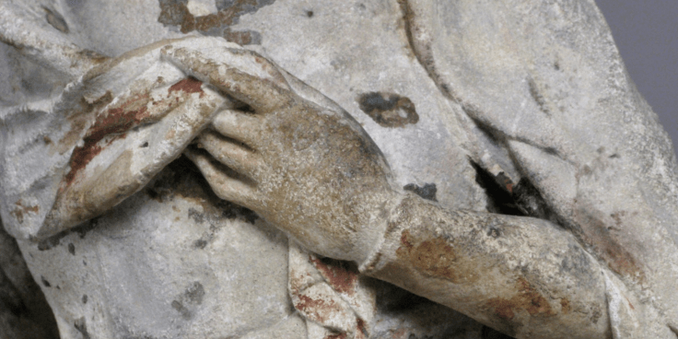
Featured image: Detail from the Virgin of the Annunciation, a sculpture carved from limestone in Paris ca. 1300-1310. Traces of paint can still be seen on the sculpture. The sculpture’s modest dimensions (16 11/16 × 11 5/8 × 7 3/8 in., 34 lb.) permit the delicate features of the sculpture to be clearly seen. Image credit: Metropolitan Museum of Art (Public domain).

#abandonment #FrançoisDeSainteMarie #incarnation #MarianDevotion #redemption #VirginMary

Discover the complete story of the appearance of the Virgin of Guadalupe in Mexico in the book "The Miracle of Guadalupe" by Francis Johnston. A passionate story of Marian devotion. #History #VirgenDeGuadalupe #MarianDevotion

https://unumatma.wordpress.com/2025/12/28/the-miracle-of-guadalupe-by-francis-johnston/

The Miracle of Guadalupe by Francis Johnston

Discover the complete story of the appearance of the Virgin of Guadalupe in Mexico in the book “The Miracle of Guadalupe” by Francis Johnston. A passionate story of Marian devotion. #Hi…

Atma Unum

Know that the Lord has set apart the godly for himself; the Lord hears when I call to him.

Psalm 4:3

These words of the Responsorial Psalm express the secret of the life of Blessed Nuno of St. Mary, a hero and saint of Portugal. The 70 years of his life belong to the second half of the 14th century and the first half of the 15th, which saw this nation consolidate its independence from Castille and expand beyond the ocean, not without a special plan of God opening new routes that were to favour the transit of Christ’s Gospel to the ends of the earth.

St. Nuno felt he was an instrument of this lofty design and enrolled in the militia Christi, that is, in the service of witness that every Christian is called to bear in the world. He was characterized by an intense life of prayer and absolute trust in divine help. Although he was an excellent soldier and a great leader, he never permitted these personal talents to prevail over the supreme action that comes from God.

St. Nuno allowed no obstacle to come in the way of God’s action in his life, imitating Our Lady, to whom he was deeply devoted and to whom he publicly attributed his victories. At the end of his life, he retired to the Carmelite convent whose building he had commissioned.

I am glad to point this exemplary figure out to the whole Church particularly because he exercised his life of faith and prayer in contexts apparently unfavourable to it, as proof that in any situation, even military or in war time, it is possible to act and to put into practice the values and principles of Christian life, especially if they are placed at the service of the common good and the glory of God.

Pope Benedict XVI

Homily, Holy Mass for the Canonization of Nuno de Santa María (excerpts)
St. Peter’s Square, 26 April 2009

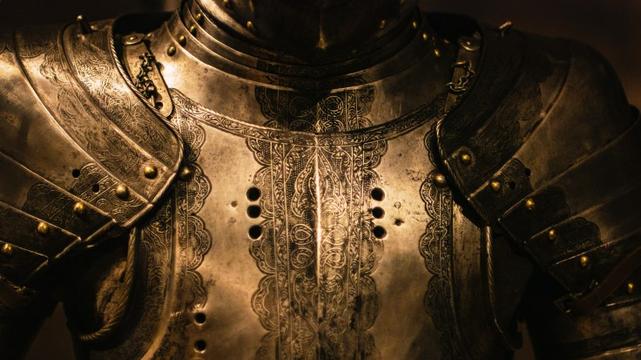
Featured image: Ukrainian photographer Nik Shuliahin captured this detailed image of a full coat of armor. Image credit: Nik Shuliahin / Unsplash (Stock photo)

https://carmelitequotes.blog/2024/11/05/b16-nunocanoniz/

#canonization #faith #homily #MarianDevotion #military #PopeBenedictXVI #Portugal #prayer #StNunoAlvaresPereira #StNunoOfStMary

Psalm 4:3 - Bible Gateway

Total Virgin

“She was a virgin even of herself.”
Père François de Sainte-Marie, O.C.D.

In a house of mirrors that coveted her image
she never walked
with her own beauty
nor made a feast of her goodness,
inviting friends from the far and wide.
She never sat down with her own innocence
to dialogue together,
nor called a stranger in
to sit at her hearth and be glorified.

She was a maiden promised to one lover
whom she was always seeking.
Though he hid in her heartbeat and settled himself
behind her breath,
he was distance, too. Journeys dwindled to places
beside her own, and miles melted beneath
her steps of wanting. She could by-pass all
meadows that trap us with their poisonous flower
and their soliciting pools
and winding lanes that skirt the only death.

She was out on a road alone, hastening onward,
gathering all as a gift, the small and great
fragments of mystery and reality.
Everything was for Him, even her own being.
Since love marks neither measurement or weight
she carried all, without touching or tasting.

Life which comes as a virgin to us all,
most safely came to her.
Time, when she passed, remained inviolate.

Sr. Miriam of the Holy Spirit, O.C.D. (Jessica Powers)

Total Virgin (1976; 1984)

Powers, J 1999, The Selected Poetry of Jessica Powers, ICS Publications, Washington DC.

Featured image: This detail of a manuscript leaf with the Assumption of the Virgin in an Initial V comes from an Italian antiphonary. The illumination by Niccolò di ser Sozzo (Italian, active ca. 1334, died 1363) was executed ca. 1340 in Siena; the materials are tempera, ink, and gold on parchment. This work comes from the Manuscripts and Illuminations Collection at the Metropolitan Museum of Art, New York. The museum notes the following: The Assumption of the Virgin, celebrated on August 15, is an especially important holiday in Siena. Niccolò di ser Sozzo, one of the city’s renowned fourteenth-century illuminators, painted it on numerous occasions. The Virgin Mary, in a diaphanous gown, rises effortlessly as choirs of angels guide her path. Image credit: Metropolitan Museum of Art (Public domain)

https://carmelitequotes.blog/2024/08/14/jessica-totalvirgin/

#AssumptionOfTheBlessedVirginMary #beauty #BlessedVirginMary #inspiration #JessicaPowers #journey #love #MarianDevotion #poetry #SrMiriamOfTheHolySpirit

The Selected Poetry of Jessica Powers