Today in Labor History March 28, 1979: Three Mile Island (TMI) nuclear power plant, in Pennsylvania, had a level-5 partial meltdown, the worst nuclear power accident in U.S. history, and one of the worst in the world, prior to Chernobyl. TMI operators had not been adequately trained to handle the type of malfunction that led to the meltdown and, consequently, a delay in mitigation efforts. Clean-up began in 1993, at a cost of $2 billion in today’s dollars. Officials concluded that the release of radioactive material from the plant did not raise exposure levels of nearby residents to a level that would increase cancer cases by even one additional case. However, anti-nuclear groups hired their own independent investigators who found that radiation levels in the area were significantly elevated. A peer-reviewed study by Dr. Steven Wing found a significant increase in cancers from 1979-1985 among people living within ten miles of TMI. And in 2009, Dr. Wing said that the amount of radiation released during the accident was likely "thousands of times greater" than the NRC's estimates.

In 2024, Bill Gates obtained exclusive rights to the “carbon-free” energy from TMI, once it reopens, to power his Artificial Intelligence farms, starting in 2028. Other Tech Barons are also looking to exploit nuclear power for their energy-hungry AI farms. Data centers currently account for about 1 to 1.5 percent of global electricity use. NVIDIA will be shipping out over 1.5 million AI server units per year by 2027. These servers, alone, would consume at over 85.4 terawatt-hours of electricity annually, more than many small countries use in a year. Yet, the U.S. still has no permanent radioactive waste storage facilities. As of 2023, the U.S. had roughly 88,000 metric tons of spent nuclear fuel from commercial reactors, and all of this is stranded at the reactor sites. Experts expect this number to grow by 2,000 metric tons each year.

https://www.cnn.com/2024/09/20/energy/three-mile-island-microsoft-ai/index.html

https://www.scientificamerican.com/article/the-ai-boom-could-use-a-shocking-amount-of-electricity/

https://www.scientificamerican.com/article/nuclear-waste-is-piling-up-does-the-u-s-have-a-plan/

#workingclass #LaborHistory #radioactive #nuclear #threemileisland #nuclearaccident #radiation #nuclearwaste #artificialintelligence #ai #billgates #chernobyl #cancere #publichealth

Today in Labor History March 28, 1977: AFSCME Local 1644 struck in Atlanta, Georgia, for a pay raise. This local of mostly African American sanitation workers saw labor and civil rights as part of the same struggle. They saw their fight as a continuation of the 1968 Memphis sanitation strike. For several years, they organized to get black civil rights leaders elected to public office. They succeeded in getting their man, Maynard Jackson, elected mayor of Atlanta. After all, as vice mayor, Jackson had supported their 1970 strike. Yet, in his first three years as mayor, he refused to give them a single raise. Consequently, their wages dropped below the poverty line for a family of four. Jackson accused AFSCME of attacking Black Power by challenging his authority. He fired over 900 workers by April 1 and crushed the strike by the end of April. Many believe this set the precedent for Reagan’s mass firing of 11,000 air traffic controllers during the PATCO strike, in 1981.

#workingclass #LaborHistory #union #AFSCME #PATCO #strike #atlanta #CivilRights #sanitation #blackpower #wages #poverty #reagan

Today in Labor History: March 28, 1968: Martin Luther King led a march of striking sanitation workers in Memphis, Tennessee. Police attacked the workers with mace and sticks. A 16-year old boy was shot. 280 workers were arrested. He was assassinated a few days later after speaking to the striking workers. The sanitation workers were mostly black. They worked for starvation wages under plantation like conditions, generally under racist white bosses. Workers could be fired for being one minute late or for talking back, and they got no breaks. Organizing escalated in the early 1960s and reached its peak in February, 1968, when two workers were crushed to death in the back of a garbage truck.

#workingclass #LaborHistory #memphis #union #strike #racism #MartinLutherKing #assassination #PoliceBrutality #WorkplaceDeaths #police #tennessee #wages

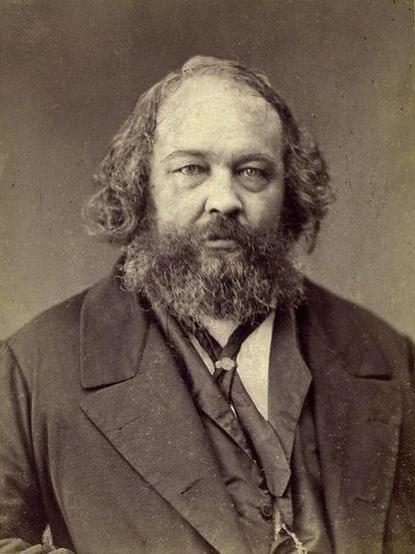
Today in Labor History March 28, 1892: French anarchist, Ravachol, was arrested for blowing up the homes of two government officials. His attentat was in response to the police murders of 9 workers, who had been demonstrating for the eight-hour-day, on May 1, 1891, and for the Clichy Affair, that same day, when anarchists were arrested and tortured by police.

#workingclass #LaborHistory #anarchism #attentat #bombing #PoliceBrutality #EightHourDay #acab #prison #france #police #torture

Yesterday, we hosted Walter Schulz, who presented his book about Hari Hünerbein, his grand-grandmothers older brother, who left Eupen, with parts of her savings, lived in Cologne and only came back once to give the money plus jnterests back to his sister. Her family survived WW1 with that money. The book put the flashlight on those, who usually are just forgotten. Thanks to Brenda Guesnet for organising this event!!! #walterschulz #harihünerbein #ikob #martinschulz #workingclass #history

History of Farm Worker Organizing in the U.S. Part II: The IWW

Farmworker organizing has a long and radical history that precedes both Cesar Chavez and the United Farm Workers (UFW). In 1903, the Japanese-Mexican Labor Association (JMLA) tried to organize in the sugar beet fields of Oxnard, California. It was the first agricultural union in California to unite workers across different ethnic groups. However, Samual Gompers, leader of the American Federation of Labor (AFL), demanded the exclusion of the Japanese workers in order to get AFL affiliation. Mexican workers refused to break ranks and maintained solidarity with their Japanese comrades. The JMLA, which won many of their demands, did not last long after this strike.

In contrast to the AFL, the Industrial Workers of the World (IWW) has organized all workers, regardless of ethnicity, race, gender, immigration status, or skill level since 1905. Like other unions, they seek to improve living and working conditions in the here and now. But unlike the AFL, or the UFW, they also fight to overthrow the wage system, abolish bosses, and create a classless society free of capitalist exploitation. The bosses hated and feared them, routinely using vigilantes, cops, Pinkertons, and National Guards to suppress their organizing efforts and strikes.

Fresno Free Speech Fight (1910)

One of the IWW’s first major agricultural battles was the Fresno Free Speech Fight (1910-1911). It was the first Free Speech fight in California and it began as an attempt to organize agricultural workers. But when the city started arresting organizers for public speaking, Wobblies (IWW members) came from across the country to join the fight and fill the city’s jails. They were so successful that the sheriff eventually got fed up and refused to accept any more prisoners. By March 1911, the city backed down and allowed the IWW to agitate freely on its streets.

Frank Little helped lead the Fresno Free-Speech fight. He was a Cherokee miner and a gifted IWW union organizer who helped pioneer many of the passive resistance techniques used decades later by the Civil Rights movement and by the UFW. Throughout his short life, Little organized oil workers, timber workers, miners, and migrant farm workers in California. He was also an anti-war activist, calling U.S. soldiers “Uncle Sam’s scabs in uniforms.” In 1917, vigilantes lynched him in Butte, Montana.

During the Fresno Free Speech fight, Little served nearly a month in jail, with half of it in solitary confinement for refusing to work in the yard with other prisoners. He said he preferred the dark cell to forced labor, and that doing unpaid prison work was tantamount to being a scab. (From the “Industrial Worker” October 8, 1910). As many as 80 Wobblies were jailed with him, many also refusing to work. They sang union songs to keep up morale, prompting the Sheriff to get the fire department to flood their cells with water. They even made a sign that said “No duck shooting on this lake.”

Organizing the California Hop Fields (1913)

In 1913, the IWW organized 2,000 migrant hop pickers at Durst Ranch, in Wheatland, California, the state’s largest agricultural employer. Conditions were deplorable. Workers had to pay 75 cents per week to sleep outside in tents, where temperatures often reached triple digits. Toilets overflowed with human excrement and were covered with flies. And the closest drinking water was a mile away. Workers earned less than $1.50 per 12-hour day, half of what those on neighboring farms earned. Durst also held 10% of each worker’s wages until the end of harvest, to discourage them from quitting early.

Not surprisingly, discontent erupted once the actual terms of their employment and living conditions became clear. In August 1, workers created an IWW local at Durst Ranch. They chose Richard "Blackie" Ford to be their spokesman. They demanded an immediate raise; the right to clean and weight their own hops (so the bosses could no longer rip them off by under weighing them); drinking water to be provided in the fields; sanitary toilet facilities; and other reforms.

Durst responded by firing Ford and the other Wobblies on the strike committee. Ford and the others refused to leave the property. Instead, they called a mass meeting, with speakers talking to the crowd in their native German, Greek, Italian, Arabic, and Spanish. The overwhelming majority voted to strike.

The Wheatland Hop Riot

Durst organized a posse of vigilantes that included Yuba County District Attorney Edward Manwell, Marysville Sheriff George Voss, and several deputy sheriffs. They tried to arrest Ford, but the workers intervened. A cop fired a shotgun into the air to disperse the crowd. The crowd responded by attacking Manwell and Deputy Lee Anderson. The cops began shooting wildly into the crowd. Manwell, Deputy Sheriff Eugene Reardon, a Puerto Rican hop picker, and an English hop picker died, quite possibly all from police fire, as the workers were unarmed.

Governor Johnson sent the National Guard, who supported the police as they arrested 100 migrant workers. They attempted to force prisoners to testify against the strike leaders by starving and tortured them. One prisoner hanged himself. Ultimately, they issued arrest warrants for Blackie Ford and another Wobbly, Herman Suhr, on murder charges.

The trial was totally rigged, with a judge who was a close friend of one of the victims. And eight of the twelve jurors were farm owners who were biased against the IWW. The defense tried to get the trial moved to a different county that was less hostile to the defendants, but their request was denied. No witnesses saw either Suhr or Ford with a gun. And defense witnesses said that the shots which killed the cops had been fired by the dead Puerto Rican picker, who had seized Deputy Reardon's gun during the scuffle. Nevertheless, the jury convicted Ford and Suhr of second-degree murder. They both got life sentences. Two other Wobblies were acquitted.

In spite of the repression, the stature of the IWW grew among farm workers. By the end of 1914, there were 5,000 Wobblies in California, with forty locals throughout the state. Blackie Ford was paroled in 1924, but rearrested and charged him with Riordon’s murder. This time the jury acquitted him. Soon after, the governor pardoned Herman Suhr.

Agricultural Workers Organization

In 1915, the IWW created the Agricultural Workers Organization (AWO) in Kansas City, Missouri. Their demands included: adequate food and housing for farm workers; a 10-hour workday; a $4.00 minimum wage; and free transportation to long-distance jobsites. By utilizing a system of roving “field” delegates, organizers signed up thousands of new members within their first two years. The roving delegates would board freight trains and demand that hobos prove IWW membership by showing their Red Cards. Anyone who couldn’t produce a Red Card was given the choice of signing up on the spot or being kicked off the train. The delegates also served as organizers and presented grievances to the ranch foremen and owners. And they had the authority to call a strike against farmers who did not resolve their grievances. Between 1915 and 1917, the IWW/AWO organized over 100,000 migratory farm workers throughout the Midwest and western United States.


Organizing in the Yakima Valley

The IWW was already active in the Pacific Northwest, primarily in timber and mining. However, by the summer of 1910, they were organizing migrant farm workers in Eastern Washington. In July 1910, the police arrested IWW members John W. Foss and Joseph Gordon for speaking on a street corner in downtown Yakima, even though they had a permit to do so. While in jail, they were fed a diet of bread and water and forced to carry a ball and chain. In 1915, they created a Yakima branch of the AWO. But the mass arrests and vigilante violence against them continued. On July 9, 1917, federal troops raided their Yakima Union Hall, arresting 24 Wobblies for their opposition to World War I.

The Battle at Congdon Orchards

The IWW continued to be active for decades in the Yakima Valley, but accomplished little in the 1920s. However, things heated up again in the1930, when hop pickers began fighting for an eight-hour work day, an end to child labor, and a minimum wage of 35 cents per hour, for women and men, alike. At the time, most growers were paying only 10 cents per hour for men, and 8 cents for women. In August, 1933, they went on strike in Saleh and at Congdon Orchard. The owners organized vigilantes, who attacked the picketers with clubs and other weapons. And the police jailed 61 Wobblies. The next day, the National Guard destroyed the hobo camps where they were living and built a stockade of wood and barbed wire for their prisoners. They also mounted 30 caliber machine guns at major intersections. Whenever prisoners were released from the stockade, vigilantes would kidnap them, beat them, and tar and feather them. The violence and legal repression ultimately broke the strike.

Conclusion

The IWW had a major influence on farm labor organizing in the 20th century by demonstrating that it was possible to effectively organize unskilled, immigrant laborers that the mainstream unions, like the AFL, considered unorganizable. Though they weren’t the first to organize across multi-ethnic, multi-national, and multi-linguistic groups, they were one of the largest and most effective at it. And they pioneered many tactics that would be used by future farm labor organizers, including Cesar Chavez and the UFW, like signing up workers in the fields and on trains, and using tactics like direct action and civil disobedience to pressure employers.

#workingclass #LaborHistory #IWW #strike #union #farm #immigration #ufw #cesarchavez #freespeech #censorship #police #prison #directaction #civildisobedience

#RawStory 12:49pm EDT Mar27, 2026

'Abandoning Donald': #CNN data guru reveals Trump's lost crucial voting bloc

#HarryEnten described during a live broadcast on Friday how #polling shows #WorkingClass voters — classified as people who make $50,000-a-year or less — were a major #SwingVote bloc that helped elect #Trump in 2024. But now, they've been left disappointed

#VoteBlue

https://www.rawstory.com/we-are-turning-against-him-cnn-data-guru-shows-major-dump-trump-from-working-class/

'Abandoning Donald': CNN data guru reveals Trump's lost crucial voting bloc

CNN data expert Harry Enten revealed how working class Americans have turned on President Donald Trump. Enten described during a live broadcast on Friday how polling shows working class voters — classified as people who make $50,000-a-year or less — were a major swing vote bloc that helped elect Tru...

Raw Story
𝘙𝘦𝘴𝘦𝘢𝘳𝘤𝘩 by 𝗣𝘂𝗯𝗹𝗶𝗰 𝗙𝗶𝗿𝘀𝘁 found #WorkingClass voters who have 𝘵𝘳𝘢𝘥𝘪𝘵𝘪𝘰𝘯𝘢𝘭𝘭𝘺 supported 𝘓𝘢𝘣𝘰𝘶𝘳, and more recently the 𝘛𝘰𝘳𝘪𝘦𝘴, are switching to 𝗥𝗲𝗳𝗼𝗿𝗺 𝗨𝗞!
#LocalElections2026 #NigelFarage

I actually like #EmmaVigeland but I will say I'm tired of the rah-rah for #GaryPlatner (#Maine candidate) who is suspicious at best (misogynist tweets abt rape survivors, claims to be a military history buff but claims he didn't know that the VERY distinctive #TotenkopfTattoo ...in which you have to know what that particular image means in order to ink that on someone's chest ...was a Third Reich symbol. He claims to be a #workingclass fishmonger yet he's not wrkngclss , claims he was againt the invasion of Iraq or whatever but enlisted 3 X or whtvr...

Why couldn't #Maine progressives find a better candidate, and why are ppl just glossing over what's right in front of them abt this guy

Today In Labor History March 27, 1918: The Cheka (Soviet secret police) tried to arrest the clown duo Bim-Bom for satirizing the Communist regime. The audience initially thought it was part of the act until they heard live shots being fired at the clowns as they fled. The clowns were later questioned, but released. And afterward, refrained from satirizing the government. They had been active since 1891 and continued up until World War II. They used unusual objects as musical instruments, like frying pans, brooms, saws. Prior to the Communist Revolution, they routinely satirized the Czar. For this, they were often censored or banned from events. They also performed throughout Europe, in Berlin, Budapest, Paris and Prague. In one of their satires of the Bolsheviks, Bim brought out framed portraits of Trotsky and Lenin. Bom asked what he was going to do with them. He replied, “I’ll hang one, and put the other against the wall.”

#workingclass #LaborHistory #communist #soviet #russia #cheka #censorship #freespeech #clowns #satire