 bot
botChef, AWS, Vagrant를 활용한 운영·스테이징·개발 환경의 동일성 확보
AWS EBS 스냅샷을 활용해 운영 환경의 데이터를 그대로 복제한 스테이징 환경을 구축하고, 이를 부하 테스트와 변경 사항 검증에 활용한다.
Chef, AWS, Vagrant를 활용한 운영·스테이징·개발 환경의 동일성 확보
AWS EBS 스냅샷을 활용해 운영 환경의 데이터를 그대로 복제한 스테이징 환경을 구축하고, 이를 부하 테스트와 변경 사항 검증에 활용한다.
So I spawned my first Forgejo runners on Codeberg with Ansible. I guess the migration can now slowly begin. Finally I can hopefully create custom VM image templates within a CI.
I'd like to see a replacement of Vagrant written with rust with custom hosted vm image registries supporting federation. But until then I can probably use Codebergs artifactory store to host the images.
#forgejo #codeberg #ci #runner #ansible #vagrant #federation #decentralization
Si feu servir màquines virtuals amb libvirt/qemu/kvm i vagrant, podeu canviar el comportament de vagrant suspend per a que guardi l'estat de la màquina en comptes de pausar l'execució:
libvirt.suspend_mode = "managedsave"
Abans de canviar-ho assegureu-vos de que la màquina estigui apagada.
Podeu fer el mateix amb el programa virt-manager (clic dret a la màquina > Shut Down > Save) o des de la consola amb virsh:
virsh managedsave "id"

I think it is really sad that with the license change vagrant has dropped in everybody's perception. There are many projects no longer caring about vagrant (due to the reduced number of users) and no longer building or publishing vagrant boxes. Alpine is stuck at 3.19, Debian13 download is broken for months, Fedora is stuck at 39. (I never could get the openSUSE publisher working, so I take the blame for that).
I still like the vagrant workflow, having a easy way to create shareable environments. I really like it in combination with Ansible to easily have demo setups or playgrounds.
This far I did not find a replacement. Alternatives are either not as universally usable or are lacking features like the Ansible integration. I'll keep on looking...
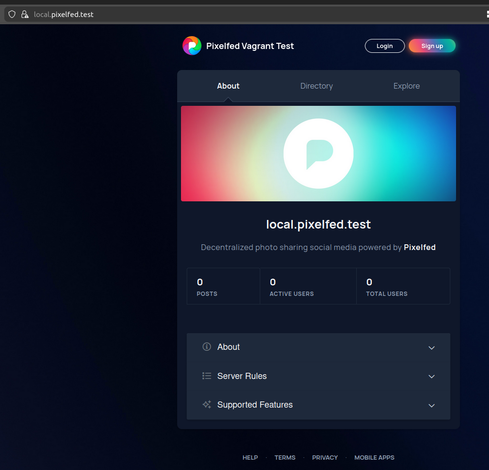
Baaaaaaaaaaaaaaaaaaaaaaaam
Pixelfed running finally locally with Vagrant.
#pixelfed #vagrant #pixelfedlocally #pixelfeddev #pixelfedadmin
@jpmens I use it almost on a daily basis. Mostly for small demo setups showcasing a new piece of software I found or for playing around with things.
All of my setups are vagrant + libvirt + Ansible.
Most are with k3s, some with Podman Quadlets, some run things natively on the VMs...
I have not yet found a good replacement.
Forwarding port 80 or 22 from #Vagrant virtual machines to their host system is fairly simple. Piping non-privileged ports outside the VM–from, say, a development HTTP server–requires not much extra work. Yet, it’s not always obvious how to do this. In this post, I explain how a #Jekyll development HTTP server running within a Vagrant VM can allow connections from its host and why the configuration works.
https://peateasea.de/forwarding-a-jekyll-dev-server-from-vagrant-vm-to-its-host/

Forwarding port 80 or 22 from Vagrant virtual machines to their host system is fairly simple. Piping non-privileged ports outside the VM–from, say, a development HTTP server–requires not much extra work. Yet, it’s not always obvious how to do this. In this post, I explain how a Jekyll development HTTP server running within a Vagrant VM can allow connections from its host and why the configuration works.

 chronicc
 FightYourFear
 𝚂𝚞𝚌𝚌𝚞𝙱𝚘𝚝 🤖🔞 OWNED BY: SUCCUCAT
 Johannes Kastl
 Jörgi (chaos.social)
 Paul Cochrane 🇪🇺
 Charlie O’Hara
 Markus Feilner