 Your Future Ex
For #ThursDeath:
#Growth: Under the Under
https://growthmusic.bandcamp.com/album/under-the-under
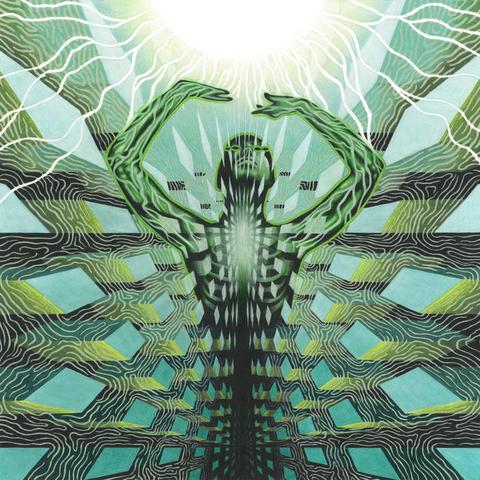
Under The Under, by Growth
6 track album
For #ThursDeath:
#Growth: Under the Under
https://growthmusic.bandcamp.com/album/under-the-under
6 track album
It's late now for #TuneTuesday's #RentFreeTracks, and I've shared this song earlier already, but I play this several times a day:
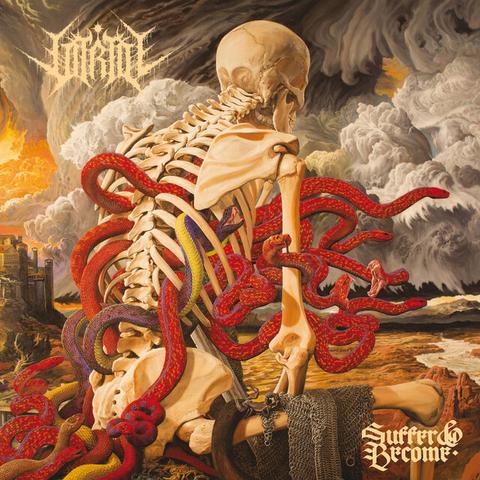
#Vitriol: Shame and Its Afterbirth
https://song.link/6x2bgkdbjf9bs
FFO #AtræBilis #HideousDivinity #Ulcerate
I can't not love the jewellery and the facial expressions 🤘
In more devastating tour news, Ulcerate is touring here in May. And it's the end of the tour for their last album, which I've listened to *a lot*. 💸 🎫
https://ulcerate.bandcamp.com/album/cutting-the-throat-of-god

7 track album
We often wax eloquent on the distinctive factors between good and great. In a writing sphere where we are strictly commanded to avoid “artistic bullshit” in our analysis in favor of more clinical, scientific examination, pinning down elements that distinguish the enjoyable from the memorable and the well-made from the impactful can make for a fun thought experiment or a maddening exercise in futility and thesaurus perusing. A few months ago, this very topic was brought up in the halls, and while staffers hemmed and hawed over nebulous ideas of quality, the ever-wise Dolphin Whisperer chimed in with a straight-to-the-point insight which stuck with me: “For me, the difference between good and great is whether I’d buy this for ten dollars.” Hailing from Croatia, one-man black metal project Petrale have arrived with some creepily straightforward artwork and an equally straightforward album title; will this be relegated to your ever-flowing streams, or have you reaching for your wallets?
Though classified as “raw black metal”, Goat at Sunset sidesteps stereotypes in presentation. Produced entirely on analogue open reel tape, this album contains the warmest, richest sound I’ve heard in some time. Rather than raw by way of underproduction like Fell Omen or draped in overly reverbed fog ala Black Cilice, each instrument has a charmingly clear enunciation while being mixed roughly around the edges with an organic, welcoming tone. Full, thick major(!) chord progressions (“Dorsal Horn”) give way to looping doses of Ulcerate-isms, which manage to be much more straightforward in execution while carving their own atmosphere of distant menace. The drums carry a dollop of modern Darkthrone in their presence, with the double bass successfully muddying the riffs just a touch, emphasizing the rawness in the nature of the production without relying on deliberate self-sabotage of aesthetic.
In that sound lies a standout assembly of riff which does a masterful job of evoking the artwork accompanying it. Far from being a nonstop collection of hazy blast beats and trem pickings, Goat at Sunset uses a healthy sense of dynamic composition and tempo changes to carry the listener through the entire body of work. Frequently throughout the album, breaks are used which evoke something spiritually akin to smokehouse lounge vibes (“The Postulating Conduit (Sunset)”, “Hunter”) while sometimes sandwiching more energetic riffs into doomy plods (“The Wedge That Was Supposed to Prevent Sin”). As the art shows the ominous goat head, far away but clearly defined and present, the reliance on dissonant foundations with sudden flourishes of clarity channels a soundtrack that doesn’t seek to quite open the gates of hell as much as let the listener observe such a thing from a long way off.
The net result renders Goat at Sunset as a genre offering that manages to hit a sweet spot of fusion between accessibility and roughness, and with atmosphere and musicianship. Special attention must be paid to the bass, carrying an absolutely delicious tone which permeates throughout the release, and is given multiple opportunities to shine and echo leads rather than down strumming through chord progressions. Even the concluding cover song (a cover of an artist called Sven Väth) channels a heavy dollop of upbeat major progressions into something that seems like an organic conclusion to the release rather than a merely tacked-on bonus track. It’s true that near the end, the album loses some of its steam and places more emphasis on slower theatrics rather than raw riffage, particularly if you disregard the cover and let the album end on its proper, more “official” note. Nevertheless, Petrale have crafted an album replete with memorable moments, unusual time signatures (the 7/4 break in “Dorsal Horn” being a real standout) and a fully realized atmosphere and mood.
Raw black metal stands alongside genres like stoner doom as being difficult to execute in a way worthy of a coveted 4.0. Petrale have come as close as I’ve heard in years by inverting, rather than rejecting, genre stereotypes. A production which is warm instead of abrasive on the ears, chords which carry harmony as much as dissonance, emphasis on dynamics as much as blast beats are all cobbled together to create an album which carves a clear personality for itself within the genre trappings. Rich enough in sound to welcome genre casuals while bleak enough to entice genre aficionados, Goat at Sunset has been a dark delight. Now, if you’ll excuse me, I have to go find my wallet and buy one of the 100 CD-R copies available. Hopefully, for ten dollars.
Rating: 3.5/5.0
DR: n/a | Format Reviewed: Stream
Label: Self-Released
Website: Album Bandcamp
Releases Worldwide: February 1st, 2026


#RuinsOfTheBeverast: Tempelschlaf
Ulcerate – Abrogation
https://wgom.org/2026/01/19/ulcerate-abrogation/Moved to dissonant death-metal for the moment, but I feel fine :-)
Ich brauche gerade eine Pause vom Korrigieren und habe es mir mit einem frischen Kaffee auf der Couch gemütlich gemacht.
Dazu höre ich zum ersten Mal die "Cutting the throat of god" von Ulcerate. Die Platte wurde ja viel gelobt und tauchte in meinen Bandcampempfehlungen immer wieder auf. Bin mal gespannt.
https://ulcerate.bandcamp.com/album/cutting-the-throat-of-god
7 track album
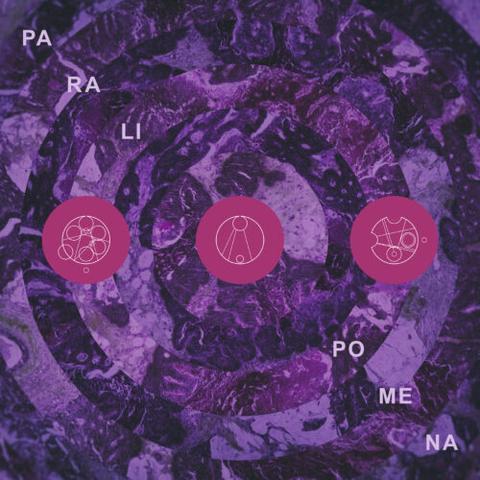
Pillars of Cacophony – Paralipomena [Things You Might Have Missed 2025]
By Owlswald
Amidst the routine of our daily lives, it’s easy to overlook the hidden, complex universe that exists just outside our normal gaze. It only takes a bit of magnification to reveal it: a place where cells shift and collide, forming the invisible architecture of existence. Capturing the awe of this biological machinery is a tall order. Yet, Dominik, multi-instrumentalist and mastermind of Pillars of Cacophony, has created a soundscape with second LP, Paralipomena, that does exactly that, exploring the building blocks of life through sound. Though tackling the topic of bioscience through the lens of disso and technical death metal may be a volatile experiment, this Austrian knows exactly how to harness the power of biology to bridge the divide. You see, Dominik is a bioscientist by trade, literally mining his own PhD thesis to drive the chaos that is Pillars of Cacophony. This academic authenticity is what sets Paralipomena apart, resulting in a rare fusion of intellect and brutality that you simply can’t afford to miss.
The genome of Paralipomena is an unstable body of technical and dissonant death metal, forged in the chaotic intersection of Ulcerate and The Faceless. The album’s kinetic energy flows freely across synapses, connecting a skin of hooky riffs, tremolo surges, and punishing down-picking. Intelligent songwriting and flash-fire percussion surgically underpin this to create an unsettling cacophony of sonic friction. While tracks like “The Cradle,” “The Discord,” and “Retina” demonstrate Pillars of Cacophony’s hyper-speed technicality, cuts like “Cachexia,” “Mitosis,” and the Meshuggahian “Landscapes of Permanence” twist the formula, venturing into unpredictability with jazzy permutations and calm, contemplative sections (“Maps of Disintegration”). This is the soundtrack to inter-cellular warfare—a torrent of fast-twitch riffing and searing discordance, punctuated by pressurized blast beats, static-laced roars, and the acidic twang of bass, transporting one into a world seen only through a high-powered scope.
Paralipomena is rife with entropy, yet its multi-layered cytoskeleton maintains homeostasis. Pillars of Cacophony’s layered guitars clash and coordinate simultaneously—one flooding the airwaves with raw, unsettling dissonance, while the other focuses on calculated technicality and micro-precision picking. “Of Plagues and Fibrils” immediately delivers Paralipomena’s chemistry of chaos and precise equilibrium in its moving, shifting main palm-muted riff, infecting the listener’s brain like a disease with its immediate, powerful hooks. The drums’ complex cymbal flares and tom rolls only enhance the track’s memorability, providing badass atmosphere and tasteful technicality in equal measure. Pillars of Cacophony showcases this same momentum again in “Retina,” which pushes a Necrophagist-like tempo—particularly during its groovy double-bass sections and unidirectional picking—and “The Cradle,” where the rhythm section anchors the frenetic guitar work and furious tremolodic leads.
Ever since it dropped earlier this year, Paralipomena continues to grip me. It succeeds by concentrating sonic violence to create the ultimate soundtrack to a hidden world—one that feels as technically layered as it is immediately catchy. Pillars of Cacophony has forged an album that pairs an extreme and dystopian soundscape with the surgical authority of empirical sciences, carving a bespoke path outside the predictable confines of death metal. If you’re a fan of disso or tech-death and somehow missed Paralipomena, consider this your diagnosis and remedy that malady immediately.
Tracks to Check Out: “Of Plagues and Fibrils,” “The Cradle,” “Retina,” “The Discord.”
#2025 #AustrianMetal #DeathMetal #Meshuggah #Necrophagist #Paralipomena #PillarsOfCacophony #TechnicalDeathMetal #TeratogenRecords #TheFaceless #ThingsYouMightHaveMissed2025 #TYMHM #Ulcerate


 Tim G
Tim G Angry Metal Guy
 WGOM
WGOM
 Niels van Rongen
 Misery Path