電車ベクトル (Train Vector):

Software post is now online. 3rd & final post about the current version 2.

https://togo-lab.io/?p=243

Job of the SW: Read 2 analogue inputs, averages signals, calibrates itself at startup, applies thresholds + hysteresis, remembers the last valid direction (using by a state machine) & switches the headlights accordingly.

The optional functions are not in use. I want to wait until feedback from the train club testing this project.

Link to the git:
https://gitea.togo-lab.io/tgohle/0004-DenshaBekutoru/src/branch/master/firmware/ArduinoTest/DenshaBekutoru-0004_Version-0-2_ProMini_PCB2026-2_V01

#電車ベクトル #TrainVector #ToGoLab #BrickTrains #ModelRailway #Arduino #Electronics #Projects

電車ベクトル (Train Vector): The Software – togo-lab.io

電車ベクトル (Train Vector project): Hardware description:

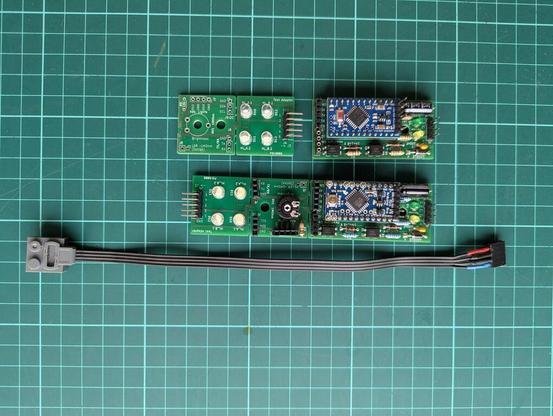
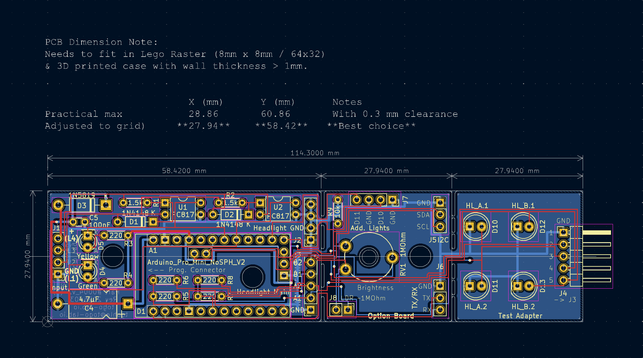
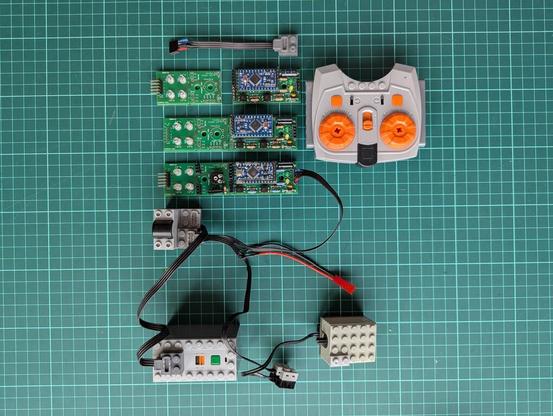
The main board reads the noisy motor signal of a brick-built model locomotive directly from the H-bridge controller, isolates and processes it & controls the headlights.

There are also a future option board & a detachable test circuit (4 LEDs).

Blog, describing the schematic & showing the PCB:
https://togo-lab.io/?p=233

Gitea (schematic, PCB):
https://gitea.togo-lab.io/tgohle/0004-DenshaBekutoru/src/branch/master/KiCad/0004-DenshaBekutoru_v0.2

#電車ベクトル #TrainVector #ToGoLab #BrickTrains #ModelRailway #Arduino #Electronics #Projects

Finished my 電車ベクトル (Train Vector) project:

A Arduino-based board will detect the driving direction of brick-built model locomotives directly from the noisy H-bridge motor controller & switches the headlights automatically.

Sounds simple, but due signal noise, switching artefacts & inductive (reverse) spikes direction sensing is quite hard.

Schematics, PCB, and firmware for beta (version2) finished & working.

Three PCBs were built & tested & the first 2 boards are now handed over for real-life testing in a model railway club.

Blog:
https://togo-lab.io/?p=223

Gitea (Schematic, PCB):
https://gitea.togo-lab.io/tgohle/0004-DenshaBekutoru

#電車ベクトル #TrainVector #ToGoLab #BrickTrains #ModelRailway #Arduino #Electronics #projects

Today I pushed my 1 GB VPS over the limit by running #Nextcloud, #Matrix, and #Gitea for togo-lab.io and adding #ClamAV AV scanning as an experiment. It crossed the line due too much load during scanning, and my system crashed.

Maybe you’ll find my post-mortem useful.

https://togo-lab.io/?p=190

#togolab #tgonet #postmortem #selfhosted

Post-Mortem: Antivirus Integration on a 1 GB Nextcloud VPS (failed due load) – togo-lab.io

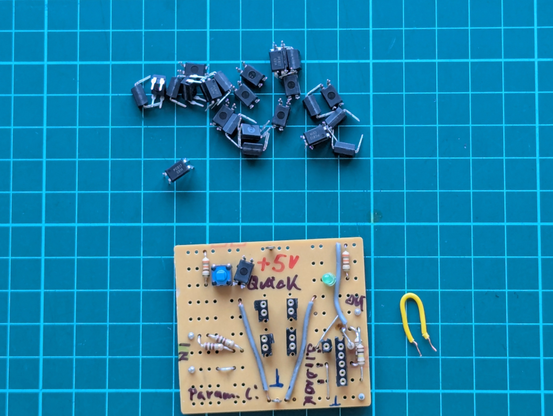
Lazy Sunday afternoon project, a simple *PC817 OptoCoupler tester.

Two very simple ~5V circuits:

1) Quick check — push the button, LED on = works.

2) Test Circuit as mentioned in the datasheet for frequency / pulse behavior test.

Nothing fancy, but handy for sorting out good vs questionable parts.

Blog:
https://togo-lab.io/?p=153

Gitea:
https://gitea.togo-lab.io/tgohle/0002-PC817-Series-PhotoCoupler-Tester

#electronics #DIY #optocoupler #pc817 #ToGoLab #SundayDIY

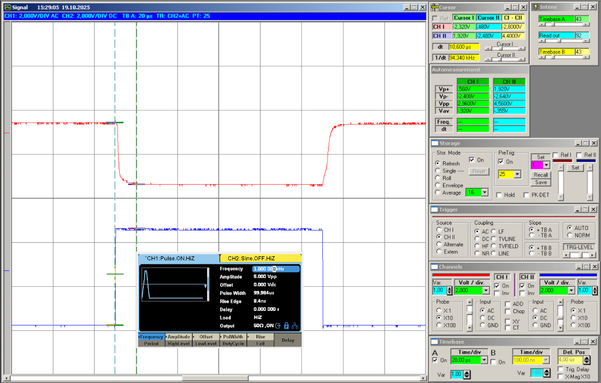
Improving my test bench for future projects, I wrote a small PyQt5 GUI to control my Siglent SDG2042X from a remote Ubuntu desktop.

It handles basic waveform setup, sweeps, bursts, presets (so you can adjust at the generator and than load down for later), ARB upload/download (not fully tested yet), and SCPI commands, also screenshots.

I’m more of a hardware guy than a coder (for sure there will be some bugs), so feedback are welcome. Fork if you like.

--
Blog:
https://togo-lab.io/?p=130

Gitea with script:
https://gitea.togo-lab.io/tgohle/0003-SDG2042X-PyQt-GUI-for-Linux

#ToGoLab #Siglent #SDG2042X #PyQt5 #Testbench #OpenSource #python #weekendProject #diy_electronics #DIY

Controlling my Siglent SDG2042X from Linux – togo-lab.io