David A Kessler:
I have been monitoring the spread of #bird #flu, also known as #H5N1,
and discussing the situation with colleagues around the country.
My concern is growing.
So far, there have been no reports of person-to-person spread of H5N1, though there have been 💥at least 55 confirmed cases of bird flu in humans in the United States,
almost entirely among poultry and dairy workers.
Those infections are presumed to be primarily the result of contact with animals.
In addition, a child in Alameda County in California with minor respiratory symptoms tested positive for H5N1 recently;
it is unclear how the child became infected.
There are likely other cases out there that are not being diagnosed.
All of those cases have been mild.
⚠️But a teenager in British Columbia who was infected with the virus is now critically ill.
In this instance, too, it is unclear how the teenager became infected.
But the virus showed signs that it had mutated in a way that could make it easier to transmit to another person.
If this is the case, the virus might then get enough of a foothold to begin human-to-human transmission.
Further mutations could evolve that would enhance attachment to human cells.
Until the British Columbia case, the recent bird flu infections in humans in North America had been limited to the eyes and nasal passages.
But H5N1 becomes deadly when the virus attaches to the lining of the lungs in the lower respiratory tract.
This virus has killed before.
⭐️In 1997, an outbreak of H5N1 in poultry in Hong Kong resulted in 18 animal-to-human infections and six deaths,
the first known fatal human infections.
Then, in 2003, H5N1 appeared in wild birds in Asia.
Outbreaks followed in poultry and resulted in two deaths in people.
🔥As outbreaks continued to occur, the mortality rate surpassed 50 percent.
Here is where matters stand:
The most recent risk assessment from the Johns Hopkins Center for Outbreak Response Innovation, issued on Nov. 19,
listed the risk of infection to farm workers as high,
and the risk of infection to people in contact with affected farm workers and animals as moderate.
The Hopkins report said that “while the immediate risk to the general public and health care workers is still currently low,
the long-term consequences of continued,
uncontrolled transmissions presents a high risk to all populations.”
California has recently seen a significant rise in detections of H5N1 in dairy herds.
🆘Experts believe that animals at as many as half the dairy farms in California are infected.
👉That is why it is important to pasteurize milk,
which kills the virus. (All milk sold across state lines is pasteurized;
30 states allow the in-state sale of nonpasteurized milk, which is labeled “raw.”)
Two states, Colorado and Pennsylvania, have agreed to test pooled milk from all farms before pasteurization to monitor spread.
🔸Bulk milk testing should be mandatory in all states with dairy farms to determine the full extent of the infection on these farms and also allow us to contain the virus.
As if to underline the importance of such a mandate, bird flu was detected in raw milk bought retail last Thursday from a dairy producer based in Fresno, Calif.
♦️Without mandatory testing, bird flu will continue circulating at farms across the country,
which substantially increases the risk that the virus mutates and evolves to allow a human-to-human transmission that will be hard to stop.
♦️H5N1 has already shown a propensity to rapidly infect hundreds of herds and farms in the United States.
Since March, 616 dairy herds in 15 states have been infected with H5N1.
And since the onset of the outbreak in February 2022, H5N1 has been detected in poultry in 49 states, affecting a total of 111 million birds.
There has also been an increase in H5N1 detections in migratory and commercial birds in the European Union, Canada, Japan and South Korea, compared to 2023.
♦️What’s also worrisome is that our arsenal to fight back might not be up to the task.
An analysis by the Centers for Disease Control and Prevention found that a mutation in people in Washington State who work as poultry cullers might ⚠️reduce the effectiveness of oseltamivir,
also known as #Tamiflu, in treating influenza A, a type of flu that includes H5N1 and many other subtypes.
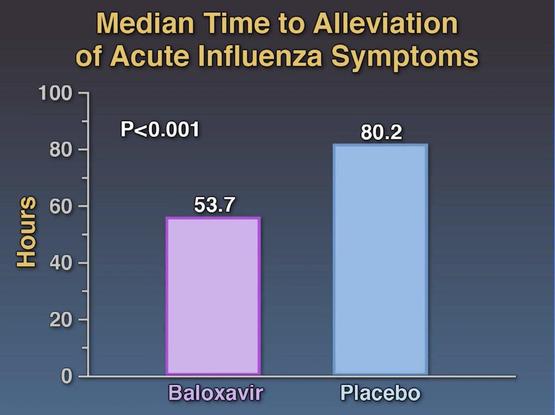
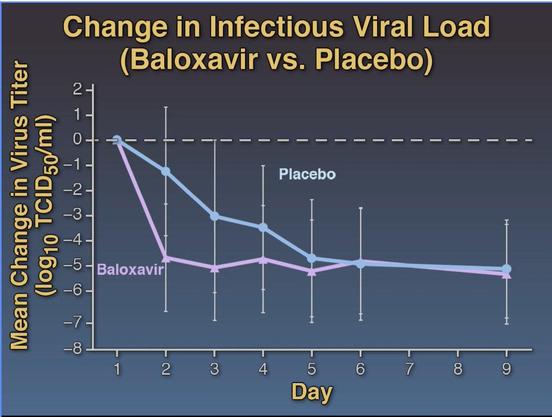
⚠️And a mutation found in a recent California case could potentially reduce the effectiveness of baloxavir marboxil, another drug used to treat influenza A.
In the case of #monoclonal #antibodies for use against the virus,
there are none commercially available at present.
These lab-produced antibodies are designed to mimic the body’s immune response and directly target the virus.
https://www.nytimes.com/2024/11/26/opinion/vaccine-bird-flu-pandemic.html?smid=nytcore-ios-share&referringSource=articleShare
 DoomsdaysCW
 DrBob, 🧠 Mechanic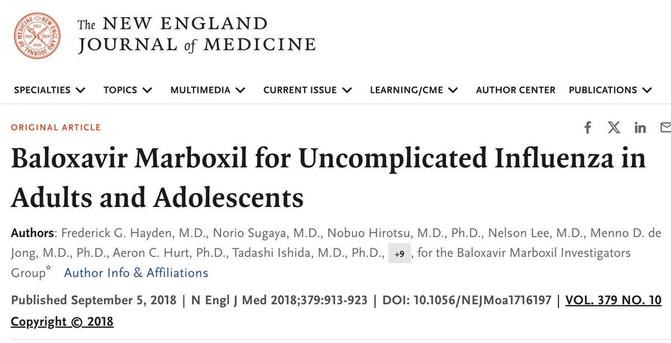
 Ehay2k
 Chuck Darwin
 Giuseppe Michieli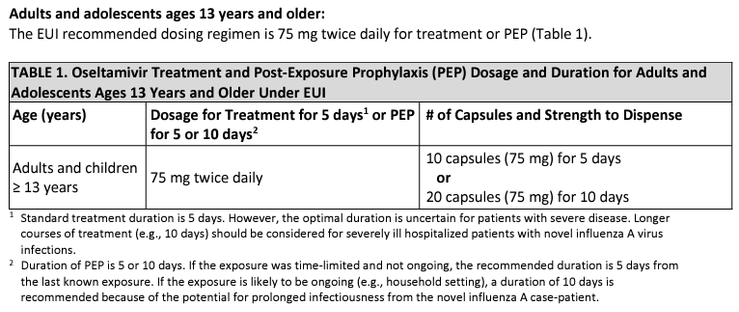

 Categorical Imperative
 Miss Fidget
 Anita Y Cheng
 BeachwoodReport
 Andrea Singletary