The Power of Forgiveness: Healing Yourself and Others in Christian Living for Men—No Excuses, No Weakness, No BS

1,428 words, 8 minutes read time.

Forgiveness is war. It is war against bitterness, against self-pity, against the lie that nursing grudges makes you strong. It doesn’t. It makes you small. It chains your mind to the past. It turns pain into identity. Christian living for men demands toughness, but not the cheap toughness of emotional armor. Real toughness is the ability to confront injury, acknowledge it, and refuse to be ruled by it.

The culture soft-pedals this. “Forgive and forget.” Sounds nice. It is half-truth garbage. Humans do not forget. Memory exists for survival and learning. Even the risen Jesus bore scars. Why? To remind us of cost and consequence. To testify that suffering existed and was overcome. The scars are not erased. The meaning of the scars is transformed.

Men must grasp this. Forgiveness is not erasure. It is liberation. You remember what happened. You refuse to let it own you. You release the debt you believe others owe. That is strength. That is Christian maturity. Anything less is emotional cowardice.

Christian Living and Faith for Men: Stop Confusing Forgiveness With Approval

Christian living for men is built on accountability and grace. Forgiveness does not equal approval. You can forgive wrongdoing without endorsing it. You can release resentment without pretending harm was trivial. This distinction is non-negotiable.

Men often resist forgiveness because they fear it signals surrender. They think: if I forgive, I am saying it didn’t matter. Wrong. Forgiveness says: it mattered, but I will not become a prisoner of it. I will not define myself by what others did. I will respond with dignity.

This matters because grudges rot character. They justify cynicism. They poison relationships. A man who carries bitterness everywhere eventually sees enemies in every direction. He isolates. He blames. He stagnates. Christian faith calls men to something higher—responsibility, growth, and the refusal to outsource emotional health to circumstances.

Forgiveness also coexists with boundaries. This is another lie in simplistic moral slogans. You can forgive someone and still distance yourself. You can release anger and still demand accountability. If a relationship is destructive, you are not obligated to maintain it. Christian love does not require self-destruction.

Men who understand this become stronger. They stop conflating forgiveness with naïveté. They recognize that boundaries are expressions of self-respect. You forgive, but you do not surrender wisdom.

The Power of Forgiveness: Healing Yourself Because No One Else Will

Forgiveness heals the forgiver first. This is the uncomfortable truth. Many men believe forgiveness primarily benefits the offender. Sometimes it does. Reconciliation is possible in certain circumstances. But the primary healing occurs inside the person who releases resentment.

Bitterness is psychological poison. It narrows perception. It amplifies minor slights into imagined conspiracies. It trains the mind to seek evidence of hostility. Over time, this becomes a worldview. Everything is interpreted through suspicion. Relationships deteriorate. Opportunities shrink. Emotional energy is wasted on replaying old grievances.

Men who hold grudges often believe they are justified. Perhaps they are. The offense may have been real. The pain may have been severe. Justice may even demand consequences. But justification does not equal healing. You can be right and still be broken.

Forgiveness interrupts this cycle. It does not deny pain. It acknowledges it. It says: this happened. I will learn from it. I will set boundaries. But I will not carry hatred. I refuse to let the past dictate the future.

This aligns with Christian teaching about grace. Grace does not ignore wrongdoing. It offers the possibility of redemption. If redemption is possible, then bitterness is unnecessary. Men can demand accountability and still believe in growth. They can confront evil and still pursue healing.

Weak men avoid this work. They prefer the temporary comfort of anger. It feels righteous. It feels powerful. It is illusion. Real power is the discipline to control emotional impulses. Real power is the decision to move forward.

Christian Living for Men: The Lie of “Forgive and Forget”

“Forgive and forget” is a slogan, not wisdom. Human memory is not disposable. It serves critical functions. Memory teaches. It warns. It preserves lessons. The problem is not memory. The problem is emotional attachment to memory.

Forgiveness does not require forgetting. It requires reinterpretation. The event remains in history, but its emotional dominance diminishes. You remember what happened without reliving the trauma. You extract lessons without constructing an identity around victimhood.

This is essential for men. Identity built on grievance is fragile. It depends on constant validation of suffering. It requires the world to acknowledge injustice at every turn. That is exhausting. It prevents growth.

Christian understanding offers a better path. The scars of life remain, but they become testimonies. They remind us of struggle and survival. They cultivate empathy. They inform wisdom. Like the scars of Jesus, they signify cost and redemption.

This is not sentimentality. It is truth. Healing does not require erasing history. It requires meaning. The past becomes a teacher rather than a tyrant.

Men who grasp this reject simplistic narratives. They do not demand that memory vanish. They demand that memory serve purpose. The offense becomes instruction. The pain becomes growth. This is Christian maturity.

The Discipline of Forgiveness in Christian Living for Men

Forgiveness is practiced. It is not theoretical. It begins with decisions. When conflict arises, resist the impulse to escalate. Listen before reacting. Seek understanding before condemnation. This does not mean excusing wrongdoing. It means approaching conflict with discipline.

Emotional reactions are powerful. They demand immediate expression. Discipline creates space between stimulus and response. In that space, wisdom operates. You choose how to act rather than being controlled by impulse.

Christian living for men emphasizes responsibility. Forgiveness is part of responsibility. You are responsible for your emotional state. You are responsible for how you treat others. You are responsible for breaking cycles of hostility.

This is not weakness. It is strength. Weak men lash out. Strong men control themselves. Weak men cling to grievances. Strong men release them. Weak men justify stagnation. Strong men pursue growth.

Boundaries remain essential. Forgiveness does not require tolerating abuse. It does not require reconciliation in every circumstance. Some relationships cannot be restored without genuine change. Wisdom discerns the difference.

Men often fear exploitation. They worry that forgiveness will be interpreted as permission. This is valid. But exploitation does not invalidate the principle. You can forgive and still protect yourself. You can release resentment and still enforce consequences. These are complementary.

The alternative—holding grudges—rarely produces good outcomes. Grudges isolate. They foster cynicism. They shrink possibilities. Forgiveness expands them.

Conclusion: No Excuses, No Weakness—Forgiveness as Strength

Forgiveness is not sentimental. It is not easy. It is war against the instincts that demand retaliation. It is Christian discipline applied to emotional life. Men who practice it grow stronger.

This does not minimize pain. It acknowledges it. Christian living for men requires honesty. Holding grudges is understandable. Healing requires letting go of the desire to punish through resentment.

The scars of history remain. So do the lessons. Like the scars of Jesus, they remind us of cost and consequence. But they also testify to the possibility of renewal.

Forgiveness is not forgetting. It is freedom. It is the decision to live forward rather than backward. It is the refusal to surrender your future to your past.

Men who understand this become better husbands, fathers, friends, and citizens. They model strength. They break cycles of hostility. They embody Christian principles in action.

No excuses. No weakness. Forgiveness is power.

Call to Action

If this study encouraged you, don’t just scroll on. Subscribe for more bible studies, share a comment about what God is teaching you, or reach out and tell me what you’re reflecting on today. Let’s grow in faith together.

D. Bryan King

Sources

Matthew 6:14-15 – Forgiveness and spiritual responsibility
Ephesians 4:31-32 – Christian instruction on kindness and forgiveness
American Psychological Association – Anger and Health Effects
National Institutes of Health – Mental Health Benefits of Forgiveness
Psychology Today – Forgiveness Overview
GotQuestions.org – Biblical Perspective on Forgive and Forget
Focus on the Family – Christian Teaching on Forgiveness
NIH – Emotional Consequences of Interpersonal Conflict
HeartMath – Forgiveness and Physical Health
NIH – Psychological Impact of Resentment
Christianity Today – Faith and Practical Christian Living
Desiring God – Theological Insights on Forgiveness
CDC – Mental Health Fundamentals
Mayo Clinic – Stress and Forgiveness

Disclaimer:

The views and opinions expressed in this post are solely those of the author. The information provided is based on personal research, experience, and understanding of the subject matter at the time of writing. Readers should consult relevant experts or authorities for specific guidance related to their unique situations.

#biblicalForgiveness #boundariesInRelationships #ChristianCharacterDevelopment #ChristianDiscipline #ChristianEthics #ChristianFaithForMen #ChristianForgivenessForMen #ChristianGuidance #ChristianLifeLessons #ChristianLifePrinciples #ChristianLivingForMen #ChristianMasculinity #ChristianMasculinityAndStrength #ChristianPerspectiveOnPain #ChristianRelationships #ChristianResponsibility #ChristianTeachingsOnForgiveness #ChristianWisdom #ChristianWorldview #emotionalDiscipline #emotionalHealing #emotionalMaturity #emotionalResilience #emotionalStrengthForMen #faithAndEmotionalHealth #faithAndForgiveness #faithBasedHealing #faithDrivenGrowth #forgivenessAndAccountability #forgivenessAndBoundaries #forgivenessAndJustice #forgivenessAndPersonalGrowth #forgivenessAndSelfControl #forgivenessAndSelfHealing #forgivenessAndWisdom #forgivenessInChristianity #forgivenessWithoutForgetting #healingEmotionalWounds #healingFromPastHurts #healingRelationships #healingThroughForgiveness #menAndEmotionalStrength #menSMentalHealth #mentalHealthAndForgiveness #mentalHealthChristianPerspective #overcomingBitterness #overcomingEmotionalPain #overcomingGrudges #personalGrowthThroughFaith #powerOfForgiveness #relationshipHealing #releasingResentment #spiritualDiscipline #spiritualGrowthForMen #spiritualMaturity #spiritualRenewal #spiritualRestoration #spiritualTransformation

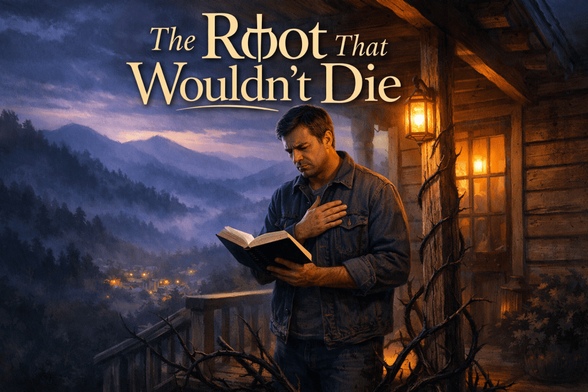
The Root That Wouldn’t Die

2,116 words, 11 minutes read time.

In the heart of Ridgeview, a close-knit town tucked into the southern mountains where the Blue Ridge foothills rose in gentle, forested waves and the air carried the faint scent of pine and woodsmoke year-round, Ethan Carter was the kind of man everyone knew and trusted. Mornings often found him on his wide front porch, coffee steaming in the crisp air, waving to neighbors who sat rocking on theirs, swapping stories about the latest blaze of fall colors on the sugar maples or who was fixing up an old cabin along one of the winding ridge roads. The town moved at its own unhurried pace: kids biking down quiet streets after school, families gathering at the diner on Main Street for Friday night catfish specials and homemade pies, church bells echoing off the valleys every Sunday morning like a gentle call to gather. Porch lights glowed against the evening mist that drifted up from the lower hollows, and folks still waved when they passed on the two-lane roads, knowing most everyone by name. It was the kind of place where community ties ran deep, where a helping hand or a shared meal mattered more than any headline—yet even in such a place, hidden burdens could quietly take root.

At Grace Community Church, Ethan was equally dependable. He arrived early each Sunday, Bible in hand, offering warm handshakes and quiet encouragement to families filing in. He taught the adult Sunday school class on books like James, unpacking passages about faith showing itself in action with clear, straightforward insight. He led the men’s accountability group, sitting with brothers as they shared real struggles—pride, temptation, doubt—and always pointing them toward Scripture without shortcuts or fluff. His technical gifts served the church too: he kept the website updated, smoothed out live-stream issues during services, and set up the online giving portal that steadied the budget through lean seasons.

His wife, Sarah, sat beside him in the pew every week, thankful for the steady man she had married twenty years before. Their two teenage children—now driving, questioning faith, and navigating their own paths—still saw him as the family’s anchor. He prayed with them at night, fixed whatever broke around the house, and provided faithfully from the income his business brought in. On the surface, everything held together.

But Ethan carried a root no one could see.

Fifteen years earlier, at the first church where he had come to faith as a young man fresh out of college with a computer science degree, Ethan had thrown himself into serving. He saw the sanctuary’s outdated sound system, flickering projector, and nonexistent website as clear opportunities to use his gifts. He volunteered to revamp the church site, set up basic live-streaming equipment in an era when that felt innovative for a small congregation, and handled audio mixing so the message came through undistorted. It energized him deeply—removing distractions so people could hear the gospel without hindrance. This was quiet, behind-the-scenes faithfulness, the kind Scripture honors: serving one another as good stewards of God’s varied grace (1 Peter 4:10).

Pastor Mark Reynolds noticed Ethan’s reliability and dedication. One Sunday after the service, Mark pulled him aside in the hallway. “Ethan, you’re one of our trusted guys,” he said. “Chosen for something bigger. God has His hand on you.” Ethan felt truly seen for the first time in a church setting. He pictured stepping further into media and tech ministry—perhaps leading a small team, training volunteers, or expanding digital outreach as the church grew.

Instead, Mark redirected him toward children’s ministry.

“God needs faithful men in the kids’ wing,” Mark explained. “We have a real shortage of male leaders down there. It’s where the kingdom impact happens most—shaping the next generation early. You’re steady, you’re married now, kids on the way soon. This is your spot.”

Ethan trusted Mark’s leadership. He gave it his best effort. For months he showed up faithfully, helped with crafts, led small groups of energetic five-year-olds through simple Bible stories. He was patient, kind, and well-prepared. But inside, it drained him in ways he could not fully articulate. His thoughts kept drifting to troubleshooting the sanctuary soundboard, coding cleaner website templates, finding better ways to connect people digitally. He felt like a square peg forced into a round hole—his God-given technical wiring ignored while the church funneled “trusted” men into visible, relational roles that fit a narrower mold of ministry. When he gently brought up his heart for media and tech service, Mark brushed it aside: “We already have people handling that side. Children’s ministry needs men like you more right now.”

The rejection cut deeper than Ethan let on at the time. He left that church quietly, wounded in a way that felt almost invisible to others. He told himself he had forgiven Mark, that he had moved on, that he had planted new roots at Grace Community. But the root stayed buried, feeding quietly on the memory.

Years later, as Ridgeview businesses thanked him publicly at chamber meetings and Grace Community leaned heavily on his technical expertise, the old wound twisted sharper whenever similar situations arose. When a young man at church approached leadership about helping with media or tech, Ethan felt a quiet pang of resentment rise unbidden. When the church publicly honored volunteers serving in “frontline” ministries like children’s or youth work, he would smile and applaud along with everyone else, but inside he replayed Mark’s words: “This is your spot.” He justified the bitterness as practical wisdom—”I know what happens when churches overlook real gifting”—but it poisoned his prayers. On communion Sundays, as he took the bread and cup in remembrance of Christ’s forgiveness, he felt the sharp hypocrisy of withholding that same forgiveness from Mark in his heart.

For years the double life held firm. At home, Ethan remained present and attentive—helping the kids with homework, leading family devotions, staying up late to push client site updates live before deadlines. At church, he continued exemplary service, teaching on Ephesians 4:31 about putting away all bitterness, wrath, and anger while secretly cherishing the very thing he warned against. In private moments, late at night in his home office with the server fans humming softly and the dark ridge shadows pressing against the window, he would scroll through old church archives, see Mark still leading and thriving, and feel the wound reopen fresh. Joy seeped out of his faith like warmth escaping through a cracked window on a chilly fall evening.

Then came the Wednesday evening Bible study that cracked everything open.

The group had been working steadily through Hebrews chapter 12. Ethan stood at the front, projecting the verses onto the screen with his own reliable setup, teaching with the usual clarity and care. When he read verse 15 aloud—”See to it that no one fails to obtain the grace of God; that no ‘root of bitterness’ springs up and causes trouble, and by it many become defiled”—the words struck him like a physical blow. His voice faltered for the first time anyone could recall. He tried to recover, explaining how bitterness spreads its poison beyond one heart to defile families, churches, entire communities—but the room seemed to shrink around him. Faces blurred. The irony burned hot: here he was, the man who connected Ridgeview’s businesses and kept the church stream running smoothly, warning others about a root he had been feeding for fifteen years, letting it defile his own heart and subtly strain his closest relationships.

He excused himself abruptly, mumbling something about needing air, and slipped into the empty hallway. Leaning against the wall under the harsh fluorescent light, Ethan felt the full weight come crashing down—the dismissed gifts, the forced role that never fit, the years of quiet judgment toward leaders who reminded him even faintly of Mark. He had preached forgiveness while refusing to practice it. He had taught grace while blocking it in his own life. Mark 11:25 echoed clearly in his mind: “Whenever you stand praying, forgive, if you have anything against anyone, so that your Father also who is in heaven may forgive you your trespasses.”

That night Ethan drove home along the winding mountain roads, the ridges black against a starry sky. In the driveway, engine off, he sat in silence and prayed raw prayers—no polished words, just broken confession and surrender. When he finally went inside, Sarah was still awake, reading on the couch. He sat beside her, took her hand, and told her everything: the old church, Pastor Mark’s redirection to children’s ministry, the ignored calling to serve through tech, the bitterness he had nursed like a hidden wound even as God had blessed his gifts in Ridgeview. Tears came—for the original hurt, for the hypocrisy it had bred, for the joy and closeness it had stolen from their marriage and family over the years.

Sarah listened without interruption, her own eyes filling with tears. She felt hurt for him, angry at the damage done, but her love remained steady. They talked deep into the night as the mist lifted outside the windows. The road ahead would not be easy or quick. Ethan stepped back from teaching and leading the men’s group for a season—not out of shame alone, but out of reverence for the holiness of those roles and a desire to walk in integrity. He sought Christian counseling to process the wound properly. He pursued real accountability with a couple of trusted brothers who would ask hard questions without judgment. Most importantly, he began praying specifically for Mark—not with easy feelings at first, but in simple obedience, asking God to bless and heal the man who had once hurt him.

He even drafted a letter to Mark, pouring out the pain honestly while releasing the grudge and owning his own part in letting it fester so long. He never sent it—forgiveness did not require confrontation in this case—but writing it helped loosen the root’s grip.

Slowly, painfully, the bitterness gave way. Ethan returned to serving at Grace, still handling the tech side but now with a lighter heart and freer hands. He began mentoring a couple of younger men interested in web development and digital ministry, encouraging them in ways he had once wished someone had encouraged him. The resentment that had defiled so much quietly yielded to mercy. He never turned his story into a dramatic stage testimony; instead, he shared it quietly, one-on-one or in small accountability settings, with men carrying similar hidden hurts—always pointing them to the same unchanging truth: secret roots thrive in darkness, but God’s light exposes them not to destroy, but to heal.

The double life promises control and safety; it delivers only chains. Confession, though costly and humbling, opens the door to true freedom. And in Christ, that freedom restores what resentment tried so hard to kill forever—joy, intimacy with God, closeness in marriage and family, and authentic service that honors the gifts He has given.

Author’s Note

This story is deeply personal to me.

Years ago I sat across from church elders, pouring out my heart and explaining the technical gifts God had given me. I talked about building websites, improving live streams, and using technology to help the gospel reach farther. Instead of being encouraged, I was gently but firmly pushed into children’s ministry because they “needed more faithful men down there.” The rejection stung deeply.

From that pain and disappointment, I found my voice in this blog.

What I learned through the hurt is something I now say boldly: You don’t need the permission of church elders to do God’s work. And you don’t even have to serve God inside the walls of a church building. Honestly, if someone had told me back then that I would one day be blogging and writing several times a week, speaking directly to men about God and faith, I would have laughed out loud.

Writing The Root That Wouldn’t Die was my way of facing that hidden wound. Ethan’s story is fiction, but the hurt he carries is real—because I’ve carried it too. If you’ve ever been wounded while trying to serve in the church, if you’ve ever felt your gifts were overlooked or redirected, please know you are not alone.

The beautiful truth is that Jesus doesn’t need our titles, our positions, or anyone’s approval to use us. He simply asks for a surrendered heart. What was meant to silence me became the very place where my voice was born.

If this story stirred something in you, I pray it leads you one step closer to releasing whatever root you’ve been carrying. God is faithful to heal what we finally surrender to Him.

Call to Action

If this story struck a chord, don’t just scroll on. Join the brotherhood—men learning to build, not borrow, their strength. Subscribe for more stories like this, drop a comment about where you’re growing, or reach out and tell me what you’re working toward. Let’s grow together.

D. Bryan King

Sources

Disclaimer:

The views and opinions expressed in this post are solely those of the author. The information provided is based on personal research, experience, and understanding of the subject matter at the time of writing. Readers should consult relevant experts or authorities for specific guidance related to their unique situations.

#accountabilityGroup #biblicalForgiveness #bitternessAndResentment #bitternessDefiles #bitternessInChristianity #christianCharacterStory #christianFamilyStory #ChristianFiction #christianFictionShortStory #ChristianHopeStory #ChristianMenStruggles #ChristianRedemptionStory #christianShortStories #ChristianShortStory #ChristianTestimony #churchBetrayal #churchHurt #churchWounds #confessionAndRepentance #dealingWithBitterness #doubleLife #doubleLifeHypocrisy #ephesians431 #exposedSin #faithAndForgiveness #forgivenessAndHealing #forgivenessJourney #forgivenessStory #freedomFromBitterness #godsLight #healingFromChurchHurt #healingFromResentment #hebrews1215 #hiddenRoot #hiddenSin #lettingGoOfHurt #livingADoubleLife #mark1125 #mercyAndGrace #ministryCalling #mountainTownFiction #overcomingUnforgiveness #pastoralHurt #poisonOfBitterness #redemptionThroughConfession #rootOfBitterness #rootOfBitternessStory #secretBitterness #secretSinExposed #secretSins #smallTownChristianFiction #southernMountainStory #spiritualDoubleLife #spiritualHypocrisy #spiritualRestoration #theRootThatWouldntDie #trueRepentance #unforgiveness #unforgivenessConsequences #walkingInTheLight #webDeveloperChristianStory

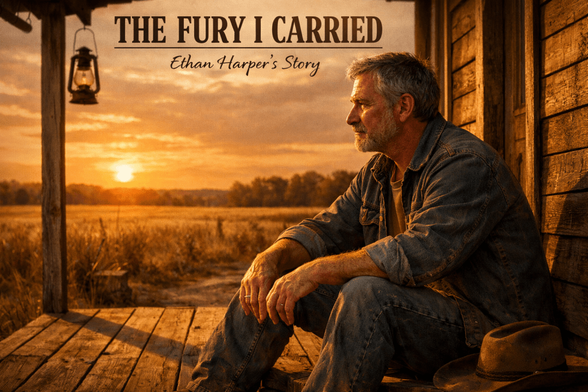
The Fury I Carried: Ethan Harper’s Story

5,834 words, 31 minutes read time.

Ethan Harper sat on the edge of his porch, the late afternoon sun burning low across the field behind his house. At fifty-five, he had learned that time has a way of loosening memories, sometimes revealing them in fragments, sometimes hiding them altogether. He had spent decades running from the storms in his head, from the anger that bubbled up at the slightest insult or perceived slight. But now, in the quiet that only comes when most of the world had turned away, he could hear it all—faint echoes of fists, belts, harsh words, and betrayed trust.

He remembered the fights with his older brother, memories he had buried so deep they had almost faded entirely. Tommy had been two years older, stronger, and cruel in ways that Ethan could never fully name as a boy. He remembered the time Tommy had pulled a knife, his own little hand trembling as he tried to back away, and the way fear had carved itself into his chest like a permanent mark. Their father had never intervened, not in that moment and not in the countless times Tommy had pushed Ethan around. Ethan had learned early on that survival meant keeping quiet, swallowing the sharp edges of his anger, and smiling when it was safest to do so.

It wasn’t just the private moments of fear that shaped him. There were times when they would play softball, basketball, or football with other children in the neighborhood, and Tommy would build himself up as the star player by tearing Ethan down. A missed catch, an airball, a strikeout—Tommy made sure everyone saw it, punctuating each mistake with sarcasm or a sharp remark that left Ethan flushed and small. Tommy was not exceptional at these games; in fact, Ethan often outperformed him when he tried. But that was the problem: Ethan’s skill threatened to shift attention away from Tommy, and he could not tolerate it. So he undermined Ethan at every opportunity, publicly humiliating him to reclaim the spotlight.

Ethan carried the lesson with him like a silent contract: never excel too openly, never make others feel overshadowed, and always hide the frustration that bubbled up inside. He learned to mask his skill, to soften his edges, and to accept that recognition often came at the price of ridicule. Every ball missed under Tommy’s watchful eye, every sneer aimed at him in front of the neighborhood kids, was another brick in the wall of restraint and quiet fury he would carry into adulthood.

And then there were the flashes he had long buried, the moments his mind had tried to forget. One of them came back to him unexpectedly at a flea market decades later. He had been scanning a vendor’s booth, the smell of old books and brass trinkets thick in the air, when he spotted it—a red glass ashtray, the exact shape and color of one that had sat on the living room table when he was ten. Something in him tightened. He remembered then, suddenly, the day it had shattered across his head, heavy and brutal, thrown by his mother during one of her fights with his father. He had not seen it coming, had not known how to dodge it, and even though the glass had bruised and cut him, leaving a scar he still carried, his mind had tucked the memory away, as if it were too sharp, too unfair, too much to bear. The ashtray at the flea market wasn’t the one that had hit him—that one was still somewhere at his parents’ house—but the sight of it brought back a clarity that was both painful and necessary.

And yet, despite the beatings, the whippings, the relentless pressure to perform, there had always been the family mantra: “We’re broke. We can’t afford that.” Yet Ethan remembered the trucks—dump trucks, dozers, backhoes—and even the lowboy trailer parked out back. He remembered the horse they owned for a season, the new cars that seemed to arrive without warning, and the endless parade of boats, hunting gear, and camping equipment that lined the garage and shed. His father had been a carpenter, proud of his trade, and the shop had gleamed with the newest, best tools money could buy: precision saws, routers, drills, chisels, clamps, levels, the kind of equipment that made a craftsman’s work sing. On weekends, Ethan had watched his father polishing shotguns, checking ammo, and tinkering with reloading equipment, preparing for hunting trips that would last days. The house smelled of sawdust, gun oil, and leather, a scent that stayed with him into adulthood.

Ethan had worked his entire young life, scraping up cash for school, for his own living expenses, only to watch the money vanish, swallowed by family claims of urgent “needs” or “emergencies.” College loans he had taken in good faith had been co-opted, a car he barely could afford had been purchased under pressure, leaving him to shoulder debt he hadn’t truly agreed to. Even before college, the pattern had been set. During high school, he spent his summers working construction alongside his father, learning the trade but also learning the rules of control and endurance in the harshest ways. On one job, his father refused to allow the lumber yard to deliver a load of shingles to the roof of a two-story house, forcing Ethan to carry each ninety-pound bundle up a rickety ladder, despite knowing how much Ethan struggled with heights. His heart would pound, legs shaking with every step, and his father would bark instructions from below, impatient and unyielding.

And the money—any cash he earned was never truly his. On Fridays, after a week of grueling labor under the hot sun and the constant weight of expectation, he would finally hold his paycheck in his hands, tasting the small victory of independence. By Saturday, it was gone—borrowed back by his father for some sudden “emergency,” never returned, never explained, as if Ethan’s effort and autonomy were meaningless. He learned early on that no matter how hard he worked, no matter how carefully he tried to hold onto what was his, control would be wrested away, and anger, no matter how justified, was never safe to show. The lesson was brutal, physical, and financial all at once: survival meant obedience, endurance, and quiet resignation, even when it felt like life itself was conspiring against him.

He had enlisted in the Army shortly after high school, not out of patriotism alone, but out of desperation. He signed a four‑year commitment because four years sounded like distance, like a clean break, like a stretch of time long enough to finally become someone his family could no longer reach or control. The Army promised structure, clarity, and rules that made sense. It promised that effort mattered, that rank was earned, and that a man’s worth was measured by what he could carry and how well he carried it. For the first time in his life, the expectations were written down, and no one could move the goalposts on a whim.

Training was brutal, but it was honest. Pain came with purpose. Yelling had a reason. When he failed, he knew why, and when he succeeded, it was visible. He slept harder than he ever had, ate like his body finally needed fuel, and felt something close to calm settle into his bones. For the first time, anger had a direction. It wasn’t explosive; it was contained. Useful.

Then, while he was still in training, the country declared war.

Everything shifted overnight. The tone changed. The urgency sharpened. Jokes dried up. Drills took on a harder edge, and names of places he had only seen on maps were suddenly spoken with gravity. Within a year, he was sent to the war zone. He didn’t panic. He didn’t hesitate. In fact, part of him felt steadier than he ever had. There was a clarity in knowing where he was supposed to be and what was expected of him. He adapted quickly. He learned routines, read people, watched the ground, and listened more than he spoke. He would have signed up for another tour without hesitation. For all its dangers, the war zone felt less chaotic than home had ever been.

Five months into a six‑month tour, everything collapsed.

One day he was there, counting time in weeks, thinking about reenlistment and the future. He had been assigned to his unit in the war zone for five months, and the more he learned, the more he felt himself fitting into a rhythm he had never known at home—a rhythm that made him feel capable, disciplined, even alive. For the first time, he could see a path forward. When his initial six-month tour ended, he had every intention of signing up for a second. He wanted to stay. He wanted to finish what he had started. The idea of coming home now, leaving the work unfinished, felt like betrayal—not just to the Army, not just to the country, but to himself.

Then it happened.

He was pulled aside by a sergeant who didn’t make eye contact. The words came slowly, almost apologetically, though Ethan could hear no real apology in the tone. His father had contacted his commanding officer. There had been an “emergency.” Medical issues. Something about an accident while building a house. Ethan never got the details straight from the source. He never saw the call. He never saw the paperwork. All he knew was that the story was enough to pull him out, to cut short the tour that he had poured himself into.

The anger came first—hot, uncontrollable. His chest felt tight, his fists clenched before he even realized what was happening. He wanted to fight, to yell, to tell the world that no one, not even his father, could take this from him. But he had learned too young that there were limits he could not cross, and that resistance often came at a price far too high.

So he went home.

The shame settled in like a second uniform, stitched tight around his shoulders. He had wanted to prove himself in uniform, to show the discipline, the courage, the loyalty he had always felt he needed to prove. And now that chance was gone, stolen by the same family that had belittled him, manipulated him, and drained him of agency for as long as he could remember. He could not reenlist for a second tour. Not now. Not ever.

When he tried to articulate it to himself, to rationalize it, all he could feel was betrayal. Betrayal that twisted into anger that had nowhere to go. He had survived the heat of a war zone, the monotony of training, the constant tension of life and death, and yet, in the end, the hand that stole his purpose came from home. His father had done what no enemy in a foreign land could: taken away the one thing Ethan had chosen for himself, leaving him hollow, furious, and confused.

He left the war zone with unfinished business and a knot in his chest that never fully loosened. Other men stayed. Others rotated forward. He went home.

The shame came quietly at first. No one accused him directly, but he felt it anyway. He had been there five months. Five out of six. Close enough to taste completion, close enough to feel like it mattered. He told himself it wasn’t his choice, but that didn’t stop the humiliation from settling in. He had wanted to stay. He would have stayed. He would have reenlisted. But that chance was gone, stolen in the same way so many other decisions had been quietly taken from him.

Back in the States, after leave, he returned to his command, trying to pick up the thread of his life where it had been cut. But home had a way of closing in. The family pressure started immediately. Obligations. Expectations. Guilt dressed up as responsibility. He was told how much they needed him, how much he owed them, how everything would fall apart without his help. It was the same voice he’d grown up with, only louder now, reinforced by the idea that he was no longer deployed, no longer “needed” elsewhere.

The Army had given him structure. Home dismantled it piece by piece.

The pressure didn’t come as one dramatic confrontation. It came in phone calls, in comments, in constant reminders that family came first, that he was selfish for wanting anything else, that he couldn’t just disappear into a uniform and pretend he didn’t belong to them. Slowly, the walls closed in. Sleep became shallow. Anger flared without warning. The discipline he had built began to crack under the weight of old patterns he thought he had escaped.

At some point, the thoughts turned dark. Not loud at first. Just quiet questions. What if he stopped fighting? What if he didn’t wake up? What if the only way to end the pressure was to disappear entirely? He didn’t tell anyone how bad it got. Men like him weren’t supposed to say those things out loud. He told himself it was temporary, that he just needed rest, that he could muscle through it like everything else.

But the weight didn’t lift.

Eventually, it was noticed. Not the family pressure—that remained invisible—but the strain it caused. The Army didn’t see a man being pulled apart by a lifetime of control and obligation. It saw a soldier no longer fit to carry the load. He was released from service, not with ceremony, but with paperwork. Another ending he hadn’t chosen. Another door closed quietly behind him.

He left the Army with anger he didn’t know how to name and a sense that something vital had been taken from him before he could decide who he was meant to be. The discipline remained, but the purpose was gone. And the fury that followed him into civilian life was no longer contained or useful. It was raw, directionless, and hungry, and it would shape the decades that followed in ways he wouldn’t understand until much later.

The anger followed him everywhere. At work, he snapped at colleagues over minor mistakes. At home, he lashed out over trivial inconveniences. It didn’t matter whether the offense was real or imagined; his body, trained for fight or flight, recognized disrespect and fear with equal ferocity. Proverbs 15:1 had been a verse he glanced at in passing: “A gentle answer turns away wrath.” He had read it, nodded, and ignored it, convinced that gentleness was weakness, and weakness could not survive in a world that had taught him from childhood that survival required steel.

He remembered the night he drove home from work, hands gripping the wheel, chest pounding, after yelling at a coworker who had “disrespected” him in a meeting that in hindsight wasn’t even about him. The sky was dark, his headlights slicing through the winter fog, and he replayed the event in his mind over and over, each time justifying his anger, insisting that he had been right, that the world had failed him once again.

And then he remembered another fragment—a smaller, older memory of his brother and father, a single afternoon when he had been twelve. Tommy had cornered him in the barn, fists clenched, eyes wild. Ethan’s heart had hammered in his chest as he tried to back away, remembering the knife. Their father had appeared after what seemed like an eternity and landed a whipping so severe it left bruises not just on his skin but in his mind. And when Ethan had tried to explain the fear, the threat, the knife, he had been told he needed to be tougher, to stop crying. “You’re a boy. You’ll toughen up,” his father had said. Ethan had learned that anger could not protect him; compliance was the only safe path.

Ethan had carried these lessons into adulthood like armor, only to discover they were double-edged. Anger was not protection—it was a prison. He had become a man who could not trust easily, who flinched at authority even as he demanded respect from others, who hid love behind sarcasm and gritted teeth. He had tried therapy once, but words were inadequate for the weight of memories he had never allowed himself to fully feel.

Financial betrayal had reinforced the lesson that family could not be trusted, and that survival meant self-reliance, no matter the cost. He had taken loans for college, believing in his own determination, only to have those funds claimed by family members who insisted they were in dire need. The car, bought under pressure, became a symbol of compromise, a tangible reminder that his agency had been hijacked again and again.

Despite it all, there were moments of reflection, rare glimpses of clarity when Ethan allowed himself to remember without the accompanying rage. He remembered a Sunday morning, years ago, when he sat alone in a small chapel, hands folded tightly in prayer, and finally whispered the words he had never been able to say aloud: “God, I’m tired. I can’t carry it all. Help me.” In that moment, he felt something shift, a softening, a glimmer of understanding that perhaps anger was not the only path to survival, that he could hand over burdens he had carried for decades.

Yet understanding did not erase history. He still remembered the trips to the bank with his father, being told the family was “broke” as he watched checks disappear into accounts he would never control. He remembered the shiny trucks, the dumpers, the backhoes, the lowboy, the horse grazing peacefully in the sun, the spotless workshop brimming with the latest carpentry tools, the hunting rifles, reloading equipment, the boats lined up by the lake, the stacks of camping gear. Each memory was a reminder of manipulation, of deception, and of how a man’s labor could be quietly co-opted. And he still remembered the sharp edge of his brother’s knife, the sting of the belt, the humiliation of public punishment—echoes that had shaped him as much as any lesson, any love, or any discipline ever could.

Ethan realized that much of his anger had been rooted in fear: fear of loss, fear of humiliation, fear of being powerless. That fear had been dressed up as pride, as control, as righteous indignation. He had justified his outbursts countless times, insisting that anyone would do the same, that anyone in his shoes would have snapped. But now, sitting on the porch, he saw the truth: his anger had been misdirected, aimed at the wrong people, even at himself.

He thought about the biblical texts he had ignored for so long. James 1:20: “Human anger does not produce the righteousness that God desires.” He had understood those words in college but only now felt their weight. Anger had never delivered justice. It had only fed isolation, fueled regret, and kept him from seeing the people around him with clarity or compassion.

And still, he did not remember everything. Some days he would find himself staring into the fog of the past, grasping for memories that refused to form, events that had been buried so deep that even now they were only half-glimpsed. But he had learned that partial memory could coexist with partial peace. He did not need to recall every moment to begin forgiving, to begin letting go, to begin living.

Ethan took a deep breath and felt the cold wind press against his face. He thought of the men and women he had served with, the colleagues he had yelled at, the friends he had pushed away. He thought of his brother, still alive somewhere, and his father, gone but never truly absent from his consciousness. And he understood something he had never known as a boy: survival was not about dominance, not about proving yourself, not about holding onto every hurt and injustice. Survival was about learning to release what you cannot change, to accept the fractured, messy truth of your past, and to carry forward with whatever fragments of peace you could grasp.

Ethan took a deep breath and felt the cold wind press against his face. He thought of the men and women he had served with, the colleagues he had yelled at, the friends he had pushed away. He thought of his brother, still alive somewhere, and his father, gone but never truly absent from his consciousness. And he understood something he had never known as a boy: survival was not about dominance, not about proving yourself, not about holding onto every hurt and injustice. Survival was about learning to release what you cannot change, to accept the fractured, messy truth of your past, and to carry forward with whatever fragments of peace you could grasp.

The sun dipped below the horizon, casting long shadows across the field. Ethan stood slowly, stretching muscles stiff with years of tension. The anger would never vanish entirely, the memories would never be complete, and the questions would never all be answered. He wondered if his brother remembered things the same way—or at all. He wondered what his father would have said if he had ever admitted the truth. He wondered how much of himself had been lost, or if it had been there all along, waiting to be claimed.

For the first time in decades, he felt a fragile sense of calm. He had lived with the fury for so long that letting it go, even partially, felt like stepping into sunlight after a lifetime in the dark. But as the wind swept across the field, he realized that some questions might never be answered. Some memories might never return. And maybe that was how life worked: the answers weren’t as important as the act of continuing forward, carrying both the weight of the past and the sliver of calm that remained.

Author’s Note:

I put off writing this story on anger, irritability, and explosive reactions for as long as I could. This story hits close to home. It draws on the very real experiences that I, and many other men, face—struggles that are often hidden, misunderstood, or dismissed. Anger doesn’t exist in a vacuum. It’s a signal. It’s a flare. It’s a message screaming that something deeper is broken, something stolen, something left unresolved. For Ethan Harper, the wounds of childhood abuse, financial manipulation, and betrayal didn’t stay in the past—they followed him into adulthood, shaped his relationships, his work, and the man he became.

Let’s be honest. Men are taught from the start to swallow our pain—sometimes through words, sometimes at the end of a paddle, a belt, or some unjust, brutal punishment. Don’t cry. Don’t complain. Handle it yourself. Be strong. Endure. Survive. And when that pain comes from the people who are supposed to protect you—your parents, your siblings—it doesn’t just hurt; it breaks something inside you. It leaves a mark. It shapes the anger you carry, the fear you hide, the defensive walls you build around your life. Anger becomes a survival tool, a shield, a weapon, and sometimes the only thing that reminds you you’re still alive.

And it doesn’t stop there. Financial betrayal, manipulation, stolen opportunities—those things sink deeper. When you work your ass off to pay for school, only to watch the money disappear, or when you’re pressured into a debt you didn’t choose, it doesn’t just teach you unfairness—it teaches you mistrust. It teaches you that even when you give everything, it’s never enough. That life, and the people closest to you, will bend it all against you. That betrayal isn’t just a memory—it’s a weight, pressing down on your chest for decades, even when you try to forget.

And then there are the memories your brain refuses to face. The ones that don’t fade so much as get buried. The things that were too big, too painful, too confusing to process when you were young and had no power, no language, no escape. Repressed memories aren’t weakness. They’re survival. They’re your mind saying, You can’t carry this yet. Put it down. We’ll come back for it later. The problem is that “later” always comes. It doesn’t ask permission. It doesn’t care if you’re ready.

Sometimes it comes through a smell. Sometimes a sound. Sometimes it’s something small and stupid that shouldn’t matter—but does. That’s how it hit me.

It was Sunday, October 5, 2025, at the Flat Rock Speedway Flea Market. We were already heading out, walking past the last vendor set up along the track, when I saw it sitting there on the table. A left-handed youth bow. Bear Archery. Twenty-five pounds pull. I picked it up without thinking, and the moment it settled into my hand, my chest tightened. Not emotionally at first—physically. Like something inside me had been yanked awake.

My hands knew it before my mind did.

I was ten years old again. Christmas morning. The weight of that bow. The way it felt to draw. The quiet pride of owning something that was mine. Not borrowed. Not shared. Not conditional. It wasn’t just a toy. It was one of the few things in my childhood that felt personal—like it belonged to me, not the family, not the system, not the constant reshuffling of control.

I stood there too long, staring at that bow, confused by the surge of feeling it stirred up. And then the questions started. Slow at first. Then louder. What happened to mine? When did it disappear? Why couldn’t I remember it leaving?

The truth landed heavy and ugly. I was ten when I got that bow. And nine years later—while I was gone, while I was trying to build a life, while I trusted that my things were safe—it was sold. No conversation. No asking. No warning. Just gone. Either my brother or my father decided it was theirs to turn into cash. Like so many other things. Like it had never belonged to me at all.

That realization didn’t come with tears. It came with anger. The old kind. The familiar kind. The kind that burns cold and steady and makes you want to put your fist through something. And then it came with grief. Because it wasn’t just about the bow. It never is. It was about the pattern. The quiet thefts. The way my life had been treated like a resource pool instead of a human being.

Once that door opened, more things started coming back. My first two computers—gone. Unaccounted for. Disappeared somewhere along the way. Sold off. Absorbed. Forgotten by everyone except the kid who built himself around them. It took nearly thirty years for those memories to surface. Thirty years of wondering why anger showed up out of nowhere. Why I overreacted. Why loss—even small loss—felt like betrayal.

There’s another kind of memory loss that’s harder to explain and harder to ignore. It’s not about forgetting a single incident. It’s about entire stretches of life that should be there—and aren’t.

In the late 1970s, my father built a house less than two hundred yards from the trailer we were living in. I would have been around eight years old. Two hundred yards. Close enough to see it every day. Close enough to hear it. Close enough that I should remember what the land looked like before the trees were cut, the road carved up the hill, the culvert installed so the creek could run underneath. I should remember the blasting of rock for the footer, the noise, the dust, the machinery moving in and out.

But I don’t.

What makes that absence impossible to dismiss is this: I remember those exact details from a neighbor’s house that was built a few years later, after we had already moved in. I remember the land before it was cleared. I remember the road cut, the culvert, the blasting. Those memories are intact. Clear. Sharp.

For my own family’s house—nothing.

For decades there was just a blank space where those memories should have been. No images. No sounds. No sense of place. Just absence. And absence like that isn’t neutral. It doesn’t happen by accident. You don’t forget something that close, that constant, that formative, unless something inside you decided it wasn’t safe to hold onto it.

Only recently did a fragment surface. The house with just the second-story walls standing. No roof. No detail. Just a skeletal frame. And even that memory feels fragile, like it could slip away again if I press too hard.

That’s what repressed memory often looks like. Not dramatic flashbacks. Not clean, cinematic scenes. Sometimes it’s missing time. Missing context. Missing pieces of your own history that should be obvious but aren’t. And when those gaps finally show themselves, they don’t bring comfort. They bring unease. Because they force a question you’ve avoided your whole life: What was happening around me that my mind decided I couldn’t afford to remember?

Repressed memories don’t stay buried because they’re harmless. They stay buried because they’re dangerous to a child who has no protection. But they don’t die. They wait. And when they surface, they don’t come back gently. They come back as fear, shame, grief, and rage—all at once. Like stepping back into a storm you thought you’d outrun.

That’s why anger can feel uncontrollable. That’s why men explode decades after the original wound. That’s why the past doesn’t stay in the past. It doesn’t forget you. It finds a way back in, demanding to be acknowledged.

Later, I found a nearly identical bow on eBay. Bought it for next to nothing—shipping cost more than the bow itself. But the money didn’t matter. What mattered was the act. Reclaiming something small but true. Drawing a line through time and saying, I see it now. I remember. And you don’t get to erase this anymore.

That wasn’t nostalgia.
That was recovery.
That was the beginning of taking my life back.

Even Scripture recognizes this. Luke 8:17 says, “For nothing is hidden that will not be disclosed, and nothing concealed that will not be known or brought out into the open.” Buried memories, pain, sins—they surface. And here’s the thing: it’s not to destroy you. It’s to give you clarity. To give you a chance to see what was stolen, what was silenced, what never got spoken. To reclaim pieces of yourself buried under years of fear, shame, and anger. The light doesn’t destroy; it restores. Even fragments of peace, even moments of clarity, even a glimpse of joy—they are waiting for you, if you’re willing to face what’s under the surface.

Even the Bible tells us that joy is meant to be a source of strength. Nehemiah 8:10 says, “Do not grieve, for the joy of the Lord is your strength.” But for men like Ethan, joy is often robbed before it can even root. Abuse, betrayal, manipulation, financial exploitation—they shove it out, replace it with frustration, resentment, and the kind of anger that simmers for decades. And yet, reclaiming joy—real joy, even in fragments—is the first step toward reclaiming life. Even one moment of peace counts. Even a fraction of sunlight after decades of shadow is worth noticing, worth holding onto, worth fighting for.

As you read Ethan’s story, don’t skim the surface and move on. Sit with what’s underneath the anger—the fear, the humiliation, the moments of powerlessness, the opportunities that never came back, the quiet betrayals that were never acknowledged. Ask yourself where anger has shaped your life. Where it has cost you relationships, jobs, peace. Where you learned to swallow pain because speaking up wasn’t safe, or because no one was listening anyway.

Even when memories are repressed, the events still happened. They didn’t disappear just because you can’t access them on demand. They influenced how you learned to react, how you learned to protect yourself, how you learned to survive. They got folded into your personality—your temper, your defensiveness, your need for control, your distance, your self-reliance. You became someone shaped by things you were never allowed to fully understand.

Not every answer will come easily. Some memories may never return in full. Some questions will remain unanswered, no matter how much you want clarity. That’s not failure—that’s reality. That’s what survival actually looks like. But noticing the patterns matters. Seeing how anger shows up, when it shows up, and what it’s guarding underneath is the first step toward taking back control. Not erasing the past. Not pretending it didn’t matter. But finally understanding what you’ve been carrying for decades—and deciding, piece by piece, what you no longer need to carry alone.

If this story scratches something raw inside you, find someone to talk to. A doctor, counselor, therapist—someone you can be honest with, without shame, without judgment. Even a friend, a mentor, a spiritual guide—someone who can hold space for the storm in your head—can help. Processing anger, trauma, and buried pain is not weakness. It’s survival. It’s courage. It’s reclaiming your life, piece by piece, day by day.

This story is about survival—but not the kind that leaves you hardened, broken, and alone. It’s about survival that lets you carry forward, even with scars, even with memories that cut deep. It’s about facing buried pain, claiming fragments of joy, and moving through life on your own terms. Healing is messy. Life is messy. Not every question will be answered. Not every memory will come back. But even fragments of clarity, peace, and understanding are worth claiming—and that fight is worth having.

Call to Action

If this story struck a chord, don’t just scroll on. Join the brotherhood—men learning to build, not borrow, their strength. Subscribe for more stories like this, drop a comment about where you’re growing, or reach out and tell me what you’re working toward. Let’s grow together.

D. Bryan King

Sources

Disclaimer:

The views and opinions expressed in this post are solely those of the author. The information provided is based on personal research, experience, and understanding of the subject matter at the time of writing. Readers should consult relevant experts or authorities for specific guidance related to their unique situations.

Related Posts

#abuseRecoveryStory #abusiveFamilyDynamics #abusiveParenting #adultMaleStruggles #adultReflections #angerAndFaith #angerAndPride #angerManagement #angerTriggers #angerTriggersInMen #biblicalInspiration #biblicalPrinciplesForAnger #biblicalWisdom #brotherViolence #childhoodAbuse #childhoodTrauma #ChristianInspirationStory #ChristianLifeChallenges #ChristianMen #ChristianMenSStories #ChristianShortStory #confrontingPastTrauma #copingStrategiesForAnger #copingWithAnger #copingWithFamily #dealingWithFamilyConflict #dealingWithRage #domesticAbuse #emotionalHealing #emotionalResilience #emotionalScars #faithAndFamily #faithAndHealing #faithJourneyForMen #familyBetrayal #familyDeception #familyLies #familyManipulation #familyPressure #fatherAbuse #fatherSonConflict #financialExploitation #financialManipulation #findingInnerCalm #findingPeace #forgivenessAndPeace #forgivenessJourney #handlingAngerBiblically #healingFromAbuse #James120 #lifeLessonsForMen #lifeLessonsFromTrauma #lifeReflection #lifeReflectionStory #lifeRegrets #maleEmotionalStruggles #maleIdentity #maleStruggles #masculinityStruggles #menAndFaith #menSEmotionalJourney #menSMentalHealth #mentalHealthAwareness #militaryVetStory #moralStruggle #Nehemiah810 #overcomingAnger #overcomingTrauma #peaceAfterAnger #PersonalGrowth #personalRedemption #personalReflectionStory #personalTrauma #Proverbs151 #PTSDSubtle #reconciliationAndForgiveness #recoveringFromBetrayal #REMFVeteran #repressedMemories #repressedTrauma #resilienceAfterTrauma #siblingAbuse #spiritualEncouragement #SpiritualGrowth #spiritualHealingForMen #spiritualReflection #spiritualRestoration #stolenDreams #stolenJoy #stolenOpportunities #survivingAbuse #toxicFamily #traumaAndFaith #traumaRecovery

Midnight Prayers to Reconnect With God — Restoring Your Relationship With the Father

💔 Feeling distant from God but longing to return? 🌙 This midnight prayer restores intimacy, heals spiritual distance, and reconnects your heart with the Father through Jesus Christ. 🕛 Tonight, fellowship is restored. #MidnightPrayer, #ReconnectWithGod, #PrayerForIntimacyWithGod, #ChristianMidnightPrayer, #SpiritualRestoration, #PrayerWarrior, #DangerousPrayer,

https://dangerousprayer.wordpress.com/2026/01/05/midnight-prayers-to-reconnect-with-god-restoring-your-relationship-with-the-father/?utm_source=mastodon&utm_medium=jetpack_social

Midnight Prayers to Reconnect With God — Restoring Your Relationship With the Father

💔 Feeling distant from God but longing to return? 🌙 This midnight prayer restores intimacy, heals spiritual distance, and reconnects your heart with the Father through Jesus Christ. 🕛 Tonight, fell…

Dangerous Prayers

Healing After Hurt: How God Restores What Life Breaks

868 words, 5 minutes read time.

Healing After Hurting Kindle Edition
Affiliate Link

We’ve all been there—wounded by betrayal, broken by loss, or crushed under the weight of our own mistakes. Hurt doesn’t discriminate. It creeps in quietly or crashes in suddenly, leaving behind cracks that feel impossible to mend. Maybe you’ve asked yourself, Can I really be whole again? Will this ache ever end? The truth is, God doesn’t just offer relief—He offers restoration. He’s not just a healer; He’s a restorer, a rebuilder, and a Redeemer who brings beauty from the ashes.

Scripture

“But I will restore you to health and heal your wounds,” declares the Lord, “because you are called an outcast, Zion for whom no one cares.”
Jeremiah 30:17 (NIV)

Reflection / Teaching

When pain lingers and wounds fester, it’s easy to believe that healing is for other people. But God’s Word boldly declares that He is in the business of healing and restoring you—not just in theory, but personally, intimately, and powerfully.

Scripture is rich with God’s promises to restore. In Isaiah 61:3, we see Him exchanging “a crown of beauty instead of ashes,” and in Joel 2:25, He promises to “restore the years the locusts have eaten.” These aren’t just poetic words. They’re declarations of divine intent—God wants to bring you back from brokenness.

Jesus himself modeled this restorative work throughout His ministry. He healed the sick, restored the outcasts, and even brought the dead back to life. But more than that, He healed hearts. He spoke peace to the tormented (Mark 5), restored dignity to the ashamed (John 8), and gave hope to the hopeless (Luke 7). That same Jesus is with us now, and His desire to restore hasn’t changed.

Healing often begins with surrender. It’s not about pretending we’re okay, but coming to God as we are—bruised, bleeding, and honest. Psalm 34:18 reminds us, “The Lord is close to the brokenhearted and saves those who are crushed in spirit.” God doesn’t turn away from our mess; He steps into it.

Application

So how do we begin the journey toward healing? Start by opening your heart to God in prayer. Tell Him the truth about your pain—He can handle your honesty. Then immerse yourself in His promises. Keep scriptures like Isaiah 53:5, Jeremiah 30:17, and Psalm 147:3 close to your heart. These are not just words; they’re medicine for the soul.

Also, ask God to help you forgive. Forgiveness isn’t always immediate, but it is essential. Holding on to bitterness is like clinging to a wound and wondering why it won’t heal. Letting go doesn’t mean what happened was okay; it means you’re choosing to move forward.

Finally, surround yourself with people who point you to Christ. Healing often happens in community. Whether it’s a trusted friend, a counselor, or a small group, God often uses others as vessels of His grace and healing power.

Prayer

Father, I come to You with my brokenness. You see the pain I carry—some of it fresh, some buried deep. I ask You to meet me here, in the middle of my hurt. Heal what’s been wounded. Restore what’s been stolen. Teach me how to forgive and show me how to trust again. Thank You for being the God who restores, who never gives up on me, and who makes all things new. I choose today to believe that You are working, even when I don’t feel it. In Jesus’ name, amen.

Closing Thoughts / Call to Action

Healing isn’t always quick, but God is faithful through every step. As you surrender your wounds and trust His process, you’ll begin to see signs of life breaking through the cracks. He will make you whole again—not just patched-up, but beautifully restored.

If this devotional spoke to your heart, don’t walk this journey alone. Subscribe to our newsletter for weekly encouragement, resources, and truth-filled devotionals to help you grow deeper in your faith and healing. You are not forgotten. God is restoring you, and we’re here to walk with you every step of the way.

D. Bryan King

Sources

Disclaimer:

The views and opinions expressed in this post are solely those of the author. The information provided is based on personal research, experience, and understanding of the subject matter at the time of writing. Readers should consult relevant experts or authorities for specific guidance related to their unique situations.

Related Posts

#BibleHealingScriptures #BibleHopeForTheHurting #BibleRestorationPromises #brokenButHealing #brokenheartedScripture #ChristianDevotional #ChristianEncouragement #ChristianFaithHealing #ChristianGriefSupport #ChristianHealingInspiration #ChristianPrayerForRestoration #ChristianSupportForPain #dailyChristianDevotionals #devotionalForBrokenHearts #emotionalHealing #faithAndInnerPeace #faithAndRecovery #faithInHardTimes #findingPeaceThroughGod #findingWholenessInChrist #forgivenessAndHealing #forgivenessPrayer #GodHealsWounds #GodRestoresHope #GodSPromisesOfHealing #GodSRestoration #GodSTimingForHealing #healingAndGrace #healingAndRenewal #healingBibleVerses #healingFromHurt #healingFromTrauma #healingJourney #healingStories #healingThroughFaith #healingVersesFromPsalms #healingWithScripture #hopeAfterLoss #howGodRestores #howToHealEmotionally #howToHealFromBetrayal #howToHealSpiritually #Jeremiah3017 #JesusHealsBrokenHearts #JesusHealsPain #overcomingPainWithGod #painToPeaceInGod #prayerForEmotionalHealing #restorationInTheBible #restoreMySoul #scripturalHealing #soulHealingDevotional #spiritualRestoration #traumaRecoveryBible #trustGodThroughPain #wholenessInChrist

Amazon.com

Awakening to the Truth: The Return of the True Christ

Join us as we expose the falsehoods overshadowing the true teachings of Jesus Christ. Discover the urgency of acknowledging His call and the necessity of restoring His kingdom in our lives and communities. It’s time to act and proclaim the good news together! #TrueChrist #AwakeningFaith #GospelTruth #KingdomOfGod #ChristianUnity #SpiritualRestoration #EndTimes #FaithJourney #HopeInChrist #ChristicAcademy from…

https://christicacademy.wordpress.com/2025/02/17/awakening-to-the-truth-the-return-of-the-true-christ/

Awakening to the Truth: The Return of the True Christ

Join us as we expose the falsehoods overshadowing the true teachings of Jesus Christ. Discover the urgency of acknowledging His call and the necessity of restoring His kingdom in our lives and comm…

Christic Academy