
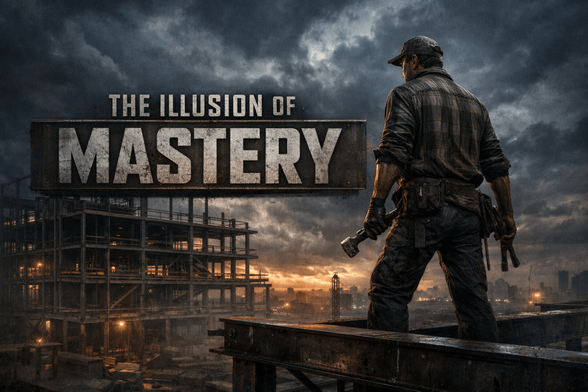
The Illusion of Mastery

2,678 words, 14 minutes read time.

Ethan had always believed he could bend the world to his will. At thirty-five, his construction business was booming. Not rich by some flashy standard, but respected in the circles that mattered. Contractors deferred to him, clients admired his efficiency, and even his crew, though tense around him, delivered on time. Every schedule, every order, every client call had to pass through his scrutiny. Anything that fell outside his control was a threat. And threats were unacceptable.

At first, his obsession with control worked. Projects finished ahead of schedule. Clients bragged about his precision. Workers, though wary of his temper, executed instructions perfectly. Ethan thrived in the illusion that if he pulled every string, micromanaged every detail, life could be made predictable, manageable, and safe. He felt powerful. He felt untouchable. And in that sense, he wasn’t cruel or malicious—just relentless, driven, and incapable of trusting anyone or anything beyond himself.

Faith existed in his life only as a convenience. Ethan prayed like a businessman signing a contract, ticking boxes: “God, make this shipment arrive. God, keep this permit clean. God, don’t let anyone ruin what I built.” He never surrendered, never waited, never allowed for uncertainty. Control was security, and trust was weakness. At least, that’s what he told himself.

Ethan’s rise was impressive. Within a few years, he had expanded from small residential renovations to mid-sized commercial projects, all running under his iron grip. Mistakes were punished, delays were intolerable, and complaints were met with sharp words and long hours of frustration directed at anyone in reach. Yet the outward appearance of success was seductive. People admired him, feared him, envied him. And Ethan thrived on that energy. The problem, of course, was the foundation beneath it.

The first cracks came subtly. One Tuesday, a key shipment of steel arrived late. Ethan’s reaction was immediate, instinctive, and raw. He stormed the warehouse, fists clenching, voice carrying across the lot. He called every number he had memorized, rattling off threats, demands, and ultimatums. Workers froze. Subcontractors flinched. The foreman tried to explain, but Ethan couldn’t hear reason—only failure, only the irreparable breach of his perfect plan. For a week, he pushed and prodded, trying to wrest control back, exhausting everyone around him.

Yet, in the short term, the chaos produced results. His crew scrambled, suppliers scrambled, and the steel was installed. Ethan felt victorious, confirmed in his belief that domination equaled competence. But the illusion of control was fragile. His crew grumbled in private, subcontractors began avoiding his calls, and the client started noticing tension. Ethan brushed it off. He had always assumed the world would bend under his grip; if it didn’t, the fault was theirs.

He had personal success too. His wife, Claire, tolerated his intensity, not out of submission but exhaustion. Even small disagreements became minefields; a careless word from Marcus, his sixteen-year-old son, could ignite an explosion of judgment and correction. Ethan loved them, in his own way, but he had no patience for imperfection, for unpredictability, for anyone who refused to fall in line. Still, outwardly, his life looked like proof of his mastery.

The next year, Ethan’s empire grew. New contracts, more employees, bigger projects. With each new victory, his control hardened, becoming obsession. Every phone call, every email, every subcontractor meeting was an opportunity to assert dominance. Even minor setbacks felt like betrayals. He didn’t yell often, but when he did, it left bruises on morale, on relationships, and sometimes, on the psyche of those around him. Success reinforced arrogance, arrogance reinforced control, control reinforced obsession.

Then the universe intervened in subtle, unrelenting ways. It began with small errors—a misfiled permit, a late delivery, a crew member misreading a blueprint. Each was minor, inconsequential if handled with perspective. But Ethan’s obsession magnified them into crises. He couldn’t pause. He couldn’t delegate. He couldn’t trust. He doubled down, barking orders, rewriting schedules, and threatening anyone in his path. His employees whispered about his temper behind closed doors; clients noticed his irritability; even suppliers began avoiding his calls. But Ethan was blind, drunk on his own perceived invincibility.

And yet, outwardly, he rose higher. For a moment, it seemed unstoppable. Projects finished, clients praised him, his reputation was untouchable. Ethan believed himself a master of circumstance, a man who could shape reality with grit, intimidation, and willpower. He felt untouchable, invincible, above failure. But life has a way of exposing illusions, and the higher a man climbs on false foundations, the more dramatic the fall.

The tipping point came slowly, then all at once. One Thursday, the city inspector misfiled a permit. The subcontractor misunderstood a critical measurement. And, crucially, the steel delivery—a shipment he had personally guaranteed—arrived late yet again. Each event was manageable on its own, but together, they formed a perfect storm. Ethan’s response was immediate and predictable: rage. He stormed the office, screaming at staff, calling suppliers, threatening legal action, pacing like a caged animal. Nothing worked. Nothing bent to his will. Nothing obeyed his grip.

In the days that followed, the fallout was brutal. Subcontractors quit mid-project. Crew members walked off sites. Clients demanded refunds. Banks refused to extend credit. Projects ground to a halt. Ethan, who had built his identity around control, found himself powerless. He realized, perhaps too late, that his obsession had been a prison disguised as a throne. The higher he rose on his own domination, the farther he had separated himself from help, from trust, from the only power greater than himself.

Ethan tried to fight it, of course. He doubled down, worked longer hours, called more people, demanded more loyalty. But it was all noise in the void. The world no longer answered to his fists or his mind. Every plan he tried to execute collided with the chaos he had ignored for so long. His health deteriorated under the stress—sleep abandoned him, meals went uneaten, hands shook from tension and exhaustion. The man who once felt invincible now felt fragile, exposed, empty.

The collapse reached his home as well. Marcus, now wary and silent, no longer shared plans or school struggles. Claire had stopped trying to argue, stopped trying to guide, stopped trying to fix anything. Ethan’s obsession with control had alienated them both, leaving him isolated in a world he thought he commanded. He had no one to blame. Not the city clerk, not the supplier, not the universe. Only himself.

Even then, Ethan did not become a villain. He was not cruel or mean; he was stubborn, obsessive, and blind to his own limits. He had loved his family and valued his crew, but he had been incapable of trusting, incapable of stepping back, incapable of admitting that he was not the center of the universe. He had mistaken domination for mastery and intensity for competence. In the end, the lesson was brutal: the world does not yield to fists, and life does not bend to arrogance.

Months passed. Ethan rebuilt in small ways, working odd jobs, taking short-term contracts, barely enough to survive. He was no longer respected or feared, no longer commanding attention or admiration. His name, once synonymous with efficiency, was now attached to failed projects and ruined reputations. Friends had drifted. Crew members had left. Clients had vanished. He had climbed, risen spectacularly, only to fall harder than he could have imagined. The empire he had built with obsession, pride, and control had evaporated.

Yet there was clarity in the ruin. Ethan understood, finally, that control had been an illusion, pride a trap, and the refusal to trust—whether in God, others, or circumstance—the true architect of his downfall. Faith, which he had treated as a convenience, now stood as the concept he had ignored at every turn. Trust was not weakness; it was strength he had never allowed himself to wield. But understanding came too late. Recognition did not rebuild the bridges he had burned or restore the empire he had dismantled with his own hands.

In the end, Ethan’s life became a quiet cautionary tale. He wasn’t a villain, nor was he a hero. He was a man with talent, ambition, and drive, undone by his inability to surrender. The lessons were clear, brutal, and unflinching: obsession with control isolates, pride blinds, and refusal to trust guarantees failure. A man who grasps too tightly discovers, inevitably, that the world cannot be commanded. No empire built on fear, obsession, and self-reliance endures. Only trust, patience, and the willingness to relinquish the illusion of omnipotence can prevent a fall.

Ethan walked through the remnants of his life daily, a man who had tasted power, experienced the thrill of mastery, and then felt the crushing emptiness of collapse. He survived, yes, but only as a shadow of his former self. The streets, the sites, the office floors—all reminders of what happens when control becomes an idol and trust is denied. He had been neither a saint nor a tyrant, only a man who refused to trust and paid the price. And that was enough to teach him, and anyone who watched, the raw, unflinching truth about control and pride.

The End

Epilogue

Make it about 500 words, and ethan is still unchanged

Years passed, but Ethan never really changed.

He still worked construction, though the empire he once built was long gone. The trucks with his company’s name had been sold off years earlier, the office closed, the contracts handed to other men who now ran the kinds of projects Ethan used to command. These days he moved from job to job as a subcontractor, doing framing work, repairs, whatever someone needed. The pay was steady enough to survive, but nothing like what he once had.

On a gray morning in early fall, Ethan stood on the second floor of a half-finished office building, staring through the empty steel frame where windows would eventually go. Wind pushed through the structure, carrying the smell of wet lumber and concrete dust. Down below, a foreman shouted instructions to the crew.

Ethan barely listened.

He had heard this kind of noise his whole life—orders, deadlines, problems. It all sounded the same. The difference now was that none of it belonged to him anymore.

A younger guy ran the site. Barely thirty, confident, clipboard in hand. The kind of man Ethan used to be. The kid gave instructions quickly, moving from one group of workers to the next like he owned the place.

Ethan watched him and shook his head.

“Guy’s gonna burn himself out,” he muttered.

The foreman eventually called up the stairs. “Hey, that beam’s off a little. Shift it left before you bolt it.”

Ethan didn’t answer right away. He stared at the steel beam like it had personally offended him. Finally he adjusted it, slow and deliberate, jaw tight the whole time.

Years ago nobody would have talked to him like that.

Years ago he ran sites twice this size.

He walked downstairs at lunch and sat on an overturned bucket near the loading dock. The younger workers laughed about football and weekend plans. Someone passed around a bag of chips. Ethan stayed quiet, arms crossed, staring out at the parking lot.

Across the street stood another office building. Ethan recognized it immediately.

His company had started that project fifteen years earlier. Back when things were still climbing. Back when people answered his calls. Back when every delay felt like a battle he could win if he pushed hard enough.

He remembered the shipments that ran late, the permits that stalled, the subcontractors who quit after too many arguments. One problem turned into five, then ten. Clients lost patience. Workers walked. Banks stopped extending credit.

People said he should have stepped back, trusted the process, trusted the people around him—maybe even trusted God instead of trying to force everything himself.

Ethan never bought that.

He still didn’t.

In his mind the problem had always been the same: other people failed. Suppliers failed. Workers failed. Timing failed.

He took a long drink from his thermos and stared at the building across the street.

“If people had just done their jobs,” he muttered under his breath, “none of that would’ve happened.”

A whistle blew from the site, calling the crew back to work.

Ethan stood, grabbed his gloves, and walked back toward the stairs without looking up.

Some men learn from a fall.

Others just spend the rest of their lives explaining why they shouldn’t have fallen in the first place.

Author’s Note

Ethan is not meant to be a villain, and he isn’t meant to be a hero. He represents a kind of man that is easy to recognize. He works hard. He takes responsibility. He refuses to quit when things get difficult. On the surface, those traits look like strength, and in many situations they are. But strength can quietly turn into something else when it is no longer anchored in trust.

Ethan’s real struggle is control.

From the beginning of the story, he believes the weight of everything rests on his shoulders. If something goes wrong, he pushes harder. If people fail him, he tightens his grip. If circumstances shift, he forces another plan into place. In his mind, that’s what responsible men do. They take charge. They make things happen. They do not sit back and wait.

For a while, that approach works. His business grows. People respect him. The results reinforce the belief that his way is the right way. But success built on control carries a hidden weakness. When a man begins to believe that his own strength is the reason everything works, he slowly removes God from the center of the equation.

That is the quiet turning point in Ethan’s life.

He never says he doesn’t believe in God. He never openly rejects faith. But his actions reveal something deeper. Every decision is driven by his own judgment. Every problem is solved by his own pressure. Every outcome must bend to his will. Instead of trusting God with uncertainty, he tries to eliminate uncertainty altogether.

Eventually life pushes back.

Projects collapse. Relationships strain. The structure he built begins to crack. Yet even then, Ethan cannot release control. Rather than stepping back and asking what went wrong inside his own heart, he continues to believe the problem is everyone else. Suppliers failed him. Workers failed him. Timing failed him. In his mind, the system broke—not him.

That is why the story ends the way it does.

Ethan never learns the lesson.

And that is intentional.

Not every story ends with redemption. Sometimes the warning is meant for the reader rather than the character. Ethan’s fall shows what happens when control becomes an idol. A man may rise quickly on determination and ability, but if pride sits at the center, the foundation will eventually crack.

Scripture speaks directly to this reality. The Bible says plainly, “God opposes the proud but gives grace to the humble” (James 4:6).

That verse does not simply warn against arrogance. It reveals something deeper. Pride places a man in opposition to God. When we insist on controlling every outcome, trusting only our own strength, we slowly begin working against the very God we claim to follow.

Ethan believed success depended on how tightly he could hold everything together.

In the end, the tighter he held, the more everything slipped through his hands.

Call to Action

If this story struck a chord, don’t just scroll on. Join the brotherhood—men learning to build, not borrow, their strength. Subscribe for more stories like this, drop a comment about where you’re growing, or reach out and tell me what you’re working toward. Let’s grow together.

D. Bryan King

Sources

Disclaimer:

The views and opinions expressed in this post are solely those of the author. The information provided is based on personal research, experience, and understanding of the subject matter at the time of writing. Readers should consult relevant experts or authorities for specific guidance related to their unique situations.

#ambitionAndObsession #biblicalPrinciple #cautionaryFiction #cautionaryTale #characterFlawStory #characterStudy #ChristianFiction #ChristianLifeLesson #ChristianMoralStory #ChristianMorality #consequencesOfPride #contemporaryFiction #contemporaryMoralFiction #controlIssues #controlObsession #EthanStory #ethicalFailure #faithAndControl #GodVersusPride #humanControl #humanPride #humanWeakness #humilityLesson #humilityVersusPride #James46Lesson #leadershipFailure #lessonInHumility #lessonsForMen #lifeCollapseStory #lifeConsequences #lifeFailureLesson #lifeLessonStory #lifeLessonsForMen #manAgainstCircumstances #masculineFiction #menSCharacterStudy #menSFiction #modernFictionStory #modernMoralityTale #modernParable #moralDownfall #moralFiction #moralStorytelling #obsessionAndControl #obsessionNarrative #personalResponsibility #prideAndDownfall #prideNarrative #realisticCharacterStory #realisticFiction #realisticLifeStory #selfMasteryMyth #selfRelianceFailure #spiritualFiction #spiritualLesson #spiritualReflectionStory #spiritualWarningStory #trustInGod #trustLesson #trustingGod
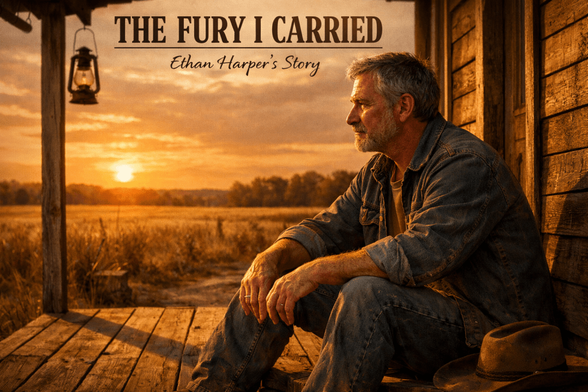
The Fury I Carried: Ethan Harper’s Story

5,834 words, 31 minutes read time.

Ethan Harper sat on the edge of his porch, the late afternoon sun burning low across the field behind his house. At fifty-five, he had learned that time has a way of loosening memories, sometimes revealing them in fragments, sometimes hiding them altogether. He had spent decades running from the storms in his head, from the anger that bubbled up at the slightest insult or perceived slight. But now, in the quiet that only comes when most of the world had turned away, he could hear it all—faint echoes of fists, belts, harsh words, and betrayed trust.

He remembered the fights with his older brother, memories he had buried so deep they had almost faded entirely. Tommy had been two years older, stronger, and cruel in ways that Ethan could never fully name as a boy. He remembered the time Tommy had pulled a knife, his own little hand trembling as he tried to back away, and the way fear had carved itself into his chest like a permanent mark. Their father had never intervened, not in that moment and not in the countless times Tommy had pushed Ethan around. Ethan had learned early on that survival meant keeping quiet, swallowing the sharp edges of his anger, and smiling when it was safest to do so.

It wasn’t just the private moments of fear that shaped him. There were times when they would play softball, basketball, or football with other children in the neighborhood, and Tommy would build himself up as the star player by tearing Ethan down. A missed catch, an airball, a strikeout—Tommy made sure everyone saw it, punctuating each mistake with sarcasm or a sharp remark that left Ethan flushed and small. Tommy was not exceptional at these games; in fact, Ethan often outperformed him when he tried. But that was the problem: Ethan’s skill threatened to shift attention away from Tommy, and he could not tolerate it. So he undermined Ethan at every opportunity, publicly humiliating him to reclaim the spotlight.

Ethan carried the lesson with him like a silent contract: never excel too openly, never make others feel overshadowed, and always hide the frustration that bubbled up inside. He learned to mask his skill, to soften his edges, and to accept that recognition often came at the price of ridicule. Every ball missed under Tommy’s watchful eye, every sneer aimed at him in front of the neighborhood kids, was another brick in the wall of restraint and quiet fury he would carry into adulthood.

And then there were the flashes he had long buried, the moments his mind had tried to forget. One of them came back to him unexpectedly at a flea market decades later. He had been scanning a vendor’s booth, the smell of old books and brass trinkets thick in the air, when he spotted it—a red glass ashtray, the exact shape and color of one that had sat on the living room table when he was ten. Something in him tightened. He remembered then, suddenly, the day it had shattered across his head, heavy and brutal, thrown by his mother during one of her fights with his father. He had not seen it coming, had not known how to dodge it, and even though the glass had bruised and cut him, leaving a scar he still carried, his mind had tucked the memory away, as if it were too sharp, too unfair, too much to bear. The ashtray at the flea market wasn’t the one that had hit him—that one was still somewhere at his parents’ house—but the sight of it brought back a clarity that was both painful and necessary.

And yet, despite the beatings, the whippings, the relentless pressure to perform, there had always been the family mantra: “We’re broke. We can’t afford that.” Yet Ethan remembered the trucks—dump trucks, dozers, backhoes—and even the lowboy trailer parked out back. He remembered the horse they owned for a season, the new cars that seemed to arrive without warning, and the endless parade of boats, hunting gear, and camping equipment that lined the garage and shed. His father had been a carpenter, proud of his trade, and the shop had gleamed with the newest, best tools money could buy: precision saws, routers, drills, chisels, clamps, levels, the kind of equipment that made a craftsman’s work sing. On weekends, Ethan had watched his father polishing shotguns, checking ammo, and tinkering with reloading equipment, preparing for hunting trips that would last days. The house smelled of sawdust, gun oil, and leather, a scent that stayed with him into adulthood.

Ethan had worked his entire young life, scraping up cash for school, for his own living expenses, only to watch the money vanish, swallowed by family claims of urgent “needs” or “emergencies.” College loans he had taken in good faith had been co-opted, a car he barely could afford had been purchased under pressure, leaving him to shoulder debt he hadn’t truly agreed to. Even before college, the pattern had been set. During high school, he spent his summers working construction alongside his father, learning the trade but also learning the rules of control and endurance in the harshest ways. On one job, his father refused to allow the lumber yard to deliver a load of shingles to the roof of a two-story house, forcing Ethan to carry each ninety-pound bundle up a rickety ladder, despite knowing how much Ethan struggled with heights. His heart would pound, legs shaking with every step, and his father would bark instructions from below, impatient and unyielding.

And the money—any cash he earned was never truly his. On Fridays, after a week of grueling labor under the hot sun and the constant weight of expectation, he would finally hold his paycheck in his hands, tasting the small victory of independence. By Saturday, it was gone—borrowed back by his father for some sudden “emergency,” never returned, never explained, as if Ethan’s effort and autonomy were meaningless. He learned early on that no matter how hard he worked, no matter how carefully he tried to hold onto what was his, control would be wrested away, and anger, no matter how justified, was never safe to show. The lesson was brutal, physical, and financial all at once: survival meant obedience, endurance, and quiet resignation, even when it felt like life itself was conspiring against him.

He had enlisted in the Army shortly after high school, not out of patriotism alone, but out of desperation. He signed a four‑year commitment because four years sounded like distance, like a clean break, like a stretch of time long enough to finally become someone his family could no longer reach or control. The Army promised structure, clarity, and rules that made sense. It promised that effort mattered, that rank was earned, and that a man’s worth was measured by what he could carry and how well he carried it. For the first time in his life, the expectations were written down, and no one could move the goalposts on a whim.

Training was brutal, but it was honest. Pain came with purpose. Yelling had a reason. When he failed, he knew why, and when he succeeded, it was visible. He slept harder than he ever had, ate like his body finally needed fuel, and felt something close to calm settle into his bones. For the first time, anger had a direction. It wasn’t explosive; it was contained. Useful.

Then, while he was still in training, the country declared war.

Everything shifted overnight. The tone changed. The urgency sharpened. Jokes dried up. Drills took on a harder edge, and names of places he had only seen on maps were suddenly spoken with gravity. Within a year, he was sent to the war zone. He didn’t panic. He didn’t hesitate. In fact, part of him felt steadier than he ever had. There was a clarity in knowing where he was supposed to be and what was expected of him. He adapted quickly. He learned routines, read people, watched the ground, and listened more than he spoke. He would have signed up for another tour without hesitation. For all its dangers, the war zone felt less chaotic than home had ever been.

Five months into a six‑month tour, everything collapsed.

One day he was there, counting time in weeks, thinking about reenlistment and the future. He had been assigned to his unit in the war zone for five months, and the more he learned, the more he felt himself fitting into a rhythm he had never known at home—a rhythm that made him feel capable, disciplined, even alive. For the first time, he could see a path forward. When his initial six-month tour ended, he had every intention of signing up for a second. He wanted to stay. He wanted to finish what he had started. The idea of coming home now, leaving the work unfinished, felt like betrayal—not just to the Army, not just to the country, but to himself.

Then it happened.

He was pulled aside by a sergeant who didn’t make eye contact. The words came slowly, almost apologetically, though Ethan could hear no real apology in the tone. His father had contacted his commanding officer. There had been an “emergency.” Medical issues. Something about an accident while building a house. Ethan never got the details straight from the source. He never saw the call. He never saw the paperwork. All he knew was that the story was enough to pull him out, to cut short the tour that he had poured himself into.

The anger came first—hot, uncontrollable. His chest felt tight, his fists clenched before he even realized what was happening. He wanted to fight, to yell, to tell the world that no one, not even his father, could take this from him. But he had learned too young that there were limits he could not cross, and that resistance often came at a price far too high.

So he went home.

The shame settled in like a second uniform, stitched tight around his shoulders. He had wanted to prove himself in uniform, to show the discipline, the courage, the loyalty he had always felt he needed to prove. And now that chance was gone, stolen by the same family that had belittled him, manipulated him, and drained him of agency for as long as he could remember. He could not reenlist for a second tour. Not now. Not ever.

When he tried to articulate it to himself, to rationalize it, all he could feel was betrayal. Betrayal that twisted into anger that had nowhere to go. He had survived the heat of a war zone, the monotony of training, the constant tension of life and death, and yet, in the end, the hand that stole his purpose came from home. His father had done what no enemy in a foreign land could: taken away the one thing Ethan had chosen for himself, leaving him hollow, furious, and confused.

He left the war zone with unfinished business and a knot in his chest that never fully loosened. Other men stayed. Others rotated forward. He went home.

The shame came quietly at first. No one accused him directly, but he felt it anyway. He had been there five months. Five out of six. Close enough to taste completion, close enough to feel like it mattered. He told himself it wasn’t his choice, but that didn’t stop the humiliation from settling in. He had wanted to stay. He would have stayed. He would have reenlisted. But that chance was gone, stolen in the same way so many other decisions had been quietly taken from him.

Back in the States, after leave, he returned to his command, trying to pick up the thread of his life where it had been cut. But home had a way of closing in. The family pressure started immediately. Obligations. Expectations. Guilt dressed up as responsibility. He was told how much they needed him, how much he owed them, how everything would fall apart without his help. It was the same voice he’d grown up with, only louder now, reinforced by the idea that he was no longer deployed, no longer “needed” elsewhere.

The Army had given him structure. Home dismantled it piece by piece.

The pressure didn’t come as one dramatic confrontation. It came in phone calls, in comments, in constant reminders that family came first, that he was selfish for wanting anything else, that he couldn’t just disappear into a uniform and pretend he didn’t belong to them. Slowly, the walls closed in. Sleep became shallow. Anger flared without warning. The discipline he had built began to crack under the weight of old patterns he thought he had escaped.

At some point, the thoughts turned dark. Not loud at first. Just quiet questions. What if he stopped fighting? What if he didn’t wake up? What if the only way to end the pressure was to disappear entirely? He didn’t tell anyone how bad it got. Men like him weren’t supposed to say those things out loud. He told himself it was temporary, that he just needed rest, that he could muscle through it like everything else.

But the weight didn’t lift.

Eventually, it was noticed. Not the family pressure—that remained invisible—but the strain it caused. The Army didn’t see a man being pulled apart by a lifetime of control and obligation. It saw a soldier no longer fit to carry the load. He was released from service, not with ceremony, but with paperwork. Another ending he hadn’t chosen. Another door closed quietly behind him.

He left the Army with anger he didn’t know how to name and a sense that something vital had been taken from him before he could decide who he was meant to be. The discipline remained, but the purpose was gone. And the fury that followed him into civilian life was no longer contained or useful. It was raw, directionless, and hungry, and it would shape the decades that followed in ways he wouldn’t understand until much later.

The anger followed him everywhere. At work, he snapped at colleagues over minor mistakes. At home, he lashed out over trivial inconveniences. It didn’t matter whether the offense was real or imagined; his body, trained for fight or flight, recognized disrespect and fear with equal ferocity. Proverbs 15:1 had been a verse he glanced at in passing: “A gentle answer turns away wrath.” He had read it, nodded, and ignored it, convinced that gentleness was weakness, and weakness could not survive in a world that had taught him from childhood that survival required steel.

He remembered the night he drove home from work, hands gripping the wheel, chest pounding, after yelling at a coworker who had “disrespected” him in a meeting that in hindsight wasn’t even about him. The sky was dark, his headlights slicing through the winter fog, and he replayed the event in his mind over and over, each time justifying his anger, insisting that he had been right, that the world had failed him once again.

And then he remembered another fragment—a smaller, older memory of his brother and father, a single afternoon when he had been twelve. Tommy had cornered him in the barn, fists clenched, eyes wild. Ethan’s heart had hammered in his chest as he tried to back away, remembering the knife. Their father had appeared after what seemed like an eternity and landed a whipping so severe it left bruises not just on his skin but in his mind. And when Ethan had tried to explain the fear, the threat, the knife, he had been told he needed to be tougher, to stop crying. “You’re a boy. You’ll toughen up,” his father had said. Ethan had learned that anger could not protect him; compliance was the only safe path.

Ethan had carried these lessons into adulthood like armor, only to discover they were double-edged. Anger was not protection—it was a prison. He had become a man who could not trust easily, who flinched at authority even as he demanded respect from others, who hid love behind sarcasm and gritted teeth. He had tried therapy once, but words were inadequate for the weight of memories he had never allowed himself to fully feel.

Financial betrayal had reinforced the lesson that family could not be trusted, and that survival meant self-reliance, no matter the cost. He had taken loans for college, believing in his own determination, only to have those funds claimed by family members who insisted they were in dire need. The car, bought under pressure, became a symbol of compromise, a tangible reminder that his agency had been hijacked again and again.

Despite it all, there were moments of reflection, rare glimpses of clarity when Ethan allowed himself to remember without the accompanying rage. He remembered a Sunday morning, years ago, when he sat alone in a small chapel, hands folded tightly in prayer, and finally whispered the words he had never been able to say aloud: “God, I’m tired. I can’t carry it all. Help me.” In that moment, he felt something shift, a softening, a glimmer of understanding that perhaps anger was not the only path to survival, that he could hand over burdens he had carried for decades.

Yet understanding did not erase history. He still remembered the trips to the bank with his father, being told the family was “broke” as he watched checks disappear into accounts he would never control. He remembered the shiny trucks, the dumpers, the backhoes, the lowboy, the horse grazing peacefully in the sun, the spotless workshop brimming with the latest carpentry tools, the hunting rifles, reloading equipment, the boats lined up by the lake, the stacks of camping gear. Each memory was a reminder of manipulation, of deception, and of how a man’s labor could be quietly co-opted. And he still remembered the sharp edge of his brother’s knife, the sting of the belt, the humiliation of public punishment—echoes that had shaped him as much as any lesson, any love, or any discipline ever could.

Ethan realized that much of his anger had been rooted in fear: fear of loss, fear of humiliation, fear of being powerless. That fear had been dressed up as pride, as control, as righteous indignation. He had justified his outbursts countless times, insisting that anyone would do the same, that anyone in his shoes would have snapped. But now, sitting on the porch, he saw the truth: his anger had been misdirected, aimed at the wrong people, even at himself.

He thought about the biblical texts he had ignored for so long. James 1:20: “Human anger does not produce the righteousness that God desires.” He had understood those words in college but only now felt their weight. Anger had never delivered justice. It had only fed isolation, fueled regret, and kept him from seeing the people around him with clarity or compassion.

And still, he did not remember everything. Some days he would find himself staring into the fog of the past, grasping for memories that refused to form, events that had been buried so deep that even now they were only half-glimpsed. But he had learned that partial memory could coexist with partial peace. He did not need to recall every moment to begin forgiving, to begin letting go, to begin living.

Ethan took a deep breath and felt the cold wind press against his face. He thought of the men and women he had served with, the colleagues he had yelled at, the friends he had pushed away. He thought of his brother, still alive somewhere, and his father, gone but never truly absent from his consciousness. And he understood something he had never known as a boy: survival was not about dominance, not about proving yourself, not about holding onto every hurt and injustice. Survival was about learning to release what you cannot change, to accept the fractured, messy truth of your past, and to carry forward with whatever fragments of peace you could grasp.

Ethan took a deep breath and felt the cold wind press against his face. He thought of the men and women he had served with, the colleagues he had yelled at, the friends he had pushed away. He thought of his brother, still alive somewhere, and his father, gone but never truly absent from his consciousness. And he understood something he had never known as a boy: survival was not about dominance, not about proving yourself, not about holding onto every hurt and injustice. Survival was about learning to release what you cannot change, to accept the fractured, messy truth of your past, and to carry forward with whatever fragments of peace you could grasp.

The sun dipped below the horizon, casting long shadows across the field. Ethan stood slowly, stretching muscles stiff with years of tension. The anger would never vanish entirely, the memories would never be complete, and the questions would never all be answered. He wondered if his brother remembered things the same way—or at all. He wondered what his father would have said if he had ever admitted the truth. He wondered how much of himself had been lost, or if it had been there all along, waiting to be claimed.

For the first time in decades, he felt a fragile sense of calm. He had lived with the fury for so long that letting it go, even partially, felt like stepping into sunlight after a lifetime in the dark. But as the wind swept across the field, he realized that some questions might never be answered. Some memories might never return. And maybe that was how life worked: the answers weren’t as important as the act of continuing forward, carrying both the weight of the past and the sliver of calm that remained.

Author’s Note:

I put off writing this story on anger, irritability, and explosive reactions for as long as I could. This story hits close to home. It draws on the very real experiences that I, and many other men, face—struggles that are often hidden, misunderstood, or dismissed. Anger doesn’t exist in a vacuum. It’s a signal. It’s a flare. It’s a message screaming that something deeper is broken, something stolen, something left unresolved. For Ethan Harper, the wounds of childhood abuse, financial manipulation, and betrayal didn’t stay in the past—they followed him into adulthood, shaped his relationships, his work, and the man he became.

Let’s be honest. Men are taught from the start to swallow our pain—sometimes through words, sometimes at the end of a paddle, a belt, or some unjust, brutal punishment. Don’t cry. Don’t complain. Handle it yourself. Be strong. Endure. Survive. And when that pain comes from the people who are supposed to protect you—your parents, your siblings—it doesn’t just hurt; it breaks something inside you. It leaves a mark. It shapes the anger you carry, the fear you hide, the defensive walls you build around your life. Anger becomes a survival tool, a shield, a weapon, and sometimes the only thing that reminds you you’re still alive.

And it doesn’t stop there. Financial betrayal, manipulation, stolen opportunities—those things sink deeper. When you work your ass off to pay for school, only to watch the money disappear, or when you’re pressured into a debt you didn’t choose, it doesn’t just teach you unfairness—it teaches you mistrust. It teaches you that even when you give everything, it’s never enough. That life, and the people closest to you, will bend it all against you. That betrayal isn’t just a memory—it’s a weight, pressing down on your chest for decades, even when you try to forget.

And then there are the memories your brain refuses to face. The ones that don’t fade so much as get buried. The things that were too big, too painful, too confusing to process when you were young and had no power, no language, no escape. Repressed memories aren’t weakness. They’re survival. They’re your mind saying, You can’t carry this yet. Put it down. We’ll come back for it later. The problem is that “later” always comes. It doesn’t ask permission. It doesn’t care if you’re ready.

Sometimes it comes through a smell. Sometimes a sound. Sometimes it’s something small and stupid that shouldn’t matter—but does. That’s how it hit me.

It was Sunday, October 5, 2025, at the Flat Rock Speedway Flea Market. We were already heading out, walking past the last vendor set up along the track, when I saw it sitting there on the table. A left-handed youth bow. Bear Archery. Twenty-five pounds pull. I picked it up without thinking, and the moment it settled into my hand, my chest tightened. Not emotionally at first—physically. Like something inside me had been yanked awake.

My hands knew it before my mind did.

I was ten years old again. Christmas morning. The weight of that bow. The way it felt to draw. The quiet pride of owning something that was mine. Not borrowed. Not shared. Not conditional. It wasn’t just a toy. It was one of the few things in my childhood that felt personal—like it belonged to me, not the family, not the system, not the constant reshuffling of control.

I stood there too long, staring at that bow, confused by the surge of feeling it stirred up. And then the questions started. Slow at first. Then louder. What happened to mine? When did it disappear? Why couldn’t I remember it leaving?

The truth landed heavy and ugly. I was ten when I got that bow. And nine years later—while I was gone, while I was trying to build a life, while I trusted that my things were safe—it was sold. No conversation. No asking. No warning. Just gone. Either my brother or my father decided it was theirs to turn into cash. Like so many other things. Like it had never belonged to me at all.

That realization didn’t come with tears. It came with anger. The old kind. The familiar kind. The kind that burns cold and steady and makes you want to put your fist through something. And then it came with grief. Because it wasn’t just about the bow. It never is. It was about the pattern. The quiet thefts. The way my life had been treated like a resource pool instead of a human being.

Once that door opened, more things started coming back. My first two computers—gone. Unaccounted for. Disappeared somewhere along the way. Sold off. Absorbed. Forgotten by everyone except the kid who built himself around them. It took nearly thirty years for those memories to surface. Thirty years of wondering why anger showed up out of nowhere. Why I overreacted. Why loss—even small loss—felt like betrayal.

There’s another kind of memory loss that’s harder to explain and harder to ignore. It’s not about forgetting a single incident. It’s about entire stretches of life that should be there—and aren’t.

In the late 1970s, my father built a house less than two hundred yards from the trailer we were living in. I would have been around eight years old. Two hundred yards. Close enough to see it every day. Close enough to hear it. Close enough that I should remember what the land looked like before the trees were cut, the road carved up the hill, the culvert installed so the creek could run underneath. I should remember the blasting of rock for the footer, the noise, the dust, the machinery moving in and out.

But I don’t.

What makes that absence impossible to dismiss is this: I remember those exact details from a neighbor’s house that was built a few years later, after we had already moved in. I remember the land before it was cleared. I remember the road cut, the culvert, the blasting. Those memories are intact. Clear. Sharp.

For my own family’s house—nothing.

For decades there was just a blank space where those memories should have been. No images. No sounds. No sense of place. Just absence. And absence like that isn’t neutral. It doesn’t happen by accident. You don’t forget something that close, that constant, that formative, unless something inside you decided it wasn’t safe to hold onto it.

Only recently did a fragment surface. The house with just the second-story walls standing. No roof. No detail. Just a skeletal frame. And even that memory feels fragile, like it could slip away again if I press too hard.

That’s what repressed memory often looks like. Not dramatic flashbacks. Not clean, cinematic scenes. Sometimes it’s missing time. Missing context. Missing pieces of your own history that should be obvious but aren’t. And when those gaps finally show themselves, they don’t bring comfort. They bring unease. Because they force a question you’ve avoided your whole life: What was happening around me that my mind decided I couldn’t afford to remember?

Repressed memories don’t stay buried because they’re harmless. They stay buried because they’re dangerous to a child who has no protection. But they don’t die. They wait. And when they surface, they don’t come back gently. They come back as fear, shame, grief, and rage—all at once. Like stepping back into a storm you thought you’d outrun.

That’s why anger can feel uncontrollable. That’s why men explode decades after the original wound. That’s why the past doesn’t stay in the past. It doesn’t forget you. It finds a way back in, demanding to be acknowledged.

Later, I found a nearly identical bow on eBay. Bought it for next to nothing—shipping cost more than the bow itself. But the money didn’t matter. What mattered was the act. Reclaiming something small but true. Drawing a line through time and saying, I see it now. I remember. And you don’t get to erase this anymore.

That wasn’t nostalgia.
That was recovery.
That was the beginning of taking my life back.

Even Scripture recognizes this. Luke 8:17 says, “For nothing is hidden that will not be disclosed, and nothing concealed that will not be known or brought out into the open.” Buried memories, pain, sins—they surface. And here’s the thing: it’s not to destroy you. It’s to give you clarity. To give you a chance to see what was stolen, what was silenced, what never got spoken. To reclaim pieces of yourself buried under years of fear, shame, and anger. The light doesn’t destroy; it restores. Even fragments of peace, even moments of clarity, even a glimpse of joy—they are waiting for you, if you’re willing to face what’s under the surface.

Even the Bible tells us that joy is meant to be a source of strength. Nehemiah 8:10 says, “Do not grieve, for the joy of the Lord is your strength.” But for men like Ethan, joy is often robbed before it can even root. Abuse, betrayal, manipulation, financial exploitation—they shove it out, replace it with frustration, resentment, and the kind of anger that simmers for decades. And yet, reclaiming joy—real joy, even in fragments—is the first step toward reclaiming life. Even one moment of peace counts. Even a fraction of sunlight after decades of shadow is worth noticing, worth holding onto, worth fighting for.

As you read Ethan’s story, don’t skim the surface and move on. Sit with what’s underneath the anger—the fear, the humiliation, the moments of powerlessness, the opportunities that never came back, the quiet betrayals that were never acknowledged. Ask yourself where anger has shaped your life. Where it has cost you relationships, jobs, peace. Where you learned to swallow pain because speaking up wasn’t safe, or because no one was listening anyway.

Even when memories are repressed, the events still happened. They didn’t disappear just because you can’t access them on demand. They influenced how you learned to react, how you learned to protect yourself, how you learned to survive. They got folded into your personality—your temper, your defensiveness, your need for control, your distance, your self-reliance. You became someone shaped by things you were never allowed to fully understand.

Not every answer will come easily. Some memories may never return in full. Some questions will remain unanswered, no matter how much you want clarity. That’s not failure—that’s reality. That’s what survival actually looks like. But noticing the patterns matters. Seeing how anger shows up, when it shows up, and what it’s guarding underneath is the first step toward taking back control. Not erasing the past. Not pretending it didn’t matter. But finally understanding what you’ve been carrying for decades—and deciding, piece by piece, what you no longer need to carry alone.

If this story scratches something raw inside you, find someone to talk to. A doctor, counselor, therapist—someone you can be honest with, without shame, without judgment. Even a friend, a mentor, a spiritual guide—someone who can hold space for the storm in your head—can help. Processing anger, trauma, and buried pain is not weakness. It’s survival. It’s courage. It’s reclaiming your life, piece by piece, day by day.

This story is about survival—but not the kind that leaves you hardened, broken, and alone. It’s about survival that lets you carry forward, even with scars, even with memories that cut deep. It’s about facing buried pain, claiming fragments of joy, and moving through life on your own terms. Healing is messy. Life is messy. Not every question will be answered. Not every memory will come back. But even fragments of clarity, peace, and understanding are worth claiming—and that fight is worth having.

Call to Action

If this story struck a chord, don’t just scroll on. Join the brotherhood—men learning to build, not borrow, their strength. Subscribe for more stories like this, drop a comment about where you’re growing, or reach out and tell me what you’re working toward. Let’s grow together.

D. Bryan King

Sources

Disclaimer:

The views and opinions expressed in this post are solely those of the author. The information provided is based on personal research, experience, and understanding of the subject matter at the time of writing. Readers should consult relevant experts or authorities for specific guidance related to their unique situations.

Related Posts

#abuseRecoveryStory #abusiveFamilyDynamics #abusiveParenting #adultMaleStruggles #adultReflections #angerAndFaith #angerAndPride #angerManagement #angerTriggers #angerTriggersInMen #biblicalInspiration #biblicalPrinciplesForAnger #biblicalWisdom #brotherViolence #childhoodAbuse #childhoodTrauma #ChristianInspirationStory #ChristianLifeChallenges #ChristianMen #ChristianMenSStories #ChristianShortStory #confrontingPastTrauma #copingStrategiesForAnger #copingWithAnger #copingWithFamily #dealingWithFamilyConflict #dealingWithRage #domesticAbuse #emotionalHealing #emotionalResilience #emotionalScars #faithAndFamily #faithAndHealing #faithJourneyForMen #familyBetrayal #familyDeception #familyLies #familyManipulation #familyPressure #fatherAbuse #fatherSonConflict #financialExploitation #financialManipulation #findingInnerCalm #findingPeace #forgivenessAndPeace #forgivenessJourney #handlingAngerBiblically #healingFromAbuse #James120 #lifeLessonsForMen #lifeLessonsFromTrauma #lifeReflection #lifeReflectionStory #lifeRegrets #maleEmotionalStruggles #maleIdentity #maleStruggles #masculinityStruggles #menAndFaith #menSEmotionalJourney #menSMentalHealth #mentalHealthAwareness #militaryVetStory #moralStruggle #Nehemiah810 #overcomingAnger #overcomingTrauma #peaceAfterAnger #PersonalGrowth #personalRedemption #personalReflectionStory #personalTrauma #Proverbs151 #PTSDSubtle #reconciliationAndForgiveness #recoveringFromBetrayal #REMFVeteran #repressedMemories #repressedTrauma #resilienceAfterTrauma #siblingAbuse #spiritualEncouragement #SpiritualGrowth #spiritualHealingForMen #spiritualReflection #spiritualRestoration #stolenDreams #stolenJoy #stolenOpportunities #survivingAbuse #toxicFamily #traumaAndFaith #traumaRecovery