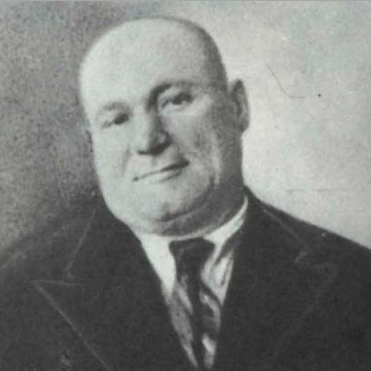
 Levka
Levka#Holocaust #ChildrensLiterature #SholemAleichem
"In Yiddish, the Holocaust is known as der driter khurbn, the Third Destruction. That designation is a clear sign that for Ashkenazi Jews, the decimation of European Jewry was spiritually and historically identical to the destruction of the two ancient Temples in Jerusalem: first, by the Babylonians in 586 BCE, and then by the Romans in 70 CE.
The story which I’ve translated below closes out the Forverts project of the year 5785 — our year-long exploration of the Jewish holiday cycle through Yiddish children’s literature.
Because the fast day of Tisha B’Av (The Ninth of Av) — the somber holiday commemorating the Temples’ destruction — falls during the summer, it gets short shrift in Yiddish school anthologies and other collections of holiday tales. Secular Yiddish summer camps took the day as an opportunity to connect the deep and recent past, commemorating the tragedy in Europe.
Just as the ancient catastrophes yielded a liturgy of lamentation, the events of the Holocaust gave rise to poetry, testimony, fiction and drama. Survivors and more distant witnesses put pen to paper and paint to canvas, seeking to document the horror and make meaning of it.
But educators in the Yiddish school networks of North and South America faced a special set of challenges: how could they inform their pupils about the fate of Europe’s Jewish children without overwhelming them with the sense of hopelessness and helplessness? The solution: They focused on imagining the small gestures of resistance, instances of extraordinary and everyday heroism, that could be undertaken even by elementary school-aged children.
Yuri Suhl (identified in Yiddish as M.A. Suhl) and his colleagues in the leftist organization YKUF pulled together Holocaust children’s literature that had appeared immediately after the war in Yiddish youth periodicals, publishing an anthology in Buenos Aires in 1953 under the title Kinder heldn (Child Heroes). These fictional stories and poems depict children who support the fighters of the Warsaw Ghetto Uprising. Some of them even join the partisans fighting in the forests. These young heroes often care for children even younger and more vulnerable than them, like one story in which two best friends smuggle infant twins out through Warsaw’s sewers to the relative safety of a forest encampment.
This story, 'The Little Sholem Aleichem,' describes a boy who engages in a profound act of spiritual resistance during the Warsaw Ghetto Uprising: preserving and circulating the last remaining volume of the Collected Works of Sholem Aleichem among the 'schools' that were improvised even in wartime ghettos. In this way, he 'saves' the classic Yiddish humorist, and by extension, his cultural heritage.
Children can indeed be heroes. And stories of their heroism can — and should — be read by adults too. May these depictions of young people’s grace and grit in the worst of circumstances motivate us to agitate for a world in which all children enjoy safety, dignity and peace."
https://forward.com/yiddish-world/759859/story-child-fought-nazis-holocaust-ghetto-books/

 דניאלה סולזמן ✡️🕎🟦🎥

 🕵️old klezmers🎻
 Sim Barr


 ValTagliaferri
 7sleepersmusic


 Between Wanderings