As a digital marketer, I am always on the lookout for new and innovative ways to improve the overall performance of campaigns for my clients. One method that has been gaining a lot of attention lately, in the wake of third-party cookie deprecation, is server-side tracking. In this blog post, I will explore what server-side tracking is, how it works, and why it is the future of digital conversion tracking.
What is it, you may be asking yourself… How is it relevant for me? Server-side tracking is a method of collecting data about user behaviour on a website or your app by sending requests directly to the server instead of relying on client-side scripts like Google measurement tags. This means that all tracking data is collected and processed on the server side, rather than in the user’s browser.
Server-side tracking works by sending tracking requests to your server every time a user interacts with your website or app. These requests contain information about the user’s behaviour, for instance which pages they visited, how long they spent on each page, if they have signed up to a newsletter, or purchased one of your products.
The server then processes this data and stores it in a database, where it can be analysed, sent to a media partner and used in the optimisation process to improve the effectiveness of your marketing campaigns. Because all tracking data is collected on the server side and considered first-party, it is more reliable and accurate than client-side tracking (often third-party), which can be affected by ad blockers, privacy settings, and other factors.
Clients always ask me, “But… Why is it the future of digital tracking?” There are generally several reasons that I give them:
It provides more accurate and reliable data than client-side tracking, which means you can make better-informed decisions about your marketing campaigns.Server-side tracking is more secure than client-side tracking because it does not rely on third-party cookies or other tracking technologies that can be blocked or deleted by users. This means that you can collect data about user behaviour without compromising their privacy or security.Your media tags are hosted in a cloud server environment; you’ll still need a container tag client-side, but it would reduce the amount of loads required on a page. This will effectively speed up your site making it more user friendly, even more important on mobile devices that have poor signal.Server-side tracking allows you to integrate your marketing data with other business systems, such as CRM, ERP, and BI tools. This means that you can get a complete picture of your customers and their behaviour, which can help you create more effective marketing campaigns.To wrap this post up, server-side tracking is the future of digital media tracking because it provides more accurate and reliable data, is more secure and allows you to integrate your marketing data with other business systems.
If you are not already using server-side tracking, now is the time to start. Feel free to reach out to IT Service Guru to see how we can help your business with your digital transformation.
Like, Comment or WordPress Reblog the post and Subscribe to IT Service Guru for future blog posts.
Follow IT Service Guru
https://itservice.guru/server-side-tracking-the-future-of-digital-tracking-campaign-optimisation/
#Cookieless #DigitalTracking #DigitalTransformation #ServerSideTracking #ThirdPartyCookie
 Meteora Web
 PPC Land
 staper
 Rubait Rad | Ads & Analytics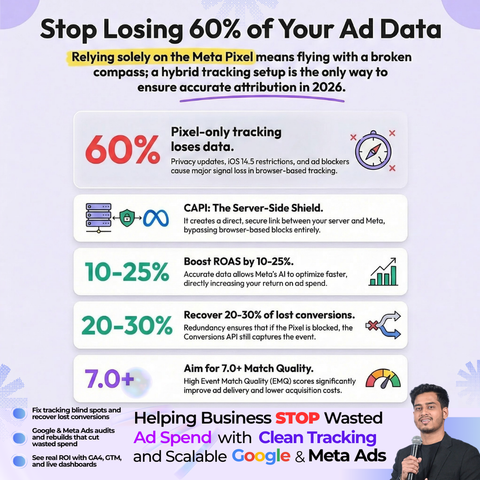
 Kevinleary.net
 Tarnkappe.info
 RenkeSiems
 Lee Pepper
 Ąŋdį Ƥęţȥοŀdţ
 Peter Hense 🇺🇦